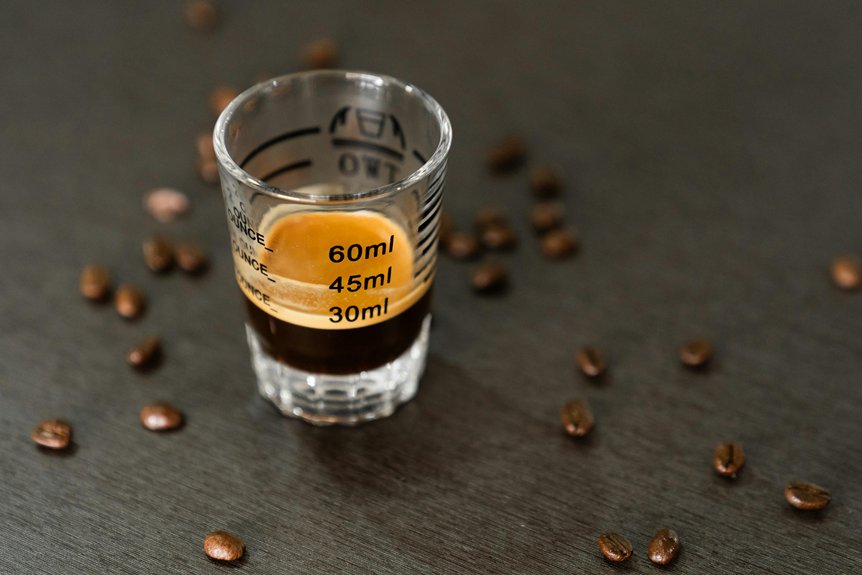
One scoop of ground coffee per 6-ounce cup of water is your starting point for balanced drip coffee. A standard scoop holds about 2 tablespoons or 10 grams. If your mug’s bigger than 6 ounces, add more coffee proportionally. Want it stronger? Use 1.5 scoops. Prefer it milder? Try three-quarters of a scoop. A kitchen scale gives you the most consistent results, letting you nail the exact ratio every time. There’s plenty more to discover about fine-tuning your brew.
One Scoop Per Cup: The Starting Point
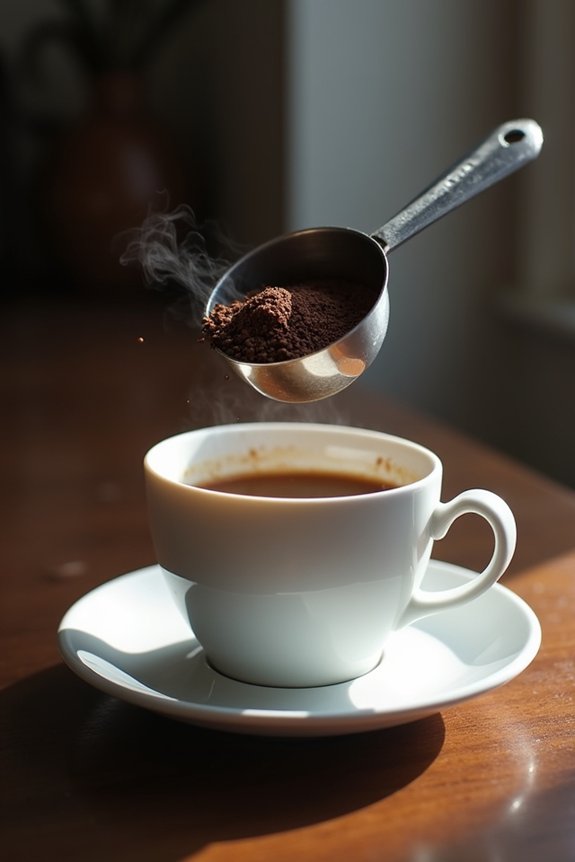
So how do you know where to start with coffee measurements? I use the simple rule: one coffee scoop per 6-ounce cup of water. This is the standard baseline for drip brewing.
A typical coffee scoop holds about 2 tablespoons of ground coffee, which equals roughly 10 grams. That’s your coffee-to-water ratio foundation. One standard scoop per cup means you’re measuring consistently every time.
Here’s the thing: a “cup” on your coffee maker isn’t always a full 8 ounces. Most coffee makers call 5–6 ounces a cup. So when you’re filling your brewing method, keep this in mind. Stick with one scoop per actual 6-ounce cup of water. This ratio works across different brewing methods and gives you a reliable starting point before adjusting for your taste preferences.
What “Cup” Actually Means
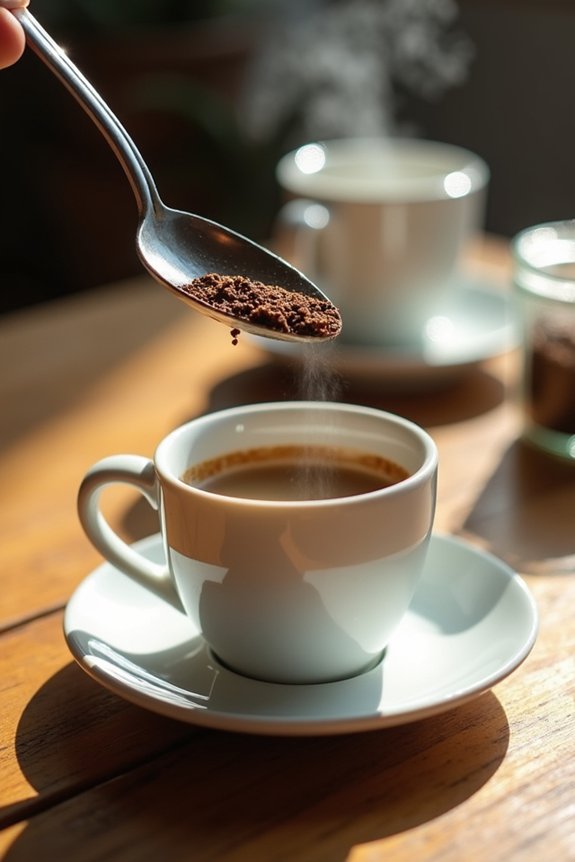
When I mention “one scoop per cup,” I’m using the word “cup” loosely—and that’s where things get confusing. You’ll notice that coffee cup sizes vary wildly: a true US cup holds 8 ounces, but your actual coffee mug might hold 6 ounces, and carafe markings often indicate 5-ounce servings instead. Understanding which measurement your brewer uses helps you dial in the right amount of ground coffee and get consistent results every time.
Coffee Cup Size Variations
Why does your coffee scoop seem to work differently depending on which mug you’re using? The problem isn’t your scoop—it’s coffee cup size variation. When you brew for a 6-ounce cup versus a 12-ounce mug, you need different amounts of ground coffee. Your standard coffee scoop holds about 10 g, but the water-to-coffee ratio changes based on container size.
| Cup Size | Scoops Needed | Brewed Coffee Output |
|---|---|---|
| 6 oz | 1 | 5-6 oz |
| 12 oz | 2 | 10-12 oz |
| 12-cup carafe | 12 | 60 oz |
| Large mug (16 oz) | 2.5-3 | 14-16 oz |
| Travel cup (10 oz) | 1.5-2 | 9-10 oz |
Carafe markings often show “cups” as 5-ounce servings, not full 8-ounce cups. Understanding your specific cup size variation ensures consistent brew strength every time you measure coffee for drip brewing.
Carafe Markings And Measurements
that “12-cup” label on your coffee maker doesn’t mean twelve 8-ounce cups. Most carafe markings use 5 oz per cup, not the standard 8 oz cup size you’d drink from. So a labeled 12-cup carafe actually yields about 60 ounces total—roughly 7.5 standard cups or five to six mugs.
Understanding carafe yield matters for your water-to-coffee ratio. When you’re measuring with a coffee scoop, remember the brewing guidelines for drip coffee suggest one scoop per 6 ounces of water. However, carafe markings often don’t show their units, so assume 5 oz per cup unless labeled otherwise.
This measurement consistency helps you dial in strength. Check your machine’s instructions for clarification on cup size. Knowing your carafe’s actual output prevents weak or overly strong coffee and ensures better brewing results every time.
Tablespoons and Grams: Simple Conversions
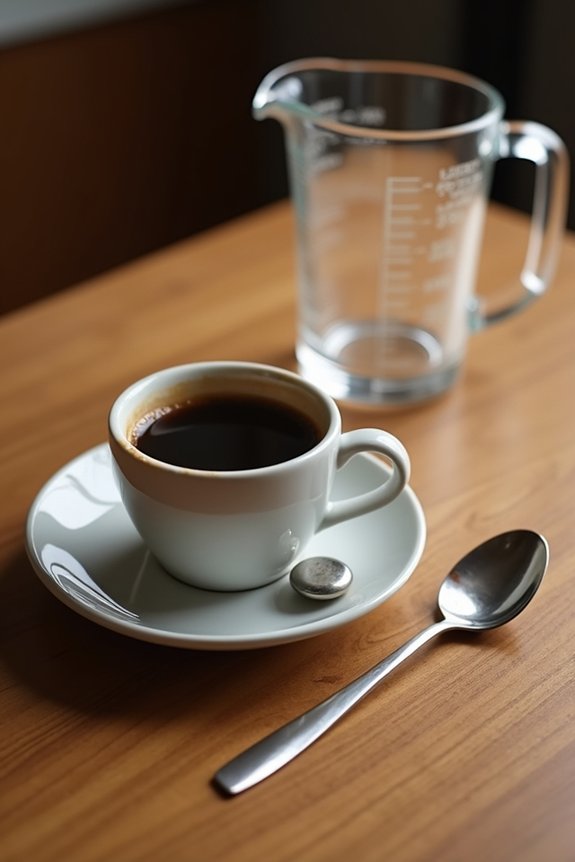
When you’re measuring coffee by spoon instead of a scale, knowing that one level tablespoon of medium-roast ground coffee weighs about 4 grams helps you understand what you’re actually brewing. I’ll show you how different roasts change this conversion—dark roasts are lighter and fluffier, so they weigh around 3 to 3.3 grams per tablespoon, while medium roasts pack in a bit more weight at that 4-gram mark. This matters because if you’re following a recipe that calls for grams but you only have spoons, you now know exactly how to translate between the two.
Converting Ground Coffee Weights
How do you know if you’re using the right amount of coffee when your measuring tools don’t match?
I’ll help you convert between tablespoons and grams so you brew consistently. Ground coffee weight varies based on roast level and grind size, which affects your coffee-to-water ratio. Here’s what I’ve found works:
- Medium roasts weigh about 4 grams per tablespoon
- Dark roasts weigh roughly 3–3.3 grams per tablespoon
- A kitchen scale gives you precision at 15 grams per 250 ml water
- One tablespoon equals approximately 4–5 grams depending on your roast level
For drip brewing strength, I use 1 scoop per 6-ounce cup (about 10 grams per 180 ml). Your scale measurement ensures consistency across brewing methods. Understanding roast level impact helps you adjust per cup coffee amounts without guessing.
Tablespoon-to-Gram Measurement Guide
Now that you understand how roast level affects weight, let’s nail down the exact conversions you’ll use every time you brew. I’ll walk you through the simple math that takes the guesswork out of your morning routine.
| Measurement | Grams |
|---|---|
| 1 tablespoon | 4–5 g |
| 1 scoop | 10 g |
| 2 tablespoons | 8–10 g |
| 3 tablespoons | 12–15 g |
| 4 tablespoons | 16–20 g |
Here’s what matters: one tablespoon of ground coffee weighs roughly 4–5 grams. One scoop equals 2 tablespoons, so that’s about 10 grams. For your standard cup, use 15 grams of ground coffee per 250 ml of water. This coffee-to-water ratio keeps things consistent. Grind size and roast type shift weight slightly, so measuring by grams beats volume alone. You’re building a brew method that works.
Accounting For Roast Variations
that same tablespoon of dark roast coffee weighs less than a tablespoon of medium roast.
Roast density changes everything about your coffee-to-water ratio. I’ll show you why this matters for brewing consistency:
- Dark roasts weigh 3–3.3 grams per tablespoon due to lower density
- Medium roasts hit closer to 4 grams per tablespoon
- Weight-based measurement using grams eliminates guessing across roast variations
- Scoop size adjustments help when you’re brewing by feel
When you’re measuring by tablespoon, darker beans take up more space despite weighing less. This throws off your brewing. Using grams per tablespoon gives you accuracy that tablespoons can’t match. Start with 4 grams as your baseline for medium roasts, then adjust down slightly for dark roasts. Your coffee-to-water ratio becomes predictable once you account for roast density differences.
Stronger or Weaker? Adjusting to Your Taste
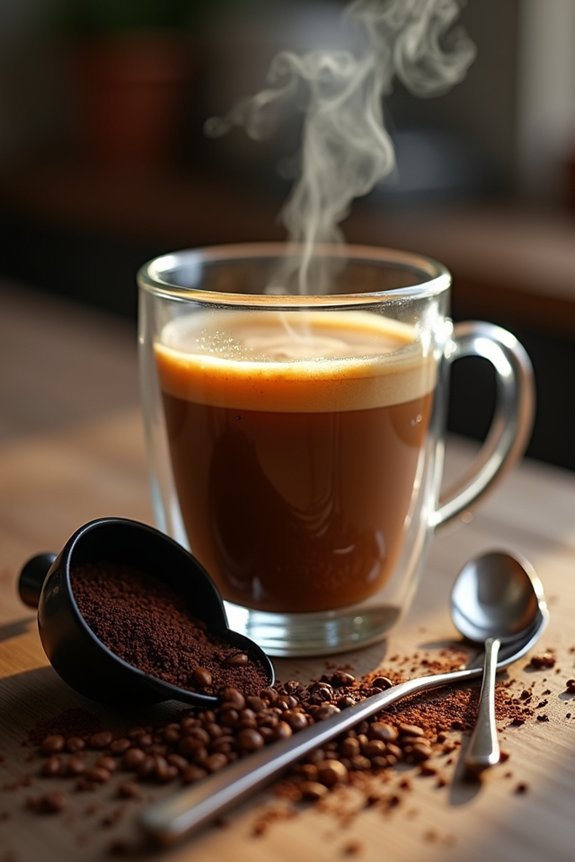
Why settle for a cup that doesn’t match what you actually like?
Finding your perfect coffee strength means experimenting with scoops per cup until you nail it. Start with the standard brew ratio: one scoop per 6-ounce cup. If that tastes too weak, bump it up to 1.5 or 2 scoops for a bolder cup. Prefer something lighter? Drop down to half a scoop.
Your water-to-coffee ratio directly affects taste adjustment. More coffee grounds create stronger extraction. Less grounds make a gentler brew. You’re personalizing your morning ritual here—there’s no wrong answer, just your answer.
Remember: grind size and roast level matter too. But start by adjusting scoops per cup. Make small changes, taste, then decide. You’ll discover what belonging to your coffee preference actually feels like.
Grind Size Changes How Much Coffee You Need
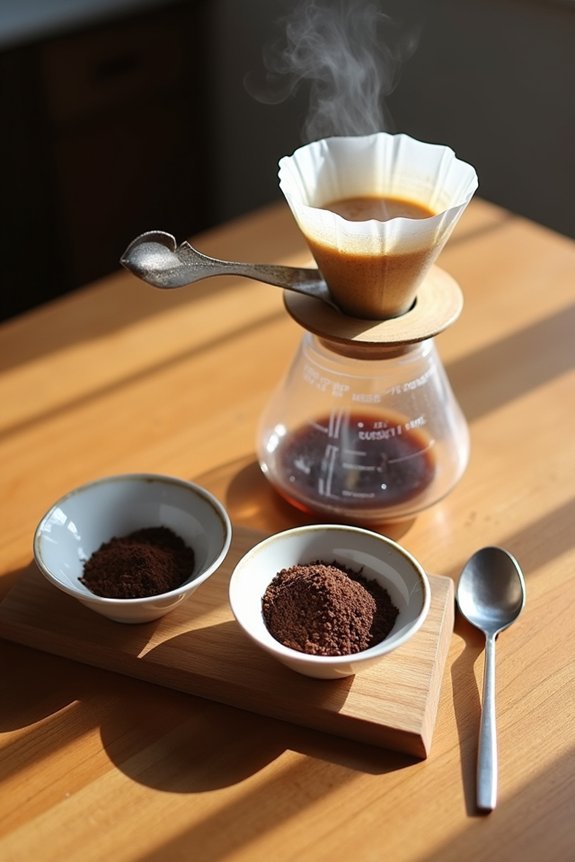
your grind size dramatically changes how much coffee you actually need in your cup. I’ve learned that matching your grind to your brew method ratio matters more than most realize.
Here’s what happens with different grind coarseness levels:
- Fine grinds extract faster, so you’ll need less coffee per cup to avoid bitterness
- Medium grinds use about 4 grams per tablespoon as your baseline measurement by weight
- A standard coffee scoop weighs roughly 10 grams, but varies between 8–12 grams depending on coarseness
- Drip brewing requires slight coffee reduction when switching from medium to fine grind
Your extraction efficiency improves when scoop weight aligns with grind size. Finer grounds need less volume. Coarser grounds need more. This direct relationship means measuring by weight beats eyeballing it every time.
Step Into Precision: Using a Kitchen Scale
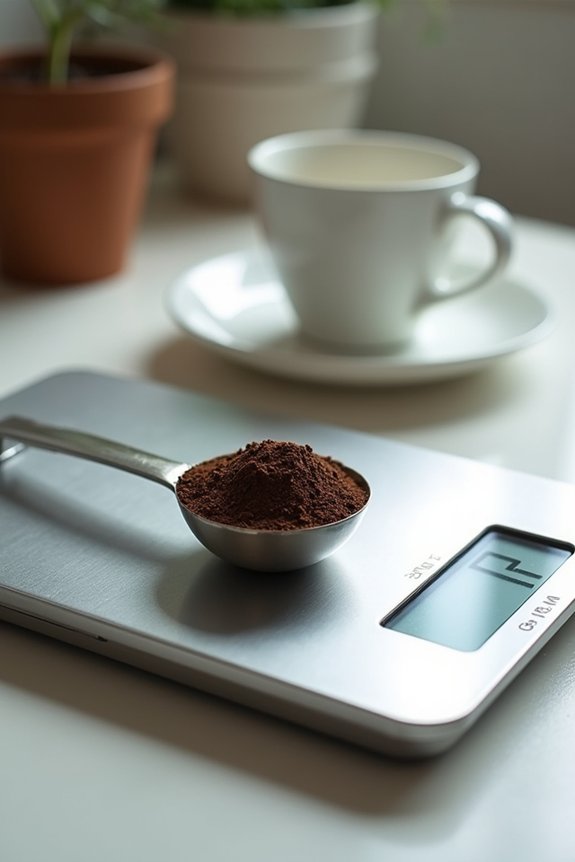
Measuring coffee by weight beats the scoop method every time, and a basic kitchen scale is your ticket to consistent cups. I tare my scale—that means zeroing it out—then place my brewing vessel on top. Here’s where precision brewing gets real: I aim for around 1 gram of coffee per 15–18 grams of water. This coffee-to-water ratio, sometimes called the 1:16 ratio, eliminates guesswork. For weight-based measurement, I measure my water in grams or milliliters since they’re equivalent. A standard grams per cup breakdown looks like this: about 15 grams of coffee for 250 mL of water. Once you nail this kitchen scale routine, you’ll join the precision brewing club where consistency wins.
Common Brewing Problems and Quick Fixes
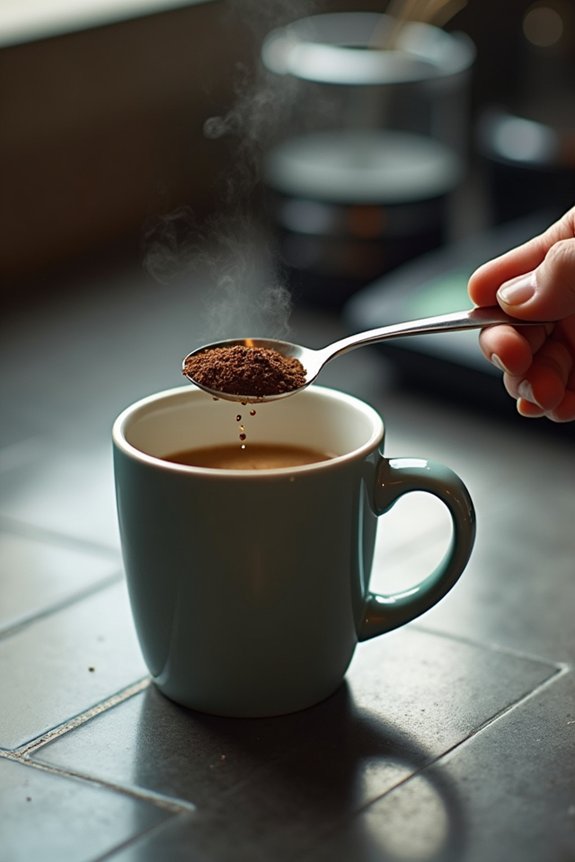
Even with the right ratio in hand, things can still go sideways in your cup. I’ve found that most brewing troubles stem from measurement accuracy or grind size issues. Here’s what I do when my coffee tastes off:
- Weak coffee? Use the 1:16 coffee-to-water ratio with a kitchen scale instead of eyeballing your coffee scoop size. Weight vs volume matters more than you’d think.
- Too strong? Your carafe markings might be misleading. Try the per cup method—one scoop per marked cup, then adjust by halves.
- Inconsistent results? Grind size affects brewing strength dramatically. Coarser grounds need more time; finer grounds brew faster.
- Bitter taste? You’re likely over-extracting. Check your ground coffee amount and brewing time.
These quick fixes work because they target measurement accuracy directly.