
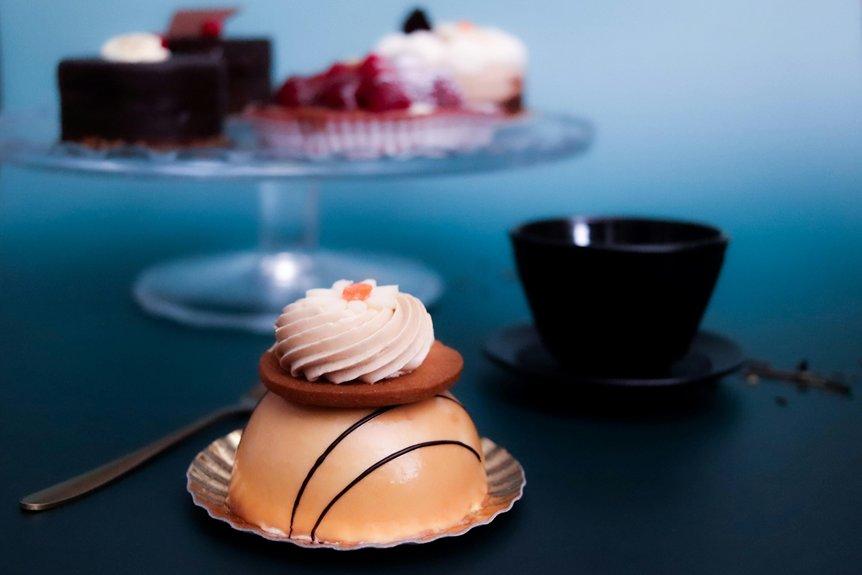
An entremet is a fancy frozen dessert with distinct layers: cake, ganache, mousse, and mirror glaze. You build it by baking a chocolate fudge cake, creating rich ganache, whipping mousse for airiness, then stacking everything in an acetate-lined ring. Freeze between each layer—at least three hours or overnight—so edges stay sharp and textures don’t blend. Pour glossy chocolate glaze over the frozen dessert at 104°F, then refrigerate. The result? Clean slices with professional polish. There’s more technique to master here.
What Is an Entremet and Why It Matters
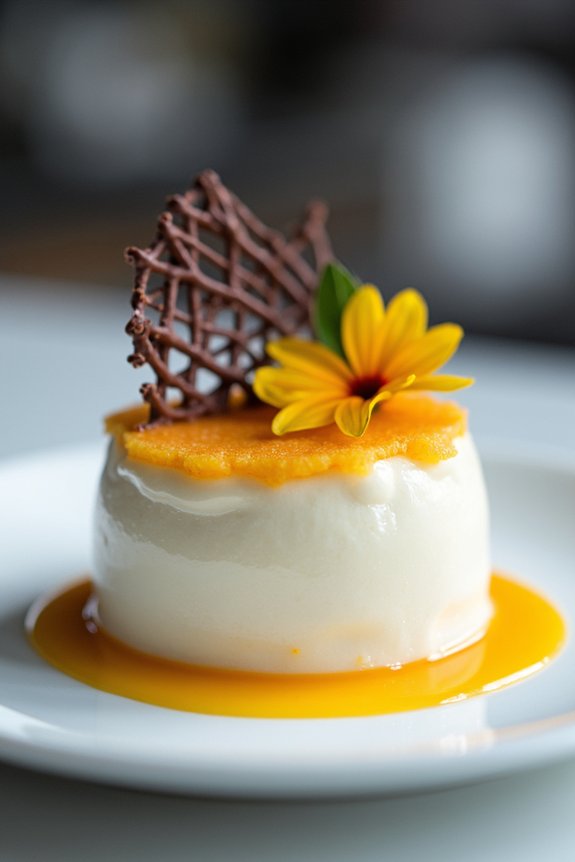
An entremet is basically a fancy French dessert that combines multiple layers into one impressive creation. You’re looking at cake, mousse, ganache, and a glossy mirror glaze all stacked together. Each layer brings something different—different textures, different flavors, different techniques.
What makes an entremet matter? It’s the ultimate test of pastry techniques. You’ll freeze between layers to get clean cuts and keep everything stable. The contrast matters too. A crunchy element might sit next to creamy mousse. Chocolate pairs with berries. Vanilla balances it all.
This dessert demands precision and patience. Tempering, setting times, exact measurements—they’re not suggestions. You’re building something that looks professional and tastes incredible. That’s why entremets matter. They showcase real skill.
The Three Building Blocks: Cake, Ganache, and Mousse
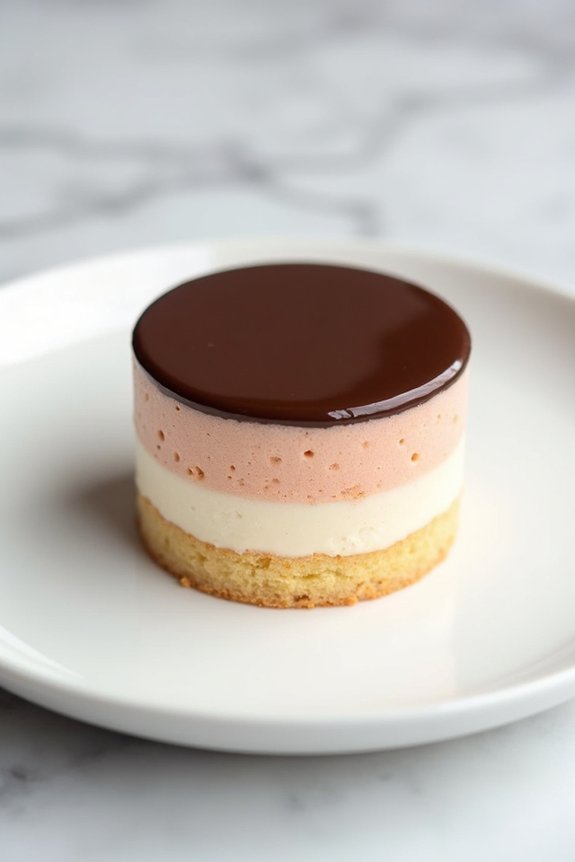
Think of cake, ganache, and mousse as the foundation of every entremet you’ll make. These three components work together to create the dessert’s signature look and taste.
Cake, ganache, and mousse form the foundation of every entremet, working together to create its signature look and taste.
Here’s what each ingredient brings to your entremet:
- Cake provides the structural base that holds everything in place
- Ganache adds richness, moisture, and deep flavor (chocolate ganache is a classic choice)
- Mousse creates airiness and height, balancing the denser layers below
During assembly, you’ll layer these chilled or frozen elements to get clean, sharp edges. The cake sits at the bottom, then ganache, then mousse on top. This order matters because it keeps your structure stable. Each component has a job—texture, binding, and contrast. Together, they’re what makes an entremet so striking and delicious.
Chocolate Fudge Cake: Building Your Foundation
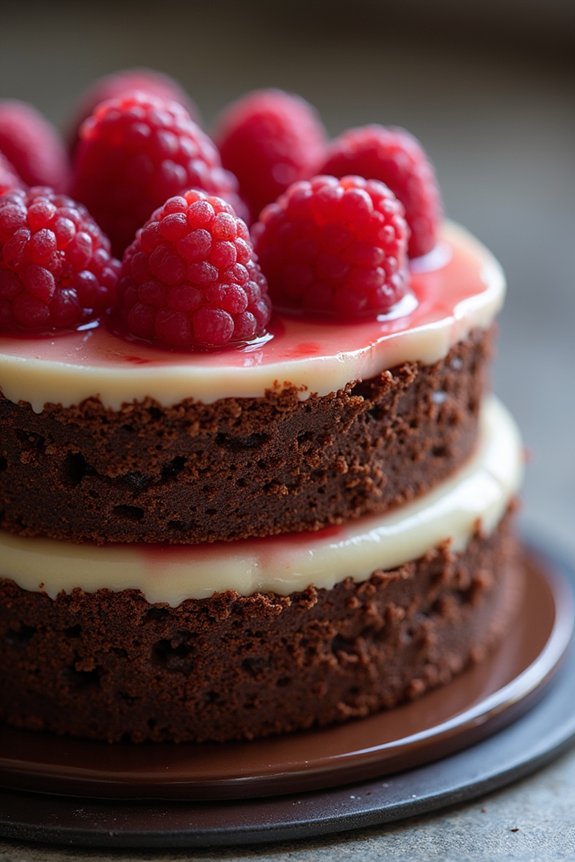
Now that you’ve got your ganache and mousse sorted, it’s time to build the cake base—and this is where everything starts. I’ll mix dry ingredients like flour, cocoa powder, sugar, baking powder, baking soda, and salt. Then I combine wet ingredients: water, mayonnaise, and vanilla. I blend everything on low then medium speed until smooth. After baking for about 15 minutes on a parchment-lined sheet pan, I cool the cake completely. Here’s the key: I freeze it for 2–3 hours to firm it up for handling. Next, I cut six 3-inch rounds to match my rings and molds. Finally, I add a small ganache dab to each center before freezing—this ganache stabilization keeps cake layers stable during mousse and ganache applications. You’re ready for entremet assembly.
Dark Chocolate Ganache: Technique and Timing
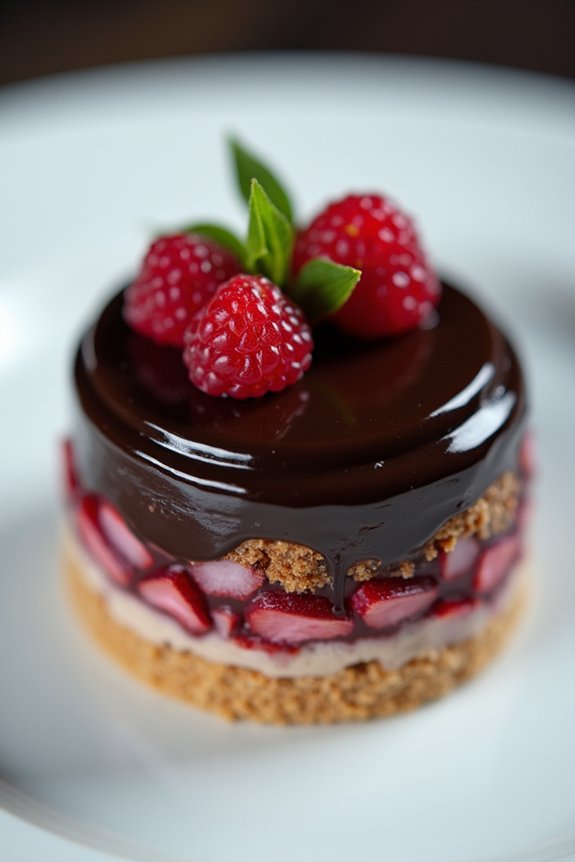
What makes ganache so essential to your entremet? It’s your secret weapon for creating that professional, polished look everyone admires.
Here’s what you need to master:
- The pouring technique: Pour hot whipping cream over chopped dark chocolate in thirds, whisking until glossy and smooth
- The immersion blender step: Blend in butter for that velvety, mirror-like finish that screams quality
- Timing and temperature: Let ganache set at room temperature for 5–6 hours, or refrigerate to speed things up
When your ganache reaches the right consistency, you’ll pipe it into centers or coat surfaces before freezing. The key? Minimize air and moisture contact so your tempered ganache stays pristine without bloom or dull spots. That glossy finish sets your entremet apart.
Chocolate Mousse: Creating Air and Structure
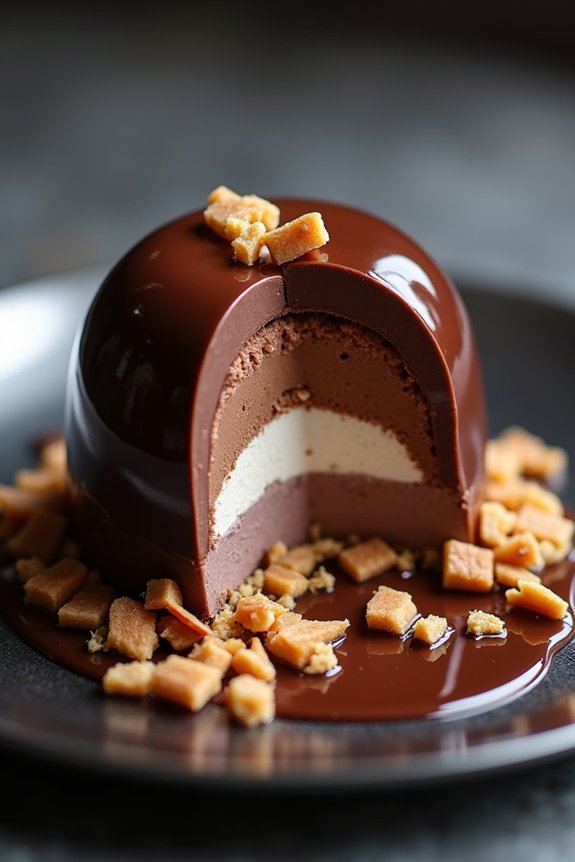
I’ll build the mousse by whipping cream to stiff peaks and folding it into the cooled ganache—this creates those airy pockets that make the texture light rather than dense. Then I’ll prepare a pâte à bombe by whisking egg yolks with hot sugar syrup (around 250°F) until it reaches ribbon stage, which gives the mousse stability and that signature velvety feel. I’ll fold this pâte à bombe into my ganache-cream mixture using gentle strokes to keep all those air bubbles intact, since aggressive mixing deflates the whole thing.
Whipped Cream Technique
Since chocolate mousse depends on trapping tiny air bubbles to get its signature light texture, whipping cream becomes your most important tool.
Here’s what makes this technique essential:
- Beat to soft peaks: Your cream should form gentle peaks that curl slightly when you lift the whisk, not stiff peaks that look grainy
- Keep it cool: Chilled cream whips faster and holds volume better during folding into ganache and pâte à bombe
- Fold with care: Use a spatula to gently combine whipped cream with your chocolate components, preserving those precious air bubbles
I always whip my cream right before folding. This timing prevents deflation. When you’re ready to assemble, pour your finished mousse into acetate-lined rings and chill thoroughly. The structure you’ve built through proper whipping technique holds everything together beautifully.
Pâte À Bombe Method
Now you’ll build the real structure that holds your mousse together—the pâte à bombe. Heat sugar and water to exactly 244°F (118°C). While it heats, whisk your yolks until pale. Pour that hot sugar syrup into the yolks in a slow, steady stream, whisking constantly. You’re creating a pale, ribboned mixture that’s stable and light.
Let it cool completely. This is where the magic happens for your entremet. Fold the cooled pâte à bombe into your melted ganache first—this lightens it. Then fold in the whipped cream and remaining mousse components in stages. Each fold adds air and stability. The result? A fluffy mousse that holds its shape perfectly when you pipe it into rings and freeze. That’s what makes your entremet structure work.
Layer Assembly in Rings: A Step-by-Step Guide
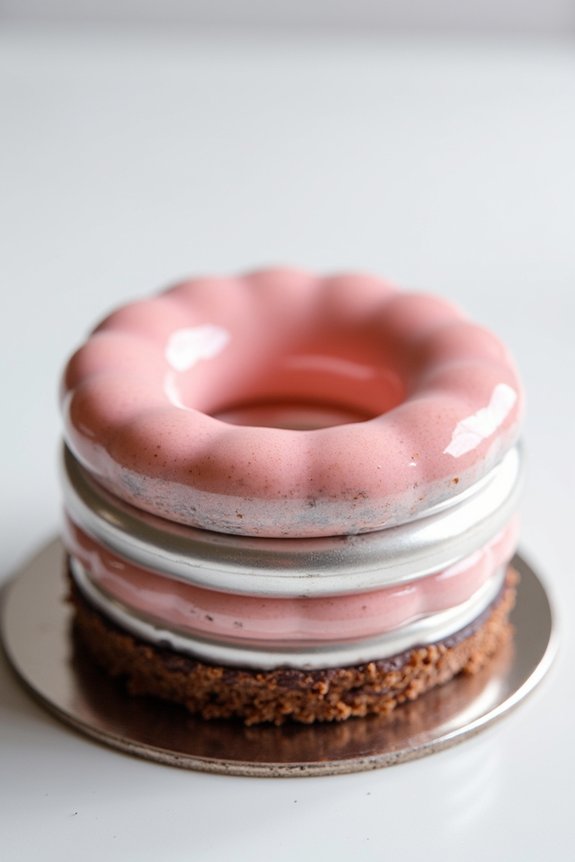
How do you actually turn all those separate components into one elegant dessert?
Layer assembly is where your entremet comes together. Here’s what you’ll do:
Layer assembly is where your entremet comes together—the moment separate components transform into one elegant dessert.
- Line your rings with acetate and spray them with cooking spray for easy release
- Pipe mousse into each ring until it’s about 3/4 full, creating a stable base
- Place your ganache-topped cake rounds on the mousse centers, then gently press down
The ganache dot you froze earlier anchors everything in place. Once you’ve inverted those rounds onto the mousse, you’ll see a ring of mousse form around the edges. That’s your signal things are working perfectly.
Freeze your assembled entremet for at least 3 hours—overnight is better. This freezing time lets everything set solid. Then you’ll finish with chocolate glaze and decorations to complete your creation.
Chocolate Mirror Glaze: Achieving Magazine-Worthy Shine
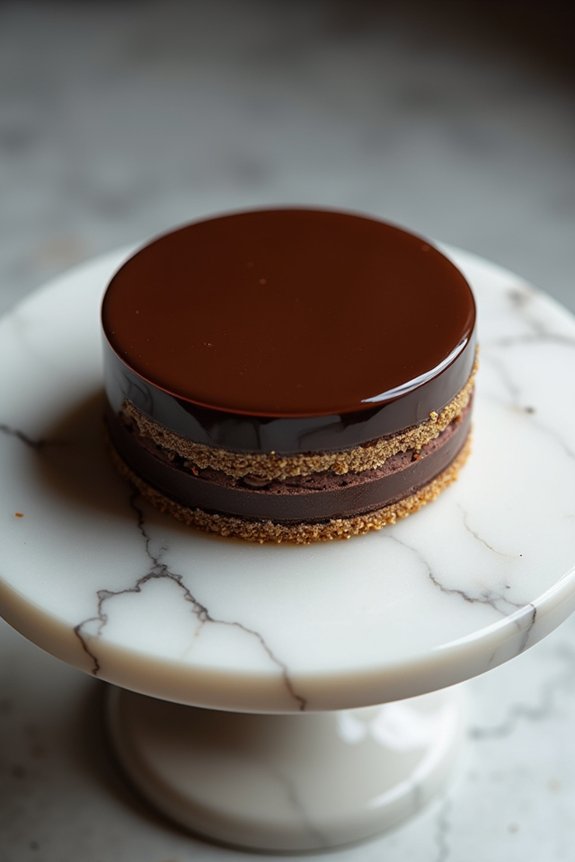
What separates a good entremet from a spectacular one? The chocolate mirror glaze. This glossy coating transforms your dessert into something magazine-worthy, and I’ll show you how to nail it.
A mirror glaze combines melted chocolate, cream, and a gelatin-stabilized sugar syrup. You bloom your gelatin sheets first, then heat sugar and glucose with cocoa powder. Whisk this warm mixture into your chocolate until silky smooth. Here’s what matters most:
| Step | Temperature |
|---|---|
| Bloom gelatin | Room temperature |
| Heat syrup | 212°F |
| Blend glaze | 104°F |
| Pour over entremet | Frozen |
| Final set | Refrigerated |
Maintain your glaze at exactly 104°F before pouring. Pour it over your frozen entremet for a bubble-free, even coat. The gelatin helps it set hard without cracking. That’s your shine right there.
Freezing Your Entremet: Critical Timing Between Layers
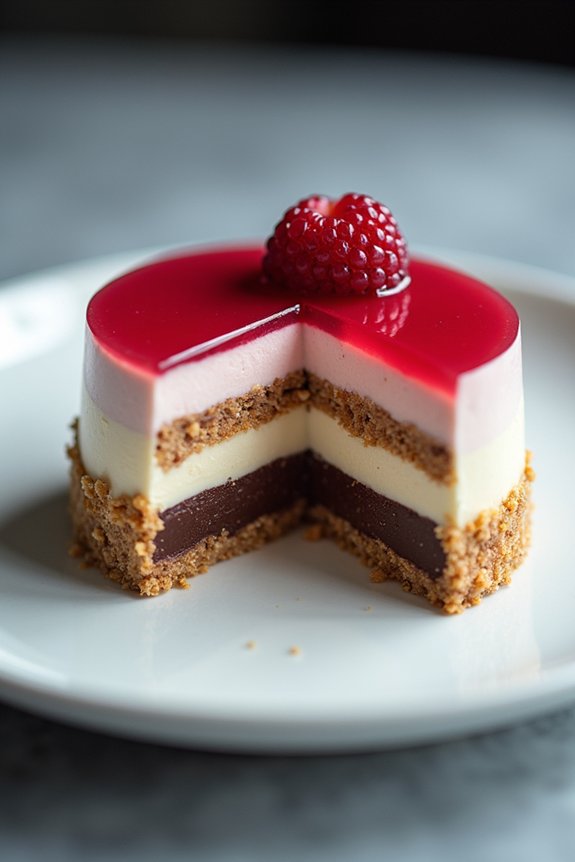
I’ll freeze each layer for at least three hours so the mousse and ganache set completely before I stack the next component, which keeps the edges clean and prevents the textures from blending together. For the best results, I let the whole assembled entremet chill overnight in the freezer so every layer becomes fully firm and stable before I add the final glaze. When it’s time to serve, I pull the entremet out, give it a few minutes to thaw slightly at room temperature, and then slice it to reveal those beautiful, distinct layers.
Freezer Setting Strategy
Why does timing matter so much when you’re freezing an entremet? Getting your freezer setting strategy right keeps each layer stable and prevents messy, runny interfaces between components.
I follow these key freezing intervals:
- 1–2 hour freezes between ganache and mousse layers to set surfaces quickly without overdoing it
- 3-hour minimum freezes before applying mirror glaze when your entremet is firmly frozen and very cold
- Overnight chilling for final mousse and glaze to ensure clean slicing and maintained structure
I prep smartly too. I freeze individual cake rounds and mousse centers separately before assembly. Lining my rings with acetate guarantees neat, unmoldable edges once frozen solid.
Longer freezes yield crisper textures and more stable mousse borders. When I apply glaze to a properly chilled entremet, I get that glossy, bubble-free finish every time.
Between-Layer Timing
each layer you add needs its own freeze time to stay put and keep its shape. I freeze my genoise before adding panna cotta. Then I chill the completed layers before applying mousse or berry mirror. When I place a ganache-topped cake round, I freeze it for about 1 hour so the center layer holds firm. Between mousse, ganache, and glaze steps, I give at least 3 hours or overnight freezing. This alternating freeze-and-build approach maintains distinct textures throughout your entremet. Why rush? Proper chilling during assembly prevents layer sinking and mixing. You’ll get clean slices and sharp presentation when you respect these between-layer timing windows. Your entremet deserves this investment.
Overnight Full Hardening
Once you’ve built your entremet layer by layer and frozen each component properly, it’s time for the final freeze—and this one’s the longest. You’re establishing the hard-set structure that makes clean slicing possible.
Here’s what happens during overnight full hardening:
- Individual layer freezing: Each component (genoise, panna cotta, mousse, ganache) freezes separately for at least 3 hours, preventing texture bleeding between layers
- Cold-chain maintenance: Keep everything at -18°C to -20°C throughout assembly, protecting your mousse’s airiness and ganache’s glossy finish
- Final assembly freeze: After stacking all layers, freeze the complete entremet overnight before applying your glaze
This extended freezing period ensures your ganache and mousse stay distinct. You’ll get that professional appearance—crisp edges, no merging layers, perfect slices. The hardening sequence takes patience, but it’s what separates homemade entremets from bakery-quality results.
Common Entremet Mistakes and How to Fix Them
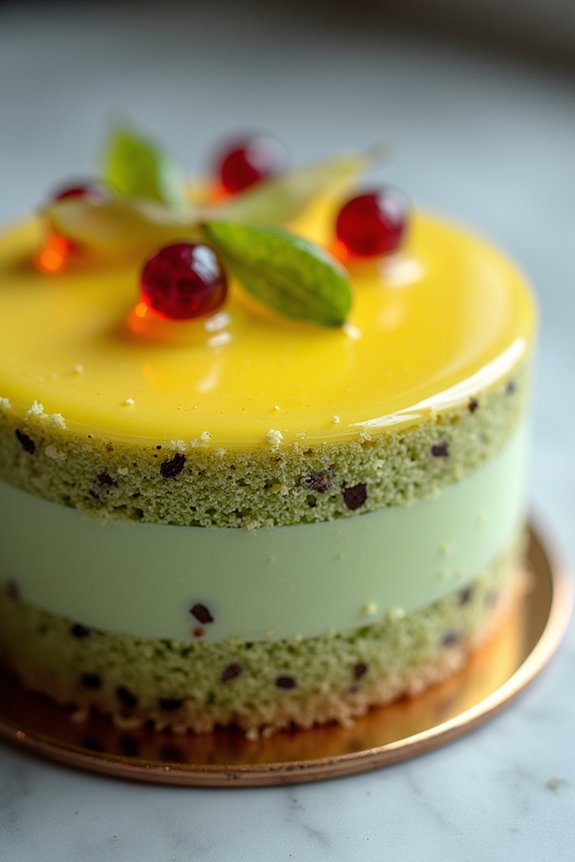
How many times have you pulled an entremet from the freezer, only to watch the layers shift and slide apart when you tried to slice it?
I’ve learned that skipping freezer time between layers causes slippage between your sponge, mousse, and ganache. Give each layer at least two hours to set properly. When whipping cream or pâte à bombe for mousse, under-whipping creates a heavy, grainy texture that won’t support other layers. Whip until you reach stiff peaks.
Your glaze matters too. Too-hot mirror glaze won’t set, and gelatin that hasn’t bloomed fully turns dull and runny. Let gelatin hydrate completely before heating.
Don’t skip lining and spraying acetate rings either. Proper preparation prevents uneven edges and unmolding disasters. Chill thoroughly after assembly for clean slices every time.
Storing and Serving Your Entremet: Make-Ahead Timeline
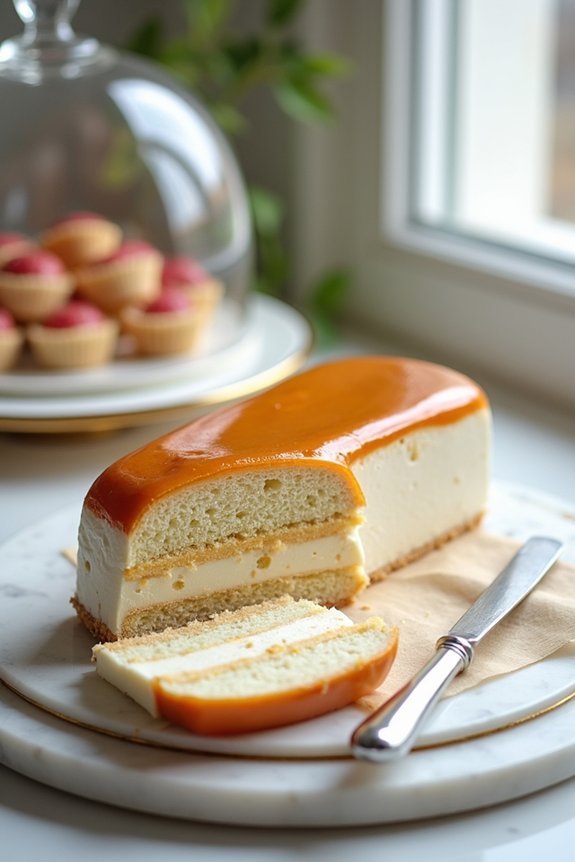
Once you’ve assembled your entremet, I’ll show you how to store it properly so it stays perfect until serving time. You’ll freeze the cake for at least 3 hours (or overnight) to let each layer set, then keep it refrigerated or frozen until you’re ready to serve it. I’ll walk you through thawing it gently in the fridge and slicing it cleanly so those beautiful layers show off your hard work.
Freezer Storage Guidelines
The beauty of an entremet is that you can build it in stages, freezing each layer before you add the next one. I wrap or cover each component to prevent moisture damage and let the glaze set properly. Here’s what I do:
- Freeze mousse and ganache-covered rounds for at least 3 hours or overnight to ensure they’re completely firm before unmolding
- Pre-freeze your base cake or genoise so you get clean, sharp slices when you cut through the layers
- Allow the finished entremet to freeze solid before wrapping it for long-term storage
I keep my finished entremet frozen until serving day. When I’m ready, I trim the edges while it’s still cold, then slice it into half to one-inch portions. I let each slice warm slightly at room temperature so the mousse and ganache flavors really shine through.
Thawing and Serving Tips
When’s the best time to pull your entremet from the freezer? Plan ahead. Thaw it in your refrigerator for several hours or overnight—this creates clean slices and even texture. Your patience pays off here.
About 15–20 minutes before serving, let it sit at room temperature. This softens the mousse and ganache slightly, bringing out the best flavor. You’re essentially giving your dessert a warm-up.
The mirror glaze needs special attention. Avoid rapid temperature changes, or it’ll crack. Slow thawing prevents this problem entirely.
Save decorative elements—edible items or gold leaf—for after thawing. Refreshing them at the end preserves their appearance. Your entremet deserves that final polish before guests dive in.