For a gallon of tea, use one large bag or eight to ten standard bags. Black tea needs sixteen bags steeped three to five minutes in near-boiling water. Green tea also uses sixteen bags but in cooler water (160–180°F) for two to three minutes. Herbal tea takes sixteen bags and five to seven minutes. Cold brew requires twenty to twenty-four bags for eight to twelve hours. Store your finished tea in an airtight container and it’ll stay fresh three to five days. Getting these details right transforms your whole tea game.
The Golden Ratio: 1 Large Bag or 8–10 Standard Bags Per Gallon
Ever wondered why your homemade iced tea sometimes tastes weak or overly bitter? You’re probably not hitting the golden ratio. Here’s the straightforward formula: use one large bag or eight to ten standard bags per gallon of water. This water ratio creates the perfect tea brew strength—not too strong, not too weak.
Think of it this way. One large gallon-sized bag equals about four regular bags in power. So if you’re using standard bags, aim for that eight to ten range. This golden ratio works because it balances flavor without overwhelming your taste buds.
Getting the tea bags and water ratio right transforms your brewing game. You’ll nail consistent results every time. Start with this baseline, then adjust based on what you prefer.
Know Your Tea Type First: Black, Green, Herbal, and Oolong
I’ve found that different teas need different brewing approaches, so let me walk you through the main types you’ll encounter. Black tea is your straightforward option—use 16 bags per gallon, steep for 3–5 minutes in water that’s just off the boil (around 200–212°F), and you’ll get a robust flavor. Green and herbal teas require a bit more finesse: green tea uses the same 16-bag ratio but needs cooler water (160–180°F) and just 2–3 minutes of steeping, while herbal tea also takes 16 bags but prefers longer steeping at 5–7 minutes to fully release its flavors.
Black Tea Brewing Basics
Why does black tea taste bitter sometimes? Over-steeping is the culprit. I’ll show you how to brew perfect black tea every time.
For a gallon of black tea, follow these guidelines:
- Use 16 regular tea bags per 128 ounces of water
- Steep for 3–5 minutes in boiling water for standard strength
- Increase to 18–20 bags for stronger brew, keeping steeping time the same
Water quality matters significantly. I recommend filtered or bottled water for better flavor. Use water just off the boil to extract maximum taste without bitterness.
Never exceed 5 minutes of steeping—tannins make your tea taste harsh. Want to customize? Add citrus, sweeteners, or spices after brewing. You’ve got this down now.
Herbal And Green Varieties
Now that you’ve mastered black tea, let’s talk about the other tea types—because they’ve got different needs. Herbal tea and green tea require the same baseline: 16 tea bags per gallon. However, their steep times differ considerably.
For herbal tea, steep for 5–7 minutes to extract robust flavor. Green tea needs just 2–3 minutes to avoid bitterness. Want stronger brew guidelines? Increase herbal bags to 18–20, or reduce green tea bags to 12–14 for a lighter version. Monitor your steep time carefully—it’s your main control for flavor strength.
The key difference is temperature sensitivity. Green tea’s delicate leaves scorch easily with prolonged steeping, while herbal blends can handle longer exposure. Taste as you go. You’ll discover your perfect balance quickly, joining the community of tea enthusiasts who brew exactly how they like it.
Cold Brew or Hot Brew: Which Method Fits Your Timeline
If you’re brewing in a rush, hot brew gets you tea in 3–5 minutes with bolder flavor and more tannin, while cold brew demands 8–12 hours of patience but rewards you with a smoother, mellower cup. I’d pick hot brew when you need tea today and cold brew when you can plan ahead, since the slower steeping process gradually builds flavor without the harshness. The real question isn’t which method’s better—it’s whether you value speed or a gentler taste profile.
Hot Brew Time Requirements
When you’re brewing a gallon of hot tea, timing makes all the difference between a smooth cup and a bitter disappointment. I’ll walk you through what you need to know.
Here’s what matters for your hot brew:
- Black and oolong teas need 3–5 minutes in just-off-boil water to develop full flavor without turning harsh
- Green and white teas require shorter steeps of 2–3 minutes with cooler water to preserve their delicate taste
- Over-steeping ruins the batch—bitterness creeps in fast, so set a timer
When you’re using 16 tea bags for standard strength or 12–14 for sweeter versions, steep time directly affects your strength and sweetness levels. After steeping, dilute with cold water to reach your desired strength. Follow the bag’s printed instructions as your starting point, then adjust based on your preference.
Cold Brew Patience Benefits
While hot brewing demands your attention and a timer, cold brew takes a completely different approach—and honestly, it’s worth the wait. You’ll steep 20–24 tea bags in a gallon of cooler water for 8–12 hours, letting patience do the heavy lifting. This longer steeping time extracts flavor differently than hot water does. The result? A smoother, mellower taste that feels less bitter and more refined. You’re joining a community of tea drinkers who’ve discovered that slowing down actually enhances your experience. Start with more tea bags than you think you need, then adjust after tasting. Cold brew concentrates can pack serious flavor strength, so that extra patience upfront saves you from over-steeping. Refrigerate when ready, and you’ve got days of smooth tea ahead.
Speed Versus Flavor Trade-off
How much time you’ve got shapes your whole brewing decision. I’ll show you how to pick the right method for your schedule.
- Hot brew plus dilution takes just 3–5 minutes of steep time, then you add cold water. This gets you strength fast without waiting hours.
- Cold brew needs 8–12 hours of steeping but delivers that smooth, mellow flavor profile that many prefer. You’re trading time for quality here.
- Tea bags per gallon matters too—hot brew uses 16 regular bags while cold brew requires 20–24 bags for comparable strength vs flavor balance.
Here’s the reality: hot brew dilution approximates cold brew strength quickly, making it perfect when you’re pressed for time. Cold brew takes patience but rewards you with fewer tannins and a gentler taste. Pick based on whether you’re rushing or relaxing.
Water Quality and Temperature: The Often-Overlooked Essentials
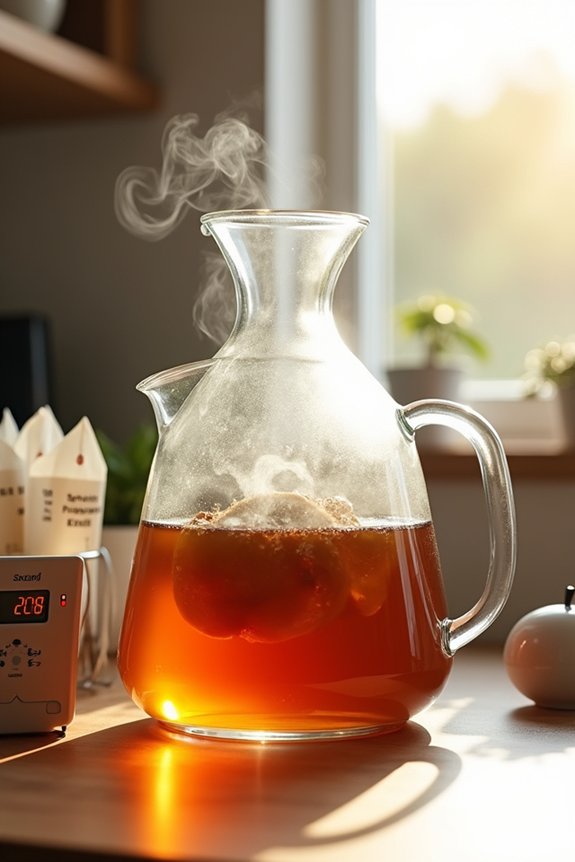
Ever wonder why your homemade gallon of tea doesn’t taste quite right? Water quality and temperature are the secret ingredients you’re probably overlooking. I’ll tell you what makes the difference.
For brewing, use filtered or bottled water instead of tap water. Tap water contains minerals and chemicals that interfere with flavor. Temperature matters just as much. Black tea needs water at or near boiling—around 212°F. But green and white teas? They’ll turn bitter if you use boiling water. Cool yours to 160–180°F instead.
Your steep time connects directly to temperature. Black tea handles 3–5 minutes at high heat. Green and white teas need just 2–3 minutes in cooler water. Get these basics right, and your gallon of tea transforms completely.
Steeping Time by Tea Type: Avoid Bitterness and Over-Extraction
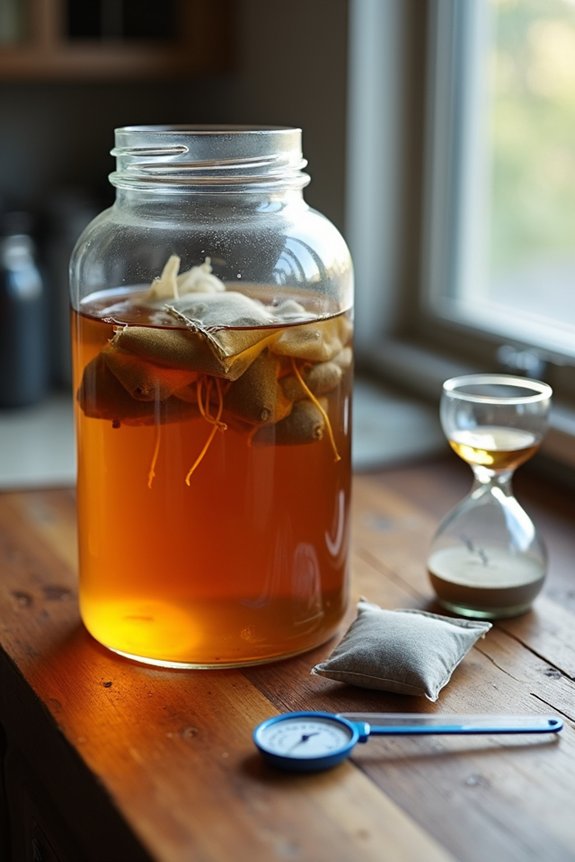
Once you’ve got the water temperature right, steeping time becomes your next control point—and it’s where most people accidentally wreck their tea. Here’s what I’ve learned about timing for a gallon brew:
- Black and oolong teas: Steep 3–5 minutes in hot water just off the boil. This timeframe extracts flavor without pulling excessive tannins that create bitterness.
- Green and white teas: Use 2–3 minutes with cooler water. These delicate leaves need less time to avoid over-extraction and astringency.
- Herbal teas: Allow 5–7 minutes for full flavor development since they lack tea leaves’ sensitivity to steeping time.
The key to your perfect brew ratio? Match your tea bags and steeping time to your tea type. Avoid over-steeping any variety—it’s the quickest way to ruin tea strength and create an unpleasant cup.
Flavor Add-Ins: Citrus, Herbs, and Natural Sweeteners That Work
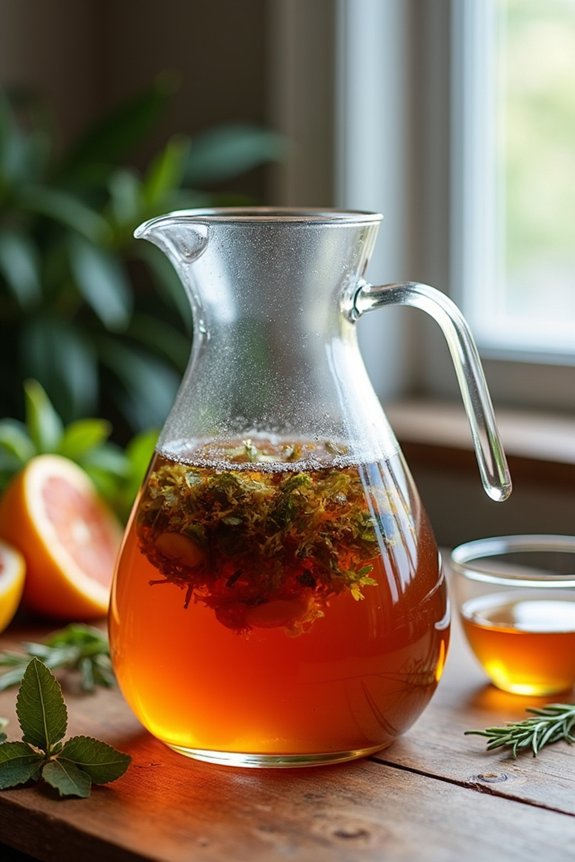
Now that your tea’s brewed to perfection, it’s time to make it taste exactly how you want it. I add lemon or lime slices after brewing to keep everything clear and pulp-free. For herbal tea blends, fresh mint and basil work wonderfully. Just crush them lightly to release their aroma before tossing them in. These herbs bring garden-fresh notes without needing extra sugar.
When sweetening, I reach for honey or simple syrup. Both blend smoothly into tea and let you control how sweet it gets. Taste first, then add what you need. Bold black teas pair nicely with citrus accents. The brightness balances out the tea’s natural tannins, creating a flavor combo that feels balanced and refreshing.
Storage and Shelf Life: Keep Your Gallon Fresh for Days
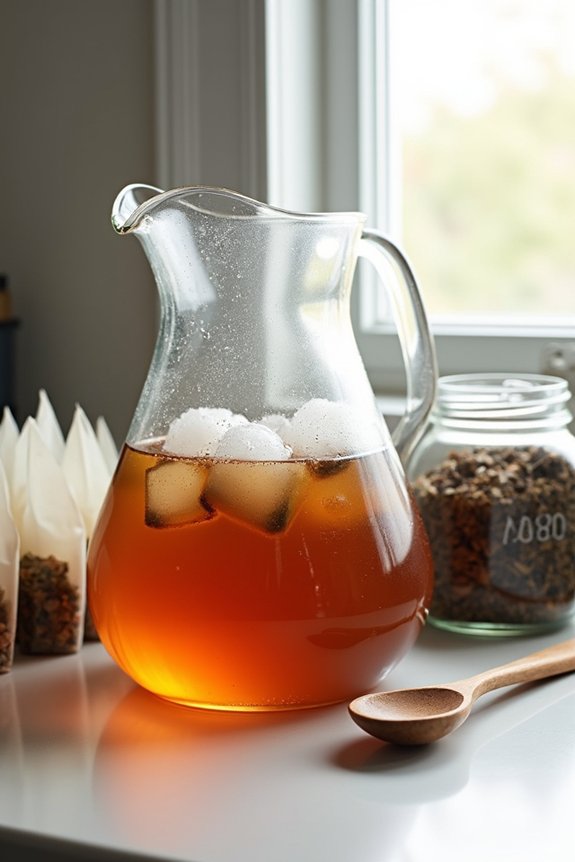
How long does your gallon of tea actually stay good? I’ve found that properly stored iced tea lasts 3–5 days in your refrigerator, which gives you plenty of time to enjoy what you’ve brewed. Here’s what keeps your gallon fresh:
- Store in an airtight container in a cool, dark place or refrigerate immediately after brewing
- Keep the container tightly sealed and away from light to prevent flavor degradation
- Check for off smells or cloudiness—discard if either appears
I add fruit or flavorings after brewing to preserve both clarity and shelf life. For the tea bags themselves, I can reuse or re-brew the same concentrate within a day or two if stored properly. Airtight storage is your best friend for flavor preservation.
Common Brewing Mistakes: How to Fix Flat, Bitter, or Watery Tea
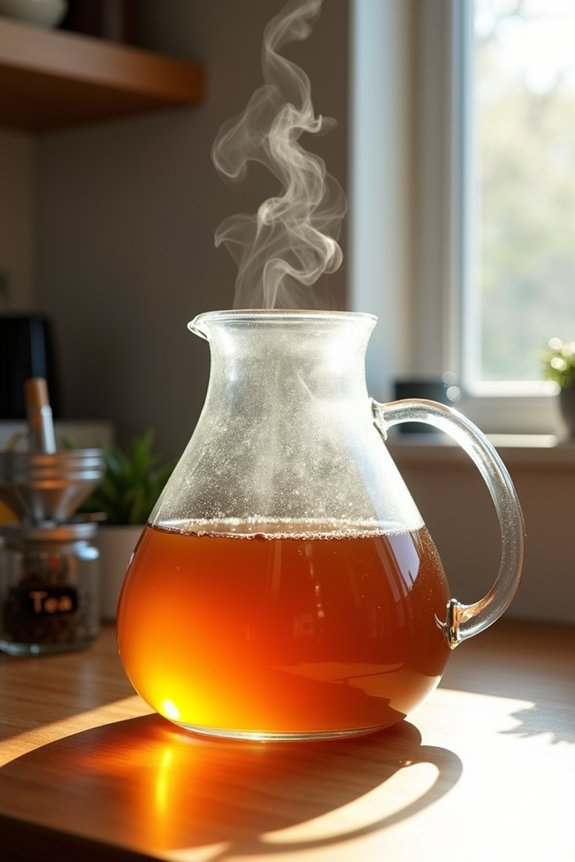
Even with the best storage practices, brewing mistakes happen before your tea ever reaches the fridge. Under-brewing creates flatness, while over-steeping causes bitterness and high tannin taste—two problems you can easily fix. For a proper brew, use 16 tea bags per gallon as your baseline. If your tea tastes weak, gradually increase your tea bags per gallon instead of extending steep time, which amplifies bitterness. Brew black tea with near-boiling water for just 3–5 minutes. Water quality matters too; filtered or bottled water prevents off-flavors. Cold brew requires 20–24 bags per gallon since it steeps differently than hot tea. Adjusting these variables gives you control over flavor strength without sacrificing taste.