
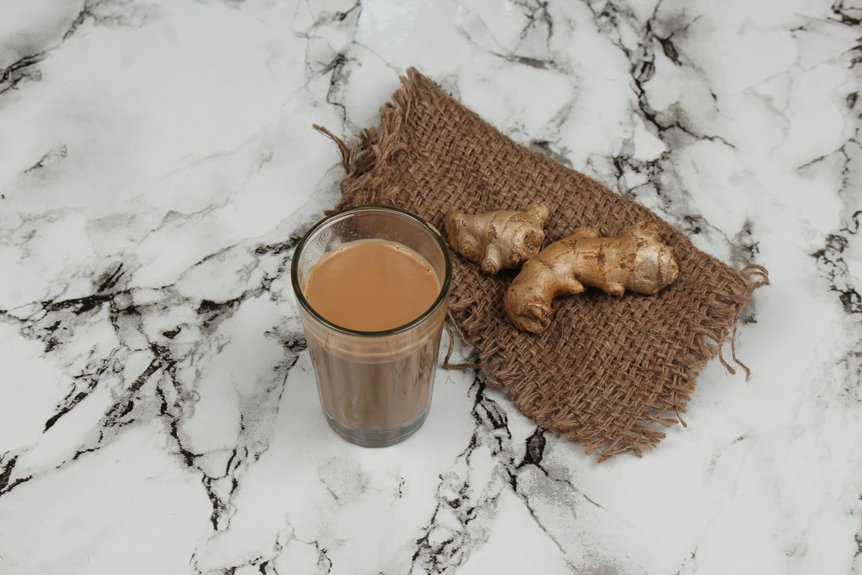
Chai isn’t coffee—it’s a spiced black tea drink with way less caffeine. An 8-ounce cup gives you about 25–60 mg of caffeine, while coffee packs 80–160 mg. The real difference? Chai feels smoother. Black tea contains L-theanine and tannins that slow caffeine absorption, so you get steady energy instead of jitters. The spice blend—cinnamon, ginger, cardamom—actually calms your system. If you’re curious about swapping coffee for chai or want the full breakdown on how it works, there’s plenty more to unpack.
Chai vs. Coffee: Which Has More Caffeine?

Ever wondered why your morning chai gives you a gentler lift than your office coffee? The answer lies in caffeine content. An 8-ounce cup of chai contains about 30–50 mg of caffeine from its black tea base. Coffee delivers roughly 95 mg or more in the same serving size. That’s a significant difference. Here’s what makes chai unique: tea tannins and L-theanine moderate your caffeine absorption, creating a smoother energy boost without the jitters coffee sometimes brings. A chai latte still gets its caffeine from the black tea, not the milk or sugar you add. Want to skip caffeine entirely? Try decaf chai or herbal alternatives like rooibos. They offer that spiced chai flavor you love, minus the caffeine punch.
Why Chai Feels Gentler Than Coffee (Even With Similar Caffeine)?

Why does chai feel so much smoother on your system when it actually contains almost as much caffeine as a light cup of coffee?
The secret lies in what else is in your cup. Chai’s black tea base delivers 25–60 mg of caffeine per 8-ounce serving, but that’s only part of the story. L-theanine, a compound in black tea, promotes alertness without the jitters you’d get from coffee. Tannins in chai slow down how fast your body absorbs caffeine, creating a gentler energy rise instead of a sharp spike.
Then there’s the spice blend. Cinnamon, cardamom, and ginger work together to calm your system. Add dairy or plant milk, and you’re blunting the caffeine’s intensity even further. You’re getting sustained, balanced energy—not the crash-prone rush coffee brings.
The Health Benefits That Give Chai an Edge

While chai and coffee both deliver caffeine, I find chai gives you around 25–50 mg per cup without the jittery crash, plus that L-theanine I mentioned earlier actually smooths out the caffeine’s sharp edges. Beyond the energy boost, the spices in your chai—think cinnamon, ginger, and cardamom—pack real anti-inflammatory punch that coffee simply doesn’t offer. You’re essentially getting a beverage that wakes you up and works to reduce inflammation in your body at the same time.
Caffeine Advantages Over Coffee
How does a gentler caffeine buzz sound compared to the jolt you get from coffee? Here’s what makes chai caffeine compared to coffee so different. You’ll get a caffeine boost of about 25–60 mg per 8-ounce cup, which is considerably lower than coffee’s 80–160 mg. Black tea tannins and L-theanine work together to smooth out your energy. These compounds slow caffeine absorption, giving you steady energy without the crash. You avoid those afternoon jitters and the sharp drop-off coffee drinkers experience. If you want zero caffeine, herbal chai and decaf chai options deliver all the spice flavor you love. Tea vs coffee basically comes down to this: chai wins when you need focus without the intensity.
Anti-Inflammatory Spice Profile
What if I told you that the warm spices you’re already enjoying in your chai cup are actually doing heavy lifting for your body? That’s where chai’s anti-inflammatory spice profile comes in. Ginger, cinnamon, and cardamom contain powerful compounds called polyphenols that help calm inflammation throughout your body. Ginger’s active components called gingerols work to support your joints and digestive health. Cinnamon and cardamom add flavonoids that reduce inflammatory markers while supporting your heart. Your black tea contributes theaflavins and catechins—additional polyphenols with serious antioxidant benefits. Here’s the bonus: these spices don’t work alone. They combine synergistically with black tea’s compounds to create something stronger than any single ingredient. A warm chai latte becomes your inflammation-fighting ally, delivering digestive comfort with every sip.
Can You Replace Coffee With Chai in Your Daily Routine?

You can swap coffee for chai tea, though you’ll notice some real differences in how your body responds. Chai contains about 25–50 mg of caffeine per 8 ounces, compared to coffee’s much higher dose. A chai latte with milk bumps that to 30–60 mg per 12–16 ounces, depending on concentrate strength.
Your energy shift happens slower with chai. You’ll skip the jitteriness that coffee brings, getting steadier fuel instead. The trade-off? Expect fewer calories from black tea alone, but chai lattes add milk and sweeteners that bump up the count.
If you’re replacing coffee with chai in your daily routine, give yourself a week to adjust. Your body will appreciate the gentler caffeine hit while those beneficial spices work their anti-inflammatory magic.
What You Need to Know About Dirty Chai

If swapping coffee for chai sounds appealing but you’re worried about losing that caffeine kick, there’s a middle ground: the dirty chai.
A dirty chai combines your favorite chai latte with a shot of espresso. You get the warmth of black tea, spices, and creamy milk alongside bold coffee flavor. The espresso transforms your drink’s caffeine content significantly, pushing it well above traditional chai.
| Feature | Dirty Chai |
|---|---|
| Base | Chai latte with espresso |
| Caffeine boost | 60-80mg from espresso shot |
| Preparation | Hot or iced |
| Key ingredients | Black tea, spices, milk, espresso |
| Flavor profile | Spiced and coffee-forward |
You control the espresso amount based on your caffeine tolerance. Adjust it to taste. This hybrid drink bridges chai and coffee perfectly, letting you enjoy both worlds without compromise.
Is Chai the Right Switch for You?

So, does switching from coffee to chai make sense for your lifestyle? If you’re seeking coffee alternatives but want to keep some caffeine, chai tea delivers. A standard chai latte gives you 25–50 mg of caffeine from its black tea base—enough for a gentle lift without the jolt.
Consider your goals. Need less caffeine? Try rooibos chais or decaffeinated black tea options. Want to ease into mornings gradually? Chai works well. Craving that coffee kick? A dirty chai mixes espresso with your brew.
You’re joining a community that values flexibility. Chai tea fits various routines and preferences. The caffeine source matters if you’re specifically avoiding coffee beans. Test a chai latte first. See how it feels in your day. Your perfect coffee alternative might already be steeping.
Should You Switch From Coffee to Chai Tea?

Whether switching from coffee to chai tea makes sense depends on what you’re actually looking for in your daily cup. If you want a coffee alternative that won’t leave you jittery, chai tea delivers. Black tea provides caffeine content around 25–50 mg per 8 oz serving—significantly less than coffee’s typical 95–200 mg. That gentler energy boost means you’ll avoid the afternoon crash many experience. A chai latte variation still offers that warm, comforting ritual you love. The real game-changer? L-theanine, a compound in black tea that promotes calmness while boosting focus. Your caffeine comparison shows chai tea works best if you’re seeking sustained energy without the intensity. Try it for two weeks and notice how your body responds to this coffee alternative.