

Chamomile tastes like a delicate mix of apple-sweetness, soft florals, and hay-like warmth. I’d describe it as naturally sweet with honey undertones and earthy notes grounding the flavor. To identify quality chamomile, smell for that distinctive hay-like aroma and look for subtle apple notes on your palate. Steep at 200°F for 5–7 minutes to unlock the mellow floral sweetness. German chamomile delivers bolder apple notes, while Roman offers gentler, more delicate flavors. Understanding these distinctions helps you appreciate what’s truly in your cup.
The Core Flavor Profile: Sweet, Floral, and Apple-Like
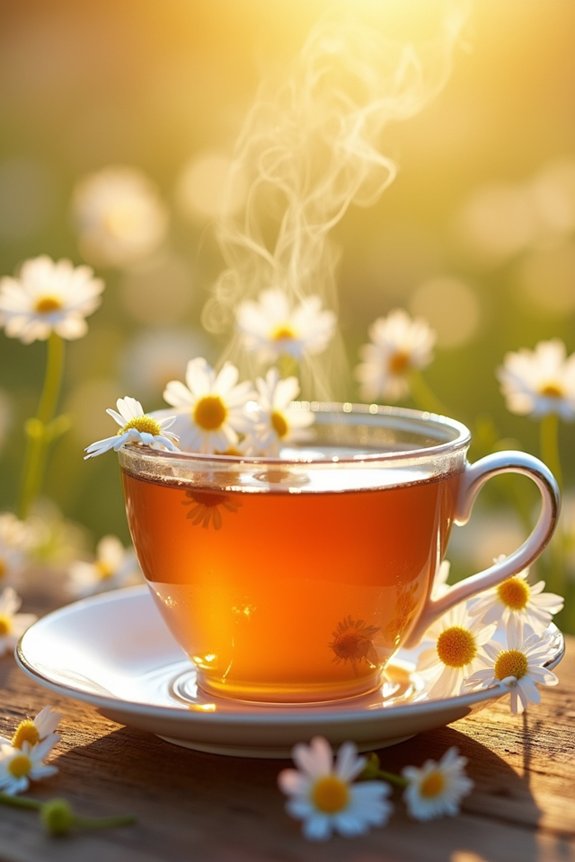
What makes chamomile tea so distinctive? The chamomile flavor combines delicate sweetness with floral notes that set it apart from other herbal infusions. You’ll notice an apple-like sweetness right away—the name itself comes from Greek words meaning “earth apple.” This mellow profile isn’t aggressive. Instead, it’s gentle and inviting.
When you smell your cup, you catch a hay-like aroma that might seem unusual at first. That’s part of chamomile’s charm. Roman chamomile tastes milder and more delicate than other varieties, offering subtle herbaceous notes that blend beautifully. High-quality versions give you stronger flavor and aroma.
Sip slowly and you’ll detect honey-like smoothness. Earthy undertones add depth without overpowering the soft, silky texture. Together, these elements create a comforting taste experience that welcomes you into the tea-drinking community.
German vs. Roman Chamomile: How Variety Changes the Taste

I’ll show you how the two main chamomile varieties create noticeably different experiences in your cup. German chamomile hits you with a bold, apple-like sweetness and strong aroma from its high essential oil content, while Roman chamomile offers a gentler, more delicate taste with subtle herbaceous and slightly bitter notes. When you’re choosing between them, think of German as the fuller-bodied option and Roman as the lighter, softer choice.
German Chamomile’s Bold Profile
When you’re comparing chamomile varieties, German chamomile stands out as the bolder sibling. This variety packs a pronounced apple notes flavor profile that you’ll notice immediately per cup. The secret? Higher essential oil content gives German chamomile its strong aroma and sweeter taste. You’re getting a robust chamomile profile that doesn’t whisper—it speaks clearly on your palate. The bold flavor makes it ideal when you want chamomile to be the star of your blend rather than a supporting player. If you steep it for three to five minutes at around 200°F, those apple notes and sweet characteristics develop fully. German chamomile delivers the kind of unmistakable taste that coffee and tea enthusiasts respect. It’s the choice when you’re seeking depth and presence in your cup.
Roman Chamomile’s Delicate Character
it’s the gentler alternative to German chamomile’s bold statement. If you’re seeking a subtle, calming tea experience, Roman chamomile delivers exactly that.
Roman chamomile offers these distinct characteristics:
- A mild, delicate flavor profile that doesn’t overpower your palate
- Subtle herbal and slightly bitter notes with an earthy undertone
- Lighter, more floral qualities compared to its bolder cousin
- Lower essential oil content, creating a gentler brewing experience
What sets Roman apart is its restraint. You won’t find that pronounced apple-like intensity here. Instead, you’ll discover a quieter charm—something that works beautifully in blends where you don’t want one ingredient dominating. The calming properties remain strong, but the taste speaks softly. Brew it for 5-7 minutes at 200°F to unlock its delicate character without extracting excess bitterness. It’s perfect when you want soothing comfort without bold flavors stealing the show.
Identifying Key Flavor Notes in Your Cup

When you brew a cup of chamomile tea, pay attention to three main flavor notes that make it distinctive. You’ll notice floral and herbaceous qualities right away—that soft, hay-like aroma that makes chamomile feel calming—along with subtle apple-like undertones that add a gentle sweetness without overwhelming your palate. Below those, you can detect earthiness and natural sweetness that round out the flavor, creating that smooth, non-bitter cup that works so well before bedtime.
Floral and Herbaceous Notes
How do you spot the delicate flavors hiding in your chamomile cup? Pay attention to what you’re actually tasting. The floral notes come through as gentle, apple-like sweetness rather than perfume-heavy flavors. You’re experiencing the plant’s natural character, not something forced or artificial.
Here’s what to identify:
- The hay-like aroma that signals fresh, quality chamomile
- Subtle floral notes layered beneath the mild sweetness
- Herbaceous undertones that remind you of dried herbs
- That honey-like texture coating your mouth
These elements work together. The delicate flavor profile means you won’t experience bold intensity. Instead, you get a soothing combination of gentle botanicals. Loose leaf chamomile shows these characteristics more clearly than tea bags. Notice how each sip reveals the same calming character. That’s authentic chamomile.
Subtle Apple-Like Undertones
The apple-like sweetness you’ve noticed actually gives chamomile its name. The Greek word “chamai melone” literally means ground apple, and that’s exactly what you’re tasting. You’ll find this chamomile flavor differs based on variety. German chamomile delivers a pronounced apple-like notes with stronger delicate sweetness, while Roman chamomile offers something milder and earthier. The floral aroma pairs beautifully with these apple undertones, creating a balanced cup. When you sip, notice how the sweetness hits first, then fades into that characteristic aftertaste—slightly bitter but pleasant. Want to experience these notes more clearly? Grab high-quality loose-leaf chamomile instead of standard tea bags. The better leaves really highlight that apple-like notes and floral aroma you’re seeking to identify.
Earthiness and Natural Sweetness
Beyond that apple-like sweetness, you’ll notice chamomile’s earthy undertones sitting quietly in the background of your cup. I find these herbal notes create a grounded feeling without overpowering the delicate floral profile.
The natural sweetness tastes honey-like and smooth. Here’s what makes chamomile’s flavor work so well:
- Earthy notes remain restrained, keeping the tea mellow
- Honey-like sweetness emerges naturally without added sugar
- Floral notes blend seamlessly with herbal tea characteristics
- Balanced earthiness prevents any harsh, bitter tastes
When you brew chamomile for 5-7 minutes at 200°F, you’re extracting just enough earthiness to complement the sweetness. This balance creates that signature calm, comforting cup we all seek. You’re tasting how nature designed this herbal tea—gentle, approachable, and perfect for winding down without any jarring flavors disrupting your peace.
Hot Chamomile Tea: Taste and Best Flavor Enhancers

When you brew a cup of hot chamomile tea, you’re getting a mellow, sweet, and floral drink with a subtle honey undertone that feels genuinely soothing. This caffeine-free beverage works perfectly for evening relaxation or anytime you want comfort in a cup.
| Enhancer | Effect | Best For |
|---|---|---|
| Honey | Amplifies natural sweetness | Classic preparation |
| Lemon | Adds brightness | Daytime enjoyment |
| Cinnamon | Provides warmth | Seasonal depth |
| Clove | Deepens complexity | Winter variation |
| Apple slice | Creates subtle tartness | Cold months |
The floral notes stay soft and delicate, never overpowering your palate. Add honey to enhance that honey undertone, or squeeze lemon for brightness without masking the base profile. Cinnamon sticks and apple slices transform your cup into something seasonal and cozy. Your taste preferences guide which enhancers work best for you.
Iced Chamomile Tea: Taste and Refreshing Combinations

How does chamomile transform when you chill it? Your iced chamomile tastes crisper and more invigorating than the hot version. The cooling sensation brings out herbal tea notes with a lightly sweet profile that feels refreshing.
Here’s how to join the iced chamomile enthusiasts:
- Brew 2 teaspoons per 400 ml of hot water for 7–10 minutes
- Pour over ice immediately after steeping
- Cool to room temperature first to preserve floral sweetness
- Garnish with citrus notes or mint pairing
The chamomile tea flavor shines brightest with simple additions. Citrus notes from orange slices or lemon enhance the base without overpowering it. A splash of fruit juice works too. Try combining chamomile with hibiscus and lemon for a balanced, refreshing drink that keeps you coming back.
Brewing Methods That Unlock the Best Flavor
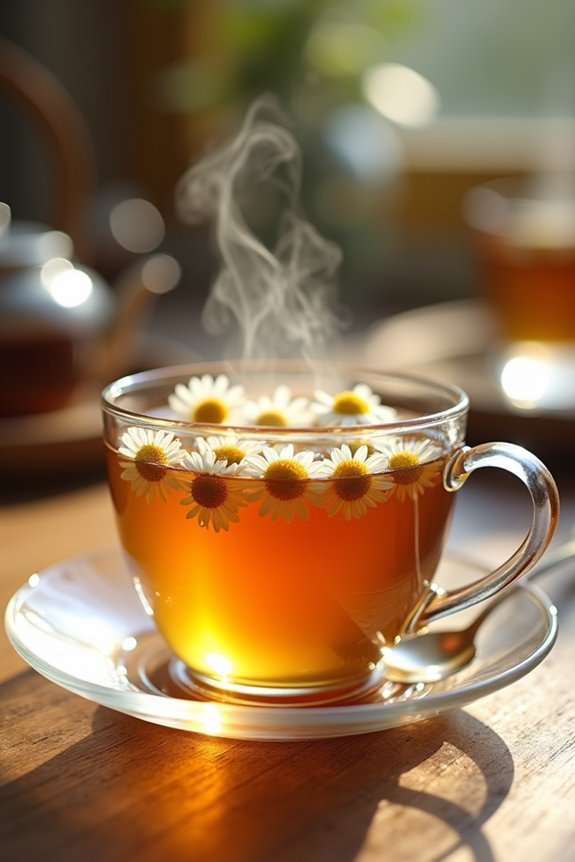
The secret to chamomile’s best taste lies in three simple things: water temperature, steeping time, and storage. Heat your water to around 200°F—just below boiling—and let it steep for 5–7 minutes. This optimum steeping time extracts the full chamomile flavor without bitterness. Use filtered water, not distilled, since it preserves the tea’s potency and aroma better.
The brewing methods you choose affect what you taste. Hot chamomile delivers mellow floral sweetness with apple-like notes. Iced chamomile develops crisper, herbal notes when you steep 7–10 minutes, cool it, then pour over ice.
Keep your dried flowers in a cool, dry, airtight container. These simple steps unlock the best flavor every time you brew.
How Chamomile’s Taste Supports Your Relaxation Routine

Why does chamomile feel so calming to drink? The answer lies in how its gentle flavor profile supports your wind-down ritual. That soft, hay-like aroma combined with the apple-like sweetness creates a sensory experience designed for relaxation. Here’s what makes chamomile flavor work for your routine:
- Floral notes trigger your body’s relaxation response
- Apple-like sweetness feels naturally soothing without intensity
- The herbal tea’s honey undertone grounds you in the moment
- Iced chamomile tea offers a cooling variation for any season
The calming properties of chamomile extend beyond taste. When you sip this gentle herbal tea, you’re engaging multiple senses simultaneously. Your mind registers the mellow, comforting flavors. Your body responds to the warmth or cool refreshment. Together, these elements anchor your relaxation routine, making chamomile a trusted companion for evening unwinding or caffeine-free moments throughout your day.