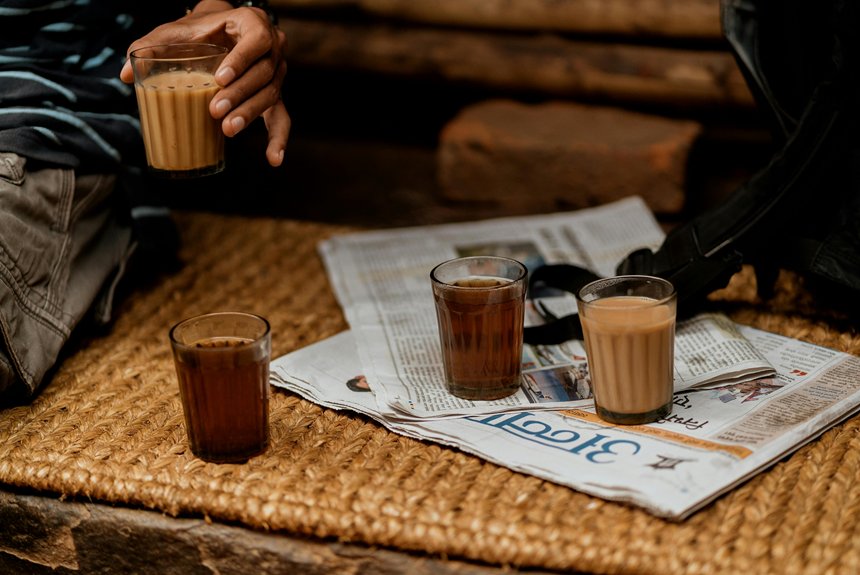
Traditional black chai packs 25–50 mg of caffeine per cup, while chai lattes contain 30–60 mg depending on how you make it. Steeping time matters—most caffeine releases in the first 3 minutes, so longer brewing gives you more. Chai concentrate doubles the caffeine of regular brewed chai. Black tea is your only caffeine source here. Want a caffeine-free option? Rooibos and herbal blends have zero mg. Compared to coffee’s 80–100 mg, chai’s lighter kick makes sense. Each fact reveals why your cup varies so much.
Fact #1: Traditional Black Chai Contains 25–50 Mg of Caffeine per Cup
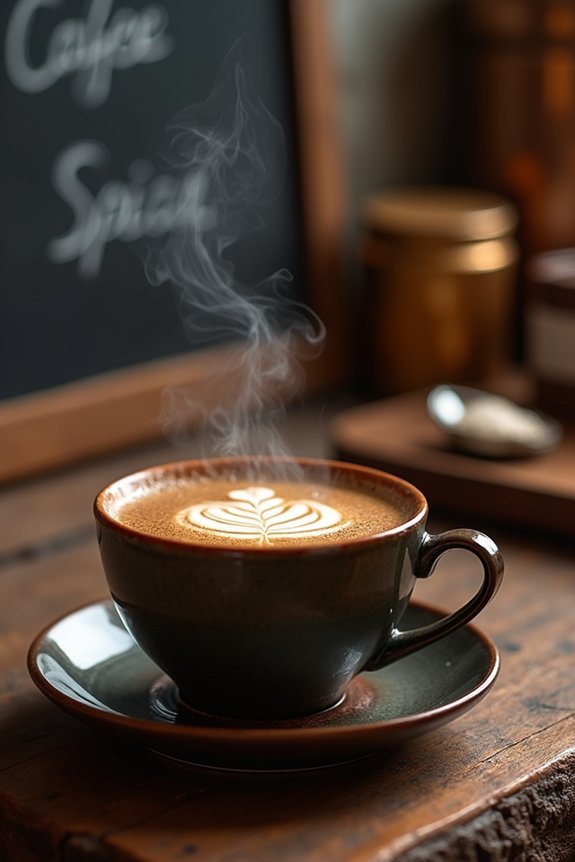
A typical 8-ounce cup of traditional black chai contains about 25–50 mg of caffeine. That’s less than a cup of coffee, which packs 95–200 mg. The caffeine comes from the black tea leaves, usually Assam, not the spices like cinnamon or ginger.
Your chai’s caffeine content depends on three things. First, your tea-to-water ratio matters. Use more tea leaves, get more caffeine. Second, steep time counts. Longer steeping pulls more caffeine from the leaves. Three minutes gives you less than five minutes does. Third, the specific black tea variety affects strength.
Understanding these factors helps you control your caffeine intake. Want stronger chai? Steep longer or add more leaves. Prefer less caffeine? Shorten your steep time.
Fact #2: Steeping Time Dramatically Affects How Much Caffeine Releases
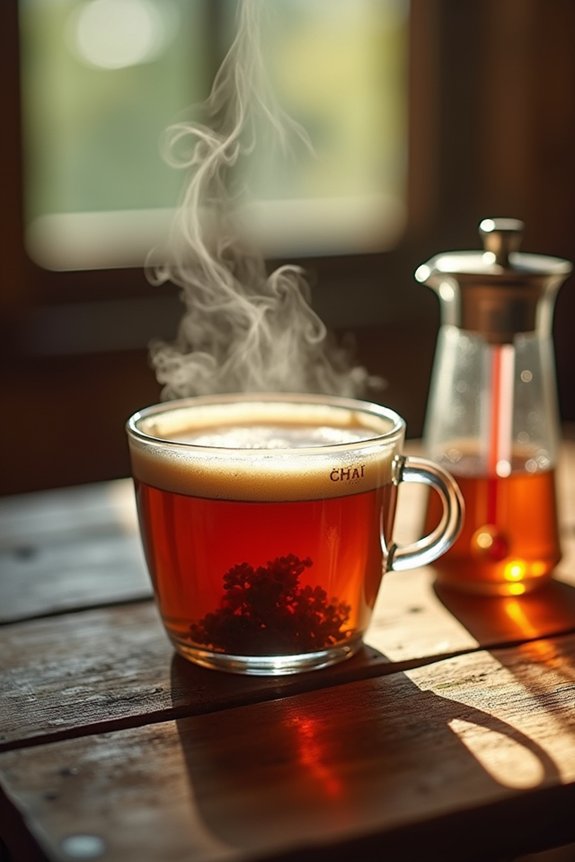
Now that you know how much caffeine’s in your chai cup, let’s look at what really controls that amount—how long you let it steep. Here’s the thing: caffeine extraction happens fast. Most of the caffeine release occurs within the first 3 minutes of steeping. But here’s where it gets interesting. Keep steeping beyond 3 minutes, and you’ll keep pulling out more caffeine at a slower rate. Your steep duration directly impacts those caffeine milligrams in your infusion.
| Brew Time | Caffeine Release | Extraction Rate |
|---|---|---|
| 2–3 minutes | 15–30 mg | Fast initial |
| 5 minutes | 30–50 mg | Moderate continued |
| 7+ minutes | 40–50 mg | Slower plateau |
Factors like your tea-to-water ratio and water temperature amplify these changes. Adjust your steeping time strategically to control your caffeine intake.
Fact #3: Chai Concentrate Has Double the Caffeine of Brewed Chai
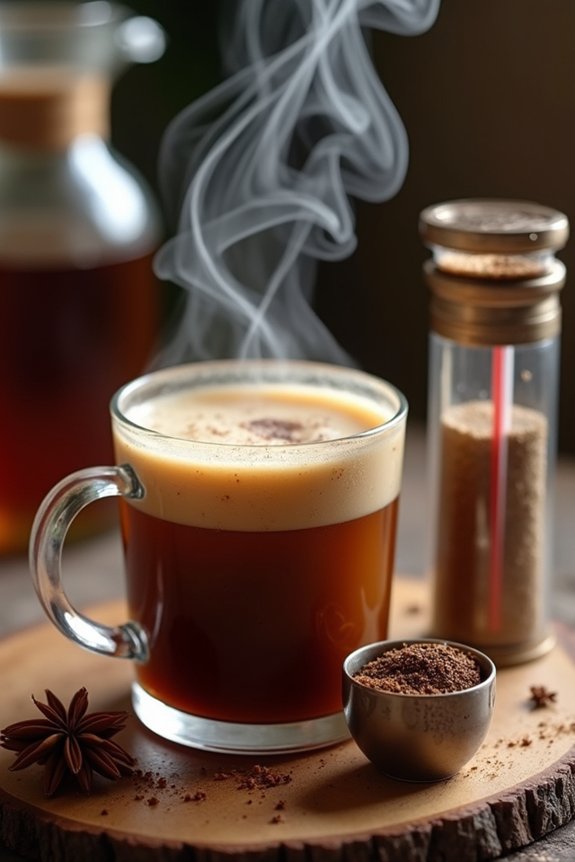
Ever wonder why your chai latte from a coffee shop hits different than homemade chai tea?
The secret’s in the concentrate. Chai concentrate packs roughly double the caffeine of brewed chai. While regular brewed chai delivers about 30–50 mg per 8-ounce serving, chai concentrate contains 25–55 mg, but when you make a chai latte, you’re using a higher tea-to-water ratio that boosts your caffeine content markedly.
Here’s what’s happening: concentrate uses more concentrated tea extraction, not longer steeping. That means you’re getting more caffeine concentration in every sip of your chai latte. If you’re sensitive to caffeine or worried about caffeine risk, you’ve got options. Try using less concentrate, pick a lower-concentration brand, or go caffeine-free. Simple adjustments, real results.
Fact #4: Chai Lattes Contain 30–60 Mg of Caffeine (Depending on Preparation)
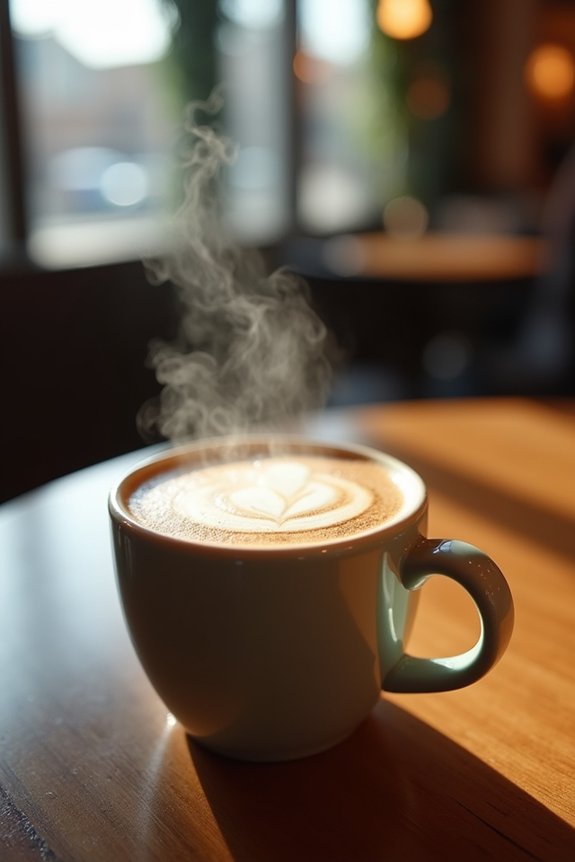
What makes one chai latte pack more caffeine than another? It all comes down to how you prepare it. A standard 8-ounce chai latte contains 30–60 mg of caffeine per serving. The amount depends on your chai latte preparation and the tea concentrate strength you choose.
Using more chai tea concentrate boosts your caffeine intake toward that higher end. Loose-leaf chai typically lands in the lower range, while concentrates deliver stronger results. Your chai base matters too—a robust blend packs more punch than a lighter one.
The caffeine mg per serving climbs when you increase brew time or concentrate ratio. Interestingly, chai latte caffeine levels rival black tea caffeine in many cases. Milk doesn’t change the caffeine in chai, so customize your drink without worry about altering its kick.
Fact #5: Black Tea Is the Only Source of Caffeine in Chai
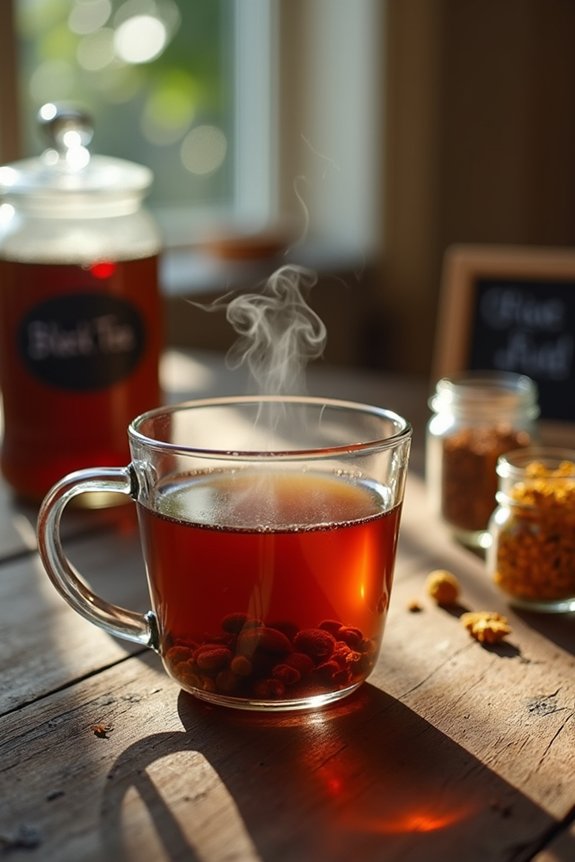
Black tea is the sole caffeine contributor in your chai cup, which means I’m being straightforward with you—the spices like cinnamon, cardamom, and ginger don’t actually contain caffeine, so they won’t boost your energy one bit. The milk you add and any sweeteners you stir in follow the same rule: zero caffeine contribution. So when you’re checking how much caffeine you’re getting from chai, you’re really just checking how much black tea went into the blend.
Black Tea’s Caffeine Role
So where does chai get its caffeine kick? Black tea is the sole caffeine source in traditional chai. When you brew a cup, that black tea base delivers the caffeine content you’re looking for.
| Chai Type | Caffeine per 8 oz Cup |
|---|---|
| Traditional Black Tea Chai | 40–70 mg |
| Decaffeinated Chai | 2–5 mg |
| Chai Latte | 40–70 mg |
| Herbal Chai (Rooibos) | 0 mg |
| Concentrated Chai | 50–85 mg |
The spices and milk in your chai latte don’t contribute caffeine—they’re just flavor companions. Steeping time matters too. Longer steeps pull more caffeine from the black tea base. Want less caffeine? Switch to decaffeinated black tea, and you’ll drop to just 2–5 mg per cup. Skip black tea entirely with herbal blends, and you’ll hit zero caffeine content while keeping that chai taste.
Spices Contain No Caffeine
Your chai’s spice rack—think cinnamon, cardamom, ginger, cloves, and black pepper—contributes zero caffeine to your cup. I know spices seem like they’d pack a punch, but they don’t. The caffeine in chai comes entirely from your tea base, whether that’s black tea, green tea, or oolong. No spice changes this reality.
Here’s what actually matters for chai caffeine levels: your tea-to-water ratio and steep time. More tea leaves mean more caffeine. Longer steeping extracts more caffeine from those leaves. Doubling your spice blend? That won’t increase caffeine one bit.
Even masala chai variants follow this rule. Traditional masala chai uses black tea as its caffeine source. The spice blend stays the same—powerless against caffeine content. Understanding this helps you control your actual chai caffeine intake.
Fact #6: Chai Has Far Less Caffeine Than Coffee (But More Than Herbal Tea)
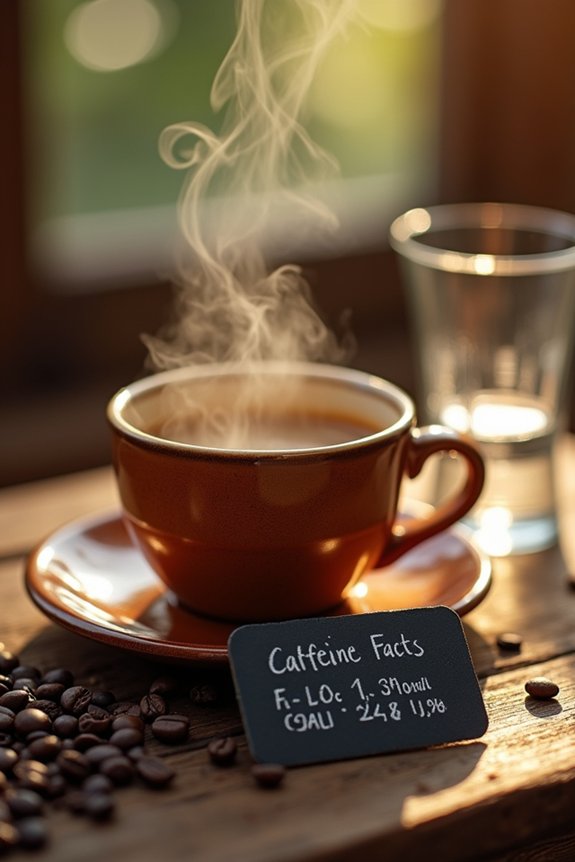
When you’re comparing caffeine levels across different beverages, chai sits right in the middle—it’s got way less kick than coffee but noticeably more than herbal tea. An 8-ounce cup of chai delivers about 30–50 mg of caffeine, while coffee packs roughly 80–100 mg. That’s a significant difference if you’re watching your caffeine intake. Most herbal teas contain zero caffeine, so chai beats them easily. The type of tea base matters too. Black tea chai has the most caffeine, while green tea and white tea variants offer less. If you’re making a chai latte with concentrate, your caffeine in chai can shift depending on how much you use. Know your preferences, and you’ll nail the right caffeine comparison for your needs.
Fact #7: Rooibos and Herbal Blends Offer Completely Caffeine-Free Alternatives
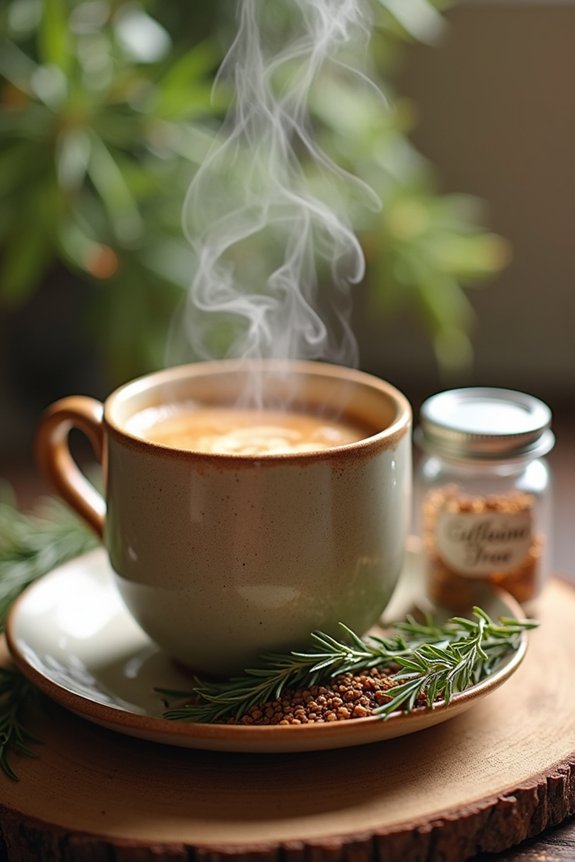
If you’re done with caffeine altogether, rooibos and herbal chai blends are your answer. These options deliver zero caffeine while keeping that warm, spiced chai flavor you love. Rooibos chai uses rooibos as its base instead of tea leaves, making it completely caffeine-free. Herbal blends swap traditional tea for chamomile, hibiscus, or other herbs mixed with chai spices.
Check tea labeling carefully though. Some blends might contain trace caffeine if manufacturers mixed in small amounts of actual tea. When shopping, look for labels that clearly say “rooibos chai” or “herbal chai”—this signals you’re getting genuine caffeine-free alternatives.
| Option | Caffeine Content | Best For |
|---|---|---|
| Rooibos Chai | Zero | Evening drinkers |
| Herbal Blends | Zero | Caffeine-sensitive folks |
| Decaffeinated Black Tea | 2–5 mg | Mild caffeine seekers |