Baking powder is keto-friendly in small amounts because it contains minimal carbs. The trick is keeping it fresh—test it by mixing ½ teaspoon in hot water and watching for fizz. If it doesn’t bubble, toss it out. Low-carb flours like almond and coconut flour are alkaline, which neutralizes baking powder’s acid and weakens its rise. Store your powder in an airtight container away from heat and humidity. Understanding how these flours interact with leavening reveals why your baked goods turn dense and flat.
Quick Answer: Is Baking Powder Keto-Friendly?

Is baking powder safe for keto? Yes, baking powder is keto-friendly in small amounts. It’s a leavening agent that helps your baked goods rise, and it contains minimal carbs.
Baking powder is keto-friendly in small amounts, containing minimal carbs and working as an effective leavening agent for low-carb baking.
Here’s the catch: baking powder works differently in low-carb baking. When you swap wheat flour for almond or coconut flour, you’re changing how the leavening process works. These keto flours are alkaline, which can actually reduce the CO2 gas that makes your baked goods fluffy.
Double-acting baking powder reacts at two points—when it hits water and again in the hot oven. But in keto recipes, you might not get the same rise you’d expect.
Use fresh baking powder and avoid over-mixing your batter. These simple steps help preserve those gas bubbles that create light, airy texture in your low-carb creations.
Why Your Keto Baking Powder Loses Its Rise
Ever wonder why your keto brownies come out dense and flat despite using the right amount of baking powder? Keto flours like almond and coconut are alkaline and fat-rich, which neutralizes the acids that trigger your powder leavening. Here’s what happens: these flours absorb lots of liquid, leaving less free water available for the chemical reaction that creates CO2 bubbles. Without enough water, the acid and base can’t fully react, so you get minimal rise. Double-acting baking powders need heat around 350°F to trigger their second reaction, but alkaline nut flours can blunt this process entirely. The result? Dense, flat baked goods. You’ll need to adjust your approach—boost acid with lemon juice or vinegar, balance your liquids carefully, or try alternative leaveners.
The Role of Keto Flours in Baking Chemistry
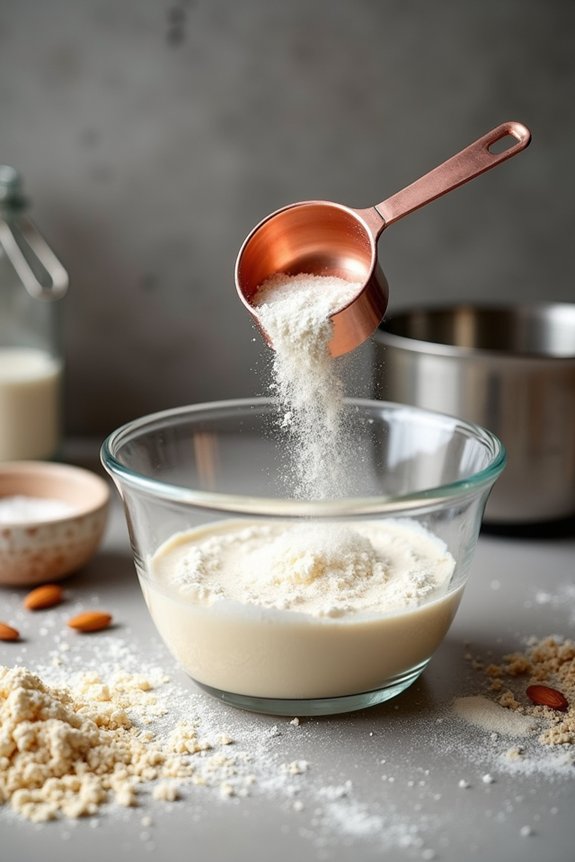
When you swap wheat flour for keto alternatives like almond or coconut flour, you’re actually changing how your baking powder behaves at the chemical level. Almond flour leans more alkaline, which means it can neutralize the acids in baking powder and reduce the CO2 gas production that gives your baked goods that rise you’re after. Coconut flour adds another wrinkle—it’s super absorbent and fiber-heavy, so it soaks up moisture differently and shifts how leavening bubbles get trapped in your batter.
Flour Properties And Leavening
Because keto flours behave so differently from wheat flour, they fundamentally change how baking powder works in your recipes. Almond flour’s alkaline nature neutralizes the acids in baking powder, which stops the chemical reaction that produces CO2 gas. That means less rise. Coconut flour absorbs massive amounts of liquid and traps moisture, throwing off leavening dynamics entirely. Both almond and coconut are high in fat and low in moisture, so water penetrates slowly through the batter. This delays gas release from your baking powder, weakening the lift you’d normally expect. Add psyllium husk or flax, and you’re introducing dense, fibrous ingredients that actually trap bubbles instead of letting them expand freely. You’ll need to adjust your baking powder amounts and liquid ratios to compensate for these chemical shifts.
pH Changes Affecting Rise
Altering the pH of your flour actually matters for how baking powder works. Almond flour, popular in keto baking, is alkaline. When you blend it with baking powder, that alkaline environment disrupts the acid–base reaction. Baking powder relies on specific chemical conditions to release CO2 gas during baking. Your alkaline flour basically interferes with this process, weakening the rise. The hot CO2 release that happens in the oven gets compromised. You’ll notice your keto baked goods don’t rise as high or develop the same texture as wheat-based versions. Adding acidic ingredients like lemon juice or buttermilk can help rebalance your batter’s pH and restore stronger leavening action.
Test Your Baking Powder Before You Bake
How can you know if your baking powder will actually work when you need it? Freshness testing prevents wasted ingredients and disappointing flat results. I always verify my baking powder before tackling keto recipes, where leavening already faces challenges from low-moisture flours.
Here’s my simple approach:
- Mix 1/2 teaspoon baking powder with hot water
- Watch for immediate fizzing and bubbling
- Fizzing means your powder’s still active and good to use
- No fizz signals expiration and inactive leavening power
That’s it. The test takes seconds and saves headaches. I use the specific powder I’m about to bake with since brands behave differently in hot water. Check your expiration date first, then run this quick test. It’s your insurance policy for successful keto baking.
How to Store Baking Powder to Keep It Fresh
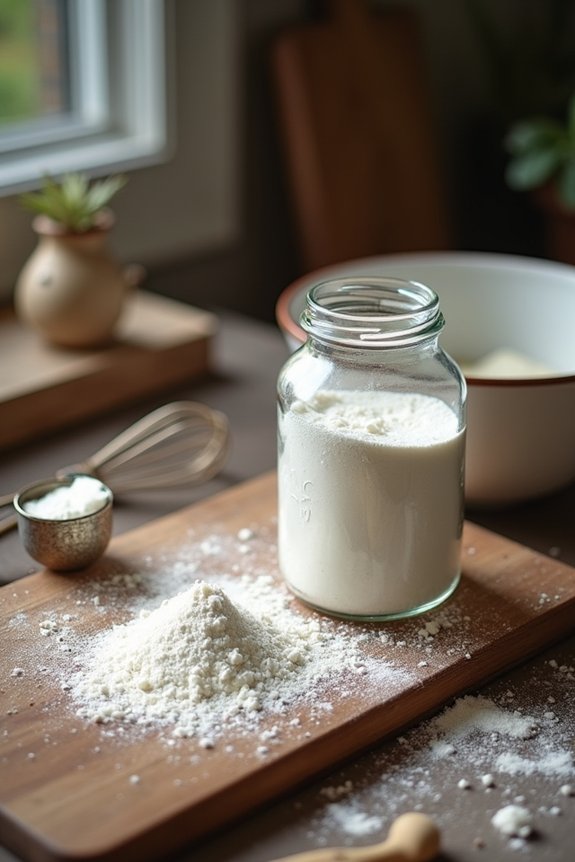
Where you stash your baking powder matters more than you’d think. I keep mine in an airtight storage container at room temperature, away from heat sources. This protects it from moisture and humidity that trigger premature reactions and clumping.
Your kitchen environment directly affects how long your baking powder stays active. Avoid storing it near the sink or in humid pantries where dampness creeps in. Heat degrades its leavening power over time, so skip the cabinet above your stove.
Before using older baking powder, I fizz half a teaspoon in hot water to check if it’s still active. A strong fizz means it’ll work. No reaction? Time for a fresh canister. Proper storage keeps your low-carb baking reliable and successful.
How to Mix Keto Batters Without Deflating Your Rise
Once you’ve got your baking powder stored properly and ready to go, the real magic happens when you actually mix your keto batter.
I’ve learned that gentle mixing is everything. Here’s what I do:
- Combine dry leavening agents separately with wet ingredients using a light hand
- Fold in dry ingredients just until combined, stopping before the batter looks perfectly smooth
- Avoid overmixing, which breaks gas bubbles and kills your rise
- Let batter rest briefly to hydrate without losing leavening power
The key is understanding that those tiny air bubbles created by baking powder are what give your low-carb baked goods lift. Excessive agitation destroys them. I fold carefully, almost like I’m handling something delicate. If you’re using single-acting baking powder, bake promptly after mixing. Those bubbles won’t wait around forever.
Why You Need Extra Acid in Keto Baking?
Why does keto baking seem to need a little something extra? Many keto flours are alkaline, which neutralizes acids and slows down CO2 production from your leavening agents. This means your baked goods won’t rise as much without help.
That’s where extra acid comes in. I add vinegar, lemon juice, or cream of tartar to boost baking powder’s effectiveness. Here’s what works:
| Acid Type | Amount | Best For |
|---|---|---|
| Vinegar | 1/4 tsp | Dense batters |
| Lemon juice | 1/4 tsp | Delicate cakes |
| Cream of tartar | 1/8 tsp | Fluffy texture |
Balance matters though. Too much acid creates tangy flavors or off tastes. I pair 1/4 tsp baking soda with acid per 1 tsp baking powder. Check your baking powder’s freshness by testing it in hot water—it should fizz immediately to confirm potency before baking.
Adding Acid to Your Recipe: Simple Adjustments
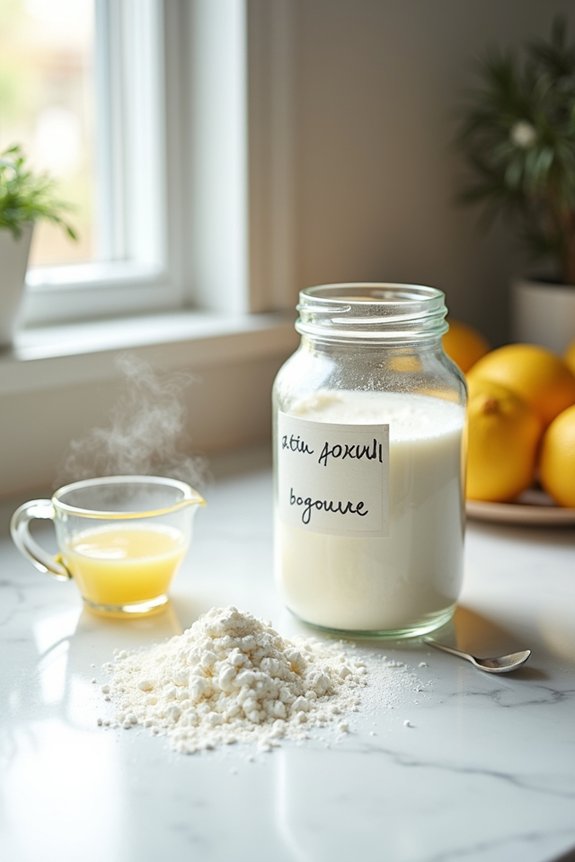
How do you actually add acid to your keto batter without messing things up? I’ve found that making acid adjustments alongside your baking powder is straightforward when you follow a simple system.
Here’s what works:
- Mix 1/4 tsp baking soda with 1/2 cup yogurt for reliable lift
- Combine 1 tsp vinegar and 1/4 tsp baking soda to replace 1 tsp baking powder
- Swap buttermilk or cream of tartar mixtures into your wet ingredients
- Adjust total liquid content so your batter stays consistent
The key is pairing your acid source directly with baking soda to trigger gas production. When you add extra acid, you’ll need to tweak sweetness and moisture levels afterward. Keep your baking powder fresh, avoid overmixing, and you’ll preserve those bubbles that make your keto treats rise properly.
Make Your Own Low-Carb Baking Powder
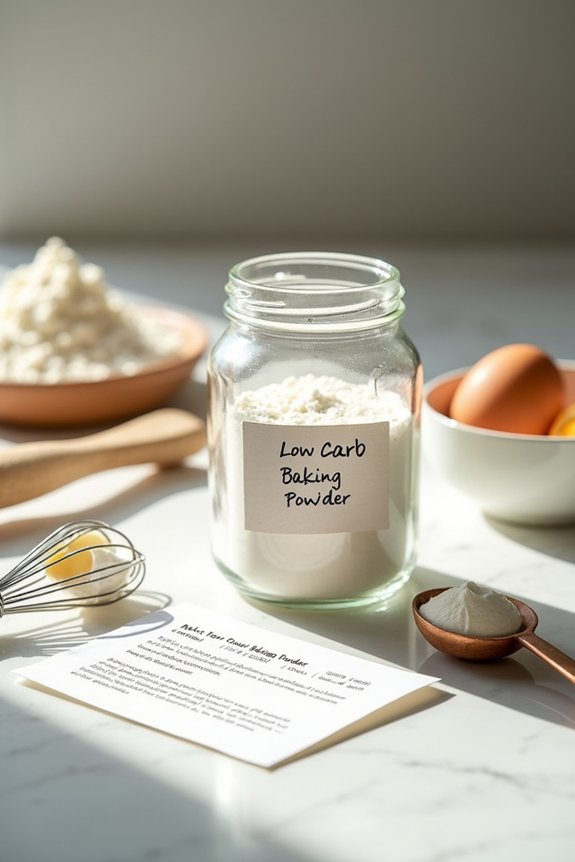
You can skip the store-bought stuff and mix your own low-carb baking powder in about two minutes. I combine baking soda, cream of tartar, and inulin to create a single-acting leavener that releases CO2 during mixing and baking. The inulin provides bulk and absorbs moisture, which keeps your low-carb baking powder potent longer.
| Ingredient | Amount | Purpose |
|---|---|---|
| Baking soda | 1 teaspoon | Primary leavener |
| Cream of tartar | 2 teaspoons | Acid component |
| Inulin | 1 teaspoon | Bulk and moisture control |
| Extra cream of tartar | ½ teaspoon | Optional acidity boost |
| Arrowroot powder | ½ teaspoon | Alternative bulking agent |
Store your homemade baking powder in an airtight container at room temperature. This prevents moisture from triggering premature reactions that’d weaken your leavening power.
Which Keto Flour Works Best With Baking Powder?
Now that you’ve mixed your homemade baking powder, it’s time to pick the right keto flour to make it work. Not all keto flours play nicely with leavening agents. Here’s what I’ve found works best:
- Almond flour buffers acids and slows CO2 production due to its alkaline nature, giving you denser results
- Coconut flour absorbs moisture heavily and can hinder gas formation, requiring extra liquid and careful ratios
- Psyllium husk or flax add bulk that traps gas bubbles, affecting your rise and final texture
- Blended keto flour mixes often perform better than single flours by balancing absorption and leavening response
The truth is wheat flour’s slight acidity and moisture retention make standard baking powder shine. Keto flours shift these dynamics. I recommend testing small batches first. Your best bet? Combine almond flour with coconut flour in controlled proportions to optimize rise and crumb structure.
Fresh Baking Powder vs. Low-Carb Substitutes: When to Choose?
When I’m baking keto treats, I face a real choice: grab fresh baking powder from my pantry or mix up a low-carb substitute on the spot. Fresh baking powder delivers reliable leavening that keto flours depend on for proper rise. Low-carb substitutes work too, but they come with trade-offs. Swapping baking soda with yogurt or vinegar requires careful liquid adjustments to keep your batter balanced. These acid-based reactions happen immediately, which means timing matters more. Inulin-based powders can replace starch in keto blends, yet they sometimes affect texture and how well your batter holds gas. Choose fresh baking powder for sensitive recipes where consistent rise is non-negotiable. Use substitutes when you’re experimenting and willing to adjust liquids as needed.
Your Go-To Substitutes When You’re Out of Powder

When you’re out of baking powder, I can show you three solid backup plans that work in keto baking. You can mix baking soda with an acid like cream of tartar or vinegar, use whipped egg whites for lighter recipes like pancakes, or swap in club soda to your wet ingredients for extra lift without the carbs. Each option handles differently depending on what you’re baking, so knowing when to reach for each one keeps your low-carb kitchen running smoothly.
Acid-Based Substitute Options
What happens when you’re halfway through mixing your keto cake batter and realize you’ve run out of baking powder? Don’t panic. You’ve got options that work just as well.
Acid-based substitutes pair an acid with baking soda to create CO2 gas, which makes your baked goods rise. Here’s what you can use:
- Vinegar + baking soda: Mix 1 tsp vinegar with 1/4 tsp baking soda per 1 tsp baking powder
- Lemon juice + baking soda: Combine 1 tsp lemon juice with 1/4 tsp baking soda for the same amount
- Yogurt + baking soda: Use 1/4 tsp soda with 1/2 cup yogurt, reducing other liquids by 1/2 cup
- Buttermilk + baking soda: Mix 1/2 cup buttermilk with 1/4 tsp baking soda, reducing liquids accordingly
These substitutes work fast. Use them immediately after mixing—the reaction happens quickly.
Egg White Leavening Methods
egg whites can actually replace baking powder by trapping air bubbles in your batter. I whip them separately until they form stiff peaks, then gently fold them in to preserve those bubbles. Use one egg white per teaspoon of baking powder you’d normally add.
This leavening method works particularly well in low-carb baking since egg whites fit the keto profile perfectly. They’re carb-free and protein-packed. The technique shines in pancakes, waffles, and lighter cakes where fat content stays minimal. Your batter rises through air expansion rather than chemical reaction.
Keep one thing in mind: egg whites won’t give you the height that traditional baking powder delivers. They’re better for delicate, airy textures than dense, towering cakes.
Carbonated Liquid Alternatives
carbonated liquids like club soda or sparkling water can actually help your baked goods rise. The bubbles introduce moisture and create lift, though they’re less reliable than proper baking powder.
When you’re in a pinch, try these approaches:
- Use club soda or sparkling water as a 1:1 swap for liquid in your recipe
- Pour the carbonated liquid directly into your batter just before baking
- Mix it with your dry ingredients quickly to capture maximum fizz
- Bake immediately after combining to lock in the bubbles
The catch? You’ll get inconsistent results since carbonation fades fast. Your pancakes or waffles might rise less predictably than with traditional baking powder. Still, it’s a solid emergency move when you’re out of options and need something now.
Common Baking Failures: Dense, Gummy, or Flat Results
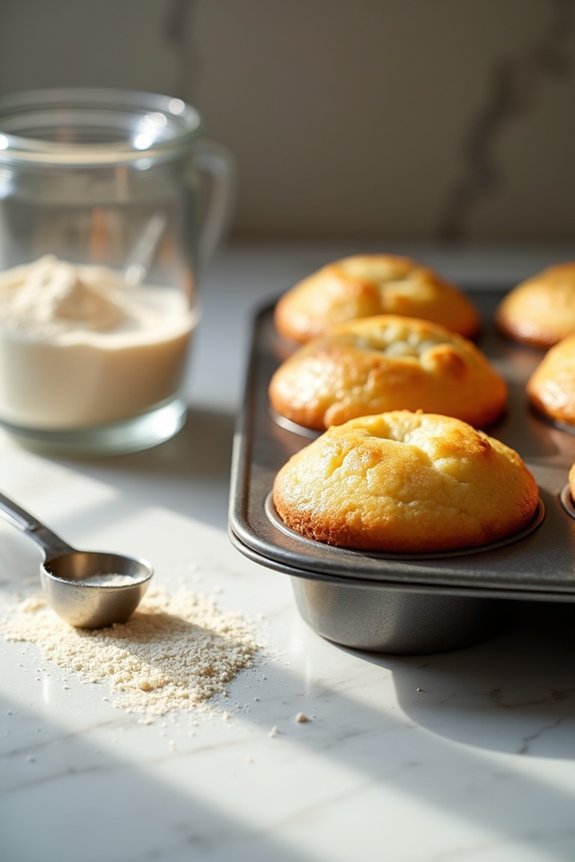
Why do your keto baked goods sometimes turn out dense, gummy, or disappointingly flat? The issue often lies with how baking powder, your primary leavening agent, performs in low-carb flours. Almond flour’s alkaline nature slows acid-base reactions, while coconut flour’s high absorbency demands more liquid and can prevent complete gas production. Double-acting baking powders underperform in keto batters because they struggle with gas retention during slower hydration. When you swap wheat flour for these alternatives, you’re changing the entire leavening dynamic. To fix this, add extra acid or combine baking soda with an acid source. Don’t overmix your batter—you’ll lose precious bubbles. Allow a short rest period before baking to hydrate your flour without losing gas.
Troubleshooting: Why Your Keto Baked Goods Aren’t Rising?
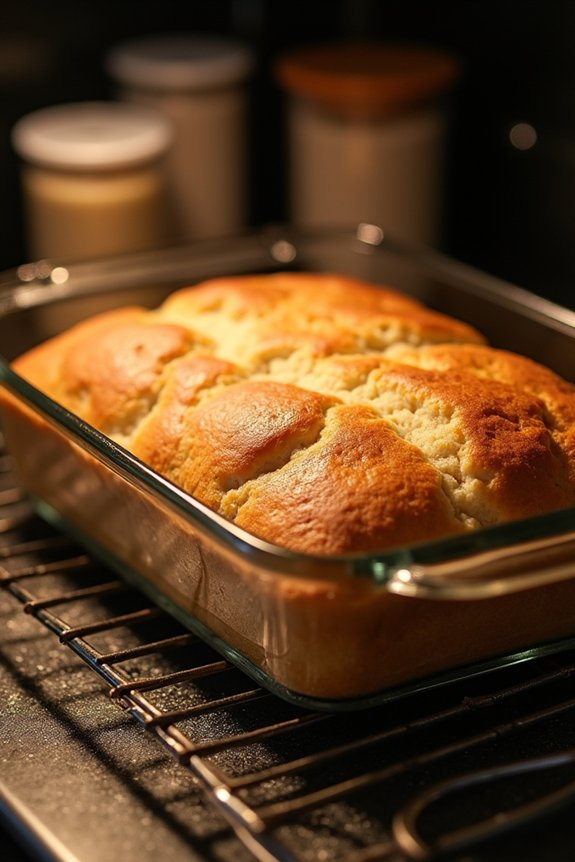
When your keto baked goods flatten instead of rise, I’d check two things first: whether your baking powder’s actually fresh and doing its job, since old powder loses potency over time. Keto flours like almond and coconut mess with the moisture and pH that baking powder needs to create those gas bubbles, so you’re fighting an uphill battle even with good powder. I recommend testing your baking powder’s freshness by mixing a teaspoon with hot water and watching for immediate fizzing, then adjusting your recipe with extra acid or swapping to baking soda paired with vinegar or yogurt to boost that chemical reaction.
Moisture and pH Disruption
moisture and pH levels.
Keto flours wreak havoc on your rise in these ways:
- Low moisture content reduces free water needed for baking powder to release carbon dioxide bubbles
- Alkaline pH in almond flour neutralizes acids, weakening the chemical reaction that produces gas
- High absorbency in coconut flour soaks up liquid, leaving less water available for leavening
- Bulk additives like psyllium husk trap gas bubbles, preventing proper expansion
When there’s not enough free moisture or when pH gets thrown off, your batter can’t generate sufficient carbon dioxide. Result? Dense, flat baked goods that disappoint. Understanding this chemistry helps you troubleshoot and adjust recipes effectively.
Testing Powder Freshness First
Before you blame your keto flour blend or second-guess your mixing technique, check whether your baking powder’s actually doing its job. Baking powder freshness directly impacts your keto baking results, so I recommend testing it first.
Start by checking the expiration date on your container. Then perform the fizz test: mix 1/2 teaspoon of baking powder into hot water and watch for bubbling. Fizzing means it’s still active and ready to work.
| Test Stage | What to Do |
|---|---|
| Step 1 | Check expiration date on container |
| Step 2 | Mix 1/2 tsp powder in hot water |
| Step 3 | Observe for fizzing reaction |
| Step 4 | Discard if no fizz occurs |
| Step 5 | Replace with fresh powder |
Inactive powder produces no gas, resulting in dense, flat keto baked goods. If your powder fails the test, toss it and grab a fresh container. This simple check eliminates one major variable in your troubleshooting process.