A 9-inch cake feeds 12 to 32 people, depending on your slice size. Single-layer cakes yield about 12 generous servings or 16 sensible ones. Two-layer cakes jump to 22–32 servings. The difference comes down to portion style: generous slices are roughly 2 by 3 inches, while party cuts are 1.5 by 2 inches. Wedding servings run even smaller. Your cutting method and layer count directly control how many plates you’ll fill. Stick around to discover exactly how to maximize servings from your specific cake.
How Many Servings From a 9-Inch Cake?
How many slices can you actually get from a 9-inch round cake?
The answer depends on your cake size and how you cut it. I find that a single 9-inch layer yields about 12 servings using standard industry cuts. If you’re working with a two-layer cake, you’re looking at roughly 22 to 32 servings total. The variation comes down to slice size.
Party-style slicing gives you fewer, larger pieces than wedding-style cuts. Party slices run about 1.5 by 2 inches each. Wedding servings are noticeably smaller. For a three-layer cake, I’d aim for at least 18 servings minimum.
Your cutting method matters too. Wedge cuts and edge-based patterns help maximize even portions. Consider your guests’ appetites and whether cake is the main dessert or one option among several.
Bigger Slices vs. Smaller Slices: What’s the Difference?
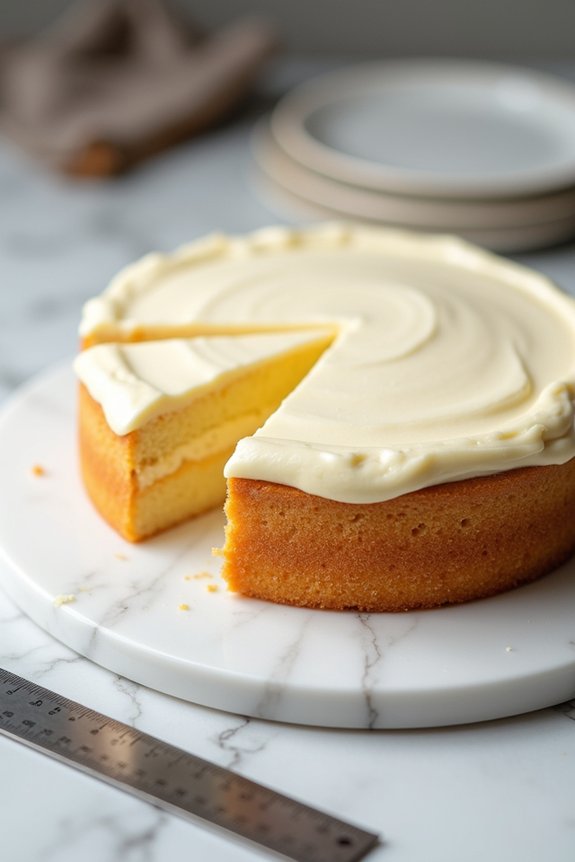
I’ll show you how slice size transforms your 9-inch cake’s serving count, because a generous 6.5 square-inch slice feeds fewer people than a sensible 3.5 square-inch portion does. Wedding servings typically measure 1 by 2 inches and yield about 22–24 slices per cake, while party servings at 1.5 by 2 inches nearly double that yield without adding any cake. The cutting pattern you choose—whether you cut wedges or use an edge-based method—directly determines how many equal, manageable slices you’ll actually get.
Generous Versus Sensible Portions
When you’re slicing up that 9-inch cake, you’ve got a choice to make: do you go big or go sensible?
Your serving size dramatically impacts how many people you’ll feed. Here’s what I recommend considering:
- Generous portions measure about 6.5 square inches each—roughly 2 by 3 inches
- Sensible portions measure about 3.5 square inches each—roughly 1 by 2 inches
- A two-layer 9-inch cake yields 12-16 generous slices or 20-24 sensible slices
- Your cake cutting technique should match your chosen portion style for consistent results
The difference matters more than you’d think. Generous slices feel indulgent and satisfy heartier appetites, while sensible portions stretch your cake further. When cake cutting, I suggest deciding your serving size before you start slicing. This prevents awkward mid-cake adjustments and ensures everyone gets equal portions.
Party Versus Wedding Servings
The portion size question becomes even more practical when you’re actually planning a real event. Party servings and wedding servings differ markedly in their serving sizes. Party slices run about 1.5 by 2 inches, roughly 3.5 square inches per piece. Wedding slices are smaller—around 1 by 2 inches, about 2 square inches each. This matters because the same 9-inch cake yields fewer servings when cut for parties versus weddings. A party cut reduces your total guest count since each person gets more cake. Wedding cuts maximize portions, stretching that same cake further. Your cutting pattern directly determines how many people you’ll actually feed. Choose party slices for a more indulgent experience. Go with wedding servings when you need to feed more guests from one cake.
Why Cake Layers Change Your Serving Count?
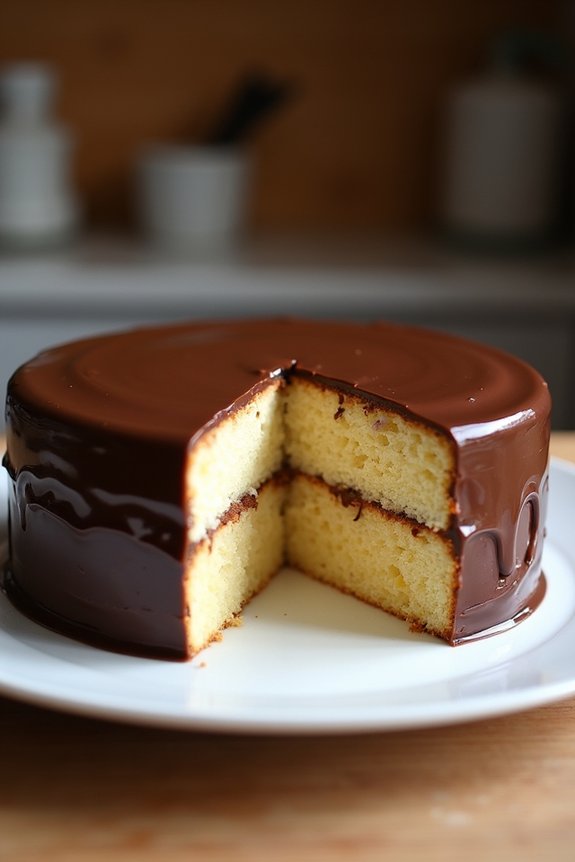
Ever wonder why a two-layer cake feeds more people than a single-layer one, even though they’re both nine inches across?
Here’s the thing: each layer you add essentially doubles your serving potential. I’m talking about real math here. When you stack layers, you’re multiplying your slicing opportunities. A single 9-inch cake might yield 12 servings. Add another layer, and you’re looking at closer to 22–24 servings from the same diameter.
Here’s why layers matter:
- Each layer can be sliced independently into wedges
- Stacked layers create more total height for portioning
- Proper torting technique maximizes cuts per layer
- Three-layer cakes approach 18–22 servings each
The height difference changes everything. You’re essentially getting more cake to cut without expanding that 9-inch footprint.
How to Score Your Cake for Even Slices?
Now that you understand how layers multiply your serving count, let’s talk about actually getting those slices to look uniform and taste equally generous. Your cutting strategy determines whether you’ll hit your cake servings target. I mark the cake’s center with a toothpick, then use a serrated knife to score light lines from the center outward, like pizza slices. For 12 slices, I divide the cake into quarters first, then halve each section. For denser party portions, I cut narrower wedges—about 2 to 2.5 inches wide—which gives you 16–18 servings instead. A sharp, thin-bladed knife dipped in hot water between cuts prevents frosting drag. This method works whether you’re slicing one layer or three.
What Size Portions Should You Cut?
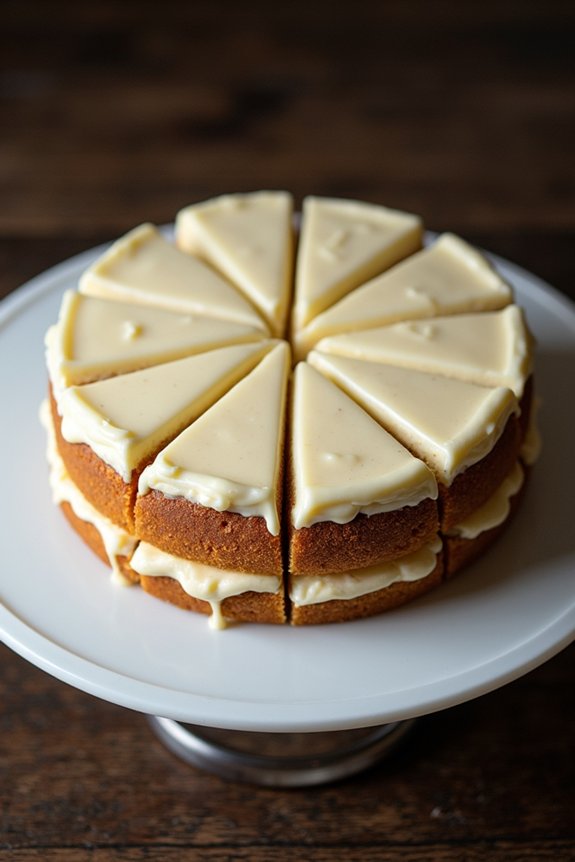
How big should each slice actually be? Your portion size determines how many servings you’ll get from that 9-inch cake. I’ll break down the options so you can pick what works for your gathering.
- Generous portions measure about 6.5 square inches (roughly 2 by 3 inches) and work great for smaller, more indulgent events
- Sensible portions clock in at 3.5 square inches (about 1 by 2 inches) and stretch your cake further for larger crowds
- Wedding-style servings stay small and elegant at 1 by 2 inches, maximizing your total servings
- Party-style servings go bigger and pie-like, prioritizing satisfaction over quantity
Two-layer cakes yield 22 to 32 servings depending on which portion size you choose. Three-layer cakes guarantee at least 18 servings with careful cutting. Pick your style, measure accordingly, and you’ll feed your crowd perfectly.
How to Cut Your Cake Evenly Every Time?
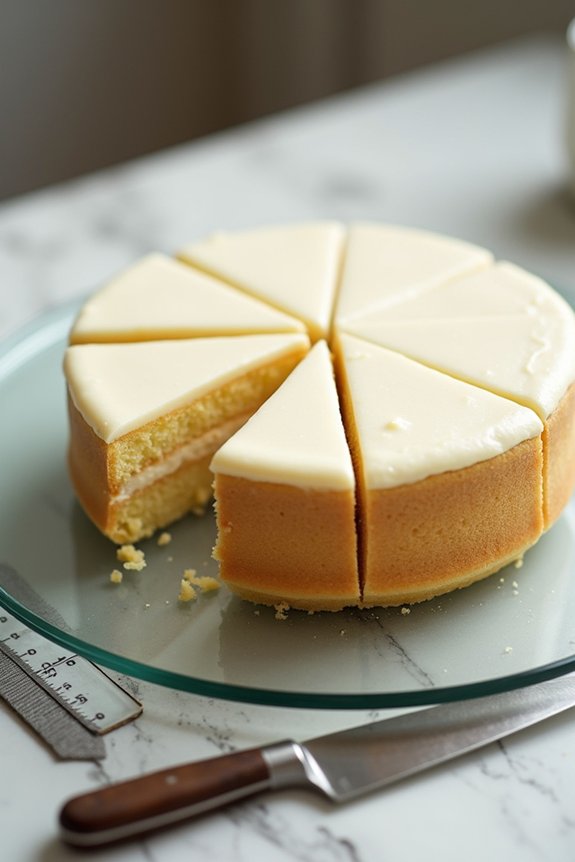
I’ll mark your cake’s division points before making any cuts—this is your roadmap to even slices. You can use toothpicks or a marker to identify where each cut should go, whether you’re dividing the cake into wedges or using the 1.5 by 2 inch slice method. Once your points are marked, I use a long, thin-bladed knife dipped in hot water and wiped clean between cuts to create straight, clean lines that divide your cake fairly and professionally.
Marking Division Points
Ever wondered why some cake slices look lopsided while others are perfectly uniform? I’ve found that marking your division points before cutting makes all the difference. Here’s how I do it:
- Use a serving chart to determine your slice count (8 for casual parties, 12–16 for weddings)
- Calculate the angle for each slice by dividing 360° by your number of portions
- Mark points around the round cake’s edge with toothpicks or a gentle scoring tool
- Start with a 2-inch wedge at the top center, then work outward using marked points as guides
This radial slicing approach ensures every guest receives an equal piece. I pre-mark the edge before any cutting happens. It takes two minutes but saves frustration and gives everyone fair portions.
Straight Cut Technique
Once you’ve marked your division points, the straight cut technique takes over—and it’s where clean slices actually happen. I dip my long, sharp knife in hot water and dry it between each cut. This keeps edges pristine and portions precise.
For a 9-inch cake, I rotate it 45 or 90 degrees after each cut to maintain consistent angles. Eight wedges give me 45-degree slices. Twelve wedges create 30-degree servings. Both options deliver uniform portions that look professional.
The key is keeping my cuts straight from the center outward. I use a ruler as my guide, treating each slice like a wedge. Hot water on the blade matters—it prevents frosting from dragging and crumbling. These servings feed your guests evenly and beautifully.
Why Your Cake Servings Fall Short?
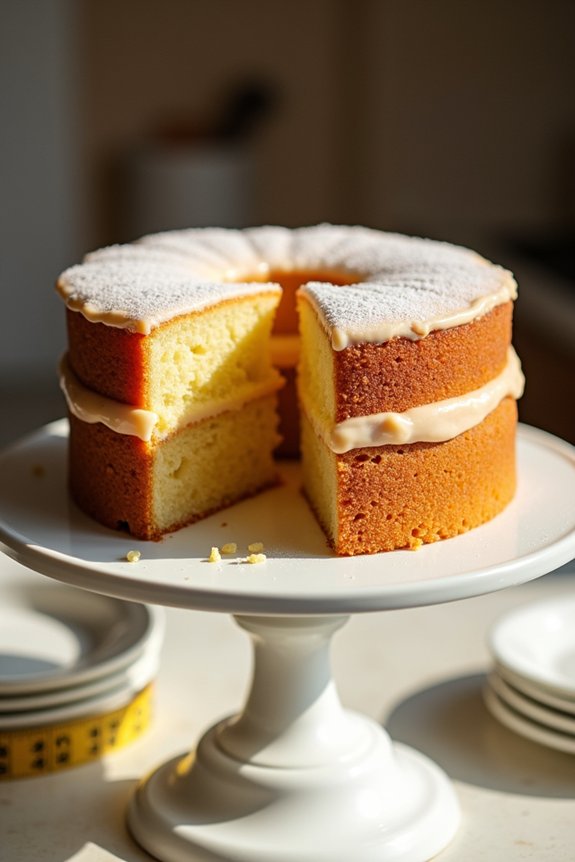
Why do your cake slices end up smaller than the charts promise? I’ve found that most standard serving charts assume ideal conditions you won’t actually achieve. Here’s what trips up bakers like us:
Most standard serving charts assume ideal conditions you won’t actually achieve in real-world baking situations.
- Charts don’t account for uneven cutting—wobbling the knife reduces slice size
- Frosting and crumb loss steal roughly 10-15% of your cake’s usable yield
- Most people cut generous portions despite charts suggesting smaller ones
- Cutting patterns matter enormously; wedge cuts give fewer slices than grid patterns
The industry standard of 12 cubic inches per piece sounds straightforward, but achieving it requires precision. I recommend using a straightforward grid cutting pattern instead of following complicated charts. This gives you predictable, reliable servings every time—no surprises when guests arrive.
How to Pick the Right Cake Size for Your Guest Count?
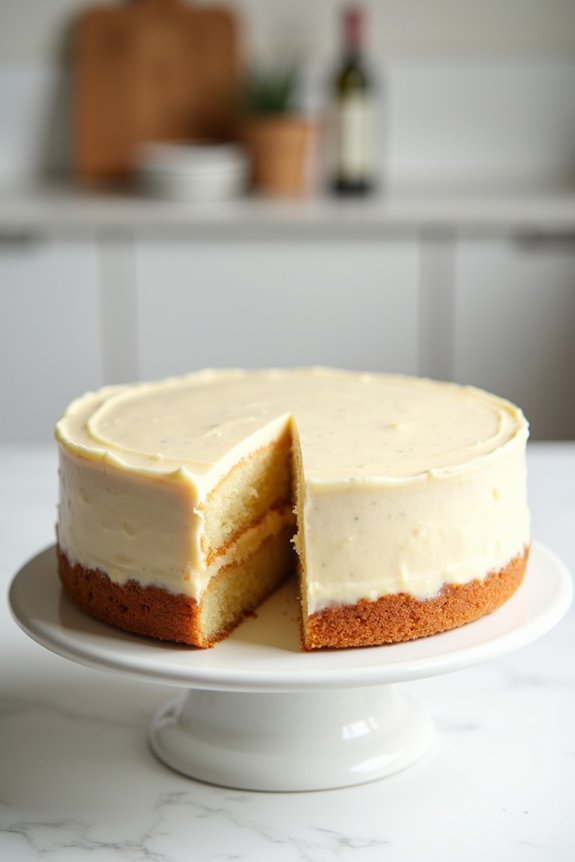
How do you know what size cake actually feeds your crowd?
Start by counting your guests and deciding on portion style. Wedding servings need about 12 square inches per person, while party servings work with smaller cuts. A 9-inch cake pan gives you roughly 22 wedding slices or 32 party slices depending on how you cut it.
If you’re serving 20 people at a formal event, a 9-inch round won’t cut it. You’ll need a larger cake pan size—think 10 or 12 inches. For casual parties with the same headcount, one 9-inch works fine.
Three-layer cakes change the math too. More layers mean you can slice thinner pieces, stretching your servings further. Calculate your exact needs before ordering. This prevents disappointing shortfalls on event day.