An 8-inch round cake feeds 16 people with 1.5-inch party slices or 22 people with 1-inch wedding slices—slice width matters way more than cake height. Square 8-inch cakes yield about 45% more servings because straight edges waste less space than curved ones. Surface area, not diameter, drives your actual serving count. Add a 10–15% buffer for second helpings and unexpected guests. Use a cutting grid to maximize portions. Keep exploring to discover why taller cakes don’t serve more and when you need cupcakes instead.
How 8-Inch Round Cakes Yield 16 Party or 22 Wedding Slices
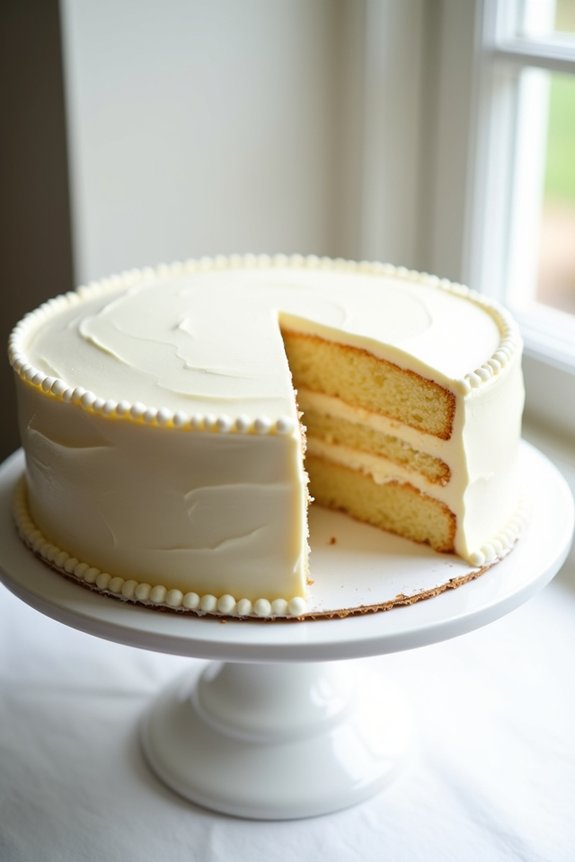
Ever wonder why the same 8-inch cake serves different numbers of people depending on the occasion? I’ll explain the difference between party slices and wedding slices using your serving chart.
An 8-inch round cake yields about 16 party slices when cut to 1.5 inches by 2 inches. The same cake gives you 22 wedding slices when cut to 1 inch by 2 inches. Party slices are 50% wider, which is why fewer servings fit from one cake.
Here’s the key: party slices measure 1.5 inches wide by 2 inches deep, while wedding slices are 1 inch wide by 2 inches deep. Apply the Bakers Buffer Rule by adjusting portions upward to account for second helpings. This ensures you’ve got enough cake for everyone at your event.
Why 8-Inch Square Cakes Yield 45% More Servings
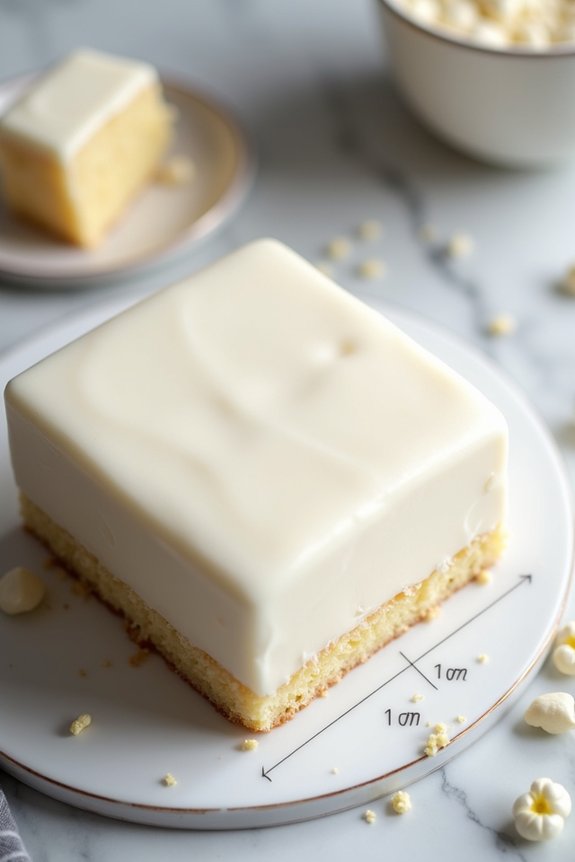
an 8-inch square cake has straight edges that give you more usable surface area than an 8-inch round cake, and that extra space means you’re working with roughly 45% more cake to slice and serve. When you cut a round cake, those curved edges create waste and smaller, irregular pieces near the perimeter, but a square pan lets you cut clean, uniform slices right to the corners. This geometric advantage directly translates to more servings from the same 8-inch measurement—about 32 wedding slices from a square versus 22 from a round.
Geometry And Surface Area
Why does a square cake labeled 8 inches give you way more slices than a round one of the same size? It’s all about geometry. A square cake has straight edges, while a round cake has curved sides. Those curves waste valuable cake space. When you compare round vs square cakes, the square wins on surface area every time.
| Cake Shape | Surface Area | Edge Waste | Portion Count |
|---|---|---|---|
| 8″ Round | 50.3 sq in | High | 12-16 |
| 8″ Square | 64 sq in | Low | 18-24 |
| Difference | +13.7 sq in | -30% | +45% |
| Serving Size | 1×2 inches | Standard | Consistent |
| Yield Rate | Lower | Higher | More efficient |
That extra surface area means more cake to cut. You’ll get bigger serving sizes and better portion counts. The math is simple: more usable space equals more guests fed.
Square Versus Round Comparison
Square cakes genuinely outperform round ones when you’re trying to feed a crowd with the same 8-inch measurement. An 8-inch square yields about 32 wedding servings while an 8-inch round produces only 22. That’s a 45% difference.
Here’s why: curved edges on round cakes create waste. Square cakes use every inch of space efficiently. When you cut wedding-style slices (1 inch by 2 inches), the square shape maximizes your headcount without sacrificing portion size.
For party servings with larger slices (1.5 by 2 inches), squares still win. You’ll get more total servings from that same diameter because surface area works in your favor.
Need to feed more guests without upsizing? Choose square. It’s geometry working for your headcount.
Why Slice Size, Not Cake Height, Determines Your Serving Count
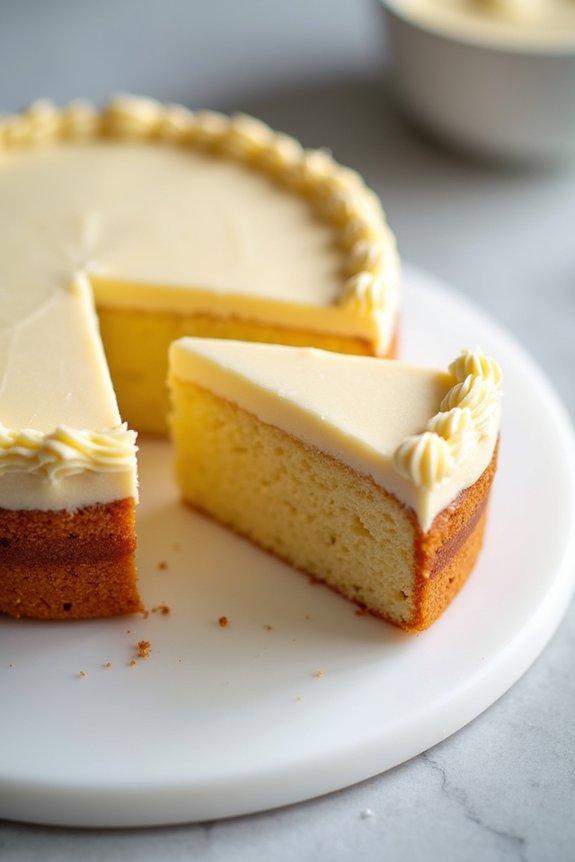
When you’re figuring out how many people your 8-inch cake feeds, I want you to focus on one thing: the width of each slice you cut, not how tall the cake sits in the pan. A standard wedding slice runs 1 inch wide by 2 inches deep, while a party slice stretches to 1.5 inches wide with the same depth, and that difference alone changes your total servings from 22 down to 16. Your cutting technique and slice thickness matter too, since thicker cuts mean fewer portions from the same cake, but the height of your cake stays completely out of this equation.
Standard Slice Width Matters
decide your slice size first, then consult your chart to figure out how many guests your cake actually feeds.
Thickness Affects Portion Yield
a taller cake doesn’t automatically feed more people. What actually determines your portion yield is slice size and your serving pattern, not cake height.
Think of it this way: your pan’s surface area stays the same whether your cake rises 3 inches or 6 inches high. That flat, circular top is what you’re slicing into. A thicker cake simply means deeper slices, not more slices total.
Your slice size—typically 1×2 inches for weddings or 1.5×2 inches for parties—controls everything. Choose your serving pattern first. Then count how many slices fit across your 8-inch round. That’s your answer. Height is just about batter and frosting needs, not guest count.
Cutting Technique Impacts Servings
Now that you understand how pan size controls your slice count, let’s talk about the actual cutting—because how you slice your 8-inch cake makes a real difference in how many people you feed.
Your cutting technique determines everything. A standard wedding slice measures 1 inch by 2 inches and yields about 22 servings from an 8-inch round. Switch to a party slice—1.5 inches by 2 inches—and you’ll get roughly 16 servings instead. The difference? Slice size, not cake height.
Your cutting pattern matters too. Grid cuts versus cuts across the diameter produce different portion numbers. Here’s the pro move: use the Bakers Buffer Rule. Add 10–15% extra servings to your target count to account for uneven slicing and edge waste, which typically reduces raw servings by about 12%.
Wedding Slices vs. Party Slices: Which to Choose
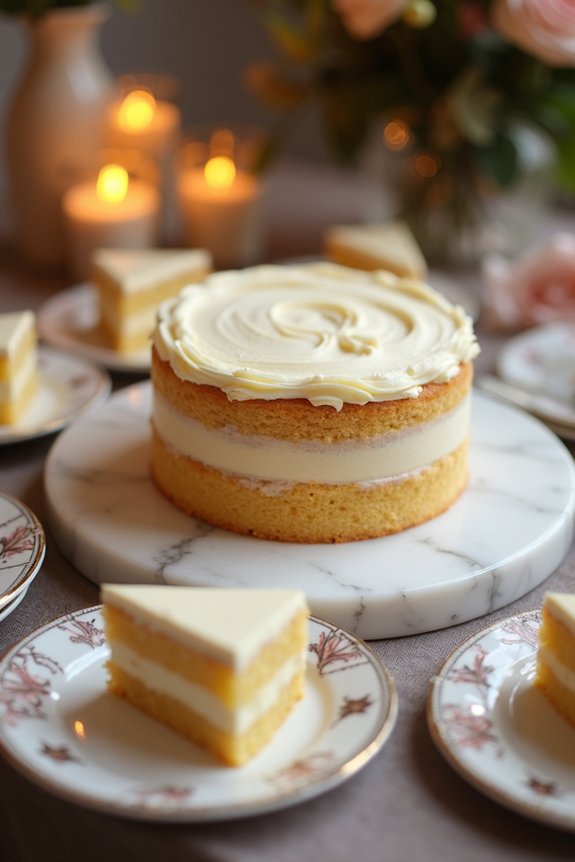
When you’re cutting an 8-inch cake, the slice size you pick changes everything about how many people you’ll feed. Wedding servings and party servings differ in both dimensions and portions per cake. Wedding slices run smaller at 1 by 2 inches, perfect for formal events where you’re serving cake after a meal. Party servings are wider at 1.5 by 2 inches, designed when cake is the main dessert. The difference matters considerably for your headcount.
| Slice Type | Width | Depth | Servings per 8-inch Cake |
|---|---|---|---|
| Wedding | 1 inch | 2 inches | 22 |
| Party | 1.5 inches | 2 inches | 16 |
Party slices offer roughly 50% more area per slice than wedding servings. Your event type determines which slice size works best for your guests.
Why Surface Area, Not Diameter, Drives the Math
Why does an 8-inch cake’s diameter alone tell you so little about how many slices you’ll actually get? The real answer lives in surface area. I’m talking about the actual space you have to work with—and that’s what determines your servings, not just the width measurement.
Here’s the math: an 8-inch round cake has a surface area of about 50.3 square inches. That’s your real working space. Now, your slicing pattern matters. Wedding slices run 1″ × 2″, while party slices are 1.5″ × 2″. Each pattern divides that surface area differently.
But wait—edge waste cuts into your count. The curved perimeter of round cakes loses roughly 12% to trimming and imperfect cuts. Square cakes? They eliminate that curved waste entirely, giving you more usable servings from identical cake dimensions.
When to Pair Your 8-Inch Cake With Larger Cakes or Cupcakes
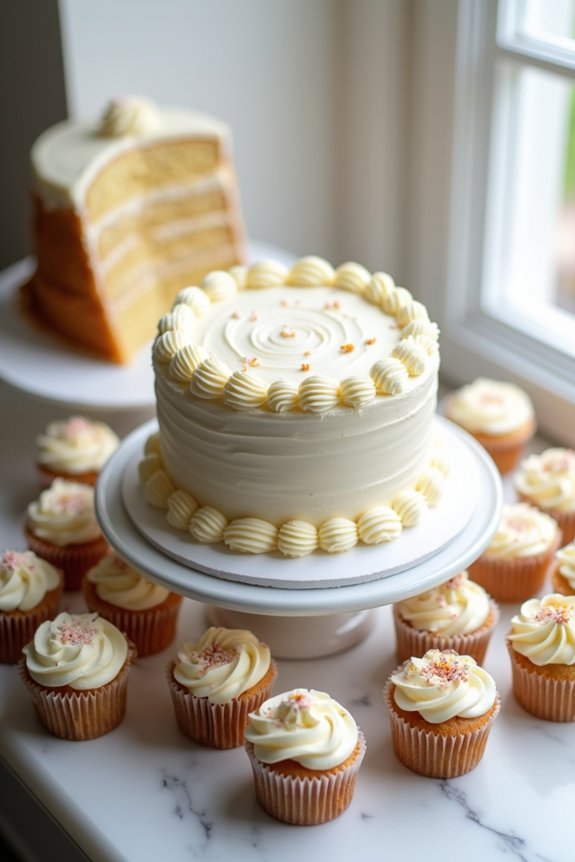
- 6+8 or 8+10 multi-tier setup reaches 40–60 servings easily
- 8-inch round with cupcakes hits 50–55 servings using the Bakers Buffer Rule
- Square 8-inch cake delivers roughly 32 wedding servings, 45% more than rounds
- Secondary tier addition adjusts headcount without changing slice sizes
- Taller third-party options like cupcakes shift total capacity smoothly
Your 8-inch cake forms the foundation. Pair it strategically based on your guest count and serving style. Wedding servings run smaller (1 x 2 inches), while party cuts are heartier (1.5 x 2 inches). Choose your pairing method based on your specific needs and budget.
How to Round Your Guest Count: The 10–15% Buffer Rule
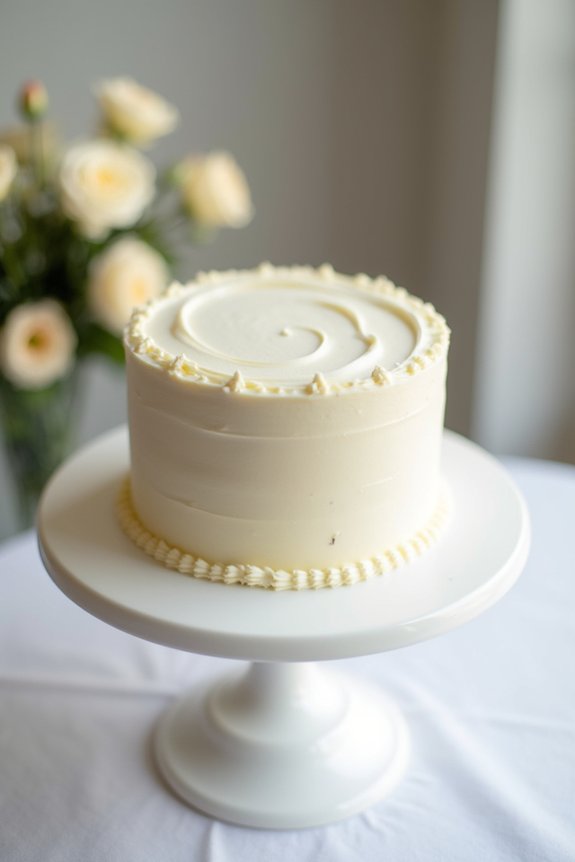
I always add 10–15% extra servings to my guest count because people eat differently at parties—some want seconds, and you’ll lose a bit to cutting waste around the edges. If I’m expecting 12 guests, I’ll plan for 14–15 servings instead, which means an 8-inch cake alone might leave me short, so I’d pair it with cupcakes or a sheet cake for backup. This buffer takes the stress out of running short and lets your guests enjoy dessert without you worrying about portions.
Buffer Beyond Your Headcount
How much wiggle room should you build into your cake order? I recommend applying the Baker’s Buffer Rule by adding 10–15% to your guest count. This extra cushion protects your event from common serving challenges.
Here’s what the buffer covers:
- Uneven cutting that wastes cake edges
- Guests requesting larger slices than standard portions
- Unexpected arrivals beyond your headcount
- Second and third helpings at celebrations
- Variations in serving size across cake portions
For an 8-inch round cake, this means converting a base estimate of 22 wedding servings into 24–25 actual servings. When you adjust pan size or use sheet cakes, apply the buffer to your total cake portions across all tiers. This headcount buffer ensures you won’t run short during your event, keeping your guests satisfied and stress off your shoulders.
Accounting For Second Helpings
Now that you’ve got your base cake size figured out, here’s the real challenge: people eat more cake at celebrations than you’d expect. I’ve learned that the Baker’s Buffer Rule solves this problem by adding 10–15% extra servings to your headcount. Here’s how it works: if you’re serving 20 guests, add 2–3 more servings to your portion control plan. This buffer accounts for second helpings and variations in your cutting method. An 8-inch round cake yields about 16 party slices or 22 wedding slices. By applying the buffer after choosing your cake size, you ensure everyone gets fed without running short. This straightforward approach prevents underestimating needs and keeps your celebration stress-free.
Why Taller 8-Inch Cakes Don’t Serve More People
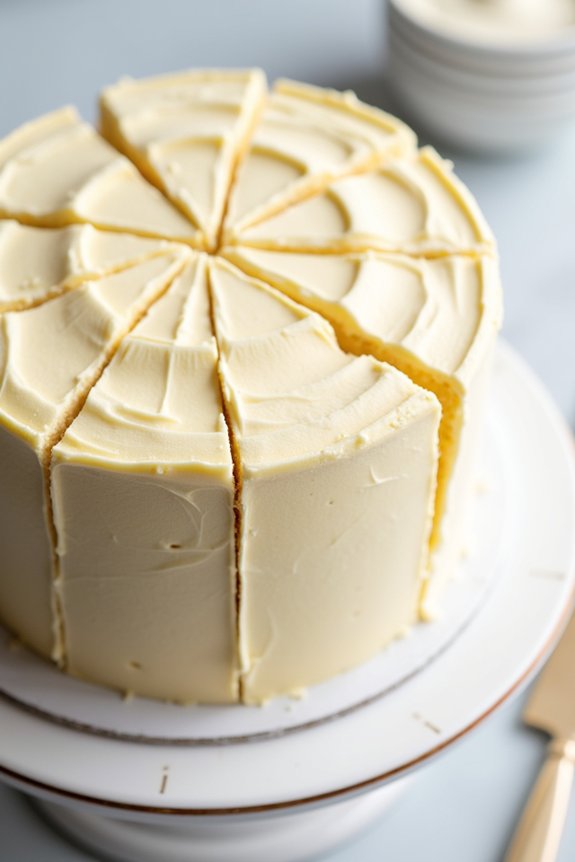
Many bakers assume that a taller 8-inch cake automatically feeds more people, but that’s actually not how serving sizes work. What really matters for servings is your cutting pattern and the cake’s surface area, not its height.
Here’s what actually determines your serving count:
- Pan size stays the same regardless of height
- Surface area remains identical on an 8-inch round
- Cutting pattern is what divides the cake into portions
- Height variation (3–6 inches) doesn’t change slice count
- Layer number only increases servings if you add more cakes
A 4-inch tall 8-inch cake yields the same wedding servings (1-inch by 2-inch slices) as a 6-inch tall one. You’re slicing from the same circular base. Change your pan size or add layers, and you’ll serve more people. But stacking height alone? That won’t do it.
How to Cut Your 8-Inch Cake to Maximize Portions
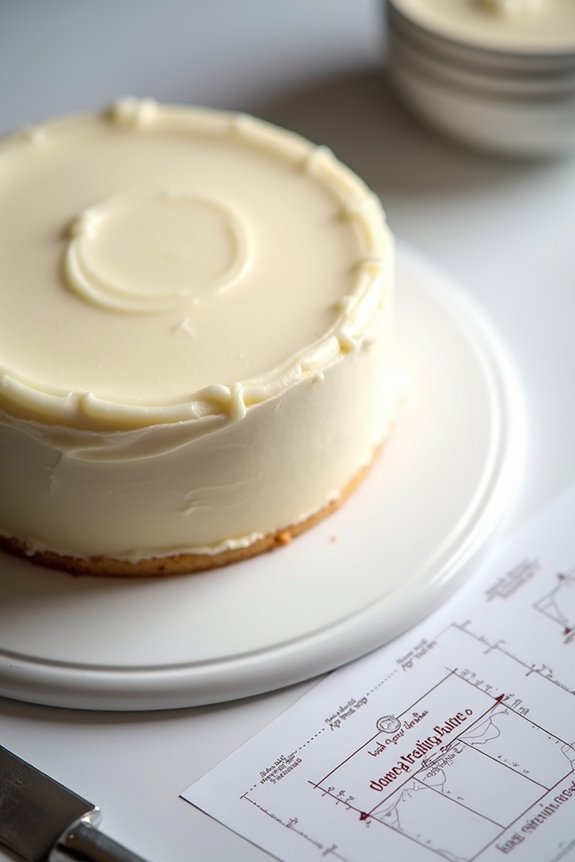
Want to serve more people from your 8-inch cake? I’ll show you how cutting patterns directly impact your cake servings.
Cutting patterns directly impact your cake servings—learn how to maximize portions from an 8-inch cake.
The Grid Method works best for round cakes. I start at the edge and slice across the diameter to create 2-inch-wide portions. This approach maximizes your serving size by reducing waste at the edges.
You can get roughly 22 wedding slices (1″ by 2″) or 16 party slices (1.5″ by 2″) using this technique. The key difference? Narrower slices mean more people get cake.
Here’s where the Bakers Buffer Rule comes in. I add 10–15% extra servings to account for variations in how guests take their portions. So from 22 potential slices, I actually plan for 24–25.
This simple adjustment ensures nobody leaves disappointed.
Right-Size Your Cake in Seconds With the Free Calculator
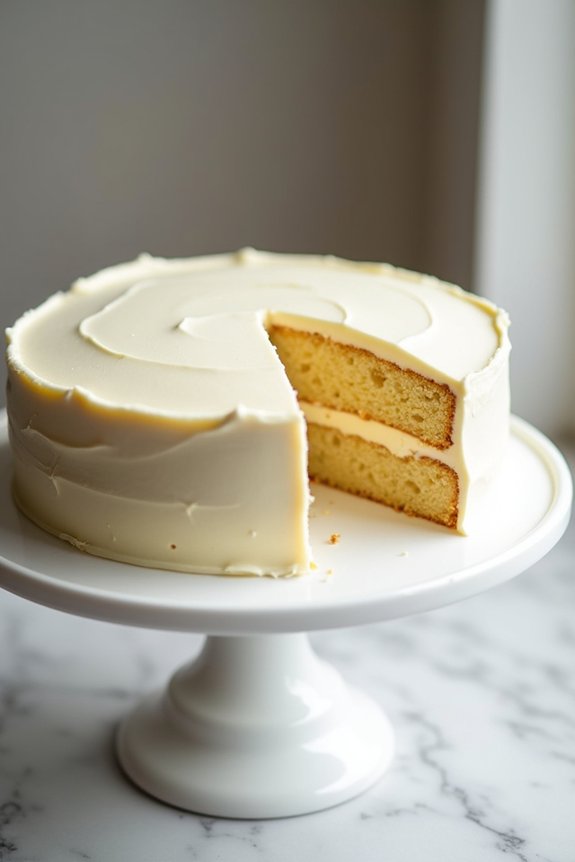
Cutting patterns matter, but so does picking the right cake size from the start. I’ve found that our free calculator removes the guesswork from cake planning. You’ll get instant answers tailored to your event.
Here’s what the calculator handles:
- Rounds, squares, and tiered configurations in seconds
- Edge waste and cutting pattern variations
- Wedding servings versus party servings estimates
- 8-inch cake conversions to different sizes
- Baker’s Buffer recommendations for extra guests
An 8-inch round yields roughly 22 wedding servings or 16 party servings. Square cakes of the same size deliver up to 45% more servings. Simply input your headcount, select your cake shape, and the calculator adjusts recommendations instantly. You’ll know exactly whether one 8-inch cake works or if you need additional tiers or cupcakes to meet your guest count.