
In a simple table setting, you’ll place your dessert fork directly above the plate, centered and about one inch from the rim. The tines should face right, matching your other forks. This straightforward placement signals that dessert is coming without requiring you to memorize complicated formal rules. If space is tight, you can position it to the left above your dinner fork instead. Keep the placement consistent across your table for a polished look. There’s more to master about spacing and pairing it with your dessert spoon.
Why Placement Rules Differ: Simple vs. Formal Settings
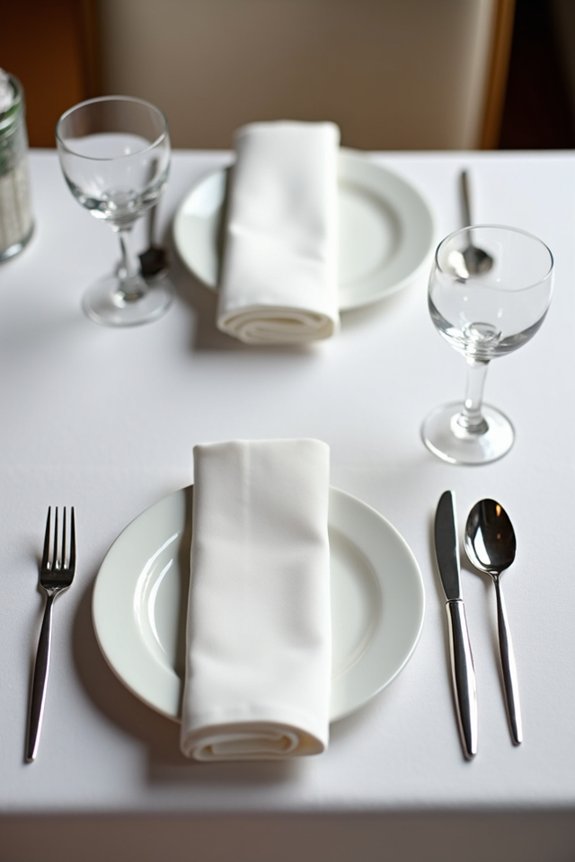
Why do dessert forks end up in different spots depending on the occasion? The answer comes down to complexity. Formal settings demand precision, while simple settings prioritize practicality. In a formal vs informal comparison, you’ll notice that formal dining places your dessert fork above the plate with specific spacing rules. Simple settings, however, work differently. You’ve got three main options for dessert fork plate placement. You can position it above your plate, place it directly on the dessert plate itself, or arrange it left-of-plate with the spoon on the right—mirroring dinner utensils. This flexibility exists because simple settings value ease over rigid protocol. You’re not memorizing complicated rules; you’re just grabbing what you need when dessert arrives. That’s the beauty of keeping things uncomplicated.
The Basic Placement: Dessert Fork Above the Plate
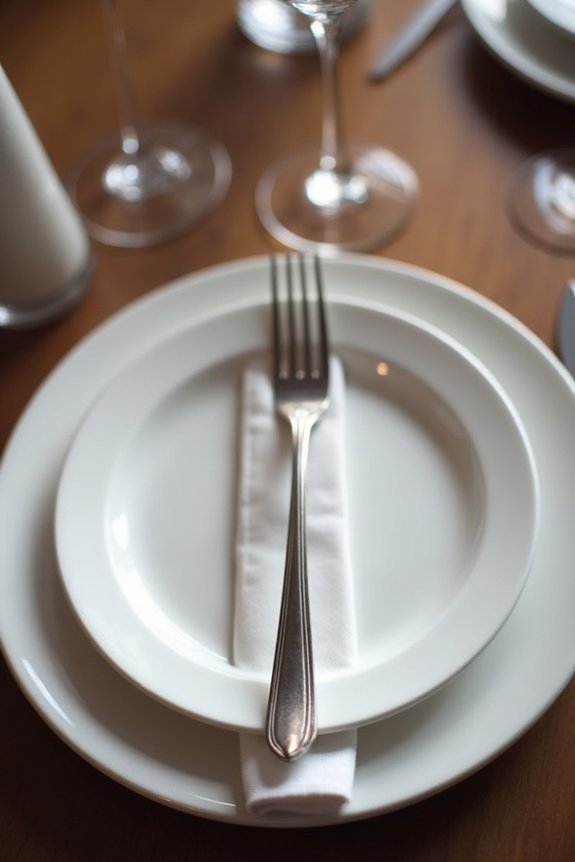
The simplest way to signal dessert is placing your fork above the plate, centered and ready to go. I position the dessert fork with its prongs facing right, mirroring how I’d use it during other courses. This above the plate placement sits directly above the dinner plate’s center, creating a clear visual signal for what’s coming next.
In a simple table setting, this utensils placement keeps things straightforward. The dessert fork stays isolated from the main-course cutlery arranged beside the plate. When I’m setting a table this way, I’m using a practical approach that doesn’t require memorizing complicated rules.
This basic arrangement works because it clearly separates dessert from earlier courses. You’ll know exactly which fork to reach for when dessert arrives.
Dessert Fork on the Left: When Space Is Tight
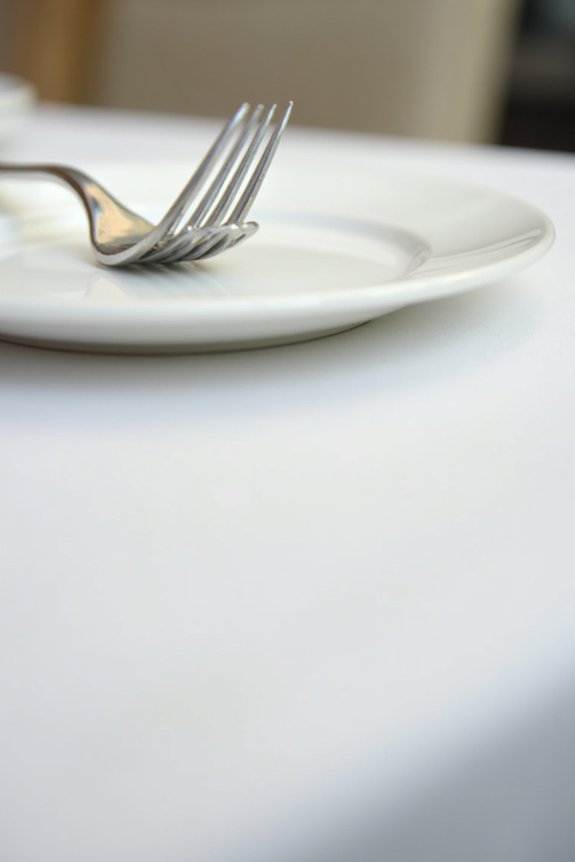
When your dining table’s cramped for space, you’ve got to get creative with your dessert fork placement. I’d recommend positioning the dessert fork to the left of your plate, placing it above the main fork. This space-saving approach keeps everything aligned neatly with the plate edge, creating a compact layout that doesn’t sprawl across your table.
| Placement | Position | Benefit |
|---|---|---|
| Dessert fork | Left side, above main fork | Saves horizontal space |
| Alignment | Flush with plate edge | Creates neat appearance |
| Access | Easy to grab | Signals dessert sequence |
This left-side arrangement signals to your guests that dessert comes next, while maintaining order in tight quarters. You’re essentially stacking your utensils vertically rather than spreading them horizontally. It’s practical, organized, and keeps your table feeling intentional rather than cluttered.
Spacing the Dessert Fork From Your Plate Edge
When you’re setting your table, I want you to position the dessert fork about 1 inch (2.5 cm) above the plate’s edge—this distance keeps things looking neat and organized. You’ll align the fork so it sits parallel to the plate rim, which means it runs in the same direction as the plate’s outer edge. Getting this spacing right makes your whole table look intentional, and it tells your guests you know what you’re doing.
Proper Distance Guidelines
How do you know exactly where to position a dessert fork so it looks intentional rather than randomly placed? The answer lies in maintaining consistent distance from your plate. I keep the dessert fork about 1 inch above the plate rim. This spacing creates a clear separation between your dessert utensil and the main place setting below it.
Think of it this way: you’re establishing a visual boundary. The distance guideline applies across your entire table, ensuring every dessert fork sits at the same height above each plate. This uniformity is what transforms a casual setup into a polished place setting.
When I’m arranging multiple settings, I measure carefully. This consistency shows intentionality and respect for your guests. It’s the detail that separates a thoughtful table from one that just happened.
Alignment With Plate Rim
The real magic of a polished table setting happens when you nail the alignment—that precise spacing between your dessert fork and the plate rim. I keep my dessert fork about 1 inch above the plate, centered directly over the dinner plate. This thumb-width distance creates the visual balance you’re after. Position the fork so its tines face right, with the handle pointing outward. The key is maintaining even spacing from the plate edge all around. Your alignment with the plate rim keeps everything looking intentional and organized. When you place the dessert fork above the plate this way, you’re signaling you know what you’re doing. That’s the confidence you want at your table. Get this spacing right, and your entire setting comes together beautifully.
Where the Dessert Fork and Spoon Sit Together
Ever wonder why dessert utensils get their own special spot above your plate? I’ll explain how the dessert fork and dessert spoon work together in table settings.
In formal settings, you’ll place your dessert spoon directly above the fork. The dessert fork sits below it, and both rest above the plate. This stacked arrangement keeps things organized and signals what’s coming next in your meal.
For informal settings, the layout shifts slightly. Your dessert fork goes on the left side while the dessert spoon sits on the right. They’re positioned above the plate or resting on your dessert plate itself.
This paired placement works because it mirrors your main utensils’ left-right positioning. You’re essentially creating a mini version of your dinner setup. Keeping them together above the plate prevents confusion and maintains visual balance throughout your table setting.
Dessert Fork Placement Mistakes to Avoid
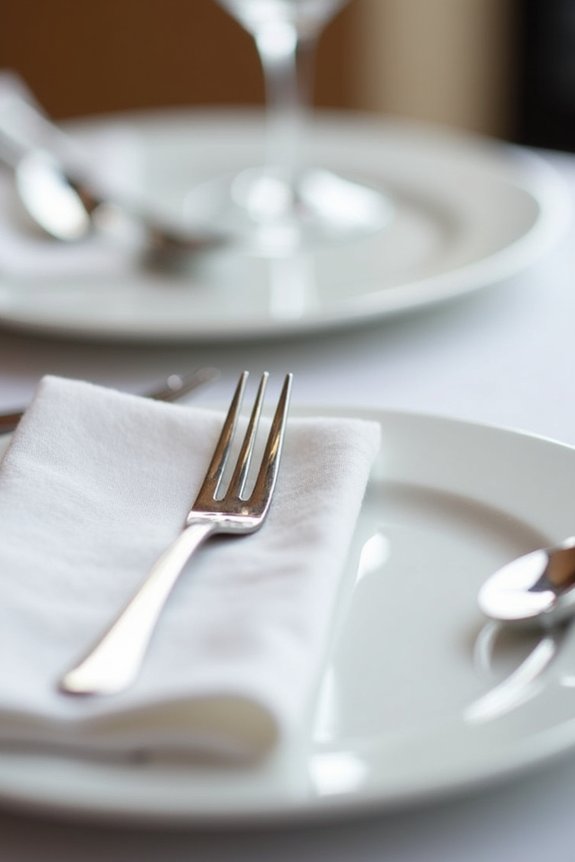
I’ll walk you through the most common mistakes I see people make with dessert fork placement, and trust me, they’re easier to fix than you’d think. The three main errors you’ll want to avoid are putting the fork above the plate but with the wrong orientation, confusing it with your dinner fork, and placing it anywhere except directly above the plate itself. Once you nail these three points, your table setting will look polished and proper.
Placement Above The Plate
Where should your dessert fork actually sit when you’re setting a simple table? I’ll tell you: directly above the dinner plate, centered and parallel to the plate’s edge. Your dessert fork’s prongs face right, with the handle pointing left. This above the plate positioning keeps your table setting looking balanced and intentional.
I see people mess this up constantly. They offset the fork toward one side or—worse—place it below the plate entirely. Don’t do that. Keeping your dessert fork centered maintains table symmetry that guests notice, even if they can’t explain why the setting feels right.
For utensils placement consistency, align your fork with the table edge. If you’re adding a dessert spoon too, position it above the plate alongside the fork. This straightforward approach ensures your table setting looks polished and properly arranged.
Orientation Of Fork Tines
How do you know which way your dessert fork’s tines should point? I’ll help you master this detail that separates a polished formal setting from a casual one.
Your dessert fork’s tines orientation matters. Here’s what you need to know:
- Point tines to the right when viewed from the guest’s perspective, aligning them toward the center of the plate
- Never face tines downward or leftward, which signals uncertainty about proper etiquette
- Keep tines pointing right in both formal and casual beach layouts for consistency
The key is positioning your dessert fork above the plate with tines facing right. This matches the spoon alignment and creates visual harmony. You’re now confident in this small but meaningful detail. Proper tines orientation shows you understand table settings and care about the dining experience you’re creating.
Confusing With Dinner Fork
Now that you’ve got the tines pointing the right direction, let’s make sure you’re not accidentally putting your dessert fork in the wrong spot altogether.
The biggest mix-up happens when people treat the dessert fork like a dinner fork. You might place it on the left side of your plate where dinner forks belong, or stick it on the right with other utensils. Here’s what actually happens:
| Mistake | What You’re Doing | The Fix |
|---|---|---|
| Left placement | Confusing it with dinner fork | Move it above the plate |
| Right side mixing | Grouping it with dinner utensils | Position it horizontally above |
| Misalignment | Disrupting the plate’s edge | Align fork with plate border |
Your dessert fork belongs above the plate, aligned horizontally. Keep it separate from your dinner fork setup entirely. This placement signals you’re ready for dessert service.
Keeping Dessert Forks Consistent Across Your Table
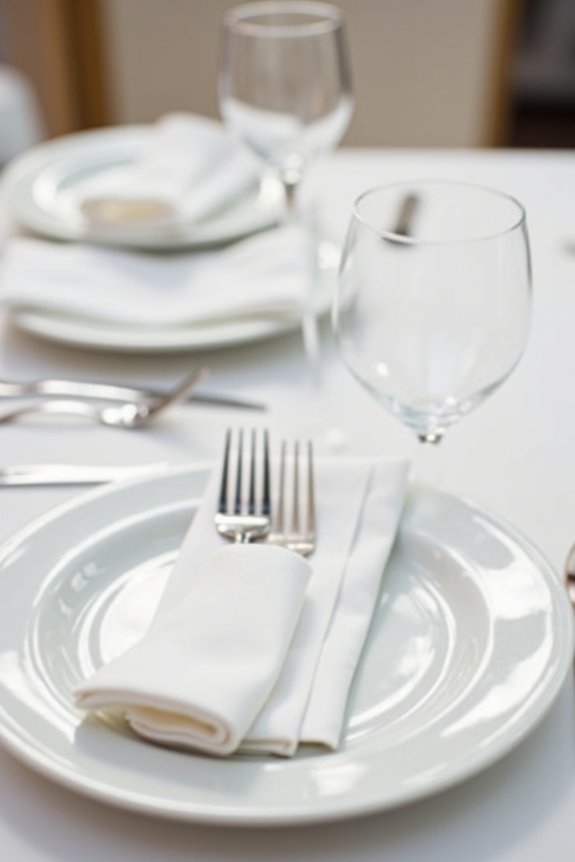
Why does consistency matter when you’re setting a table? It creates a polished look and shows your guests you’ve put thought into the experience. I’ve learned that uniformity across your table setting makes everyone feel welcomed and comfortable.
Consistency in table setting creates a polished look that shows guests you’ve put thought into their experience and comfort.
Here’s how I keep my dessert fork placement consistent:
- Align horizontally: I ensure all dessert forks line up with the plate center across every place setting, creating visual order that guests notice.
- Maintain uniform distance: I measure the space between each fork and plate edge, keeping it identical at every seat.
- Mirror the arrangement: Whether I place utensils above the plate or beside it, I replicate the exact same positioning throughout.
When your dessert fork placement matches everywhere, your table setting looks intentional and professional. That consistency tells your guests they matter to you.