Sweet tea delivers 40–100 mg of caffeine per serving, depending on brew strength and serving size. An 8-ounce cup has about 20–50 mg, while 16 ounces reaches 40–100 mg. Longer steeping times and hotter water extract more caffeine. Sweet tea sits between soda (30–40 mg) and coffee (95 mg) per 8-ounce serving. You can safely drink multiple glasses within the FDA’s 400 mg daily limit, though you’ll want to skip it after mid-afternoon for better sleep. Decaf and cold-brew options cut caffeine to just 2–15 mg per serving if you need to dial it back—there’s plenty more detail about each method.
Fact 1: Sweet Tea Typically Contains 40–100 Mg of Caffeine per Serving
Most sweet teas you’ll encounter contain somewhere between 40 and 100 milligrams of caffeine per serving, though the exact amount varies quite a bit. Here’s what affects that number: the brewing time, brew strength, and serving size all play major roles. An 8-ounce serving typically has 20–50 mg of caffeine, while a 16-ounce serving pushes toward 40–100 mg. Black tea forms the usual base for sweet tea, and longer steeping times extract more caffeine from those leaves. The amount of tea leaves you use matters too. If you’re checking caffeinated beverages at home or buying bottled options, remember that brands differ. Decaffeinated tea exists as an alternative if you want trace amounts instead. Check labels to know what you’re getting.
Fact 2: How Brewing Time Raises Caffeine Content
Ever wonder why your afternoon sweet tea packs more of a caffeine punch than your morning glass? It’s all about brewing time. When you steep black tea longer—think 10 to 15 minutes instead of just a few—you boost caffeine extraction considerably. More steep time means more caffeine ends up in your 8-ounce serving. Here’s the thing: this relationship is straightforward. Longer brewing always yields higher caffeine levels, assuming you’re using the same amount of tea. Hotter water speeds up this process, amplifying the effect even more. Want to control your caffeine level? You’ve got options. Use less tea, brew for shorter periods, or try a decaf option. Understanding tea brewing gives you real power over your drink’s kick.
Fact 3: Sweet Tea Caffeine vs. Coffee and Soda
How does your sweet tea stack up against other drinks you grab throughout the day?
When you compare sweet tea caffeine to other beverages, the numbers tell an interesting story. Here’s what I found about the caffeine content in popular drinks:
- Coffee delivers about 95 mg per 8-ounce serving
- Sweet tea ranges from 15–70 mg depending on brew strength and tea type
- Soda provides roughly 30–40 mg per 8-ounce serving
- Decaffeinated sweet tea contains just 2–5 mg per serving
Coffee’s clearly the heavyweight champion here. A restaurant vs home brew comparison matters too—a 16-ounce sweet tea from Chick-fil-A has around 62 mg, while home-brewed versions average 41 mg. If you’re seeking gentler caffeine, sweet tea fits nicely between soda and coffee, giving you flexibility based on your mg per serving preference.
Fact 4: Know Your Limit: 400 Mg Daily Is Safe; Adjust Timing for Sleep
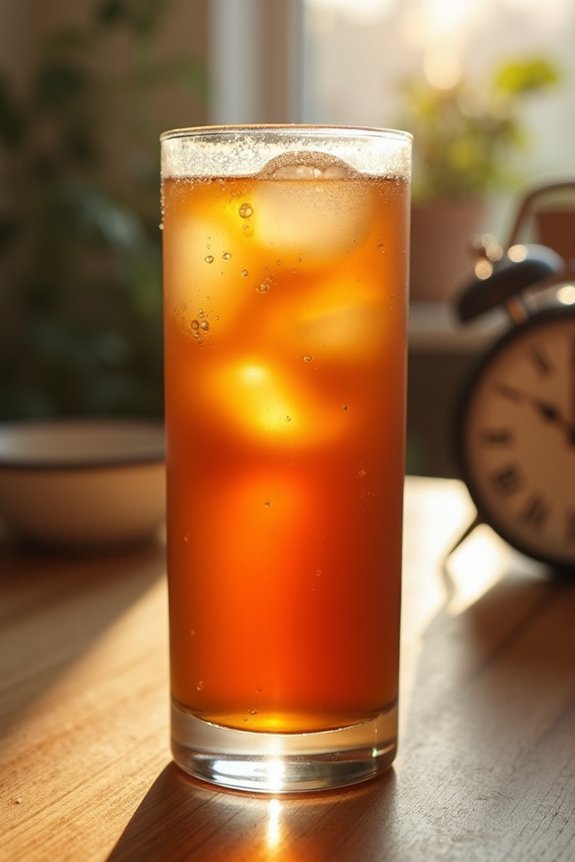
So you’re wondering if that sweet tea you’re drinking is safe—and the answer’s pretty straightforward. The FDA recommends a daily limit of 400 mg of caffeine for most adults, and you can fit several servings of sweet tea within that safe caffeine intake. Since an 8-ounce cup contains roughly 14–70 mg, you have room to enjoy multiple glasses.
Here’s the key: timing matters for sleep. Drink your sweet tea earlier in the day and skip it after mid-afternoon. This sleep timing strategy prevents bedtime caffeine avoidance issues and wakefulness at night. Your caffeine sensitivity varies based on your body, so some people need stricter limits.
If you notice sleep problems, switch to decaf sweet tea or herbal alternatives in the late afternoon. Adjusting your tea caffeine content this way keeps you comfortable and rested.
Fact 5: Decaf and Cold-Brew Options Reduce Caffeine to 2–15 Mg per Serving
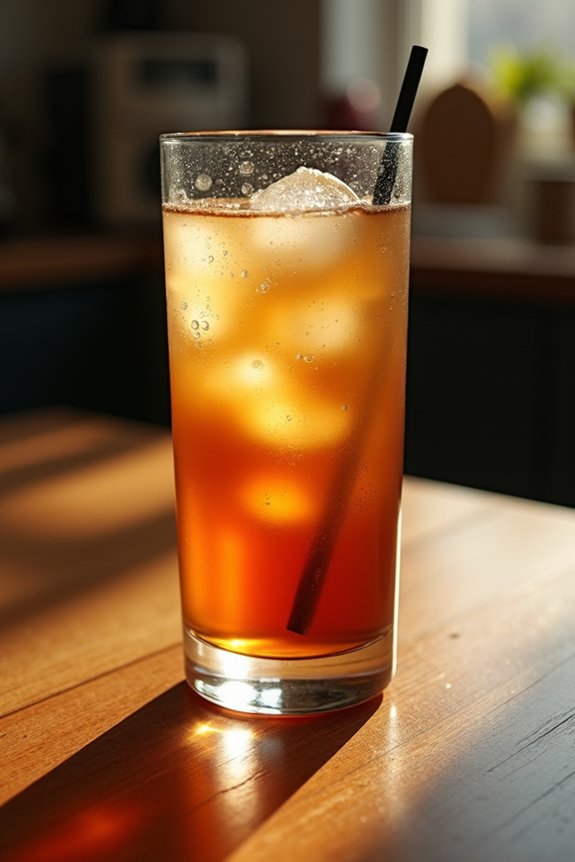
Want to enjoy sweet tea without the caffeine jolt? You’ve got solid options that keep caffeine per serving low.
Your decaf sweet tea choices:
- Decaf sweet tea delivers just 2–5 mg per 8-ounce serving, cutting caffeine dramatically
- Cold-brew methods reduce caffeine extraction by about 20% compared to hot brewing
- Hybrid blends mixing regular and decaf tea (50/50) give you moderate caffeine reduction with full flavor
- Herbal tea substitutes from plants other than Camellia sinensis are naturally caffeine-free
A 16-ounce serving of decaf still stays in that low, single-digit range depending on your tea brewing methods. Cold-brew especially helps since cooler water extracts less caffeine. Mix and match these approaches to find what works for you. You’re not sacrificing taste—just the caffeine jolt.