A standard 8-ounce cup of breakfast tea contains roughly 40–60 mg of caffeine. Your steep time makes a big difference: a quick 1-minute brew gives you about 14 mg, while a 5-minute steep pushes closer to 42 mg. Hotter water also pulls out more caffeine faster. For context, that’s less than coffee’s 96 mg but similar to chai. If you want less caffeine, decaf options drop to just 1–8 mg per cup. The specifics of what you’re brewing and how reveal even more control over your morning energy.
How Much Caffeine Is in a Standard Cup of Breakfast Tea?
Ever wonder why your morning cup of breakfast tea gives you that gentle pick-me-up? A standard 8-ounce cup of English Breakfast tea contains about 42 mg of caffeine per cup. That’s right in the middle of the typical range for black tea, which sits between 30 to 60 mg.
Here’s the thing: your brew time matters. Steep for just one minute, and you’ll get roughly 14 mg. Go for three minutes, and you’re looking at about 22 mg. Hit that full five-minute steep, and you’ll land near the standard 42 mg amount.
Want perspective? The Mayo Clinic suggests most adults can safely have up to 400 mg daily. Your single cup? Just a small slice of that limit.
What Affects Caffeine Levels: Steep Time, Temperature, and Tea Type?
Now that you know a standard cup lands around 42 mg, you might be wondering what actually controls that number. Three main factors shape your caffeine content: brew time, brew temperature, and tea type.
Brew time makes a real difference. Steep for just one minute and you’ll get about 14 mg. Push it to three minutes and you’re looking at 22 mg. Hit that typical five-minute mark and you’ll reach 42 mg.
Temperature matters too. Hotter water pulls more caffeine from your leaves faster.
Tea type itself plays a major role. Black tea like English Breakfast delivers 30–60 mg per cup, while green tea typically contains 25–50 mg. Choose your black tea, control your steep time, and you’ll dial in exactly the caffeine boost you want.
How Breakfast Tea Stacks Up to Coffee, Green Tea, and Chai?
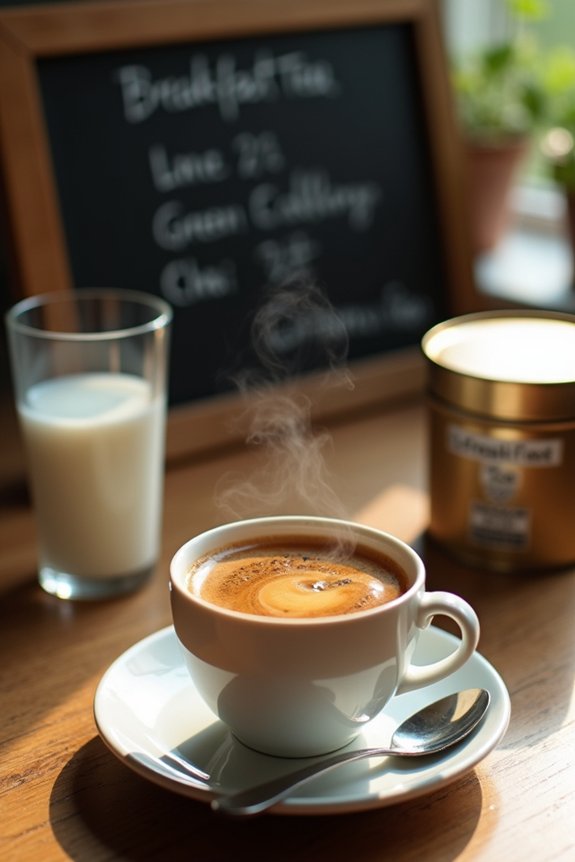
I want you to understand how breakfast tea’s caffeine content really compares to what you’re probably drinking instead—coffee has roughly twice the caffeine per cup, while green tea lands somewhere in the middle with a lighter kick. When you stack breakfast tea against chai, you’re looking at pretty similar numbers, though chai can surprise you with extra caffeine if it’s brewed strong or made with more tea leaves. These comparisons matter because knowing where breakfast tea sits on the caffeine spectrum helps you pick the right drink for your energy needs throughout the day.
Breakfast Tea Versus Coffee
How does breakfast tea actually compare when you stack it against coffee, green tea, and chai?
When you’re choosing your morning drink, caffeine content matters. An 8-ounce cup of breakfast tea contains about 42–47 mg of caffeine. That’s roughly half what you’d get from a standard cup of drip coffee, which packs around 96 mg. So coffee wins the caffeine race, but breakfast tea still delivers a solid boost without overdoing it.
Here’s how breakfast tea stacks up:
- Breakfast tea: 42–47 mg per 8-ounce cup
- Coffee: Around 96 mg per cup
- Green tea: 25–50 mg depending on brew time
- Chai: 40–60 mg with variations based on preparation
You get enough caffeine to start your day without the jitters coffee sometimes brings. That balance makes breakfast tea a smart middle ground.
Comparing Green Tea Caffeine
Green tea brings a different caffeine story to the table. You’ll find that green tea contains about 25-50 mg of caffeine per 8 oz cup. That’s notably lower than English Breakfast tea, which delivers around 42 mg. Your brewing time matters too. A quick 1-minute steep gives you roughly 14 mg of caffeine, while a 3-minute steep bumps that up to 22 mg. Compared to coffee’s 96 mg per cup, green tea offers you about half to one-third the caffeine content. If you’re seeking a gentler option, decaffeinated green tea drops to just 1-8 mg. For a caffeine comparison, matcha green tea can match English Breakfast’s lower range, depending on how you prepare it.
Chai’s Caffeine Complexity
Where does chai fit in your caffeine lineup? I find chai sits comfortably in the middle ground, with 40–60 mg of caffeine per 8 oz cup. That’s higher than green tea but lower than most coffee drinks. The black tea base gives chai its caffeine kick, though the spice mix doesn’t drastically change the caffeine content.
Here’s how chai stacks up:
- Chai caffeine content: 40–60 mg per cup, matching English Breakfast tea
- Black tea foundation: Provides consistent milligrams per cup across preparations
- Milk dilution effect: Adding milk waters down flavor but keeps caffeine stable
- Decaf option: Choose 1–8 mg versions if you want the taste without the jolt
You’re joining plenty of tea drinkers who appreciate chai’s balanced caffeine strength.
Want Less Caffeine? Decaf and Herbal Tea Options Explained?
If you’re cutting back on caffeine but still want your morning cup of tea, you’ve got solid options. Decaf tea reduces your caffeine content significantly. Each 8-ounce cup contains 1–8 mg of caffeine per cup, though it’s not completely caffeine-free. The decaffeination process removes most caffeine from Camellia sinensis leaves, the plant behind traditional breakfast tea.
For truly zero caffeine, herbal tea is your answer. Chamomile and red raspberry herbal tea contain 0 mg per 8-ounce cup. These herbal blends use botanicals and non-tea-leaf ingredients instead of Camellia sinensis, making them naturally caffeine-free. Choose herbal tisanes when you want caffeine-free moments without sacrifice. Both decaf and herbal options let you enjoy your ritual while keeping your caffeine intake low.
Is Breakfast Tea Safe? Daily Caffeine Limits and You?
If you’re wondering whether your morning cup of breakfast tea fits into a healthy routine, the good news is that most adults can safely drink up to 400 mg of caffeine daily according to Mayo Clinic guidelines. I’ll show you how to track your tea consumption throughout the day so you stay within that safety threshold—especially since an 8-ounce cup of English Breakfast tea contains about 42 mg of caffeine, meaning you could have nine cups before hitting the limit. Understanding these numbers helps you make informed choices about when and how much tea you drink without guessing whether you’re overdoing it.
Daily Caffeine Intake Guidelines
How much breakfast tea can you safely drink each day? Most adults can consume up to 400 mg of caffeine daily without issues. English Breakfast tea typically contains 42–60 mg per cup, depending on steeping time. Here’s what you need to know:
- Standard 5-minute steeps yield about 42 mg of caffeine content per 8-ounce cup
- Nine cups of English Breakfast could reach your 400 mg daily intake guidelines limit
- Shorter 1-minute steeps produce only 14 mg per cup, giving you more flexibility
- Decaffeinated tea offers 1–8 mg per cup if you’re monitoring caffeine closely
Your mg per cup matters because steeping duration changes the strength considerably. Shorter steeps mean you’re drinking less caffeine overall. If you’re tracking your daily intake, adjust your steep time accordingly to stay within safe limits.
Safety Thresholds For Adults
Now that you know how much caffeine ends up in your cup based on steep time, let’s look at whether drinking breakfast tea regularly is actually safe for you. Most adults can safely consume up to 400 mg of caffeine daily. Since an 8-ounce cup of English Breakfast tea contains roughly 42 mg, you’d need about nine cups to hit that daily threshold. That’s a lot of tea. For context, decaffeinated tea offers only 1–8 mg per cup, making it a solid option if you’re watching your caffeine content. The key to caffeine safety is knowing your limits and listening to your body. You’ve got flexibility here—you’re not restricted to just one type of tea.
Tracking Consumption Throughout Day
The real challenge isn’t just knowing how much caffeine’s in one cup—it’s keeping track of how much you’re drinking all day long. Your daily limit is 400 mg, and English Breakfast tea contains about 42 mg per 8-ounce cup. That means you could have roughly nine cups before hitting that threshold. But most people don’t drink just one cup, so tracking matters.
Here’s how to stay on top of your caffeine content:
- Jot down each cup you drink with the brewing time used
- Remember that 1-minute steeps have only 14 mg, while 5-minute steeps reach 42 mg
- Count your morning tea early to avoid surprises later
- Switch to decaf or herbal options after lunch
This simple tracking keeps you in control of your daily limit.
How Black Tea Variety Changes Your Caffeine Intake?
Did you know that not all black teas pack the same caffeine punch? The caffeine content in your cup depends on which black tea blends you choose. English Breakfast, a popular mix of two or three black teas from China, India, and Africa, typically contains 40–60 mg of caffeine per 8 oz cup. Want more kick? Stronger brews using CTC-processed leaves and longer steeping times push that number toward 60 mg. On the flip side, high-grade varieties like Pu-erh can reach nearly 100 mg per cup. If you’re sensitive to caffeine, decaffeinated black tea drops the content to just 1–8 mg. Your choice of variety directly shapes your daily caffeine intake.
Pick Your Brew: Breakfast Tea by Energy Level and Time of Day?
When should you brew your breakfast tea, and how long should you let it steep? Your brew time directly controls your caffeine content and energy level. I find that matching my mug’s strength to my daily needs makes mornings smoother.
Here’s how I pick my English Breakfast brew:
- Quick wake-up (1 minute steep): About 14–22 mg per cup—gentle energy without jitters
- Moderate morning boost (3–5 minutes): Around 22–42 mg per cup—solid caffeine for sustained focus
- Maximum energy (5+ minutes): Approaches 42 mg—strongest kick, though bitterness increases
- Low-caffeine option: Decaf English Breakfast delivers just 2–10 mg per cup for afternoons
I adjust my brew time based on what I need that day. Shorter steeps work when I want calm alertness. Longer steeps hit harder when I need serious focus.
Brewing Tips to Control Your Caffeine?
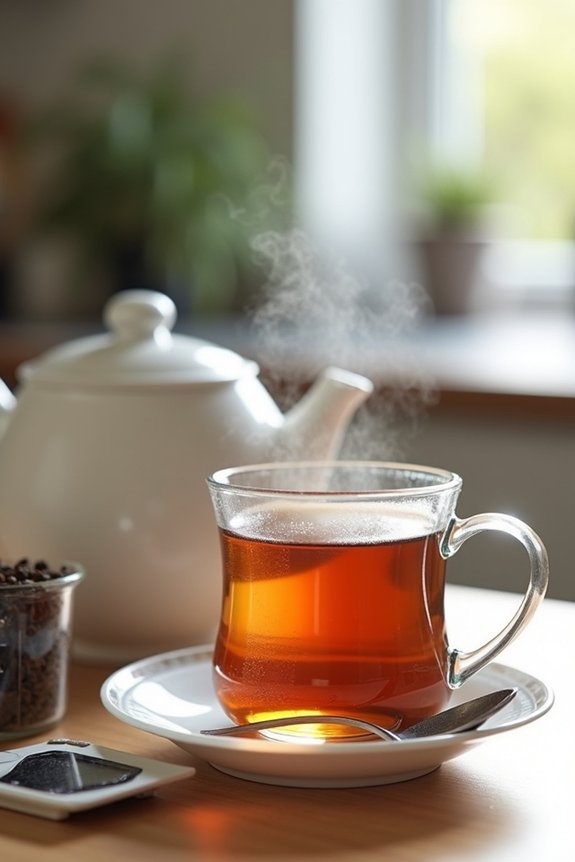
How much control do you actually have over your tea’s caffeine punch? More than you’d think. Brew time is your secret weapon for caffeine control. A 1-minute steep gives you about 14 mg per 8 oz cup, while 3 minutes bumps it to 22 mg, and 5 minutes reaches 42 mg. English Breakfast tea typically lands around 42 mg with standard brewing.
Want to cut caffeine without switching tea types? Grab decaffeinated teas instead, which contain only 1–8 mg per cup. You control the strength by adjusting your steep time. Keep your water hot and time it carefully. Shorter steeps mean less caffeine extraction. Track what works for your morning routine and adjust accordingly.