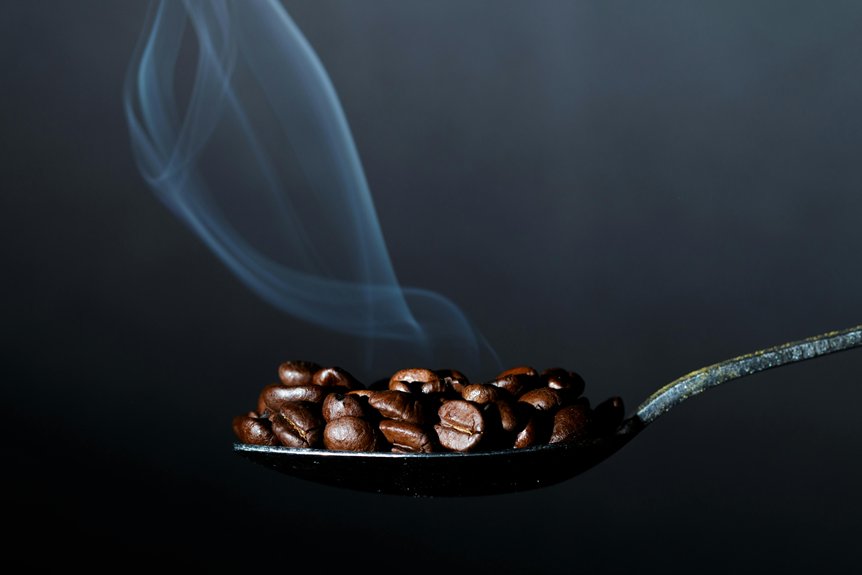
French roast coffee uses extended high heat to turn beans nearly charcoal-dark, creating bold chocolate and smoky flavors with low acidity. I’d brew it in a French press with coarse grounds, 195–205°F water, and a 1:15 coffee-to-water ratio for a smooth, velvety cup. Keep beans in an airtight container for two to three weeks after roasting. If you’re getting burnt or ashy notes, lower your water temperature to 80–85°C or shorten your steep time. The technique matters far more than bean origin here.
What Is French Roast Coffee?
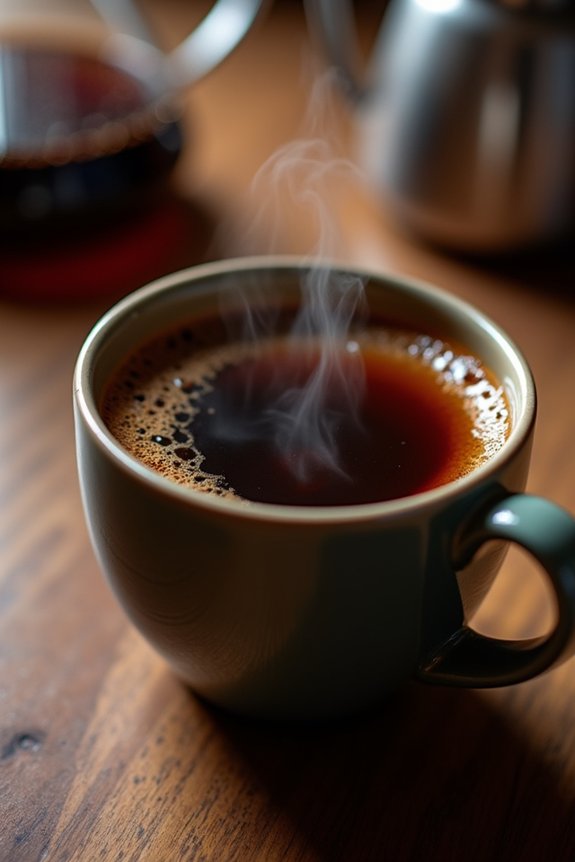
French roast is a dark roast coffee where roasters heat the beans until they’re nearly charcoal-colored. During roasting, beans reach the second crack, which signals when oils rise to the bean’s surface. This process creates that signature shiny appearance you’ll notice.
What makes French roast special isn’t where the beans come from—they can originate anywhere worldwide. Instead, the extended high-heat roasting defines the profile. You’ll taste bold flavor notes like dark chocolate, smokiness, and toasted nuts. The acidity drops considerably, giving you a heavy body and velvety mouthfeel that feels luxurious on your tongue.
French roast emphasizes the roaster’s craft over origin characteristics. It’s perfect for a French press, where those oils truly shine and deliver that rich, full-bodied cup you’re after.
What Does French Roast Actually Taste Like?
Ever wonder why your French roast tastes so different from lighter roasts? I’ll tell you—it’s all about what happens during that extended high-temperature roasting process.
French roast delivers a bold, smoky flavor profile that’s unmistakably rich. You’ll notice chocolate notes, roasted nuts, and a bittersweet finish. The low acidity makes it smooth and easy on your stomach. Those visible oils on the bean surface create a full-bodied cup with a velvety mouthfeel.
| Flavor Element | What You Taste | Why It Happens |
|---|---|---|
| Smoky Quality | Dark, charred notes | Extended roasting at high heat |
| Chocolate Notes | Sweet, toasted richness | Caramelization during second crack |
| Low Acidity | Smooth, mellow finish | Roasting breaks down acids |
The roaster’s skill matters more than the bean’s origin here. Your French roast tastes like your roaster made it, not where it grew.
How French Roast Compares to Medium and Light Roasts
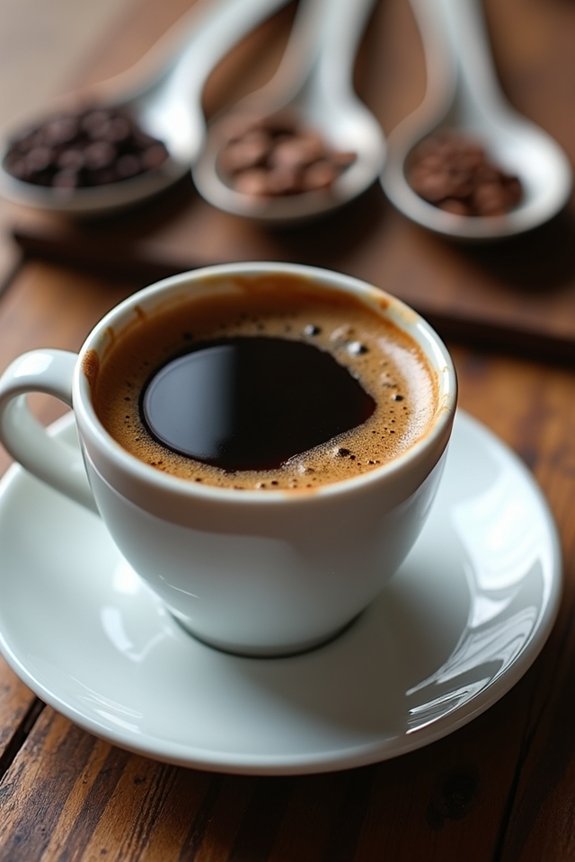
Now that you know what makes French roast taste so distinctive, let’s see how it stacks up against its lighter cousins. French roast has a darker color and more oils on the bean surface than medium or light roasts. You’ll notice higher sweetness from caramelization and lower perceived acidity. Medium roasts fall somewhere in the middle, while light roasts highlight origin notes and fruitiness that French roast masks. French roast delivers a fuller body and bittersweet finish, unlike the floral or citrus notes you’d find in lighter options. When brewing, this comparison matters. French roast often benefits from methods extracting those oils, like a French press. You might need cooler water or shorter brew times to prevent excessive bitterness.
The Best Brewing Methods for French Roast
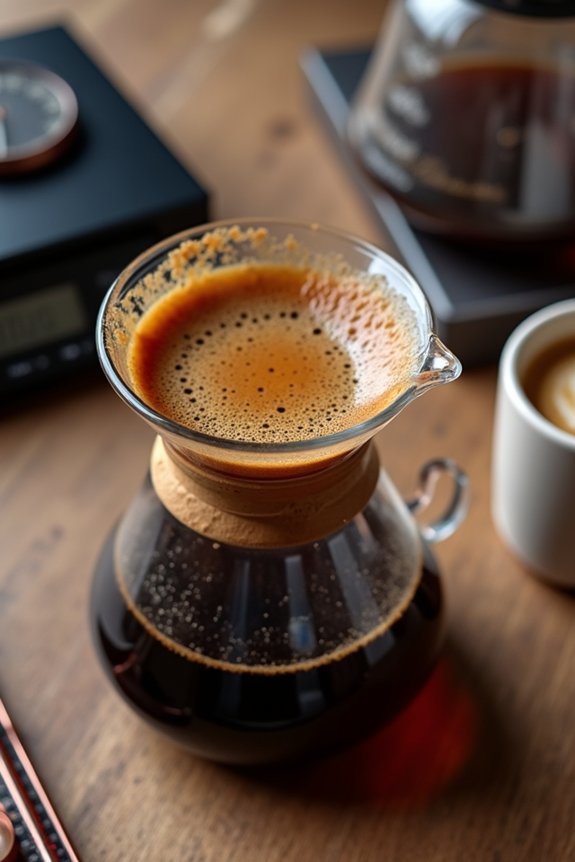
I’m going to show you the two brewing methods that really bring out French Roast’s best qualities: French press and cold brew. With a French press, you’ll use a coarse grind and steep your coffee for about 4 minutes in water around 195–205°F to get that rich, bold flavor you’re after. Cold brew takes patience, but it gives you a smooth, concentrated cup that lets the roast’s chocolate notes shine without any bitterness.
French Press Mastery
What makes the French Press the ultimate brewer for French Roast? It’s simple: this method preserves the oils that create that signature velvety mouthfeel you’re after.
Here’s your setup. Use coarsely ground beans—the texture matters. Add 55 grams of coffee to your 8-cup press. Pre-warming your carafe first prevents heat loss and ensures even extraction.
Now brew. Heat water to 195–205°F. Pour just enough to saturate your grounds, then wait 30 seconds for the bloom phase. This lets flavors develop. Stir evenly, pour the remaining water, and steep for four minutes.
Break the crust at the top, then plunge slowly. You’ll get a balanced cup with those smoky, chocolate notes intact. That’s French Press mastery.
Cold Brew Excellence
If you love the French Press but want to explore another method, cold brew takes French Roast in a completely different direction. This technique smooths out the roast’s natural bitterness while keeping those rich chocolate and smoky flavors intact.
Here’s what you need:
- Coarse grind size for slow, even extraction over 12–24 hours
- Coffee-to-water ratio of 1:4 to 1:8, depending on strength preference
- Filtered water to preserve bold flavors without unwanted tastes
- Cold steeping in your fridge, letting time do the work
- Paper filters to catch oils and reduce ashy notes
Your coffee grounds need patience. Mix them with cold water, let them steep overnight, then strain. Serve it over ice, dilute with water or milk, and you’ve got a smooth, full-bodied cup that’s nothing like hot brewing.
How to Brew French Roast in a French Press
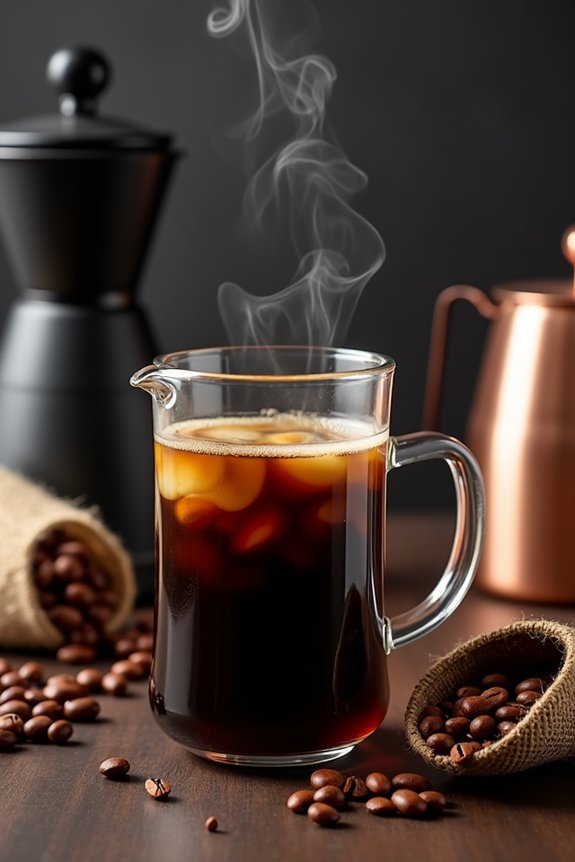
I’ll nail the perfect French press brew by getting two things right: your water temperature and your coffee-to-water ratio. You want water around 195–205°F (basically hot but not boiling), and I’ll use about 1/2 cup of coarsely ground beans for every 32 ounces of water to hit that sweet spot. The grind itself matters just as much—think breadcrumb-sized pieces that let water flow through without creating sludge or pulling out too many bitter compounds.
Water Temperature Control
Why does water temperature matter so much when you’re brewing French Roast? The answer’s simple: it directly controls extraction, which determines whether your coffee tastes rich or bitter.
I aim for a brew temperature between 195-205°F when using my French press. Here’s what I focus on:
- Pre-warm your press with hot water before brewing
- Use 195°F if you detect harsh, ashy flavors
- Maintain steady heat throughout your steep time
- Steep for four minutes at your target temperature
- Use freshly ground beans for consistent heat transfer
This French press temperature range balances the bold, oil-rich profile of French Roast without creating muddy flavors. Lower temperatures within that range and shorter steep times reduce over-extraction. It’s all about extraction control—get it right, and you’ve mastered the brew.
Grind Size and Ratio
How you grind your beans matters just as much as the water temperature we covered earlier. I recommend a coarse grind that resembles breadcrumbs—this prevents over-extraction and sludge in your cup.
| French Press Size | Coffee Amount | Water Amount |
|---|---|---|
| 8-cup | 40 g (8 tbsp) | 1 liter (33.8 oz) |
| 4-cup | 28 g (2 tbsp) | 680 ml (23 oz) |
| Standard | 56 g (2 oz) | 32 oz |
For French roast, I use a coffee-to-water ratio between 1:15 and 1:16. This ratio maintains body and flavor balance while compensating for the roast’s bold oils. Always grind fresh immediately before brewing. Pre-ground coffee loses those smoky notes that make French roast special. Your French press deserves freshly ground beans for the best results.
Dial In Grind, Temperature, and Time for Better Extraction
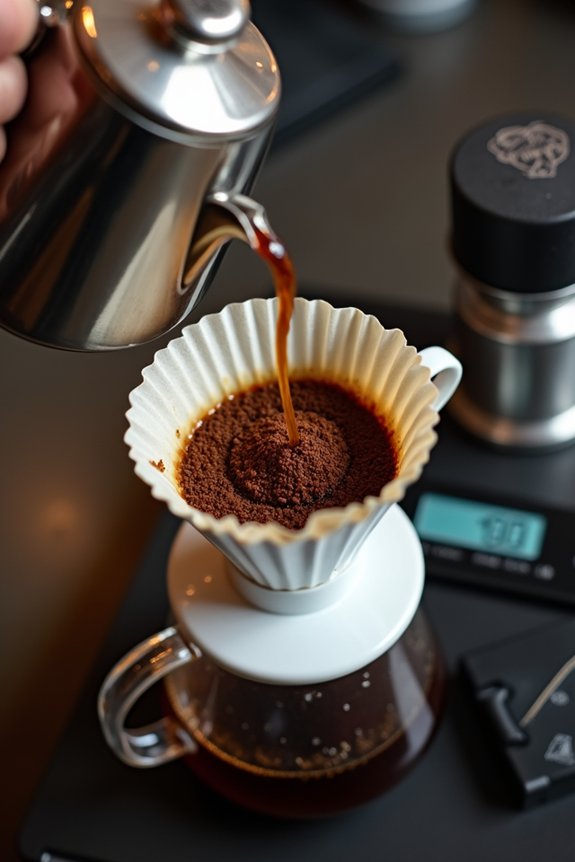
Getting the most from French roast comes down to three key variables: grind size, water temperature, and brew time. I’ll help you dial in each one for smoother, more balanced coffee.
Start by adjusting these elements systematically:
- Lower your water temperature to 80–85°C (176–185°F) to reduce ashiness and bitterness
- Shorten your brew time when using hot methods to prevent over-extraction and harsh, burnt flavors
- Adjust grind size in small increments—coarser grinds slow extraction in French press brewing
- Use a higher bean-to-water ratio to match French roast’s bold, oil-rich character
- Test one variable at a time, then fine-tune the others
Change one factor, brew a batch, taste it, then adjust again. This gradual approach helps you find your sweet spot without guessing.
Why Your French Roast Tastes Burnt: and How to Fix It
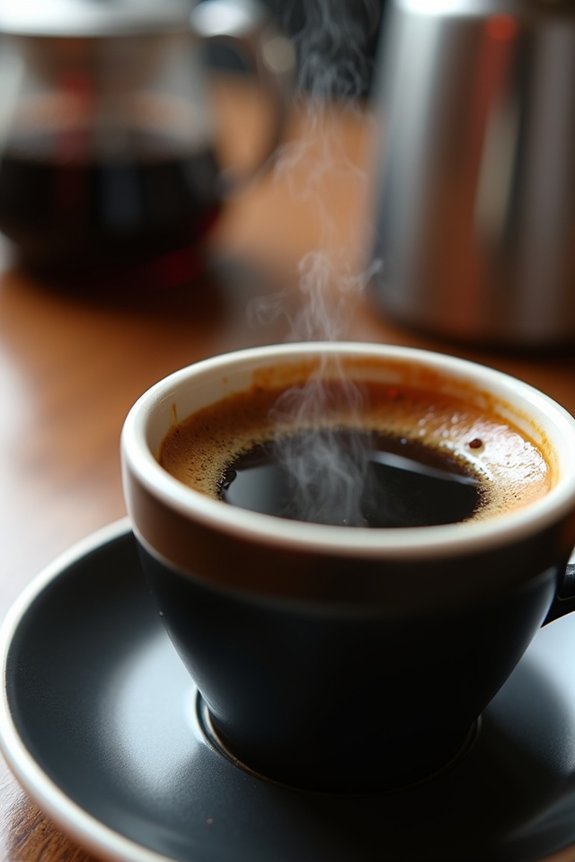
If your French roast tastes harsh, ashy, or like charcoal, you’re likely over-extracting—pulling out too many bitter compounds during brewing. This happens through over-roasting, brewing method mistakes, or stale beans. Here’s how I fix it.
Lower your water temperature to 195–205°F and reduce brew time by 30 seconds. Use a coarser grind and paper filter to slow extraction. These changes work across drip, moka pot, and espresso styles.
Lower water temperature to 195–205°F, reduce brew time, use coarser grind and paper filter to slow extraction across all brewing styles.
Freshness matters too. Once roasted, beans become porous and degrade with oxygen exposure. That intensifies burnt-taste perceptions. Store beans airtight in a cool, dark place and use them within 2–3 weeks of roasting.
Adjust one variable at a time. You’ll dial in the balance between the French roast’s bold, smoky character and harsh bitterness.
Troubleshooting Common French Roast Brewing Problems
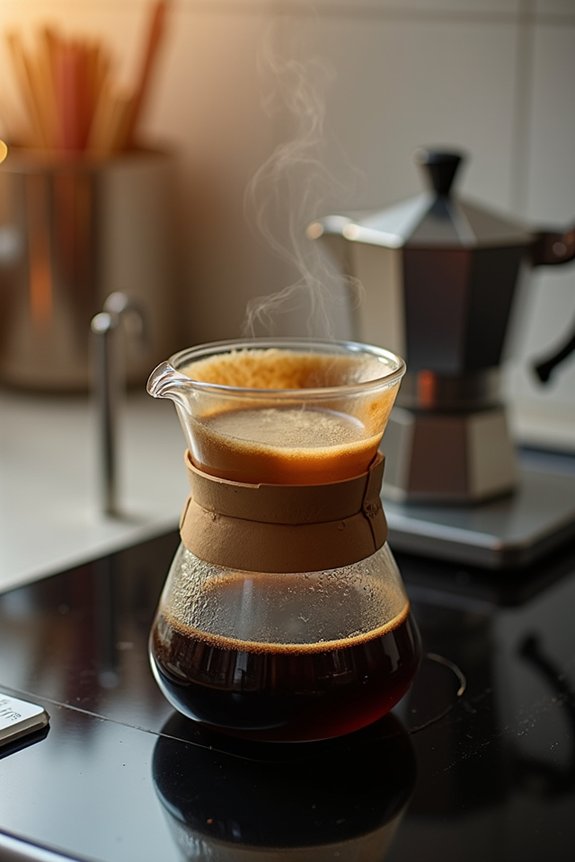
If your French Roast tastes ashy or burnt, I’d start by lowering your brew temperature to around 80–85°C (176–185°F) and cutting your steep time short—these adjustments alone reduce over-extraction that creates those harsh flavors. You’ll also want to use a coarser grind and remove fines, which keeps the water from pulling too much bitterness out of those dark beans. Getting your brew temperature and extraction time dialed in transforms a cup from unpleasantly charred to boldly smoky.
Reducing Burnt Flavors
Since French roast beans are already darkly roasted, they’re prone to tasting ashy or overly bitter when you’re not careful with your brewing method. I’ve found that adjusting your technique makes a real difference in eliminating those harsh flavors.
Here’s what works:
- Brew at lower temperatures around 80–85°C instead of boiling water
- Shorten your brew time to prevent over-extraction
- Use a coarser grind size to slow extraction
- Increase your bean-to-water ratio for better balance
- Switch to paper filters, which remove more bitter compounds than metal ones
You can also try cold brew if you want to eliminate burnt notes entirely. The cooler temperature and longer steeping period bring out chocolatey, smoother tones instead. Experiment with combining lower temperature, shorter contact time, and adjusted grind size until you find your perfect cup.
Optimizing Brew Temperature
What’s the single biggest mistake people make when brewing French roast? They use boiling water. That 212°F temperature cranks up extraction, pulling out all those harsh, burnt flavors you’re trying to avoid.
Instead, dial your water temperature down to 80–85°C (176–185°F). This slower extraction preserves the chocolate and smoky notes that make dark roast special. You’re basically giving the water less aggressive power to grab the intense roast flavors.
For immersion brewing like French press, this temperature control becomes your secret weapon. Pair lower heat with shorter steep times—maybe 3-4 minutes instead of 5. This combo prevents over-extraction that amplifies bitterness.
Cold brew takes this concept further. Extended contact with cool water emphasizes those desirable chocolate characteristics while minimizing harshness. Experiment with these temperature adjustments until you find your sweet spot.
Keep Your French Roast Beans Fresh Longer
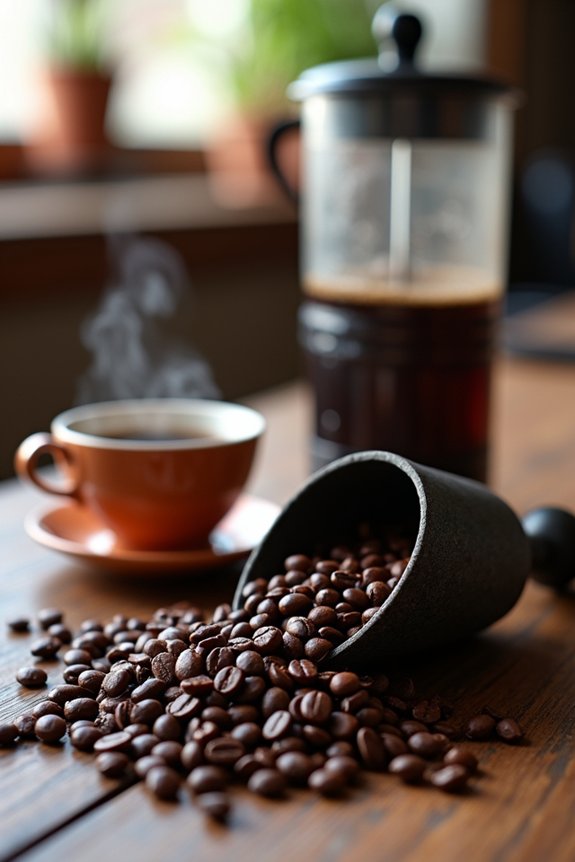
How long your French roast beans stay fresh really comes down to storage. I’ve found that keeping these beans at their best requires specific conditions and habits.
Here’s what I do to maintain oil freshness and aroma:
- Transfer beans to an airtight container immediately after cooling finishes
- Choose opaque containers to block sunlight and heat damage
- Store in a cool, dark place away from countertops and heat sources
- Keep beans whole and grind before brew to preserve flavor
- Use within 2–3 weeks of roast for optimal strength
Skip the freezer and refrigerator completely. Moisture and odor transfer will degrade your beans fast. Room temperature storage in a sealed, dark container works best. Whole beans maintain their character longer than ground coffee, so I grind just before brewing. This simple approach keeps your French roast tasting bold and fresh.
The Origin of French Roast Roasting
Why do we call it “French roast” when coffee roasters worldwide produce it today? The name comes from France during the 1800s, when the style gained popularity there. It’s not about where beans get roasted—it’s about the technique that became famous in that region.
| Aspect | Definition | Result |
|---|---|---|
| Temperature | Extended high heat | Dark color |
| Stage | Toward second crack | Oil sheen develops |
| Flavor | Roaster-driven profile | Bold, smoky taste |
| Acidity | Low levels | Smooth finish |
French roast pushes beans far into the roasting process. You’ll spot it by that distinctive oil sheen and deep, dark appearance. The bold flavor profile comes from those high temperatures. Today, roasters everywhere use this same method. We use “French roast” as shorthand for this dark style, regardless of where your beans actually get roasted.