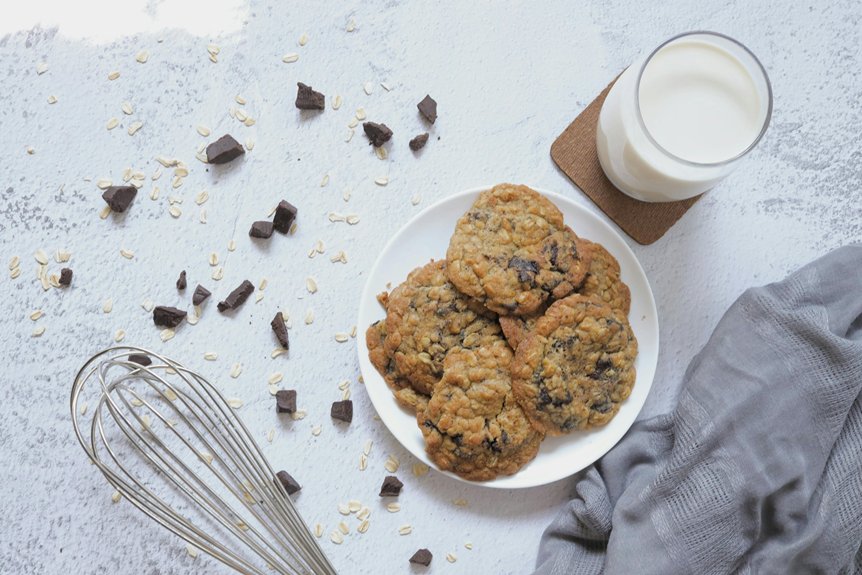
You don’t technically need baking soda for cookies, but you’re likely to end up disappointed without it. Baking soda activates with acidic ingredients like brown sugar or buttermilk, releasing carbon dioxide that makes cookies rise and spread into that chewy texture you want. Skip it, and you’ll get dense, flat, unevenly browned results instead. It also speeds up browning through the Maillard reaction, creating those golden edges. The right amount matters too—too much tastes soapy, while too little leaves you with a disappointing brick. There’s more to understand about getting the balance just right.
Do You Actually Need Baking Soda in Cookie Dough?
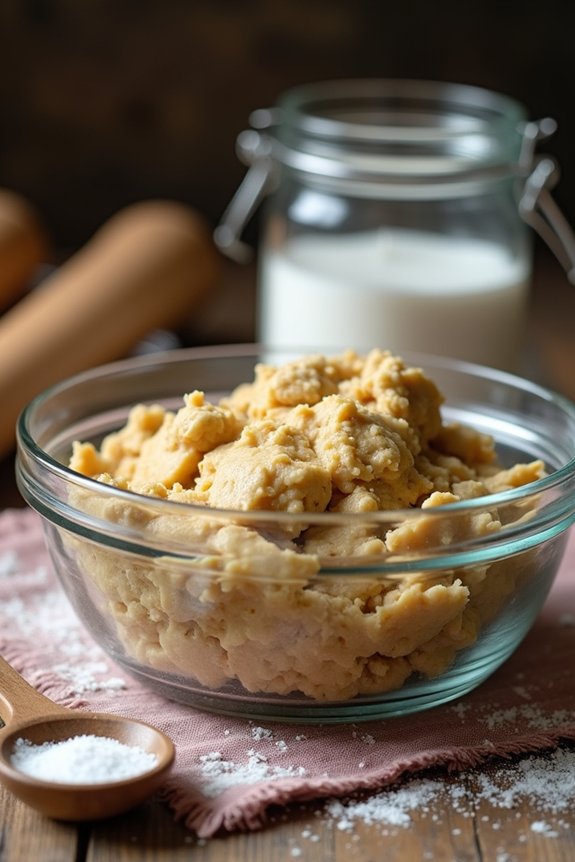
Why’s baking soda such a big deal in cookie recipes? It’s actually a leavening agent that needs an acid to work properly. When baking soda meets acids like buttermilk or brown sugar, it releases carbon dioxide gas. This gas helps your cookies rise and spread nicely.
Baking soda does more than just lift your dough though. It triggers the Maillard reaction, which creates that golden-brown color you want. It also shifts your cookies toward a chewier texture with a wider crumb structure.
Here’s the catch: without enough acid balance, your baking soda can’t do its job. You’ll end up with denser, flatter cookies. Fresh baking soda matters too. Stale or incorrectly measured amounts mess with your rise, color, and texture and browning results. Get it right, and your cookies turn out perfect.
When Your Recipe Calls for Baking Soda (And Why It Matters)
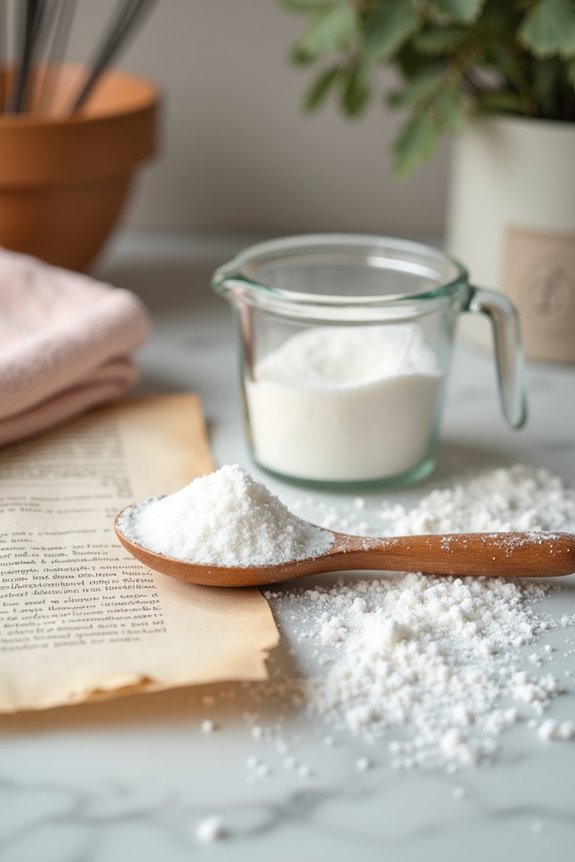
When your recipe calls for baking soda, you’re counting on acidic ingredients like buttermilk, brown sugar, or lemon juice to kick off the chemical reaction that creates those carbon dioxide bubbles. I’ve found that this activation is what gives you the texture and browning you’re after—the baking soda raises your dough’s pH level, which triggers the Maillard reaction and helps your cookies spread and brown beautifully in the 350-375°F oven. Getting the ratio right between your baking soda and acidic ingredients matters because too little means less lift and a denser cookie, while too much can leave a soapy taste.
Acidic Ingredients Activate Reaction
it can’t do its job alone. You need acidic ingredients to make baking soda activation actually happen. When you add brown sugar, yogurt, lemon juice, buttermilk, or chocolate to your dough, you’re triggering a leavening reaction. The acid meets the base, and boom—carbon dioxide gas forms. Those gas bubbles spread through your dough during mixing and expand even more when heat hits them in the oven. This creates lighter, softer cookies with better texture. Without enough acidic ingredients, your baking soda sits there inactive. You’ll end up with denser, flatter cookies that brown unevenly. The timing matters too. Acids in your ingredients react immediately during mixing, then heat intensifies the browning and texture changes. Get the acid-base balance right, and your cookies transform completely.
Texture And Browning Effects
Now that you understand how acids trigger baking soda’s leavening power, let’s look at what actually happens to your cookies during baking. Baking soda delays how quickly your dough sets, giving melted butter and sugars time to spread. This creates those crispy edges you’re after. The real magic happens through the acid-alkaline interaction. When baking soda raises your dough’s pH level, it speeds up browning reactions—making your cookies develop deeper color faster. You’ll notice richer, more golden results at the same bake time. The leavening effect also matters. Carbon dioxide bubbles lift your cookies slightly, creating better texture. Get the measurement right though. Too much baking soda flattens cookies, burns edges, and leaves a soapy taste. You want just enough to trigger these effects without overdoing it.
Balancing Recipe Ingredient Ratios
Why does your favorite cookie recipe specifically call for baking soda instead of baking powder or nothing at all? The answer lies in leavening balance. Your recipe needs the right combination of ingredients to work properly.
Baking soda requires an acidic ingredient like brown sugar, yogurt, or lemon juice to activate and create lift. Without that acid, you’ll end up with flat, over-browned cookies that taste metallic or soapy. When you pair baking soda with baking powder, you’re creating a team. The soda spreads your cookies wider and deepens browning. The powder adds extra rise from the top.
Get the ratios wrong, and your texture suffers. Too much baking soda makes cookies greasy and bitter. Too little means they won’t spread enough. Match your leaveners to your acidic ingredients for cookies that bake consistently every time.
What Baking Soda Does to Your Cookie Chemistry?
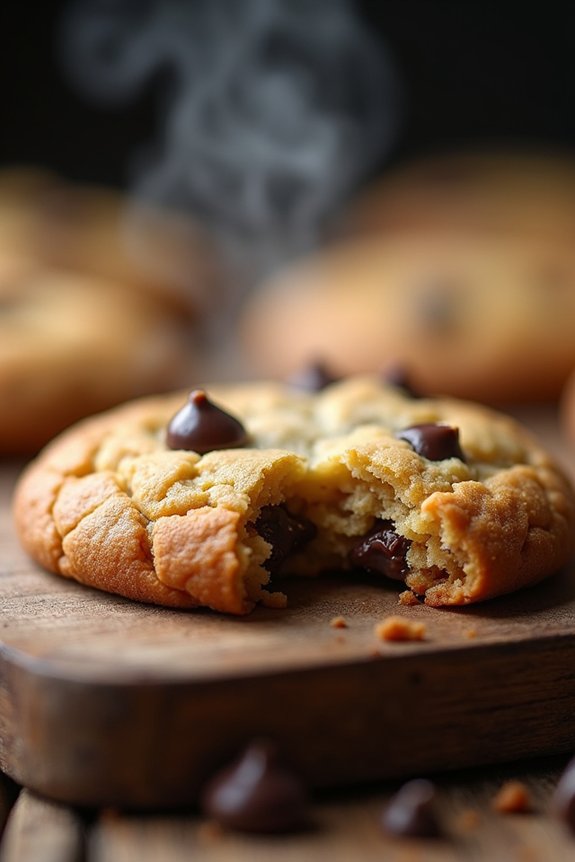
When you add baking soda to your cookie dough, it kicks off a chemical reaction that releases carbon dioxide gas, which creates lift and helps your cookies rise and spread just right. I’ll show you how this same ingredient also triggers the Maillard reaction—that browning process that happens around 300°F—by raising your dough’s pH level and giving your cookies that golden-brown color you’re after. The balance matters here: too little baking soda leaves you with dense, flat cookies, while the right amount delivers that chewy interior and crispy edges everyone loves.
Leavening and Carbon Dioxide
baking soda meets an acid, and they team up to create carbon dioxide gas—the same stuff in soda bubbles. This gas gets released early during mixing and continues through baking, lifting your cookies as they bake.
Here’s how this matters for your final cookie:
- Lighter crumb structure – The bubbles create tiny air pockets, making your cookies less dense and more tender
- Wider spread – Extra gas pushes dough outward, giving you those satisfying, chewy edges
- Better browning – The carbon dioxide helps the Maillard reaction happen faster, creating that golden-brown color and deeper flavor
You need acidic ingredients like brown sugar, buttermilk, or chocolate to activate this reaction properly. Balance matters too—too much baking soda causes overspreading and metallic tastes, while too little leaves you with flat, dense cookies.
Browning and Maillard Reaction
If your recipe doesn’t have enough acidic ingredients to balance the baking soda, the browning can happen too quickly, and you’ll end up with that unpleasant soapy or metallic taste instead of delicious caramelized flavor.
Here’s what’s actually happening: baking soda raises your dough’s pH level, which supercharges the Maillard reaction—the chemical process where amino acids and reducing sugars team up to create browning and complex flavors. You’ll notice cookies develop deeper, more amber-colored surfaces and darker golden edges. The baking soda also promotes spreading, exposing more surface area for that browning magic. Combined with sugars and butter, you get a richer crust with pronounced flavor.
The key? Balance your baking soda with acidic ingredients like buttermilk or lemon juice for optimal browning without unwanted off-flavors.
Spread and Texture Development
How does baking soda actually change your cookie’s structure? When baking soda activates with acids in your dough—like brown sugar or chocolate—it produces carbon dioxide gas. This gas creates lift and helps your cookies rise. But here’s the real magic: baking soda delays how quickly your dough sets, giving melted butter and dissolved sugars extra time to spread before the mixture firms up. This spreading action is what creates that chewy, denser crumb you’re after.
Your texture develops through three key processes:
- Leavening – Gas bubbles make cookies lighter and airier
- Spread control – Delayed setting allows proper expansion without burning
- Crumb density – The balance between lift and spread determines final chewiness
Get the baking soda amount right, and you’ll nail the texture every time.
How Does Baking Soda React With Acidic Ingredients?
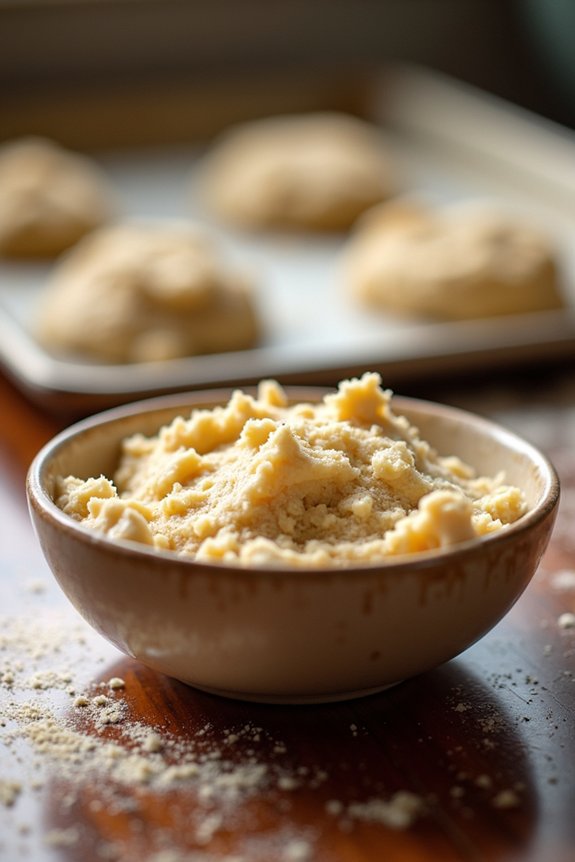
Sodium bicarbonate—that’s the fancy name for baking soda—won’t do much of anything in your cookie dough unless an acid is present to wake it up. Think of it like a sleeping giant that needs a nudge to spring into action.
When baking soda meets acidic ingredients like brown sugar, buttermilk, or chocolate, something magical happens. The baking soda reaction creates carbon dioxide gas bubbles that lift your dough. This happens during mixing and keeps going as your cookies bake in the oven’s heat.
Here’s what matters: get the acid balance right. Too little acid means flat, dense cookies. Too much acid creates weird flavors and overly brown edges. The acidic ingredients don’t just trigger leavening agents—they’re your secret weapon for deeper color and better taste through the Maillard reaction.
Baking Soda vs. Baking Powder: Which One Spreads Cookies More?

When you’re choosing between baking soda and baking powder, you’re really deciding what kind of cookie you want.
Baking soda spreads cookies more than baking powder does. Here’s why: baking soda lets melted butter and dissolved sugars spread before the dough sets. Baking powder focuses more on lift and height, creating fluffier, taller cookies with less overall spread.
The spreading effect matters because it changes your cookie’s final texture:
- Baking soda creates thinner, crispier cookies that spread across your baking sheet
- Baking powder produces thicker, cake-like cookies that hold their shape better
- Using both leaveners together gives you balanced spread and height
Choose baking soda when you want that classic, chewy cookie with crispy edges. Pick baking powder when you prefer a fluffier texture. Your preference determines which leavener works best for your baking goals.
Why Do Baking Soda Cookies Turn Chewy and Brown?
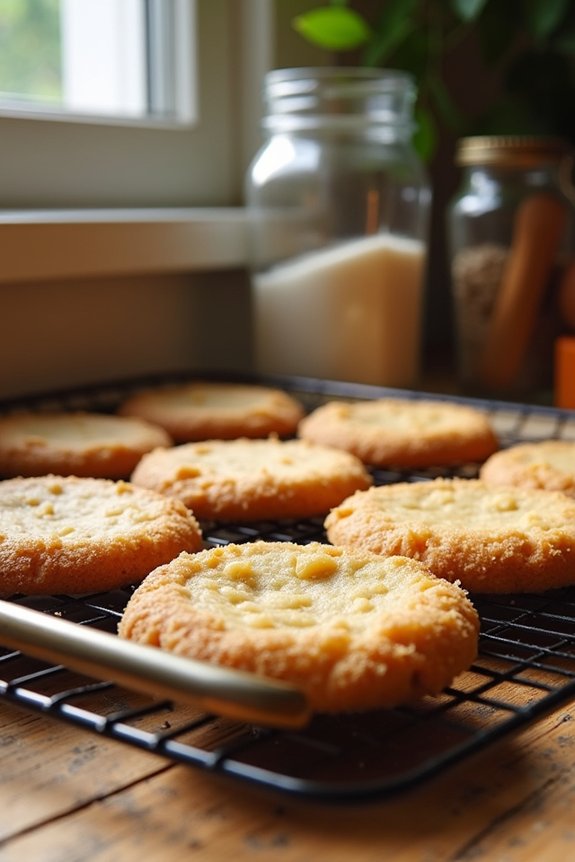
When you mix baking soda with acidic ingredients like brown sugar or buttermilk, it triggers a chemical reaction that produces carbon dioxide gas, which makes your cookies rise and spread. This spreading action, combined with the higher pH level that baking soda creates, speeds up the Maillard reaction—the browning process that happens when sugars and proteins heat up together—giving you those golden-brown edges and deeper flavors. The delay in dough setting also lets the butter and sugars melt more fully before the cookie firms up, which is exactly what creates that chewy, dense texture you’re after.
Chemical Reaction Process
Why do cookies made with baking soda spread so much and turn golden brown at the edges? It’s all about chemistry. When baking soda activation happens, it needs an acid to work. Brown sugar, yogurt, or chocolate trigger a reaction that releases carbon dioxide gas.
Here’s what happens during baking soda activation and acid leavening:
- The gas bubbles expand your dough, lowering its density so cookies spread wider before setting firm
- This extra spread creates thinner, chewier centers while edges cook longer
- Baking soda raises your dough’s pH level, speeding up Maillard browning for those deep golden-brown edges
You’ll get the best results when you balance baking soda with acidic ingredients. Too little acid means uneven browning and limited rise. Getting this right transforms your cookies from basic to bakery-quality.
Browning and Texture Development
The chemistry we just covered sets the stage for what you actually see and taste in your finished cookies. Baking soda raises your dough’s pH level, which speeds up browning reactions between amino acids and sugars. This creates those deeper, darker edges you’re after.
Here’s where texture comes in. Baking soda delays how quickly your dough sets, so it spreads more before firming up. That’s why you get thinner, chewier centers with browned rims. When acid’s present—like from brown sugar or chocolate—the leavening action kicks in, releasing carbon dioxide that creates air pockets. These pockets give your cookies that lighter, slightly chewy crumb structure with extra caramelized color.
Balance matters though. Without enough acid, over-browning happens fast.
How Baking Soda Creates the Maillard Reaction for Deeper Color?
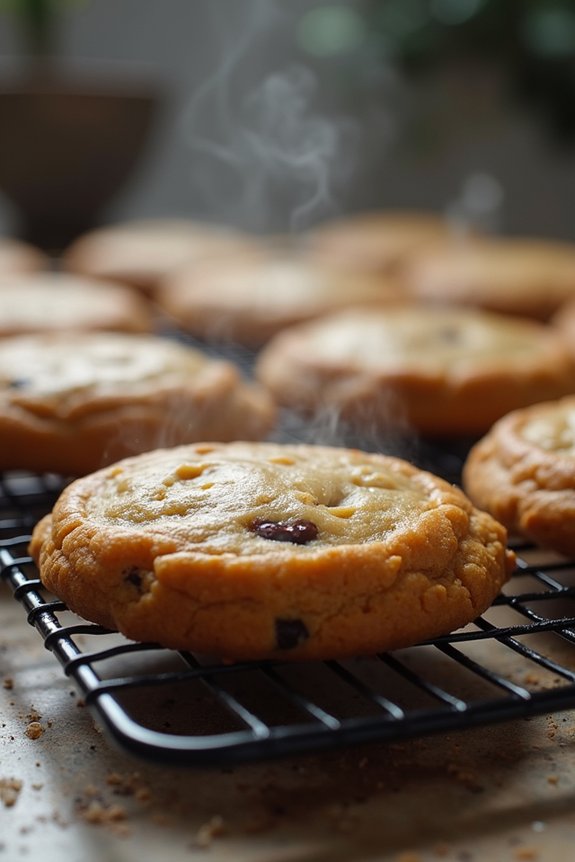
If you’ve ever wondered why some cookies emerge from the oven with a gorgeous golden-brown edge while others look pale and bland, baking soda might be your answer.
Baking soda creates deeper browning through the Maillard reaction. Here’s how it works:
- Raises pH levels – Baking soda’s alkaline conditions speed up browning by triggering faster Maillard reactions between amino acids and reducing sugars.
- Accelerates edge browning – The higher alkalinity enhances browning especially at cookie edges, creating that pronounced golden-to-dark-brown color you’re after.
- Strengthens initial reactions – Baking soda’s alkalinity promotes faster browning during early baking stages, intensifying the browning process overall.
Without proper baking soda balance, your cookies stay pale. The right amount transforms ordinary cookies into beautifully browned treats worth sharing.
Signs You’re Using Too Much Baking Soda
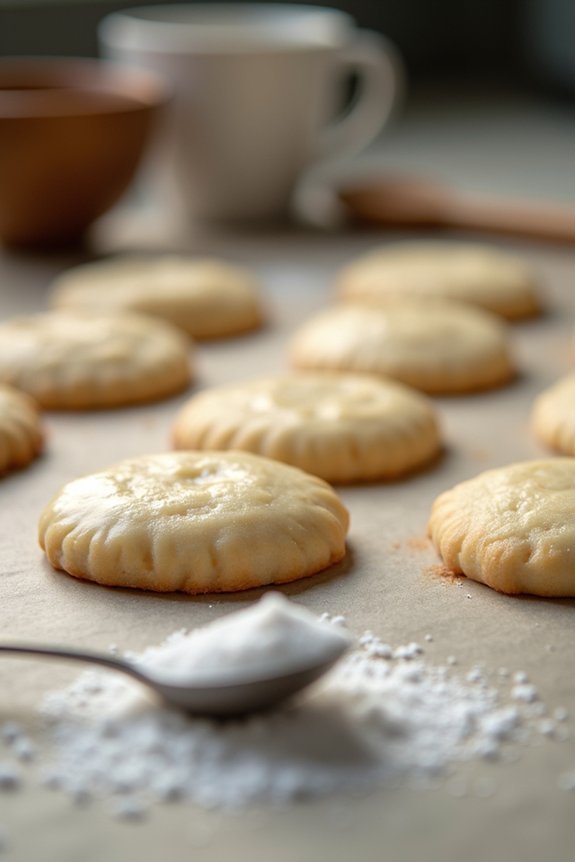
How can you tell when you’ve added too much baking soda to your cookie dough? Your cookies will brown too quickly and develop an unpleasant soapy or metallic taste. Baking soda overuse creates problems beyond flavor. You’ll notice your cookies puff up dramatically, then crater in the center, leaving thin, spread-out edges instead of even rising. This happens because excessive leavening weakens your cookie texture. The high pH makes gluten structures break down, resulting in coarse, crumbly cookies rather than tender, chewy ones. You might spot a dark rim around the edges too. Fix this by reducing baking soda amounts and balancing it with acidic ingredients like buttermilk or lemon juice. Ensure your leavening balance is right for consistent, delicious results.
Can You Bake Cookies Without Any Leavening Agent?
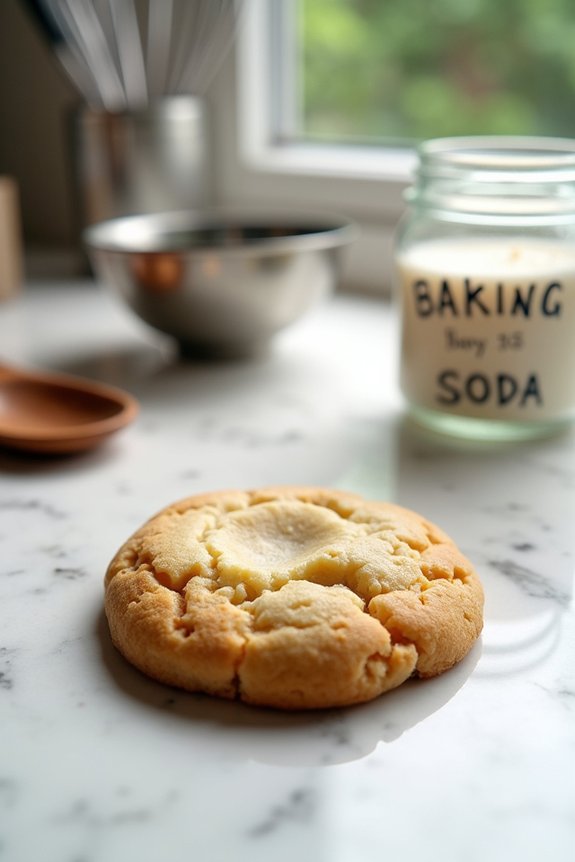
Yes, you can absolutely bake cookies without baking soda or baking powder, and I’ve done it plenty of times. No-leaven cookies are totally doable, though they’ll look and taste different from what you’re used to.
Here’s what happens when you skip leavening:
- Your cookies won’t rise much, staying compact and dense instead of fluffy
- The crumb becomes rich and chewy, concentrating flavors more intensely
- Spread becomes less predictable, so chilling dough longer helps manage it
I’ve found that using richer fats or extra flour helps control the texture. Mexican Wedding Cookies prove this works great. The trade-off is real though: you’re swapping that light, airy lift for deeper flavor and a more substantial bite. It’s just a different cookie experience, not a worse one.
What Happens If You Use Baking Powder Instead of Baking Soda?
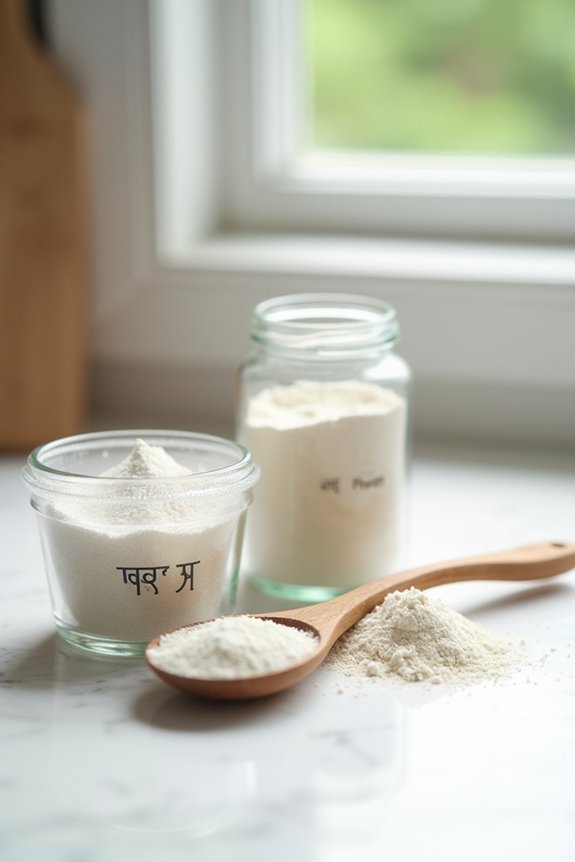
Swapping baking powder for baking soda changes your cookies in pretty noticeable ways. You’ll need about three times as much baking powder to get similar leavening power. Here’s what happens: your cookies rise more during baking, becoming cakier instead of chewy or dense. That’s because baking powder contains both acid and base built in, plus it releases gas in two stages—first when wet, then again in the oven’s heat.
You might also notice less browning on your cookies’ edges. Baking soda creates chemical reactions that darken cookies through pH changes. Baking powder doesn’t work the same way. Your final cookies won’t spread as much or develop that golden-brown color you’d expect. If your recipe specifically calls for baking soda, swapping it changes the whole texture and appearance.
Why Some Cookies Need Both Baking Soda and Baking Powder
Why do some cookie recipes call for both leaveners instead of just one? I’ve found that combining baking soda and baking powder creates cookies that actually work better together than separately.
Here’s why many bakers use this duo:
- Balanced spread and lift – Baking soda enhances spreading and browning, while baking powder adds height without making cookies cake-like
- Texture variety – You get chewy interiors from the soda’s acid-activation and airy crumbs from the powder’s independent leavening
- Flavor control – This combination prevents the bitter taste that too much baking soda alone can create
When brown sugar meets both leaveners, you’re getting the best of everything. The soda activates with the sugar’s acidity, then baking powder kicks in during baking for extra rise. You’ll notice your cookies aren’t flat or overly puffy—they’re perfectly balanced with that ideal texture you’re after.
How Missing or Wrong Baking Soda Ruins Your Cookies
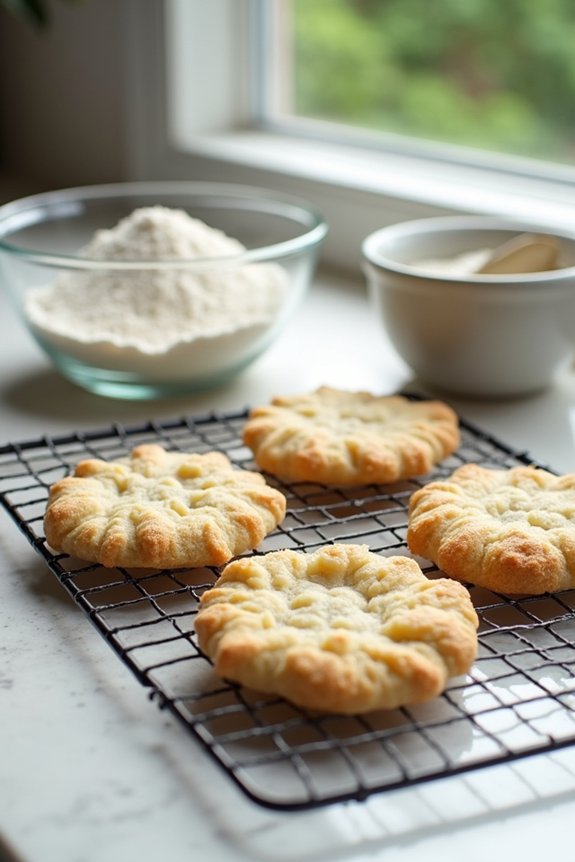
When you skip the baking soda or use the wrong amount, your cookies suffer in ways you’ll notice immediately. Your cookies become dense and flat because baking soda creates the lift that makes them airy. Without it, that chewy crumb you’re after disappears. The browning suffers too. Baking soda triggers the Maillard reaction, which gives cookies their golden-brown color. Skip it, and you’re left with pale, underwhelming cookies. The texture changes dramatically as well. Baking soda helps cookies spread during baking, creating that perfect thin, chewy edge. Without it, you’ll get thick, stiff cookies that don’t spread right. Using stale baking soda or measuring incorrectly makes these problems worse. Fresh, properly measured baking soda is non-negotiable for cookie success.
How Much Baking Soda Do You Actually Need?
I’ll walk you through the exact measurements that make cookies turn out right, because getting the baking soda amount wrong is one of the easiest mistakes to make. You’ll typically see between ¼ and 1 teaspoon per batch, and I adjust based on how much acid the recipe contains—more brown sugar or buttermilk means I can use a full teaspoon, while recipes with just butter need less. Learning to spot common dosage problems, like using too much (which causes that soapy taste) or too little (which leaves cookies flat), helps you fix recipes before they hit the oven.
Measuring For Perfect Results
a tiny pinch makes a difference, and too much creates problems. I’ve learned that baking soda measurements matter more than you’d think. Even a quarter teaspoon shift changes everything—your cookies spread wider, brown darker, or taste soapy if you overdo it.
To nail leavening accuracy, you’ll want to:
- Measure precisely using dry measuring cups and leveling off with a knife, not eyeballing amounts
- Check ingredient freshness by testing your baking soda monthly—stale powder loses its lifting power fast
- Match your acid by counting acidic ingredients like buttermilk or brown sugar, which activate the soda properly
Small deviations shift texture from chewy to cakey. You’ve got this when you measure carefully and use fresh ingredients.
Adjusting Amounts By Recipe
How much baking soda you actually need depends entirely on what’s already in your dough. I adjust my recipe based on acidic ingredients like brown sugar, yogurt, or brown butter. These acids activate the baking soda for better leavening and browning.
If I’m swapping baking powder for baking soda, I use about three times as much since baking powder contains its own acid. For low-acid batters, I reduce or skip baking soda entirely to prevent flat, overly browned cookies.
Small recipe adjustments matter significantly. Increasing baking soda by just 1/4 to 1/2 teaspoon changes how your cookies rise, spread, and color. I find the sweet spot by balancing leavening with acids. Too much baking soda creates metallic or soapy flavors you won’t enjoy.
Common Dosage Mistakes
Most cookie failures come down to baking soda miscalculation, and you’ve probably made at least one of these mistakes.
Here’s what commonly goes wrong:
- Using too much baking soda – This creates flat cookies with excessive browning and a metallic or soapy taste that nobody wants.
- Using too little baking soda – When you skimp on leavening, you’ll get dense, under-leavened results that feel heavy in your mouth.
- Swapping baking powder without adjusting amounts – This substitution over-leavens your dough, producing cakier, softer cookies instead of chewy ones.
Freshness matters too. Stale baking soda loses its leavening power, so your dosage mistakes multiply if you’re using old supplies.
Aim for about 1/4 to 1/2 teaspoon per cup of flour in most chewy cookie recipes. Adjust only when acids or other leaveners are involved.
Why Oven Temperature Changes How Baking Soda Works
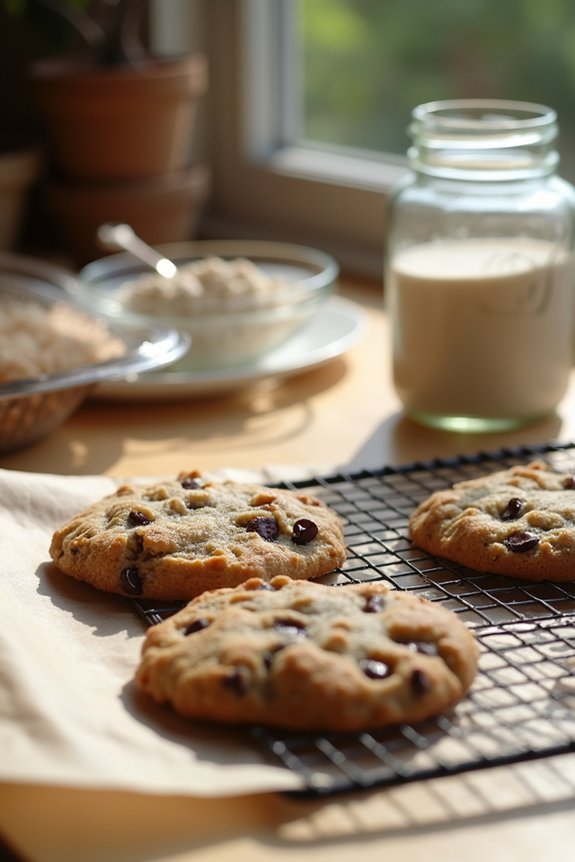
Once your cookie dough hits the oven, the temperature becomes the director of how baking soda actually performs. Here’s what happens: higher temperatures set your dough’s walls quickly, which stops the leavening reaction early and creates thicker, less-spread cookies. Lower temperatures work differently. They let the baking soda keep producing gas longer, giving you flatter, chewier results with more browning. Temperature also controls the Maillard reaction—that’s the chemical process creating rich brown colors. Hot ovens develop darker edges faster, while cooler ovens need extended bake time to build that same color. When your oven temperature doesn’t match your recipe’s intended heat, the height, texture, and browning all shift. Get the temperature right, and your baking soda performs exactly as planned.
Troubleshooting Flat, Dense, or Metallic-Tasting Cookies
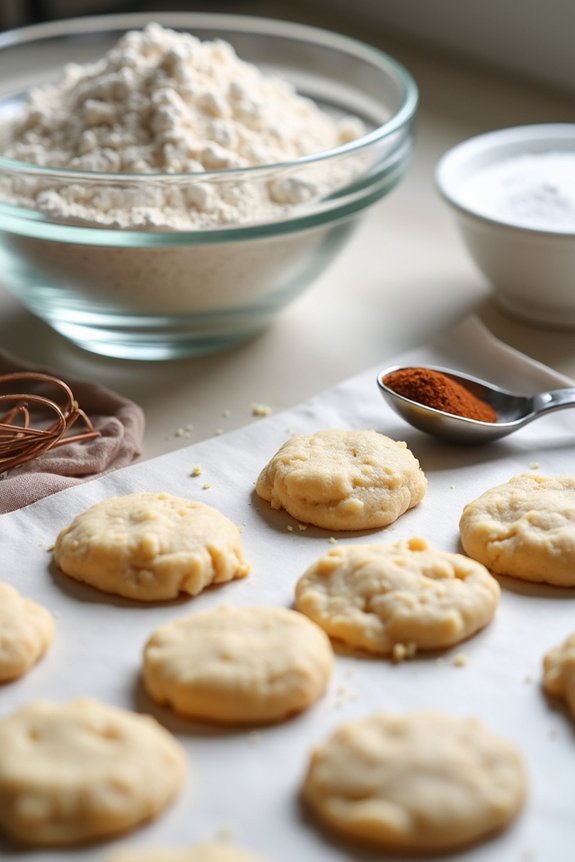
Why do your cookies sometimes turn out flat, dense, or taste like you just licked a battery?
These problems stem from baking soda issues and imbalances in your dough. Here’s what’s happening:
- Check baking soda freshness – Old baking soda loses its lifting power, causing flat, dense cookies. Replace it if it’s been open for months.
- Balance your acid – Baking soda needs acidic ingredients like buttermilk or brown sugar to activate properly. Without enough acid, you’ll get a metallic or soapy taste.
- Fix your leavening troubleshooting – Measure accurately, soften butter instead of melting it, and adjust flour or liquid to restore balance.
Verify these basics, and you’ll transform your cookie game. You’ve got this.