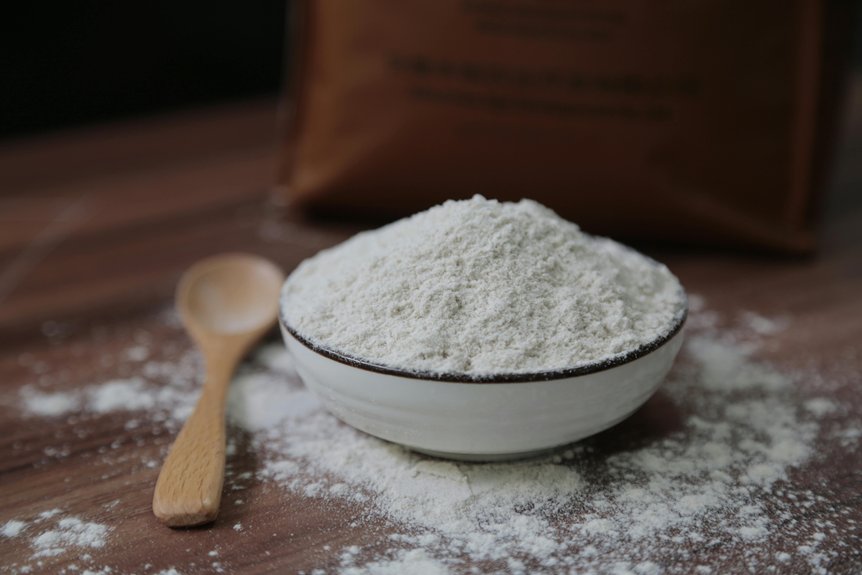
Wheat flour’s the main gluten source in cookies, but it’s sneaky—barley malt, rye derivatives, and additives hide gluten too. Emulsifiers and dough conditioners often contain wheat-derived starches. Pre-mixed cookie blends sometimes claim “gluten-free” yet include malt flavoring or cross-contact warnings. Even vanilla extract can harbor gluten if it’s imitation. Your best move? Check labels for wheat, barley, rye, and malt directly. Certified gluten-free products offer safety. Cross-contamination from shared equipment matters too. Want specifics on safer substitutes and how to bake truly gluten-free?
Wheat Flour: The Primary Gluten Source in Cookie Recipes
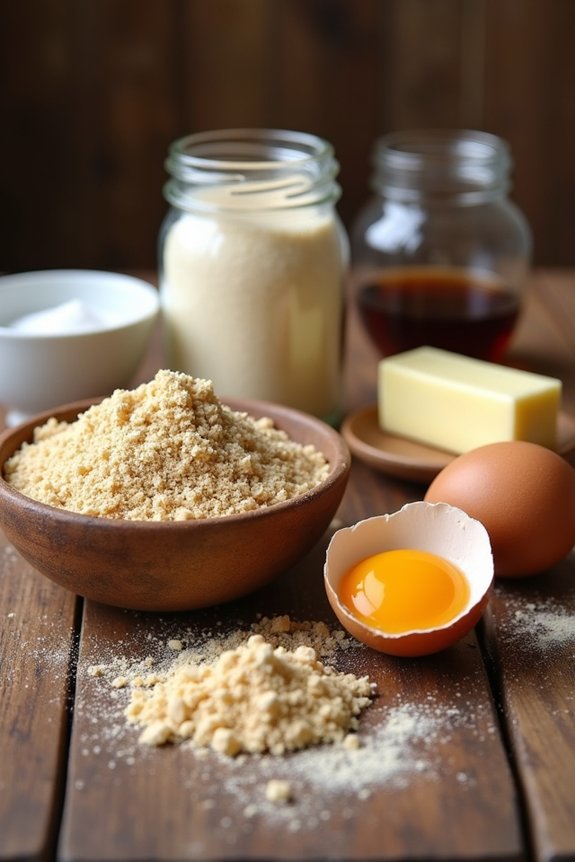
Ever wondered why most cookies have that satisfying chew and structure? Wheat flour is the primary gluten source in standard cookie recipes. When I mix all-purpose flour with water and fat, gluten networks form automatically. These networks trap gas during baking, creating rise and that desirable chewy texture we love.
All-purpose flour contains about 10-12% protein, which develops gluten when mixed. This gluten-containing ingredient gives cookie dough its elasticity and strength. The dough structure depends entirely on these gluten networks forming properly. Most traditional cookies rely on wheat flour as their main component.
If I’m making gluten-free alternatives, I replace wheat flour with specialized blends. These gluten-free substitutes attempt to mimic the texture, though the result differs from traditional recipes. Understanding wheat flour’s role helps me appreciate why it’s so essential in baking cookies.
How Gluten Proteins Create Structure in Cookies
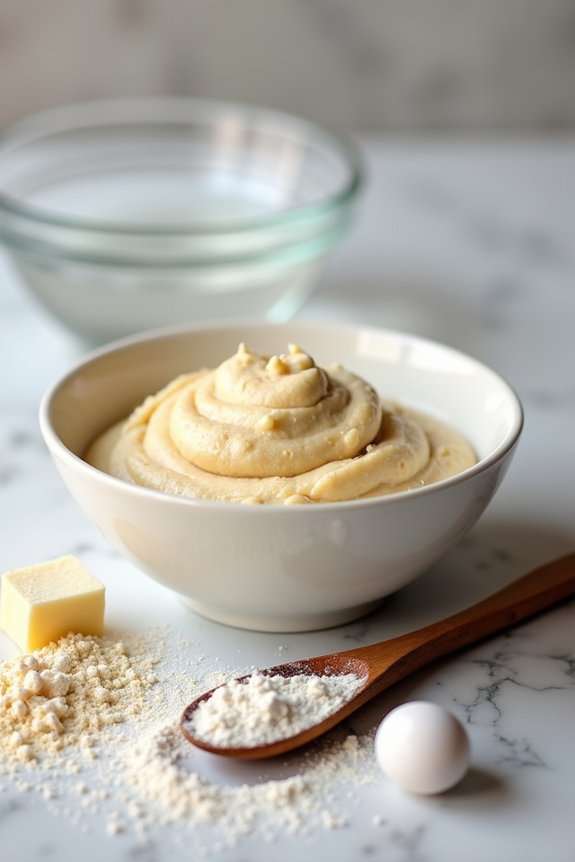
Now that you know wheat flour brings gluten into your cookie dough, let’s look at what that gluten actually does once you start mixing. When you cream butter and sugar, then add your wet ingredients and dry flour, the gluten proteins begin forming a viscoelastic network. This network traps gas bubbles and fats throughout your dough, creating structure and elasticity that holds everything together. That’s what gives your cookies their signature chewiness and helps them maintain shape while baking.
The gluten proteins essentially create a stretchy web. This web controls your bake texture, determining how much your cookies spread and how tender the crumb becomes. Too much gluten development makes cookies tough. Not enough leaves them crumbly and weak. Finding the balance is key.
If you’re using gluten-free substitutes, xanthan gum steps in to mimic what gluten proteins naturally provide.
Barley and Rye: Hidden Gluten Contributors in Specialty Blends
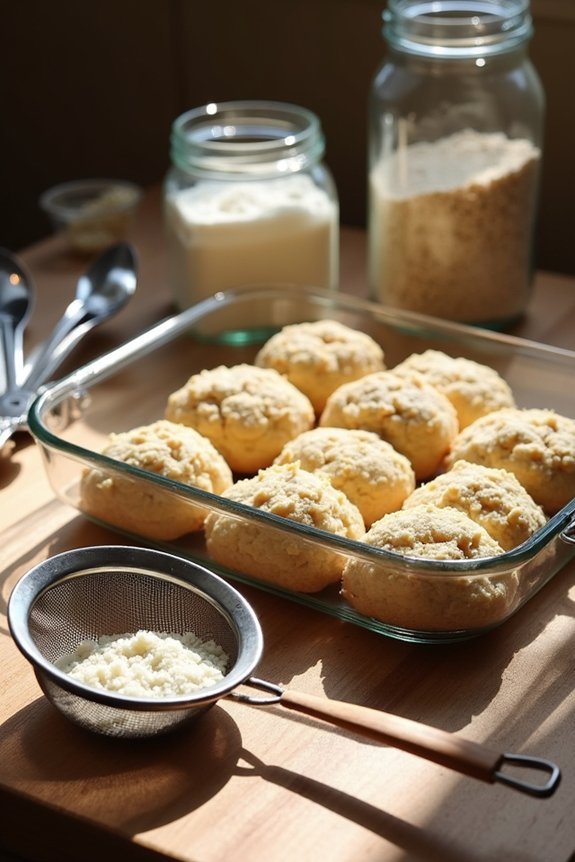
What makes a “gluten-free” flour blend actually contain gluten? I’ll tell you: sneaky ingredients hiding in plain sight. Many specialty flours use barley-derived starches or rye-derived ingredients as processing aids. You might not see “barley” listed, but malt or maltose reveals the culprit. Cross-contact happens too—when blends process on shared equipment with barley or rye, hidden gluten transfers over.
Here’s what you need to know:
- Check labels carefully for barley derivatives, malt, maltose, or rye flour
- Certified gluten-free products maintain a gluten limit of under 20 ppm
- Ask manufacturers about their processing methods and equipment
When shopping for gluten-free baking ingredients, don’t assume the label tells the whole story. Read ingredients thoroughly and seek certified gluten-free options to protect yourself from hidden gluten in specialty blends.
Malt and Malted Barley Flavoring: Why They’re Problematic for Gluten-Free Bakers
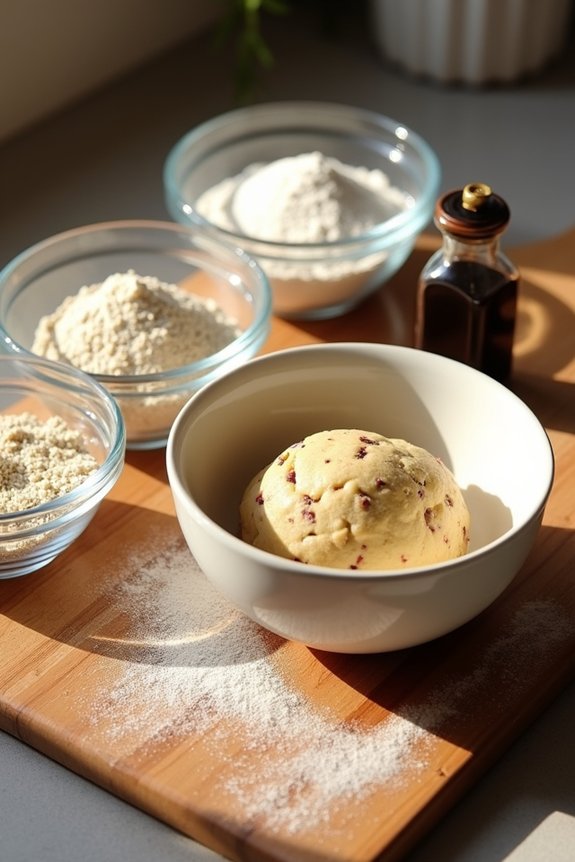
Why does malt show up on so many cookie ingredient lists? Barley-derived malt brings a rich, subtle sweetness that bakers love. Here’s the problem: it contains gluten proteins that make it unsuitable for gluten-free baking.
When you’re formulating gluten-free cookies, even trace gluten from malt flavoring creates issues. For celiac-safe products, this matters considerably. Standard malt flavoring isn’t compatible with your gluten-free goals because barley is a gluten-containing grain.
You’ll need to check every ingredient label carefully. Some manufacturers now offer gluten-free flavorings and malt alternatives, but most traditional malt flavoring still carries gluten contamination risks. Verify your extracts and flavorings independently. This step prevents gluten proteins from sneaking into your recipe. Select certified gluten-free flavorings instead to keep your cookies truly safe.
Hidden Gluten in Emulsifiers and Dough Conditioners
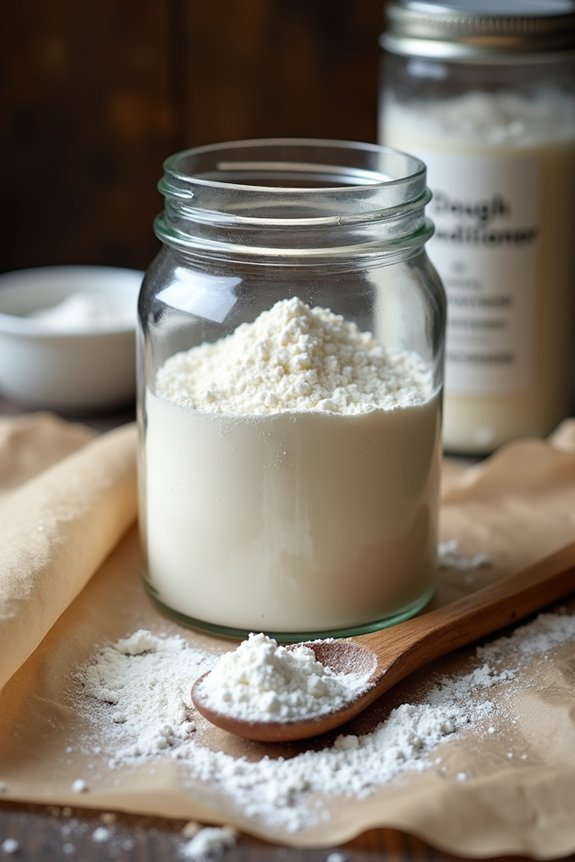
Ever notice how store-bought cookies stay soft for weeks while homemade ones go stale in days? That’s thanks to emulsifiers and dough conditioners—and here’s where gluten sneaks in.
Many commercial cookies contain gluten-containing emulsifiers derived from wheat-based starches. These ingredients keep dough smooth and cookies moist longer. Dough conditioners often hide wheat-derived starches or malt flavoring, even in products labeled gluten-free.
Here’s what you should know:
- Check labels carefully: Emulsifiers and dough conditioners don’t always disclose gluten sources clearly
- Cross-contact matters: Even gluten-free facilities can have contamination risks during production
- Request transparency: Ask manufacturers about specific ingredients like xanthan gum and vanilla extract sources
Choose cookies from dedicated gluten-free facilities. They use certified gluten-free flavorings and approved starches instead of questionable blends. Your body will thank you.
Hidden Gluten in Pre-Mixed Cookie Blends
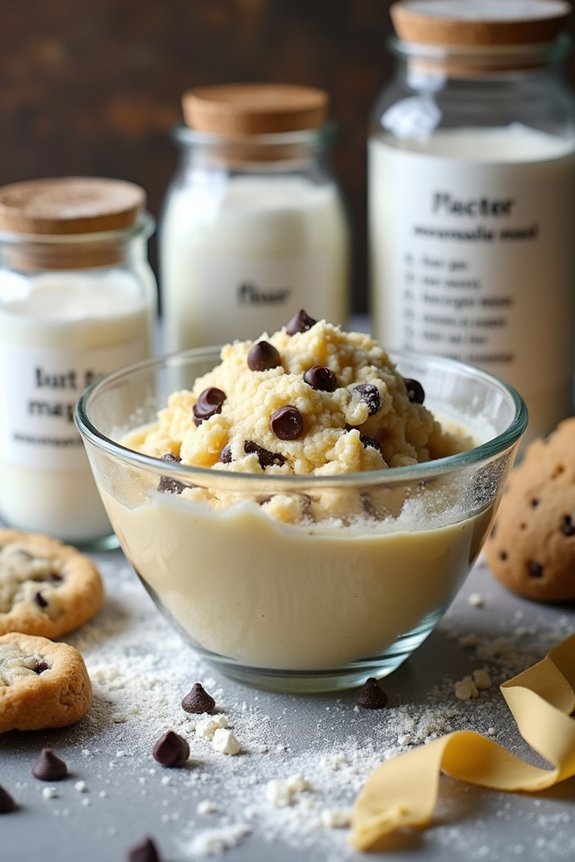
Pre-mixed cookie blends seem like they’d solve your gluten problem, but here’s the catch: many still contain hidden gluten even when the package says “gluten-free.” I’ve found that some blends rely on xanthan gum or other starches to replace wheat flour’s binding power, yet they don’t always disclose where these ingredients come from.
Check your ingredient lists carefully. Wheat-based components hide under names like malt, maltodextrin, and durum. These additives thicken and condition dough, but they’re serious gluten sources. Beyond ingredients themselves, facility allergen warnings matter too. Cross-contamination happens when gluten-free blends share equipment with wheat products. Even certified gluten-free blends risk cross-contact during manufacturing.
I recommend buying from facilities with strict separation practices. Read those labels thoroughly.
Reading Labels to Spot Hidden Gluten in Cookies
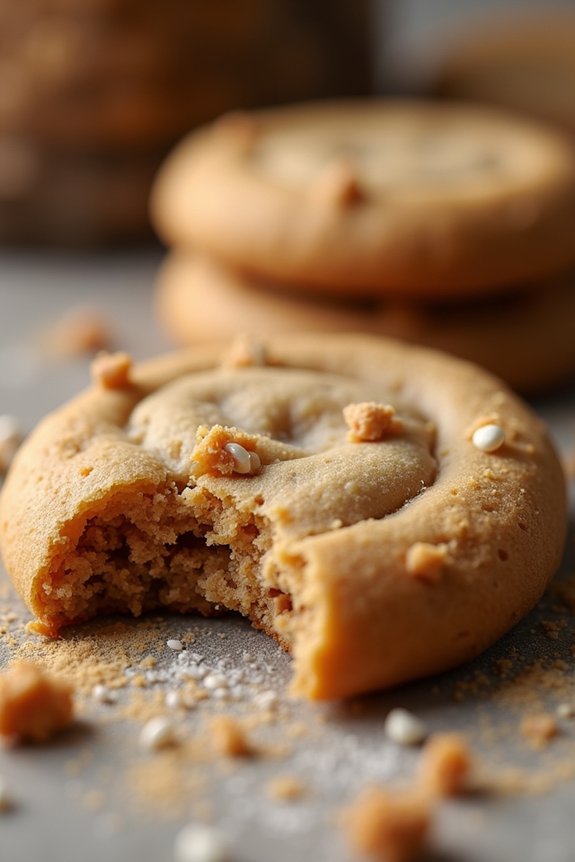
How do you know what’s actually in your cookies? I check ingredient lists carefully because hidden gluten hides everywhere. Here’s what I look for:
- Direct gluten sources: wheat flour, barley, rye, and malt appear right on labels
- Sneaky additives: dextrin and malt flavoring sneak gluten in without obvious names
- Cross-contact warnings: facility disclosures tell me if cookies touched gluten-containing equipment
Reading labels takes minutes but protects your health. I scan for those gluten-containing flours first, then hunt for less obvious culprits like dextrin that manufacturers don’t always highlight. Malt flavoring tricks people constantly. I also check for cross-contact statements because shared ovens spread gluten dust everywhere. Taking time to read thoroughly means I actually know what I’m eating, not just guessing.
Naturally Gluten-Free Cookie Ingredients to Use Instead
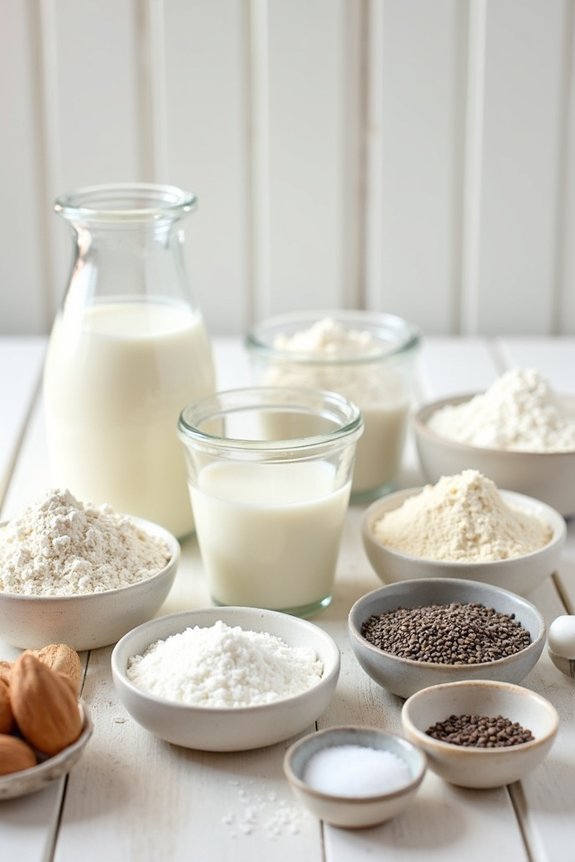
Now that you know what to avoid, I’ll show you the ingredients that actually work for gluten-free baking. You can swap out regular wheat flour for gluten-free all-purpose blends like King Arthur Measure-for-Measure or Bob’s Red Mill 1:1, which already contain xanthan gum to replace gluten’s binding power. Beyond flour swaps, you’ve got options with dairy-free butter, almond flour for moisture and color, and dairy-free chocolate chips, so you’re never stuck with just one way to make your cookies taste great.
Safe Flour Alternatives
What makes gluten-free cookies actually work? I’ll tell you: it’s all about choosing the right flour blends and additives.
I recommend these reliable options:
- King Arthur GF and Bob’s Red Mill 1:1 – Both replace wheat flour at a 1:1 ratio, so your measurements stay simple
- Xanthan gum addition – Use ½ teaspoon per cup if your blend doesn’t already contain it; this binds ingredients together
- Almond flour enrichment – I add small amounts for moisture and golden color, or swap it with nut-free gluten-free flours for allergen-conscious baking
These gluten-free all-purpose flour blends mimic wheat flour’s structure perfectly. For dairy-free adaptations, I simply substitute dairy-free butters while keeping the flour base consistent. Your cookies will hold together beautifully with these trusted alternatives. The key? Match your flour choice to your dietary needs without sacrificing texture.
Swap Traditional Ingredients
Beyond picking the right flour blend, you’ll want to swap out the other ingredients that might sneak gluten into your cookies. I’ve found that replacing traditional dairy and eggs makes a real difference. Use dairy-free butter and almond milk instead of regular butter and milk. For eggs, try Bob’s Red Mill Egg Replacer following package directions. Add almond flour in small amounts for moisture and color, but don’t use it alone.
| Ingredient | Traditional | Gluten-Free Swap |
|---|---|---|
| Butter | Regular butter | Dairy-free butter |
| Milk | Cow’s milk | Almond milk |
| Eggs | Whole eggs | Bob’s Red Mill Egg Replacer |
Always use pure vanilla extract, not imitation. Check cream cheese labels and swap for dairy-free versions if needed. These swaps keep your cookies safe while maintaining that delicious taste you’re craving.
Why Cross-Contamination Matters Even When Individual Ingredients Are Gluten-Free
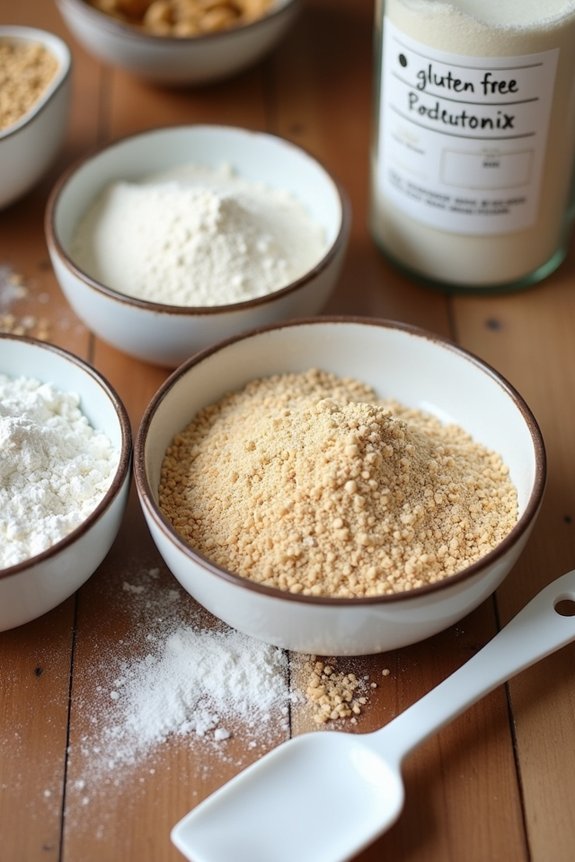
you can use all gluten-free ingredients and still end up with cookies that aren’t actually gluten-free.
Even when your gluten-free flour blends and xanthan gum are certified safe, shared ovens and shared baking sheets create real problems. If regular cookies bake in the same oven, tiny gluten particles float around and land on your cookies. Same deal with shared cooling racks and work surfaces.
Here’s what matters for keeping your cookies truly safe:
- Facility hygiene: Clean ovens, trays, and utensils thoroughly before baking gluten-free cookies
- Allergen labeling: Check if your facility processes wheat, even if your ingredients don’t contain it
- Separate equipment: Use dedicated baking sheets and tools for gluten-free baking when possible
Cross-contamination isn’t visible, but it’s real. Taking these steps protects everyone who depends on truly gluten-free cookies.