Angel food cake’s nutrition label looks innocent—120 calories, nearly zero fat—but don’t be fooled. One slice packs 28 grams of carbs and only 3 grams of protein, meaning you’ll stay hungry. With 2,247 milligrams of sodium per serving and ingredients like Sodium Aluminum Phosphate, it’s ultra-processed. The real issue? High glycemic load plus missing fiber and B-vitamins make this dessert a blood sugar spike waiting to happen. Pair it with protein-rich foods if you eat it, but there’s more to understand about what makes this cake tick.
What This Cake’s Nutrition Label Actually Reveals
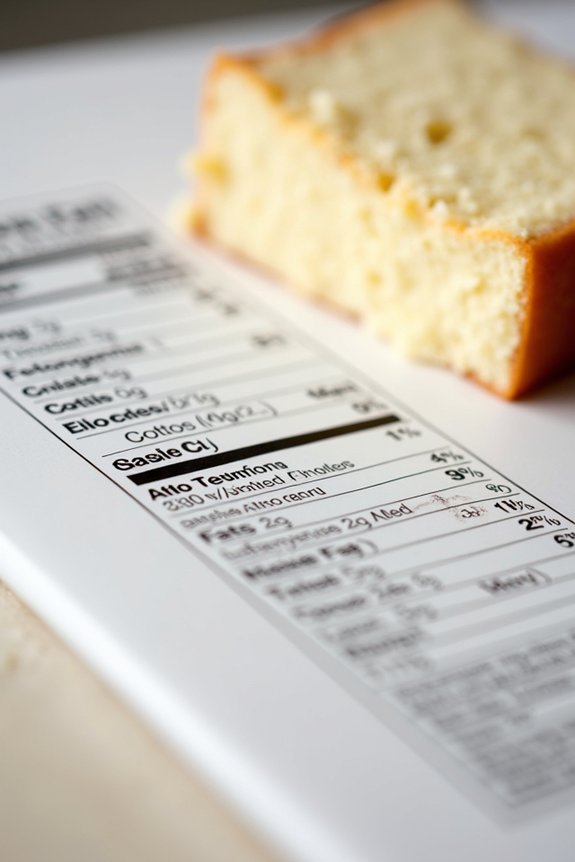
What does angel food cake’s nutrition label actually tell you? It reveals a carb-heavy dessert that won’t knock your socks off nutritionally. A single 28-gram serving packs 258 calories, mostly from net carbs—that’s 56 grams per serving. Here’s where it gets interesting: the label shows zero grams of added sugars, which seems odd given the carb count. That’s a labeling quirk worth understanding.
The real concern? Sodium. At 2,247 milligrams per serving, that’s nearly your entire daily limit in one slice. Meanwhile, fat content stays minimal at 0.8 grams total. You’re getting calcium and phosphorus, sure, but you’re trading nutrition density for sweetness and salt. This cake prioritizes taste over health benefits, making it an occasional treat rather than a nutritious choice.
120 Calories per Slice: Why Portion Control Matters More Than Calorie Count

Here’s the thing about that 120-calorie number on angel food cake’s nutrition label—it can trick you into eating way more than you planned. A single slice weighs just 28.5 grams, so if you eat three slices, you’re consuming 360 calories plus significant sugar content. That’s why portion control matters more than fixating on the calories per slice number alone.
| Serving Size | Calories | Sugar Content | Fat |
|---|---|---|---|
| 1 slice (28.5g) | 120 | High (35% by weight) | 0g |
| 2 slices | 240 | Double | 0g |
| 3 slices | 360 | Triple | 0g |
| 4 slices | 480 | Quadruple | 0g |
Track your total daily intake instead. Ask yourself honestly: will you stop at one slice? That’s the real nutrition conversation.
Protein Content (3g): Can This Cake Keep You Full?

Angel food cake’s low calorie count won’t help you feel satisfied for long. Here’s why: a slice contains only about 3 grams of protein, which isn’t enough to trigger satiety—that feeling of fullness that keeps hunger away. Your body needs adequate protein to signal satisfaction to your brain, and Angel Food Cake simply doesn’t deliver it.
With less than 1 gram of fat and nearly 30 grams of carbs per slice, you’re eating mostly sugar and air. The protein content is too minimal to meaningfully support appetite control. You’ll finish the cake quickly and feel hungry again soon after.
Want better results? Pair your slice with protein-rich foods like yogurt or nuts. This simple strategy boosts satiety and keeps cravings at bay longer.
Carbs and Glycemic Load: How 28g Affects Your Blood Sugar

How does your body actually respond to angel food cake’s carbohydrates? That 28g serving delivers 28g of total carbs, which matters for your blood sugar. I’ll break down what that means: the glycemic index sits around 67—that’s medium territory. Think of it this way: higher numbers spike your blood sugar faster, lower ones raise it slower.
Here’s the real number you should watch: glycemic load. For a typical serving, that’s about 11, showing moderate impact on your glucose levels. The starch in the cake, not added sugar, drives this response. You can control how your body reacts by pairing cake with protein or fat—those slow down carbohydrate absorption. Portion size matters too. Eat more cake, experience bigger blood sugar swings.
35% Sugar by Weight: Decoding Added Sugars on the Label

Now that you understand how angel food cake affects your blood sugar through its carbohydrate content, let’s look at what’s actually driving those carbs—the sugar.
When you see “35% sugar by weight” on the label, that means more than one-third of what you’re eating is straight-up sugar. We’re talking about 5 teaspoons per serving. The nutrition labeling breaks this down further by separating added sugars from other carbs like fiber and starch.
Here’s what matters: not all 28 grams of carbs are created equal. The added sugars section tells you which carbs spike your blood sugar fastest. That’s the number connected to obesity and metabolic health concerns. Check that label carefully. Those added sugars are what actually change how your body processes this cake.
540mg Sodium: Understanding Cardiovascular Risk

While sugar gets most of the attention in desserts, sodium’s the sneaky ingredient that can really affect your heart health. One serving of Angel Food Cake contains 540mg of sodium, which is about 24% of your daily limit. That’s significant for a dessert.
Here’s why that matters: excess sodium can raise your blood pressure, increasing cardiovascular risk over time. Your heart has to work harder when sodium levels stay high. If you’re monitoring your cardiovascular health, this matters.
You’ve got options. Practice portion control by eating smaller slices. Or look for lower-sodium dessert alternatives. Check labels when you shop—many homemade versions use less sodium than commercial brands. Small swaps make real differences for your heart.
Zero Fat and the Nutrient Absorption Problem

Angel food cake’s near-zero fat content—around 0.2g per serving—might sound like a health win, but it actually creates a nutrient absorption problem you don’t see on the label. Your body needs fat to absorb fat-soluble vitamins like A, D, E, and K. When you eat fat-free cake alone, these vitamins pass through your system without being absorbed properly.
| Nutrient | Absorption Factor |
|---|---|
| Vitamin A | Requires dietary fat |
| Vitamin D | Needs fat for uptake |
| Vitamin E | Fat-dependent absorption |
| Vitamin K | Requires fat presence |
| Calcium | Enhanced by fat pairing |
The cake does contain modest protein (2g) and carbs (28–29g), but without accompanying healthy fats, nutrient absorption stays limited. Pair your slice with nuts or avocado to unlock what your body actually uses.
Fiber Deficiency (0.1g): Why Digestive Health Suffers

Why does a slice of angel food cake leave your digestive system wanting more? The answer lies in its fiber deficiency. At just 0.1 g per serving, angel food cake provides virtually nothing your gut needs.
Here’s what happens:
- Refined starch dominates the carbohydrates instead of fiber
- Your digestive system lacks the bulk needed to move food through efficiently
- Your gut microbiome gets zero prebiotic support
Most of the 28–56 g net carbs come from refined starch rather than complex fiber. This combination slows your transit time and weakens digestive health overall. You’re essentially eating calories without the fiber benefits your body craves.
Pair your cake with high-fiber toppings or sides. Fresh berries, whole grain toast, or legume-based dishes work well. This simple fix transforms your dessert into something digestively friendlier.
Missing B-Vitamins and Minerals: What This Cake Doesn’t Deliver

When you look at angel food cake’s nutrition label, you’ll notice something important missing: the B-vitamins and minerals your body actually needs to function well. Sure, the cake contains small amounts of niacin, riboflavin, and thiamin, but one slice gives you only a tiny fraction of what you require daily—think of it like getting a single penny when you need a dollar. The real issue is that this cake’s micronutrient density (the amount of nutrients packed into each serving) is so low that it can’t meaningfully support your energy production, nerve function, or overall mineral balance.
Critical Mineral Deficiencies
Although angel food cake delivers some B vitamins—like riboflavin at 113% of your daily value and niacin at 17%—it’s missing the ones your body actually needs most. Here’s what falls short:
- B6 clocks in at just 0.01 mg per serving—barely a blip on your nutrition radar
- B12 provides only 0.18 µg, leaving you far from your daily requirement
- Potassium sits at 68 mg, which won’t meaningfully support your heart health
The real problem? That impressive calcium content (420 mg per 100 g) gets overshadowed by sodium at 2,247 mg per serving—nearly maxing out your daily limit. Magnesium barely makes a dent at 8.6% of your daily value. You’re not getting mineral support; you’re getting an imbalance that works against you.
B-Vitamin Profile Gaps
they’re not distributed evenly. You’ll get decent riboflavin at 113% of your daily value, which supports energy production. Thiamin and niacin show up too, but they’re modest contributors. The real problem? Nutrient gaps emerge when you look closer. Folate sits at only 26% daily value per serving, and B12 barely registers at 7.5%. Pantothenic acid and vitamin B6 are practically invisible in the data reporting. These inconsistencies reveal incomplete nutrition information. Angel food cake simply doesn’t deliver a complete B-vitamin package your body needs. If you’re counting on this cake for B-vitamins, you’re leaving yourself short. You’ll want other sources—eggs, whole grains, or leafy greens—to fill those B-vitamin gaps effectively.
Micronutrient Density Limitations
Beyond those uneven B-vitamins, the bigger picture gets clearer when you look at what angel food cake is actually missing. The micronutrient density falls short compared to what your body really needs. Here’s what you won’t find in meaningful amounts:
- Vitamin C (practically absent)
- Vitamin A (minimal or unreported)
- Vitamin D (not listed on most labels)
The labeling variability makes things trickier. Folate ranges from 9–105 µg per 100 g across different sources, and riboflavin swings between 0.14–1.5 mg. That inconsistency tells you the cake’s micronutrient profile isn’t standardized. While calcium and phosphorus show up, they’re modest at best. You’re looking at a dessert that delivers basic nutrients without the broad spectrum your body craves. It’s filling, but nutritionally incomplete.
Three Ingredient Red Flags: Sodium Aluminum Phosphate, Artificial Flavor, and GE Crops

What’s really in your angel food cake? Beyond the fluffy texture, you’ll find three ingredient concerns worth knowing about. Sodium Aluminum Phosphate acts as a leavening agent—it helps the cake rise—but it’s flagged as a moderate health concern. Artificial Flavor adds taste without nutritional benefit, bumping up the product’s processing level. Then there’s the GE-derived ingredients issue. Your cake likely contains sugars and soy flour sourced from genetically engineered crops, meaning you’re consuming foods modified in labs for pest resistance and yield. The allergen label tells another story: wheat, milk, and soybean are present. These three red flags combined explain why nutrition assessments score this cake lower. You’re getting carbs and protein, sure, but you’re also getting additives and genetic modifications that many consumers want to avoid.
Ultra-Processed Foods and What That Means for Your Metabolism

They hit your metabolism differently than whole foods do. Ultra-processed foods like angel food cake contain additives and added sugars that your body processes quickly. Here’s what happens:
- Your blood sugar spikes rapidly from the 29–56 grams of net carbs per serving
- High sodium levels (540–2247 mg) strain your cardiovascular system
- Lack of fiber and protein means minimal satiety, leaving you hungry soon after
When you eat ultra-processed ingredients, your metabolism works overtime managing the sugar rush. Your pancreas releases insulin fast to handle the carb load. Meanwhile, the additives provide little nutritional value your body actually needs. Real foods contain fiber and nutrients that slow digestion, keeping your blood sugar steady. Understanding this difference helps you make choices that support how your body actually functions.
Does Angel Food Cake Fit Your Diet? Your Decision Framework

To figure out if angel food cake works for you, I need you to look at two things: how the carbs, protein, and fat stack up against what your body needs, and whether that one piece fits into your daily totals. Since one serving packs 28 grams of carbs and only 2–3 grams of protein, you’re getting mostly carbohydrates with minimal staying power—so I’d pair it with something protein-rich if you eat it. Check your own carb limit and sodium needs, because 540 mg of sodium per piece is significant, and then decide if the trade-off makes sense for your specific situation.
Macronutrient Balance Assessment
When you’re trying to figure out if angel food cake belongs in your eating plan, the macronutrient breakdown tells you a lot. Let me walk you through what the numbers actually mean for your goals.
Angel food cake delivers three key nutritional points:
- Carbs dominate – You’re getting 28–29 g carbs per slice, making this a carb-heavy dessert
- Fat stays minimal – At just 0.2 g fat per serving, it’s genuinely low-fat
- Sodium adds up – Between 256–540 mg per slice, which matters if you’re watching salt intake
The protein content (2–3 g) won’t significantly boost your daily targets. If you’re managing blood sugar, counting carbs carefully, or limiting sodium, this cake requires honest evaluation. The macronutrient profile works best for people prioritizing low-fat options over everything else.
Daily Intake Compatibility
| Your Goal | Angel Food Cake Fit? |
|---|---|
| Low-carb or keto | Likely no—28-29g carbs per serving |
| Low-sodium | Problematic—540-2,247mg per serving |
| Low-sugar | Unclear—ranges from 0g to 15g |
Here’s what matters: if you’re tracking daily carbs strictly, one slice uses a significant chunk of your allowance. High sodium content poses issues if you’re managing blood pressure. The conflicting sugar data means you’ll need to verify your specific brand’s label before committing.
Match the cake’s numbers against *your* daily targets, then decide.