You’ve got to try Japan’s street desserts first—taiyaki (fish-shaped waffles with crispy outsides), dango (chewy rice dumplings glazed with sweet soy sauce), and dorayaki (red bean pancake sandwiches) are all portable and delicious. Then explore refined wagashi treats like Momiji Manju from Hiroshima or Kyoto’s elegant Kyo Baum cakes. Don’t skip trendy options either: crepes, matcha ice cream with adjustable intensity levels, and cream puffs with character designs. Each region has standout specialties worth hunting down.
Essential Street Desserts: Taiyaki, Dango, and Dorayaki
Ever wondered what Japan’s most popular street desserts taste like? You’re in for a treat. Taiyaki are fish-shaped waffles with crispy exteriors and fluffy interiors, filled with red bean paste, custard, or chocolate. They come hot off street grills and fit perfectly in your hand. Dango are chewy rice dumplings on sticks, grilled and glazed with sweet-salty soy sauce. Their soft, sticky texture comes from a rice flour base. Dorayaki consist of two honey-flavored pancakes sandwiching red bean paste—you’ve probably seen Doraemon eating these. All three are widely available at street stalls and convenience stores across Japan. They’re affordable, portable snacks with seasonal variations like strawberry or ice cream fillings. Grab one whenever you want.
Refined Wagashi Treats: Kyoto and Hiroshima Classics
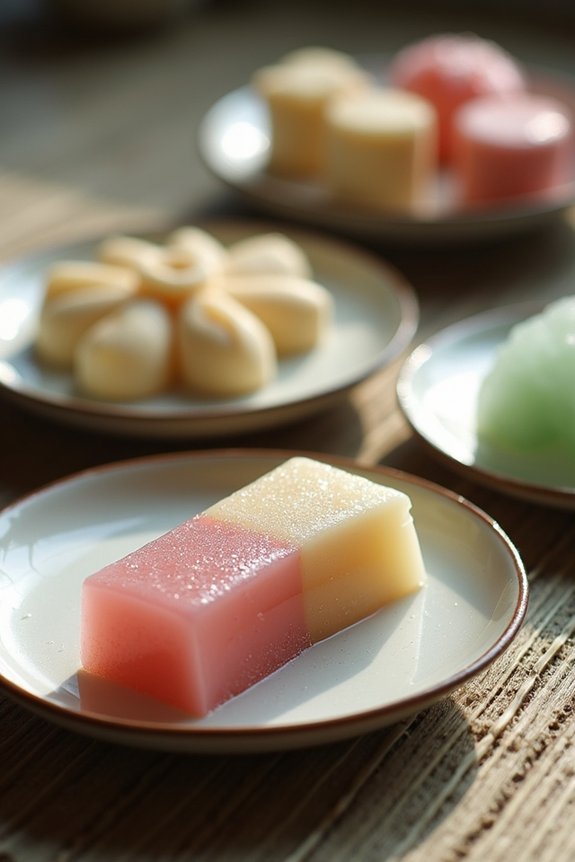
When you explore Kyoto’s refined wagashi scene, you’ll notice how seasonal maple leaf pastries showcase the autumn harvest with delicate layers that mirror nature’s color palette. I recommend checking out these layered cake traditions at Kyoto Station or local gift shops, where artisans stack thin, crispy wafers with sweet fillings to create visual beauty that matches their taste. These treats typically cost between ¥300–¥900, making them practical souvenirs that reflect generations of Japanese confectionery craftsmanship.
Seasonal Maple Leaf Pastries
As autumn rolls around, two regions of Japan—Hiroshima and Kyoto—showcase their confectionery mastery through seasonal maple leaf pastries that capture the essence of fall. I’d recommend starting with Momiji Manju, the iconic leaf-shaped wagashi from Hiroshima filled with sweet red bean paste. You’ll find these treats are best enjoyed fresh, especially during winter visits to Miyajima when the maple leaf motif feels most meaningful.
Kyoto wagashi offers its own autumn confections worth exploring. Kyo Baum features matcha-infused Baumkuchen that blends tradition with modern technique. Waguri Mont Blanc celebrates the chestnut harvest with elegant presentation.
Both regions craft seasonal pastries highlighting natural sweetness and seasonal beauty. These refined treats connect you to Japan’s dessert heritage. You’re not just tasting sugar—you’re experiencing autumn’s artistry through confectionery tradition.
Kyoto’s Layered Cake Traditions
What makes Kyoto’s layered cakes so special? They blend tradition with refined flavors that match perfectly with tea. The Kyo Baum, a Baumkuchen-style cake, features matcha and hojicha—those tea-friendly flavors that make each bite memorable. You’ll find these at Kyoto Station gift shops for ¥300–¥1000 per piece.
Then there’s the Waguri Mont Blanc, a chestnut-focused dessert that celebrates seasonal ingredients. Its spiral presentation and rich chestnut cream represent Kyoto’s wagashi tradition at its finest. Expect to pay ¥600–¥900 per piece at local confectioneries during chestnut season.
Both showcase how Kyoto bakers use natural sweetness and elegant presentation. These layered cakes aren’t just desserts—they’re edible artwork honoring Japan’s dessert heritage.
Trendy Treats Worth Trying: Crepes, Cheesecake, and Cream Puffs
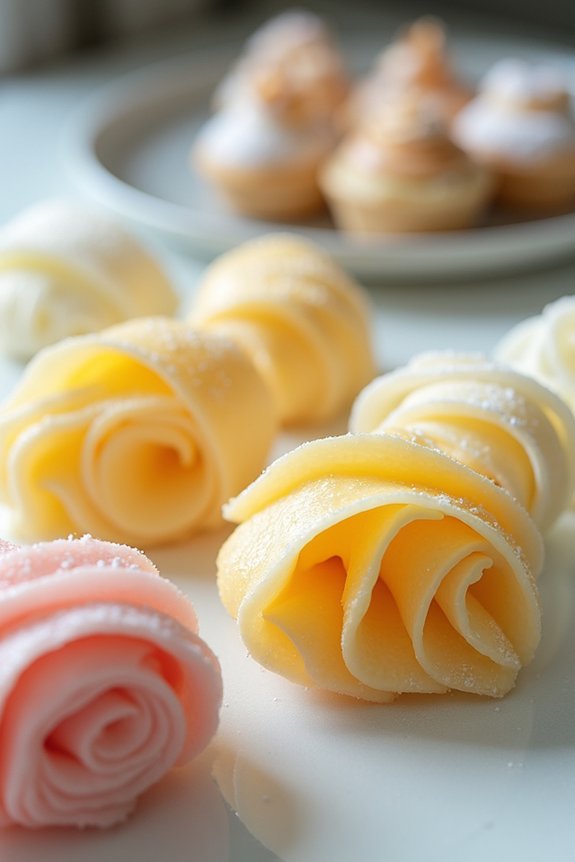
I’ll walk you through three trendy Japanese treats that have captured dessert lovers’ attention in recent years: crepes that you can grab and eat on the go, jiggly cheesecakes with an almost cloud-like texture, and adorable cream puffs featuring cute character designs. Each one offers something different—crepes give you portability with fresh toppings, cheesecakes deliver that famous light, airy quality that melts in your mouth within about 45 minutes of purchase, and cream puffs combine visual appeal with flavors like matcha and seasonal chestnuts. You’ll find these treats everywhere from Tokyo’s bustling streets to Kyoto’s specialty shops, making them easy to hunt down and taste for yourself.
Crepes: Portable Sweet Indulgence
If you’re wandering through Tokyo’s busy streets and want dessert you can eat on the move, crepes are your answer. These wrap-style desserts fit perfectly into your commute. You’ll find them at train stations and trendy neighborhoods like Shibuya and Harajuku, ready to satisfy your sweet cravings instantly.
What makes crepes so appealing:
- Matcha crepes from shops like Korot Crepe blend traditional Japanese flavor with modern street food culture
- Strawberry-based crepes loaded with whipped cream and fresh fruit offer classic indulgence you can grab quickly
- Wrap-style presentations let you enjoy your Japanese dessert while walking, fitting seamlessly into Tokyo’s fast-paced rhythm
These portable treats showcase why crepes dominate Tokyo’s dessert scene. They’re visually stunning, genuinely delicious, and designed for people like you who want quality sweets without stopping your day.
Cheesecake: Light And Jiggly
Ever wonder why Japanese cheesecake tastes so different from the dense, heavy versions you might know? The secret’s in the technique. Bakers beat egg whites until fluffy, creating oven spring that gives the cake its signature jiggle and cottony texture. This light texture comes from balancing cheese and sugar carefully—not dumping everything together.
The cooling technique matters too. Gradual cooling prevents the custard-like center from cracking, keeping that perfect wiggle intact. Uncle Rikuro in Osaka serves their cheesecake fresh, and people wait 45 minutes for slices averaging ¥800 per cake. You’ll get a stamp for the experience.
That balance of cheese and sugar, combined with fluffy egg whites, creates something totally different. It’s creamy yet delicate. Try one fresh.
Cream Puffs: Cute Character Appeal
While Japanese cheesecake wins you over with its delicate jiggle, cream puffs take a different approach—they’re all about the charm. At Shiro-Hige’s Cream Puff Factory, you’ll find Totoro Cream Puffs that combine light fluffy pastry with balanced cream puff filling. These character-inspired desserts aren’t just tasty—they’re designed to make you feel part of a special dessert community.
What makes them stand out:
- Visual magic: Each pastry’s cute character design makes them photo-worthy desserts you’ll want to share
- Seasonal flavors: Limited editions keep fans coming back to discover new tastes throughout the year
- Collectible appeal: Grabbing these novelty pastry experiences from Tokyo dessert shops feels like joining an exclusive club
The light, fluffy texture melts quickly, delivering that perfect sweet moment that connects you to Japan’s dessert culture.
Must-Try Desserts by Region
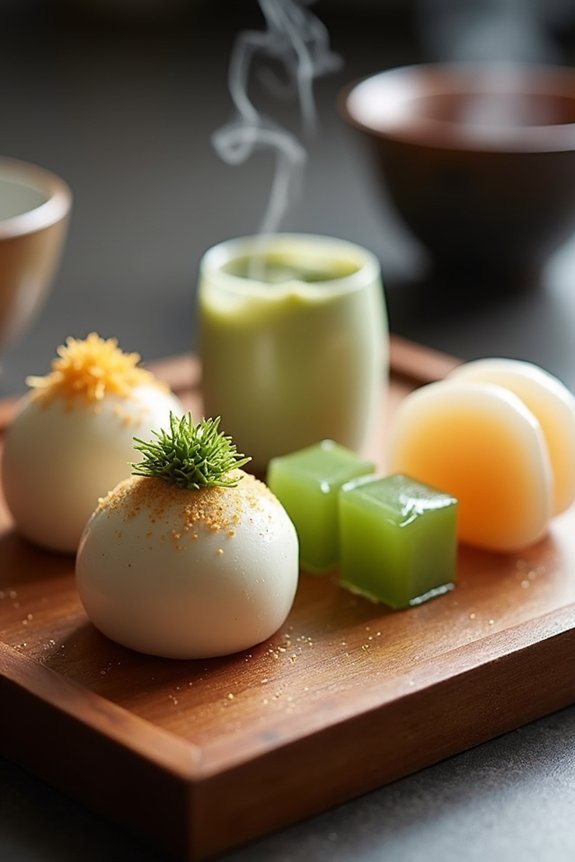
Japan’s dessert scene shifts dramatically as you travel from Tokyo to Kyoto to Nagano, each region offering its own specialty treats that locals have perfected over generations. You’ll discover that regional pride runs deep when it comes to wagashi and other traditional sweets.
| Region | Signature Dessert | Key Feature | Why It Matters | Best Season |
|---|---|---|---|---|
| Tokyo | Matcha kakigori | Shaved ice with mascarpone cream | Visual appeal draws crowds | Summer |
| Kyoto | Wagashi specialties | Kyo Baum and Mont Blanc | Artisanal craftsmanship | Year-round |
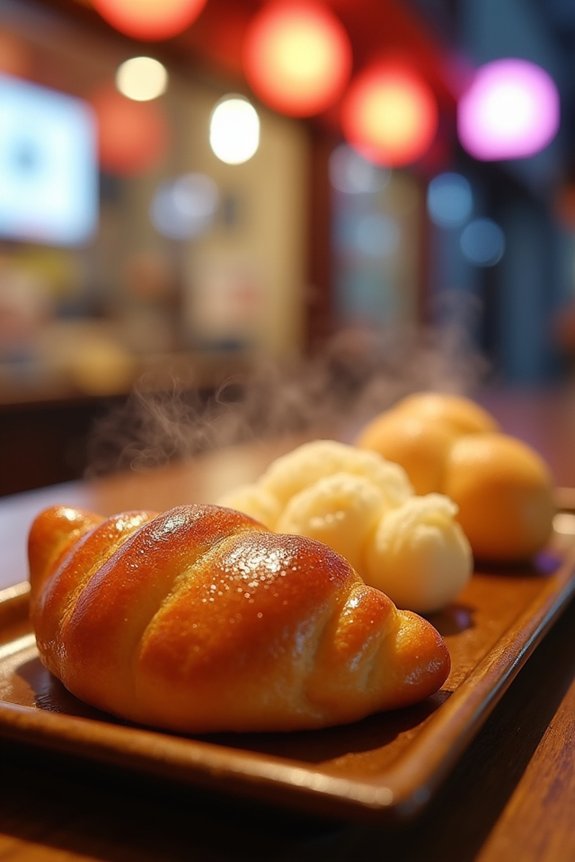
| Nagano | Gyunyu Pan | Cream-filled milk bread | Warming comfort food | Winter |
| Nationwide | Melon Pan variations | Custard or chocolate chip fillings | Accessible street food | All seasons |
| Asakusa | Matcha ice cream | Seven intensity levels (1–7) | Customizable experience | Summer |
Each region’s desserts reflect local ingredients and traditions, so you’re tasting authentic culture with every bite.
Tokyo Souvenirs Worth Bringing Home
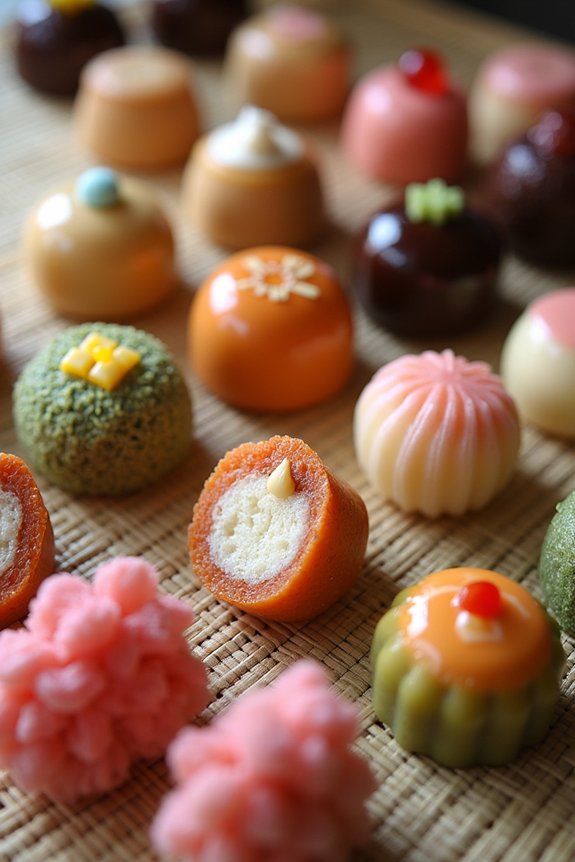
What makes a dessert gift actually worth lugging home in your suitcase? I’ve found that Tokyo souvenirs need three things: portability, taste, and that “I brought this from Japan” factor.
Tokyo Banana checks all boxes. This banana-shaped sponge cake with creamy filling stays fresh for about one week, making it perfect for travel. I grab mine at Tokyo stations or big stores.
But I don’t stop there:
- Matcha treats from depachika (department store basements) like matcha ice cream and matcha mochi let me share Tokyo’s flavors
- Kyo Baum from Kyoto offers regional specialty pricing around ¥300–¥900 for something unique
- Waguri Mont Blanc showcases seasonal chestnuts, proving gift shops near attractions stock photo-worthy presentations
These regional specialties prove souvenir freshness matters less than the story behind what you’re bringing home.
Where to Buy and What to Pay
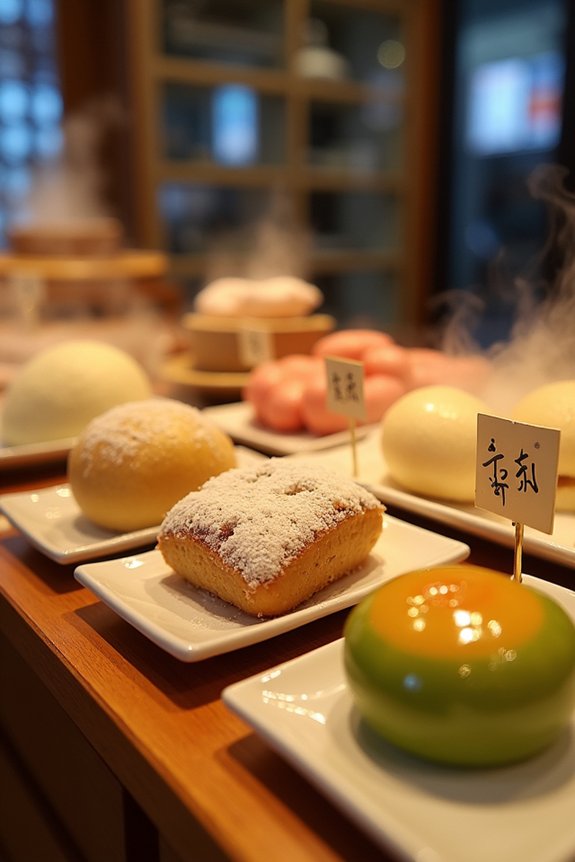
So where do you actually find these desserts, and how much should you expect to spend? Tokyo Banana runs ¥1,000–¥2,400 for a box of 12, and you’ll find it everywhere in Tokyo. Kyo Baum, that matcha and hojicha cake, costs ¥300–¥1,000 per piece at Kyoto Station shops. Gyunyu Pan from Nagano hits ¥200–¥400 each—eat it fresh, it’s a winter thing. Melon Pan stays affordable at ¥150–¥300 per piece with chocolate chip and custard variations.
Dessert hotspots in Shibuya, Harajuku, Asakusa, and near Tokyo Skytree draw longer lines. Regional specialties matter here. Check freshness windows before buying—some desserts peak within hours. Your price range depends on what you’re after, but quality treats won’t break your budget.