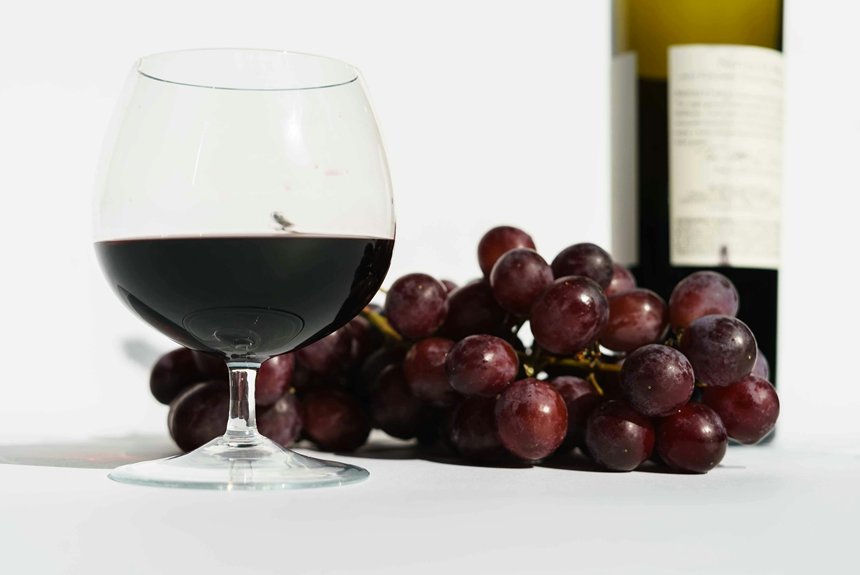
Dessert wine is a sweet wine that finishes meals perfectly. Here’s the key difference from dry wine: it keeps natural grape sugars, while dry wine ferments almost completely. You’ll find five main types—sparkling, off-dry, rich and sweet, sweet reds, and fortified options like Port. The Golden Rule is simple: match your wine’s sweetness to your dessert’s sweetness. Serve it chilled between 7–12°C in smaller glasses. Want to nail the perfect pairing every time? The specifics matter more than you’d think.
What Is Dessert Wine and Why Does It Matter?
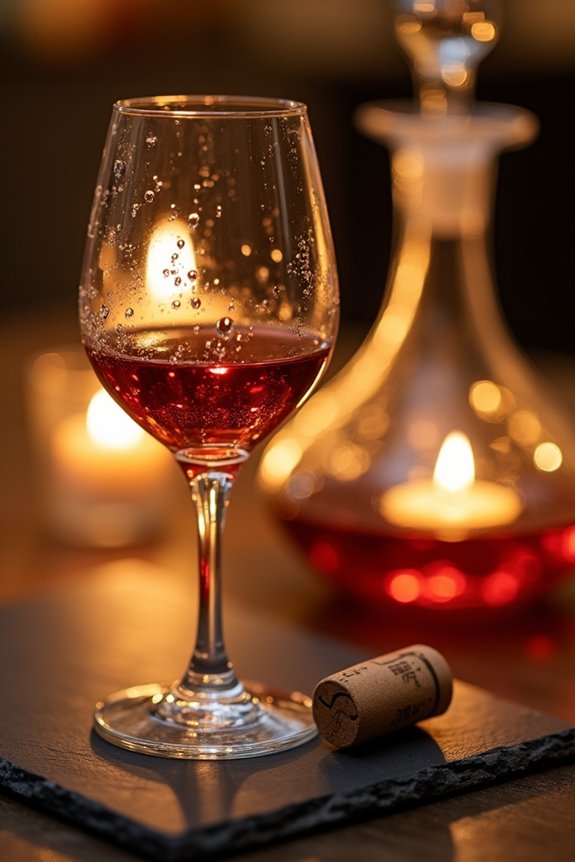
Ever wonder what makes a wine “dessert” wine? It’s basically a sweet wine that finishes your meal on a high note. I find dessert wines matter because they’re crafted differently than regular wines. Producers use techniques like late harvest, noble rot, and ice wine to concentrate sweetness in the grapes.
Here’s what sets them apart: they maintain acidity alongside that sweetness. This balance prevents them from feeling heavy and keeps your palate refreshed. You’ll discover various dessert wine types available for different occasions.
The real value? These wines enhance your dining moment. Pair them with desserts, cheeses, or enjoy them solo in small serving sizes. Understanding dessert wine types and their acidity levels helps you match the right wine to your dessert’s texture and flavor profile. That’s why choosing wisely matters.
What Makes Dessert Wine Different From Dry Wine?
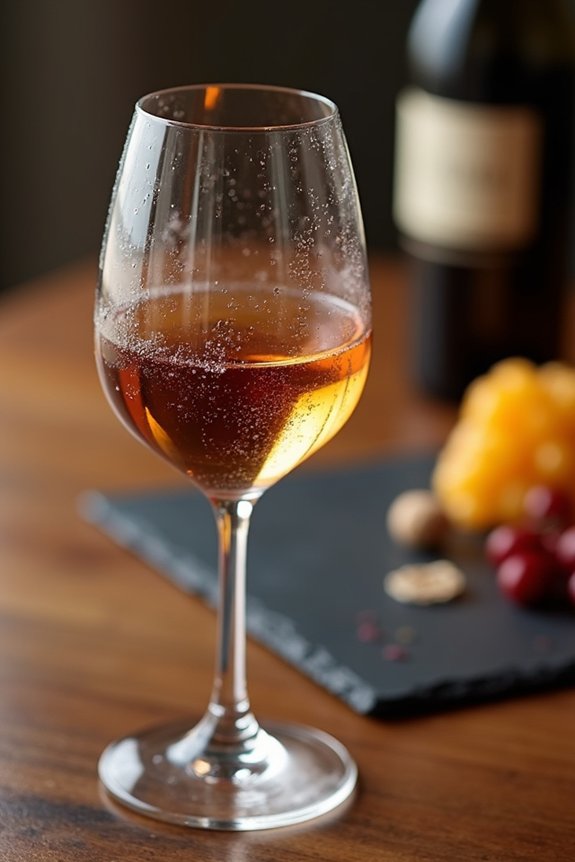
What’s the biggest difference between dessert wine and dry wine? It’s residual sugar. Dessert wines keep their natural grape sugars intact, while dry wines ferment almost completely, converting sugars into alcohol.
The fundamental distinction between dessert and dry wines hinges on residual sugar content and fermentation completion.
Here’s how winemakers achieve this. They use special techniques like late harvest, noble rot, ice wine, or fortification to concentrate sugars and preserve sweetness. Dry wines, by contrast, complete fermentation, leaving minimal residual sugar behind.
The sweetness isn’t overwhelming though. Dessert wines maintain balanced acidity that keeps them lively and prevents heaviness. This balance matters because it makes the wine feel refined rather than cloying.
You’ll notice service differences too. Dessert wines arrive in smaller glasses, allowing you to savor their nuanced flavors. Dry wines get standard pours. This distinction reflects how we experience each wine’s character and complexity.
The 5 Main Types of Dessert Wine Explained

Now that you understand what makes dessert wine special, let’s break down the five main categories so you can pick the right bottle for your taste.
I’ll walk you through each type:
- Sparkling dessert wines like Moscato d’Asti bring fizz and balance with acidity
- Off-dry dessert wines such as Riesling offer subtle sweetness paired with strong acidity
- Rich and sweet dessert wines including Sauternes, Tokaji Aszú, and Eiswein deliver concentrated, honeyed flavors
You’ve also got sweet red wines for red-fruit lovers and fortified wines like Port and Sherry, which gain higher alcohol content during production.
Each category serves different moments. Finding your favorite means exploring what resonates with you. Start with sparkling options if you prefer lighter sips, then venture toward richer selections as you develop your palate.
Which Production Techniques Control Sweetness?
Understanding how winemakers control sweetness in dessert wines is where the real magic happens. They’ve got several techniques up their sleeves to nail that perfect sweetness level.
Late harvest grapes stay on the vine longer, building up residual sugar naturally. Botrytis Cinerea, a special mold, dehydrates grapes to concentrate flavors intensely. Ice wine uses frozen grapes pressed at sub-zero temperatures, creating liquid gold with bright acidity.
Drying techniques like straw or raisin methods concentrate sugars before fermentation even starts. Fortification stops fermentation arrest by adding grape spirit, preserving sweetness while boosting alcohol in high-alcohol styles.
Each method gives you different flavor profiles and sweetness levels. Pick based on what you’re pairing it with, and you’ll impress yourself.
The Golden Rule: Match Wine Sweetness to Your Dessert
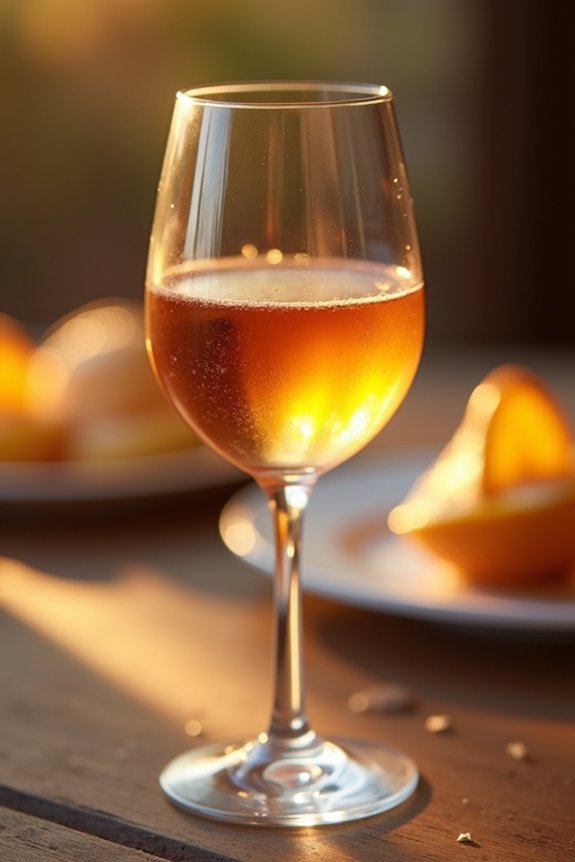
How do you know you’ve picked the right dessert wine? Follow the Golden Rule: match your wine’s sweetness to your dessert’s sweetness. This simple principle ensures the wine supports rather than overwhelms your dish.
Match your wine’s sweetness to your dessert’s sweetness—the Golden Rule for perfectly balanced dessert pairings.
When you pair sweetness levels correctly, you create balance. The wine’s acidity and fruit intensity work together with your dessert’s sugars. Here’s what to remember:
- Light, fragrant desserts need light to medium-sweet wines with bright acidity for freshness
- Rich, creamy, or chocolate desserts pair best with sweeter, fuller-bodied wines that cut through richness
- White wine and red dessert wines both work—just match the sweetness level
When in doubt, choose a wine slightly sweeter than your dessert. This strategy guarantees a complimentary wine pairing every time. You’ll develop confidence choosing dessert wines that truly enhance your experience.
Pick the Right Wine for Your Dessert’s Richness
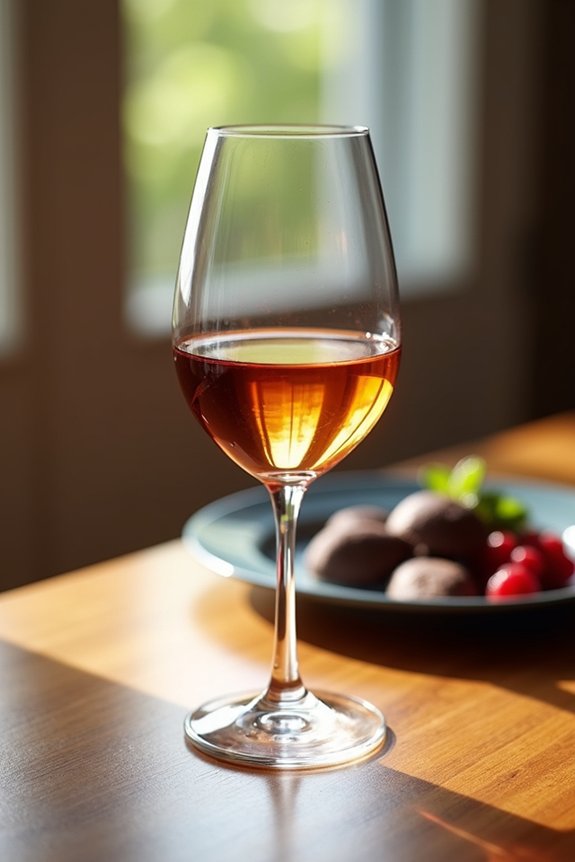
Why does a heavy chocolate cake need a different wine than a light lemon tart? The answer lies in matching your wine’s body to your dessert’s richness.
Light, fragrant desserts pair beautifully with fresh, fruity wines. They won’t overpower delicate flavors. Rich, creamy desserts demand intense, full-bodied wines with higher alcohol content. Think fortified wines for chocolate desserts—they’ve got the sweetness and complexity you need.
Acidity matters too. Bright acidity cuts through heavy richness and prevents cloying sweetness. A crisp wine refreshes your palate between bites.
Consider texture alongside richness. Creamy desserts need wines that match their weight. Chocolate desserts thrive with honeyed or fortified styles. The goal? Harmony between wine and dessert. When richness levels align, neither overpowers the other, creating pairings that genuinely satisfy.
Best Sparkling and Light Dessert Wines

Now that you’ve got the richness-matching piece down, let’s talk about wines that work differently: sparkling and light dessert wines. These bottles balance carbonation and acidity in ways that actually make them taste less sweet than their labels suggest. You’re joining a group of wine lovers who’ve discovered this trick.
Look for sweetness cues on labels:
- Demi-Sec Champagne, Moscato d’Asti, and Asti Spumante are classic choices
- Words like Moelleux and Amabile signal sweetness; Sec/Secco actually mean dry
- Fruit-forward profiles with stone-fruit and floral notes make them easy-drinking
Chill these sparkling dessert wines to 6–10°C to bring out brightness. Use smaller glasses to preserve aromas and balance sweetness with acidity. They’re perfect for warm afternoons and light desserts alike.
Rich Sweet Wines for Intense, Complex Flavors
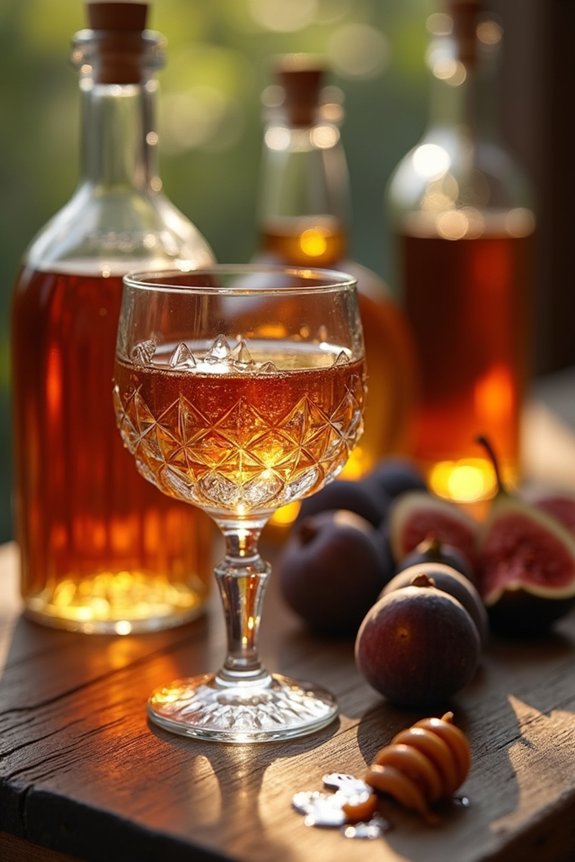
Depth and intensity separate these wines from their lighter cousins. I’m talking about Sauternes, Tokaji Aszú, and Vin Santo—the heavyweights of dessert wines. These showcase concentrated fruit and honeyed notes that’ll make you a true wine enthusiast.
| Wine | Region | Key Feature |
|---|---|---|
| Sauternes | Bordeaux | Botrytized grapes |
| Tokaji Aszú | Hungary | Late-harvest method |
| Vin Santo | Italy | Dried fruit musts |
| All three | Various | High acidity balance |
| Top pairing | Multiple | Foie gras, blue cheese |
You’ll taste dried fruits, honey, and marmalade developing complexity with time. The magic happens when botrytized grapes or late-harvest techniques create that sweet-tart balance. Your palate stays engaged, never overwhelmed. Pair these with foie gras or nut-based desserts for dessert wine pairing perfection. You’re joining wine lovers who appreciate nuance.
Pairing Dessert Wine With Cheese and Nuts
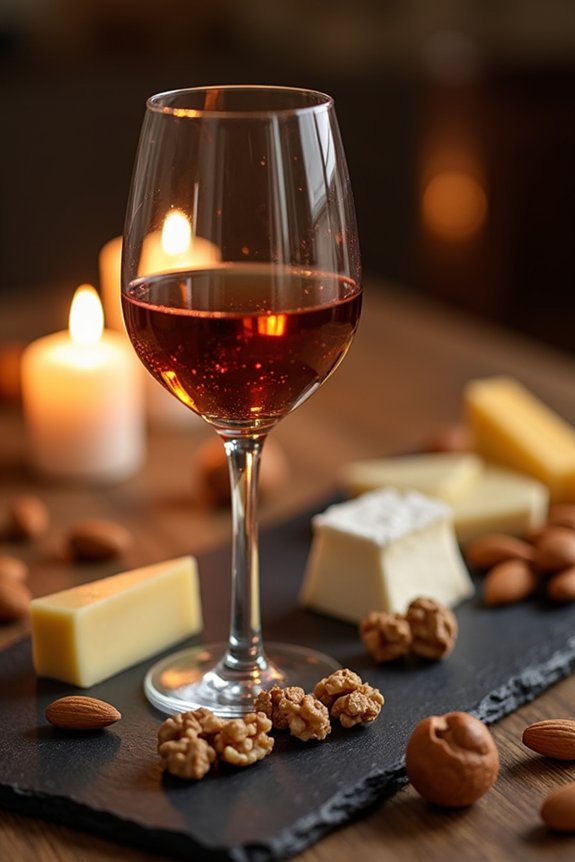
Ever wondered why dessert wine and cheese work so well together? I’ll share the secrets to creating perfect pairings.
The key is balancing sweetness and acidity. Here’s what makes it work:
- Higher acidity wines like Sauternes cut through creamy cheeses beautifully
- Richer, sweeter styles such as fortified wines complement blue cheeses and aged hard cheeses
- Texture contrast matters—serve lighter wines with soft cheeses like brie, fuller-bodied ones with aged cheddar
For nuts, I recommend trying nutty dessert wines alongside almond cookies or pistachio pastries. The aromas enhance each other naturally.
Remember your pairing guidelines: chill dessert wines to 7–12°C to keep acidity vibrant. Ensure the wine’s sweetness matches the cheese’s intensity so neither overshadows the other. This balance creates harmony on your palate.
Serving Dessert Wine at the Right Temperature
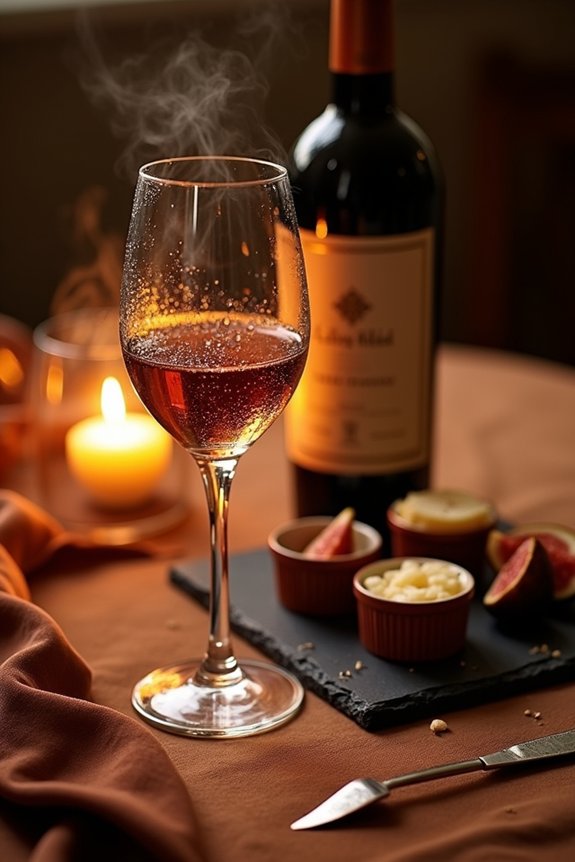
Getting the temperature right matters just as much as the pairing itself. I serve most dessert wines chilled around 7°C (45°F), though higher-acid varieties work better at 10–12°C (50–54°F). This serving temperature preserves acidity balance and prevents the wine from tasting cloying.
Sparkling dessert wines benefit from slightly cooler temps to maintain their refreshing character. Heavier, richer styles need a touch warmer to shine. Your serving glassware also plays a role—smaller glasses concentrate wine aromatics and enhance perception of both sweetness level and acidity.
I adjust based on what dessert I’m pairing with the wine. A lighter cake might pair better with a cooler chilled wine, while something rich needs warmer treatment. Small shifts in temperature transform your entire experience.
How Long Does Opened Dessert Wine Last?
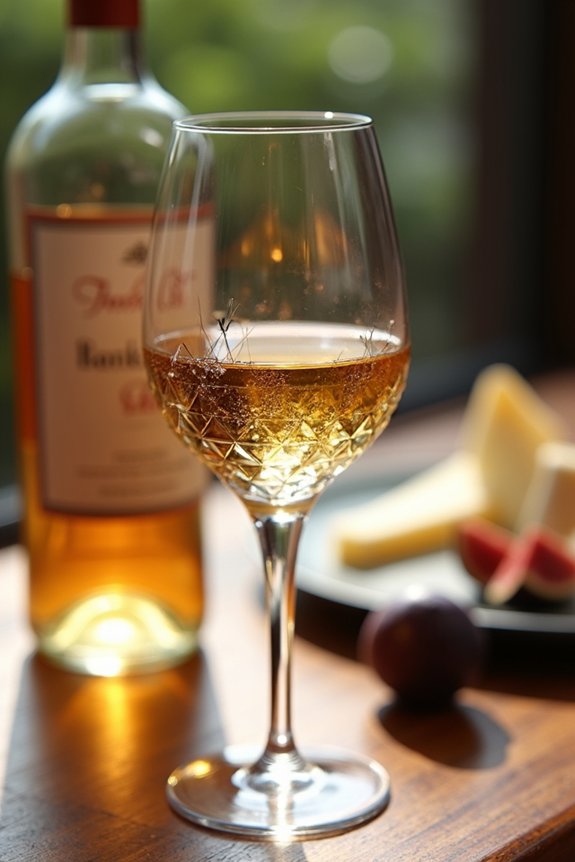
How long your opened dessert wine stays fresh depends mainly on its style, sugar content, and how you store it. I’ll walk you through what to expect so you can enjoy every sip.
Different dessert wines have different shelf-lives:
- Fortified wines like Port and Sherry last 2–3 weeks refrigerated and resealed
- Botrytized and late-harvest wines stay good 1–2 weeks when kept corked and cool
- Sparkling dessert wines lose bubbles fast—drink within 1–3 days
The higher sugar and alcohol content protect against spoilage, but oxidation still happens. Watch for off-odors, vinegar-like acidity, flat flavors, or color changes. These spoilage signs tell you it’s time to toss it. Proper refrigeration and recorking extend your wine’s life significantly.
Which Dessert Wine Should You Buy First?
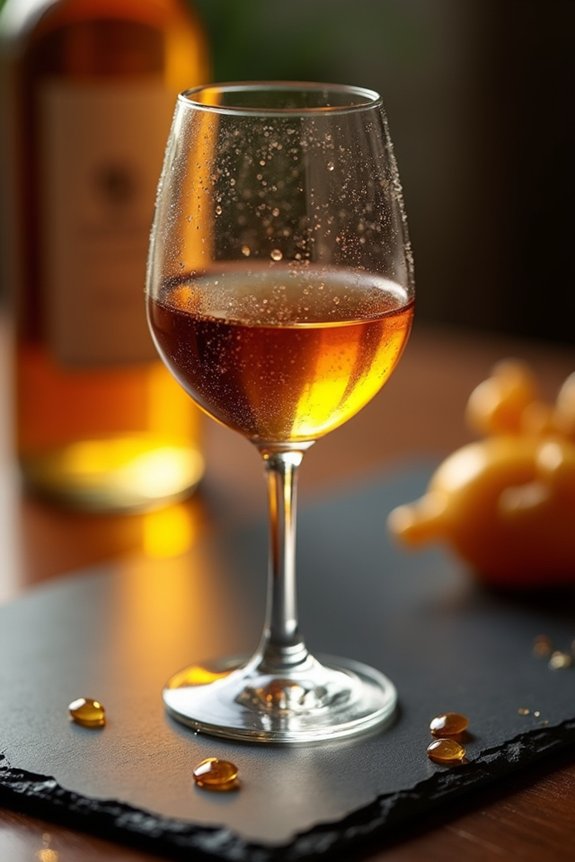
When you’re standing in front of the wine shop’s dessert section for the first time, you’ve got choices—and that’s actually good news. Start light with Moscato d’Asti, an aromatic wine that won’t overwhelm you. If you want your first white dessert wine to pop with citrus notes, grab Riesling Auslese or Vouvray instead. They’re crisp and balanced. For something richer, Sauternes and Tokaji Aszú deliver honeyed complexity that rewards sipping slowly. Prefer red? Try Recioto della Valpolicella for approachable sweetness with character. Port offers versatility—Ruby tastes fruity, Tawny turns nutty with age. Pick based on what flavors call to you: bright and fresh, or deep and layered. You can’t go wrong starting here.