
Oatmeal cookies won’t fatten you up if portions stay reasonable—your body counts total calories, not whether they come from “healthy” oats or sugar. A typical cookie runs about 67 calories, so one or two fits easily into most days. The real trick? Pairing them with protein or fiber so you feel full longer, then stopping there. The oats’ fiber actually helps steady your blood sugar and curbs cravings. We’ll walk through exactly how to make cookies work with your weight goals.
Why “Healthy” Ingredients Don’t Guarantee Weight Loss

Why does a cookie made with oats and raisins still pack on pounds? The answer lies in calorie density. Even wholesome ingredients like oats and raisins contain concentrated energy. When you add butter and refined sugar, those calories stack up fast.
Even wholesome ingredients like oats and raisins contain concentrated energy—add butter and sugar, and calories stack up fast.
Here’s the thing: your body doesn’t distinguish between “healthy” and “unhealthy” calories. What matters is your total energy balance—calories in versus calories out. Eat more than you burn, and you’ll gain weight, regardless of ingredient quality.
Portion size is your real game-changer. One oatmeal cookie might contain 150 calories. Eat five, and you’ve consumed 750 calories without feeling satisfied. The soluble fiber in oats does promote fullness, but high butter content overwhelms that benefit.
Focus on quantity, not just quality.
Calories and Macros: How Oatmeal Cookies Compare
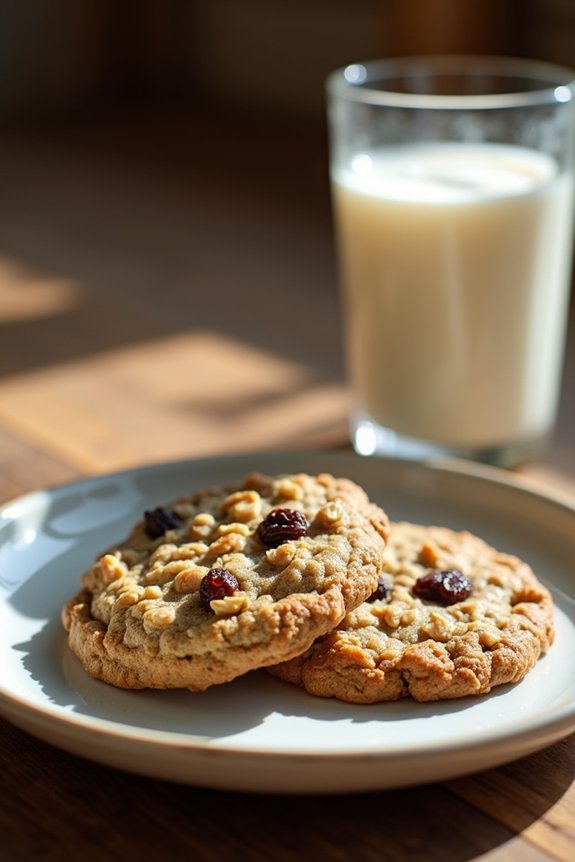
I want you to understand how oatmeal cookies stack up nutritionally, so let’s break down their calorie and fat content compared to other treats. A single Costco oatmeal cookie delivers 67 calories with 59% coming from carbs, 35% from fat, and just 6% from protein—numbers that matter when you’re tracking your daily intake. When you zoom out to 100 grams, you’re looking at 447 calories per serving, which puts these cookies in the same ballpark as chocolate chip cookies despite their wholesome reputation.
Caloric Density And Comparison
How much energy are you actually getting from that oatmeal cookie sitting on your plate? A single cookie delivers about 67 calories, but here’s what matters: 100 grams of oatmeal cookies pack roughly 447 calories. That’s serious caloric density for a small portion size.
When you compare oatmeal to chocolate chip cookies, you’ll find they’re surprisingly similar. Both hover around 210–230 calories per cookie with comparable fat content. The oats don’t make them lighter—they’re equally energy-dense.
Even modest portions add up fast toward your daily energy intake. A 50-gram serving contributes meaningfully to your total. Despite wholesome ingredients, you can’t ignore the math: these cookies demand moderation to prevent weight gain.
Macronutrient Breakdown Analysis
When you break down what’s actually inside an oatmeal cookie, the numbers tell you something important: you’re eating a carb-and-fat delivery system dressed up in wholesome oats. One 50-gram cookie packs 230 calories. Here’s where it gets interesting: carbohydrates make up 59% of those calories, while fat content accounts for 35%. That leaves just 6% from protein.
Per 100 grams, oatmeal cookies hit 447 calories—pretty dense for their size. The serving size matters because one cookie is substantial. Compare this to chocolate chip cookies at 210 calories, and you’ll notice oatmeal cookies actually pack more calorie density per bite.
The takeaway? Those wholesome oats don’t change the fundamental math. You’re still looking at a high-calorie, carb-heavy treat that requires portion control.
Where the Calories Actually Come From: Sugar’s Role
Why do oatmeal cookies pack so many calories despite their wholesome ingredients? Sugar’s the culprit. I’ll break it down: those 67 calories per cookie come largely from added sugars, not the oats or raisins. Even though oatmeal contains fiber and protein, the sugar content overpowers these benefits, spiking your blood sugar quickly. That glycemic impact matters because rapid spikes can lead to cravings and overeating.
Here’s what I’ve learned: you can’t ignore portion control just because a cookie contains wholesome ingredients. One or two cookies fit into a healthy routine. But eating five? That sugar adds up fast, driving your calorie intake higher without filling you up. Reducing sugar or swapping for natural sweeteners helps you enjoy these treats while keeping your calorie and glycemic impact in check.
Portion Control or Better Ingredients: Which Matters More?

Now that we’ve established sugar as the main calorie culprit, you might wonder: should you focus on eating smaller portions or switching to better ingredients?
Here’s the truth: both matter, but portion control wins the priority ranking. A single oatmeal cookie with wholesome ingredients still packs roughly 67 calories. That calorie density doesn’t disappear just because you’ve swapped butter for healthier fats or chosen whole grains.
You can’t out-ingredient your way around energy intake. Eating two cookies instead of one negates any nutritional upgrade you’ve made. The real strategy? Combine both approaches. Choose wholesome ingredients for better nutrition, then stick to standardized portions like eating half a cookie. This practical combo manages your overall calorie intake while supporting your weight goals without feeling deprived.
How Whole Oats Create Lasting Fullness
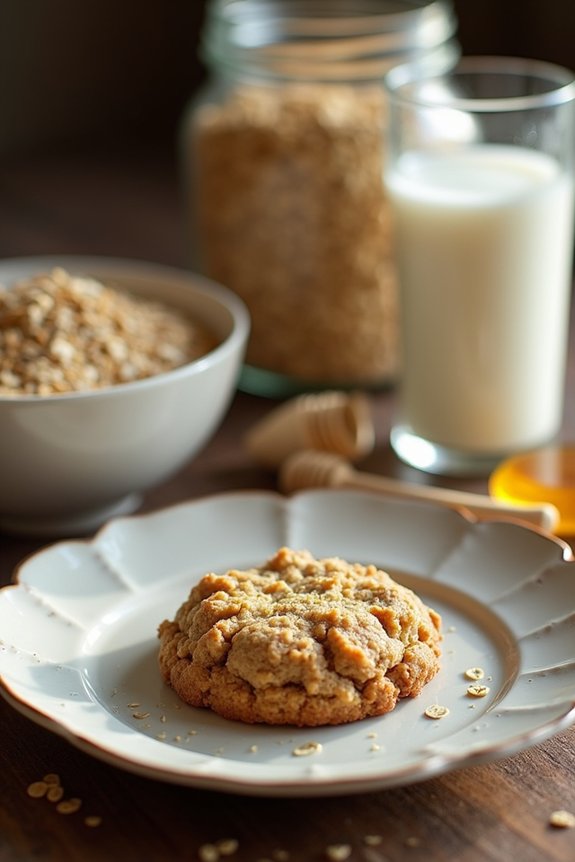
When you eat whole oats, you’re getting beta-glucan fiber that forms a gel in your stomach and slows down digestion, which keeps you feeling full longer than you would after eating regular cookies. This fiber also helps keep your blood sugar steady instead of spiking and crashing, so you won’t suddenly get hit with hunger pangs an hour later. The combination of that lasting fullness and stable energy means you’re less likely to reach for a second cookie right away.
Fiber’s Role In Satiety
the real magic in oatmeal cookies isn’t about the cookies themselves, but what’s actually inside the oats. When you eat oats, you’re getting beta-glucan, a soluble fiber that does something clever in your gut. It forms a gel-like substance that slows down digestion and keeps you feeling full longer. This matters because satiety—that satisfied, not-hungry feeling—directly influences how much you eat next. Better satiety means fewer snacks later. The fiber also helps control your blood sugar levels after eating, which prevents the energy crashes that trigger cravings. This glycemic control is key. You’re not just eating a cookie; you’re managing your hunger response with every bite.
Blood Sugar Stability Benefits
Why does your energy crash an hour after eating most cookies? Regular cookies spike your blood sugar fast, then drop it hard. Oatmeal cookies work differently. They contain beta-glucan, a soluble fiber that forms a gel in your gut. This gel slows digestion and releases glucose steadily into your bloodstream. You get a smoother glycemic response—meaning your blood sugar stays balanced longer. Your energy stays put. That’s the magic of whole oats. The fiber does the heavy lifting, creating that lasting fullness we discussed earlier. However, here’s the catch: high added sugars and fats in cookies still matter. Even with oats’ benefits, you need moderation. One or two cookies, not the whole box. That’s when you truly win.
The Real Culprits: Butter, Sugar, and Saturated Fat

A Costco oatmeal cookie has 230 calories and 9 grams of fat, while their chocolate chip cookie has only 210 calories but 11 grams of fat. The real issue? Butter and sugar drive the calorie count up fast.
| Ingredient | Impact |
|---|---|
| Butter | Adds saturated fat and calories |
| Sugar | Increases total calories substantially |
| Oats | Provides fiber, stabilizes blood sugar |
| Dark chocolate chips | Contains antioxidants |
Here’s what matters: butter and sugar are the primary culprits behind weight gain, not the oats themselves. One cookie contains about 9 grams of fat—mostly saturated. That saturated fat contributes considerably to your daily calorie load. When you eat these cookies frequently, those calories add up quickly. The sugar content compounds the problem, spiking energy intake without keeping you full long. You can enjoy oatmeal cookies by controlling portions and choosing recipes with reduced butter or sugar substitutes.
Ingredient Swaps That Cut Calories Without Sacrifice

Want to keep enjoying oatmeal cookies while cutting calories? Swap your ingredients strategically. Replace white flour with whole wheat or almond flour to boost fiber and protein, keeping you fuller longer. Trade butter for coconut oil or avocado to reduce saturated fat without sacrificing moisture. These healthy fats support better cholesterol levels too.
Next, ditch added sugars. Use honey or mashed bananas instead. This lowers your overall calorie count and prevents blood sugar spikes that leave you crashing. Add protein powder or nuts to amp up satiety—you’ll eat less throughout the day.
Finally, load up on oats. More whole grains mean slower energy release and genuine satisfaction from fewer cookies. These swaps work together, delivering cookies that taste great while supporting your health goals.
Oatmeal Cookies and Blood Sugar: The Weight Connection
what happens to your blood sugar after eating a cookie directly affects your weight.
Oatmeal cookies contain beta-glucans, a type of fiber that slows how fast sugar enters your bloodstream. This means steadier blood sugar levels instead of sharp spikes that trigger cravings and overeating. The fiber content in oats also reduces your glycemic load—basically, how much a food impacts your blood sugar.
When your blood sugar stays stable, you naturally eat less. That’s where portion control becomes easier. Your body feels satisfied longer, so you’re not hunting for snacks an hour later.
However, butter and added sugar still matter. Keep portions reasonable to avoid those blood sugar rises that undermine weight management. You’re not fighting the cookie itself; you’re working with your body’s natural responses.
Building a Sustainable Cookie Habit
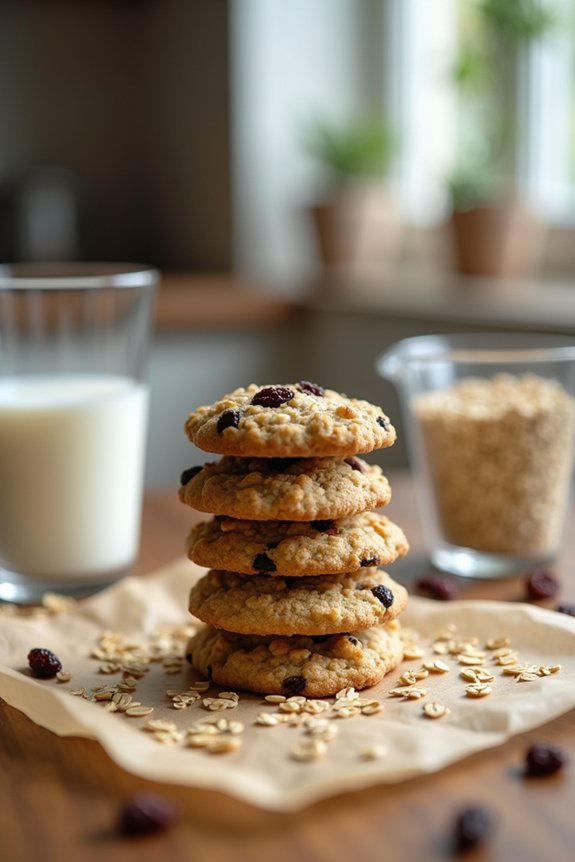
I’ve found that building a sustainable cookie habit actually comes down to three practical strategies: managing how much you eat at once, planning when you enjoy them throughout the week, and making sure they fit into your overall nutrition rather than replacing healthier foods. You control the outcome by deciding on reasonable portions—maybe one or two cookies with a meal that includes protein and fiber—and scheduling treat days so you’re not grabbing them randomly whenever cravings hit. Think of it like balancing your weekly calories and activity level, kind of how you’d plan meals around a workout schedule, except here you’re giving yourself permission to enjoy cookies without guilt or weight gain.
Portion Control And Mindfulness
How do you actually enjoy oatmeal cookies without derailing your health goals? The answer lies in portion control and mindful eating. I stick to 50-gram servings—roughly one cookie—which keeps my calorie balance in check. This serving size feels satisfying without triggering overeating.
I use uniform baking sheet portions to ensure consistency. When cookies look identical, tracking becomes automatic. I pair them with balanced meals rather than eating them alone, which anchors my total daily calories.
Mindful eating means I slow down. I notice the texture, taste, and how my body feels. This awareness prevents mindless snacking sessions. Choosing ingredients with reduced added sugars and whole oats helps too. They keep me fuller longer, supporting sustainable habits without willpower burnout.
Frequency And Weekly Planning
Building on the mindful eating habits you’ve started, planning when and how often you eat oatmeal cookies makes the whole thing sustainable. I recommend setting specific days—like twice weekly—to enjoy them as part of your routine. This weekly planning prevents random snacking that derails your goals.
Here’s the strategy: pair your cookie with a protein-rich meal or post-workout snack. Oatmeal’s fiber content, especially beta-glucans, keeps you fuller longer, which naturally supports portion control. Track your servings carefully—maybe half a cookie or one small portion per session.
Moderation truly works when you’re intentional. You’re not eliminating cookies; you’re being deliberate about when they fit into your week. This approach builds a sustainable habit that feels natural, not restrictive.
Balancing Treats With Nutrition
So here’s the real question: can you actually enjoy oatmeal cookies as part of a healthy eating pattern? Absolutely. The trick is balancing treats with nutrition through intentional choices.
Think of your daily eating like building blocks. Your oatmeal cookies fit in when you’ve already consumed whole grains, vegetables, and lean proteins. The soluble fiber in oats keeps you satisfied longer, making portion control easier. One or two cookies (about 150-200 calories each) won’t derail progress if your meals stay nutrient-dense.
| Daily Component | Breakfast | Lunch | Snack | Treat |
|---|---|---|---|---|
| Whole Grains | Oatmeal | Brown rice | Whole wheat crackers | Oatmeal cookie |
| Protein | Eggs | Chicken | Greek yogurt | Nuts in cookie |
| Vegetables | Berries | Salad | Carrots | Limited |
| Healthy Fats | Olive oil | Avocado | Almonds | Butter in cookie |
| Balance Score | Strong | Strong | Moderate | Acceptable |
This balanced diet approach transforms cookies from “forbidden” into “planned.”
Homemade vs. Store-Bought: Which Supports Your Goals?

When you’re trying to manage your weight, the choice between baking your own oatmeal cookies and grabbing a package from the store matters more than you might think. Homemade versions let you control calorie density by using less sugar and more oats, while store-bought options often sneak in added fats and sugars that rival chocolate chip cookies at around 230 calories per serving.
Here’s what actually makes the difference: portion size. A typical 50-gram cookie packs calories that add up fast. When you bake at home, you control ingredients and can swap in applesauce or flaxseed to lower calories while boosting satiety. Store-bought cookies? You’re trusting their labels.
For weight management, both work when you eat mindfully. Track your portions and fit them into your daily plan.
Your Daily Oatmeal Cookie Strategy

Now that you know what to look for in your cookies, let’s build a plan that actually works with your day. Start by setting a realistic portion control goal: one oatmeal cookie (around 50 grams) as your standard serving. This matters because the soluble fiber in oats creates satiety, meaning you’ll feel fuller longer and won’t crave more snacks.
Here’s your strategy: eat your cookie with protein. Pair it with Greek yogurt or cheese to boost fullness. Check sugar content on labels and aim for cookies with 8 grams or less per serving. Plan your cookie into your daily calorie budget rather than treating it as “extra.” This approach keeps oatmeal cookies aligned with your goals while letting you actually enjoy them.
The Bottom Line: Making Cookies Work for Weight Management

Can oatmeal cookies fit into a weight management plan? Absolutely. I’ve found that oats, portion control, and fiber work together to make this possible. The key is understanding what you’re eating.
| Strategy | Action | Result |
|---|---|---|
| Portion Control | Limit to 1-2 cookies per serving | Manages calorie intake |
| Fiber Content | Choose recipes with whole oats | Increases fullness |
| Added Sugar | Reduce by half in recipes | Lowers empty calories |
| Ingredient Quality | Use coconut oil instead of butter | Improves nutritional value |
| Serving Size | Keep cookies small, around ½ cup dry oats | Prevents overeating |
The real deal: oatmeal cookies aren’t automatically fattening. When I control portions, watch added sugar, and choose whole grain ingredients, they become a sustainable snack. You’re not giving up treats—you’re making them work for your goals.