You’ll swap bread flour in using a simple 1:1 ratio by weight or volume. Expect noticeably chewier cookies with crispier edges because bread flour’s higher protein content (around 12%) develops more gluten, trapping moisture in your dough. Your dough will feel drier, so add 1–2 teaspoons of water per cup of flour and chill for 30–60 minutes. Bake at 350°F to avoid overbaking. Bread flour works best for chocolate chip and brown butter cookies but not delicate sugar cookies. There’s more to know about adjusting your technique.
Why Bread Flour Makes Cookies Chewier and Denser
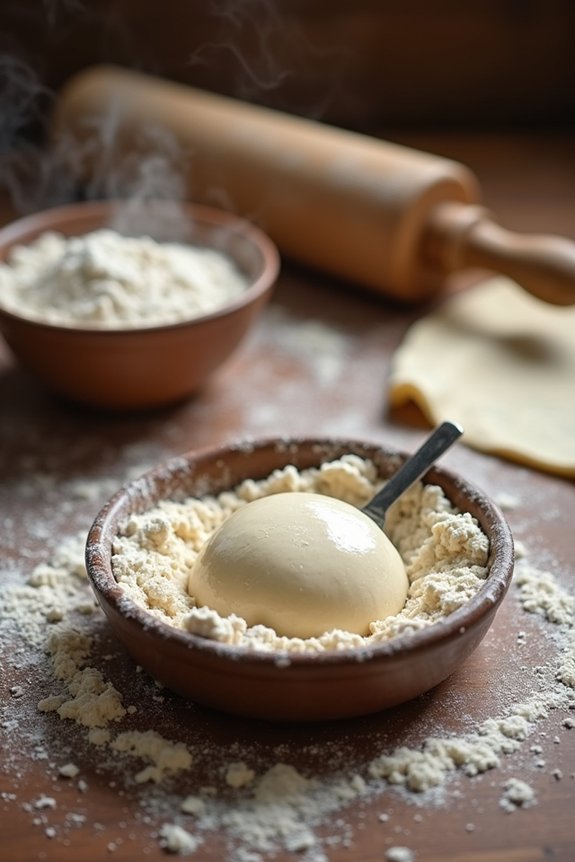
When you swap all-purpose flour for bread flour in your cookie recipe, you’re introducing a flour with about 12.7% protein instead of the usual 11.7%, and that small difference actually changes how your cookies turn out. That extra protein content kicks off more gluten development during mixing. More gluten means your dough becomes stronger and more elastic, trapping liquid better as it bakes. This trapped moisture is what gives you that chewy texture you’re after.
Bread flour also absorbs more liquid than lower-protein flours. This reduced spread lets your cookies stay thicker with a more substantial center. You’ll get cookies with a chewy interior and crisper edges—a satisfying contrast that makes bread flour worth trying in your next batch.
When Bread Flour Works Best (and When to Use All-Purpose Instead)
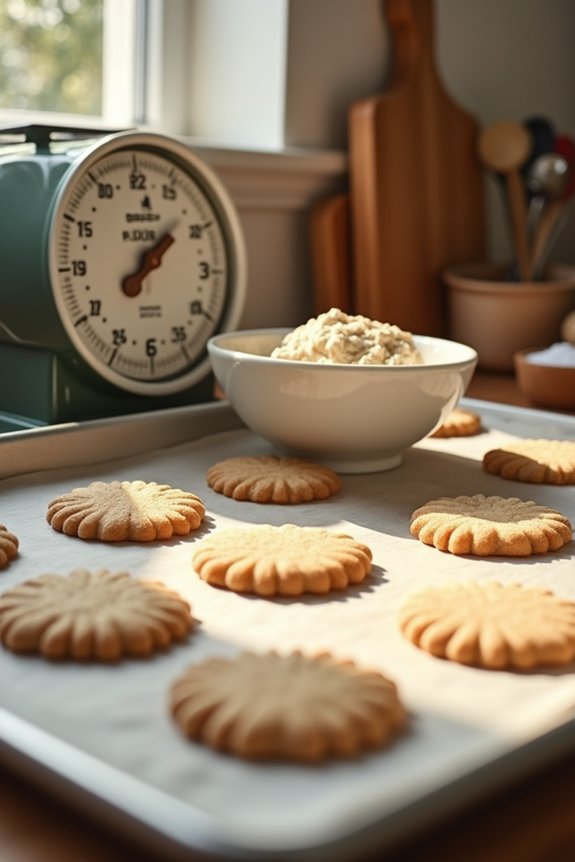
I’ll help you choose between bread flour and all-purpose based on what kind of cookie texture you’re after—chewier cookies benefit from bread flour’s extra protein, while softer, more delicate treats call for all-purpose instead. Your recipe type matters too: chocolate chip and brown butter cookies shine with bread flour’s structure, but sugar cookies and shortbreads need all-purpose to stay tender. When you swap flours, remember that bread flour’s higher protein content might dry out your dough, so you’ll want to adjust your liquid ingredients slightly and test your results before committing to a full batch.
Chewiness vs. Tenderness Trade-Off
bread flour’s higher protein content (around 11.7–12.7%) builds more gluten, which gives you chewier cookies than all-purpose flour delivers. I find that chewiness really shines when you balance bread flour with brown sugar, adequate fat, and proper hydration—it’s not just about the flour alone.
Want tender, softer cookies instead? Mix cake flour with your bread flour, or switch to all-purpose. You’ll still get good flavor without the extra chewiness.
When substituting bread flour for all-purpose using a 1:1 ratio, expect similar spread but crispier edges that develop slower. The cookie texture shifts noticeably chewier. Add an extra teaspoon of liquid per cup if your dough feels too stiff. This adjustment helps you nail your preferred cookie texture every time.
Recipe Type and Protein Content
How do you know which flour to grab for your next batch? It comes down to understanding protein content and what you’re actually trying to bake.
Bread flour’s higher protein content, around 11.7%, makes it ideal when you want chewy cookies with real bite and structure. I reach for it when I’m craving that satisfying chew. All-purpose flour, typically 9–11% protein, gives you lighter, crisper edges and tender centers instead.
Here’s the practical part: you can do a straight substitution 1:1 when swapping bread flour for all-purpose. Your cookie texture will shift noticeably denser and chewier. If you’re after softer results, stick with all-purpose. Want maximum chew? Bread flour’s your answer. Match your flour choice to your texture goals, not the other way around.
Substitution Success and Limitations
Now that you understand how protein content shapes your cookie’s personality, let’s figure out when you should actually make the swap. Bread flour shines when you want chewy texture and crispy edges. Chocolate chip and brown butter cookies benefit most from bread flour’s extra gluten development. You’ll use a 1:1 substitution by weight, swapping all-purpose for bread flour directly. If your cookie dough gets too dry after switching, add 1–2 teaspoons of liquid per cup. Test results show bread flour cookies are noticeably chewier without being drastically different. However, stick with all-purpose if you’re after soft, tender cookies instead. The swap works reliably, giving you crisp edges with soft centers that satisfy most bakers.
Simple 1:1 Substitution Method for Bread Flour Cookies
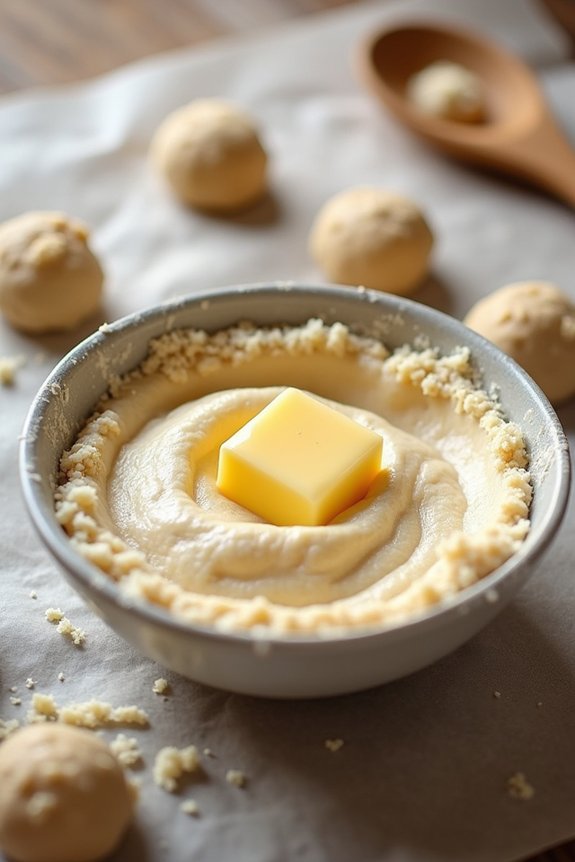
The easiest way to swap bread flour into your cookie recipe is a straight 1:1 replacement—just use the same amount of bread flour as you would all-purpose flour. Since bread flour absorbs more liquid than all-purpose (thanks to its higher protein content), you’ll want to watch your dough closely and add 1–2 teaspoons of water or milk per cup of flour if it looks too dry. Once you make this simple adjustment, you’ll notice your cookies turn out chewier and slightly denser, but the flavor and overall baking process stay pretty much the same.
Direct Flour Swapping Method
Want chewier cookies without changing your recipe? Direct flour swapping is your answer. Simply replace all-purpose flour with bread flour at a 1:1 ratio. That’s it.
Here’s why this works: bread flour contains more protein—around 11.7–12.7% compared to all-purpose’s 11–11.7%. This extra protein develops more gluten, creating that satisfying chew you’re after while keeping edges crisp.
After you swap the flour, check your dough’s texture. If it looks dry, add 1–2 teaspoons of liquid per cup of flour. This restores moisture and prevents dense cookies.
One important note: protein content varies between brands. A King Arthur bread flour differs slightly from another manufacturer’s version. You might notice small texture differences batch to batch.
Expect noticeable results. Your cookies will be chewier, though the change won’t be dramatic.
Adjusting Dough Consistency
Once you’ve swapped your flour, you’ll notice the dough behaves a bit differently—and that’s where consistency adjustments come in. Bread flour absorbs more water than all-purpose, so your dough might feel dry. Add 1–2 teaspoons of liquid per cup of flour to restore workability. The higher protein content makes the dough stiffer, which is normal.
| Issue | Solution | Result |
|---|---|---|
| Dry dough | Add water gradually | Better hydration |
| Stiff texture | Mix gently | Improved workability |
| Spread concerns | Chill 30–60 minutes | Stable cookies |
| Chewy interior | Rest before baking | Enhanced texture |
Avoid overworking the dough—that increases gluten development and toughness. Chill your dough for 30 minutes to an hour. This resting period hydrates the flour fully and prevents excessive spreading. You’re building the foundation for chewy cookies with perfect structure.
Expected Results and Outcomes
What’ll actually happen when you bake cookies with bread flour instead of all-purpose? You’re going to get chewier cookies. That’s the main event.
Bread flour’s higher protein content—around 12.7% compared to all-purpose’s 11.7%—creates more gluten development. More gluten means a denser, chewier texture you can actually bite into. Your cookies won’t be as tender, but they’ll have structure and chew that sticks around.
The moisture adjustment matters here. Since bread flour absorbs more liquid due to its protein content, your dough might feel dry. Add 1–2 teaspoons of water per cup of flour if needed. This keeps your cookies from turning out too stiff.
Brand consistency affects results too. Different manufacturers vary their protein levels, so tracking what works helps you nail it every time.
Your Dough Will Be Drier: Here’s How to Fix It
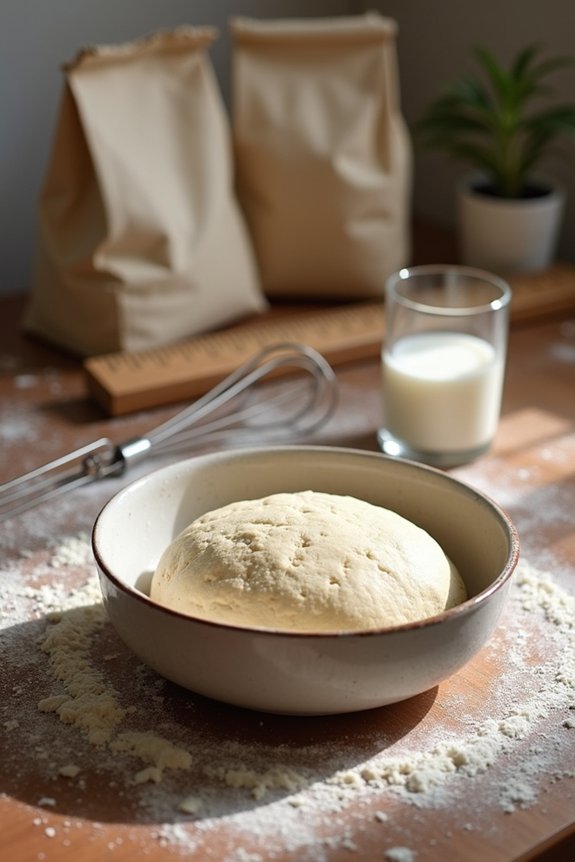
Why does bread flour absorb so much moisture? Its higher protein content binds more water than all-purpose flour does. I’ve found that dough dryness is common when baking cookies with bread flour, but you can fix it.
Start with moisture adjustment by adding 1–2 teaspoons of liquid per cup of flour. Water works fine, though milk adds subtle flavor. Mix thoroughly and check your dough’s feel. You want soft, pliable dough that holds its shape without sticking excessively.
Add 1–2 teaspoons of liquid per cup of flour, mixing thoroughly until dough is soft and pliable without excessive sticking.
Chilling dough helps too. Pop it in the fridge for 30 minutes. Cold temperatures let fat redistribute and moisture re-equilibrate throughout. This simple step often solves dryness without adding extra liquid.
Monitor how your dough feels as you work. Small adjustments make the difference between dry, crumbly cookies and ones with proper texture.
What to Expect: Texture, Spread, and Appearance
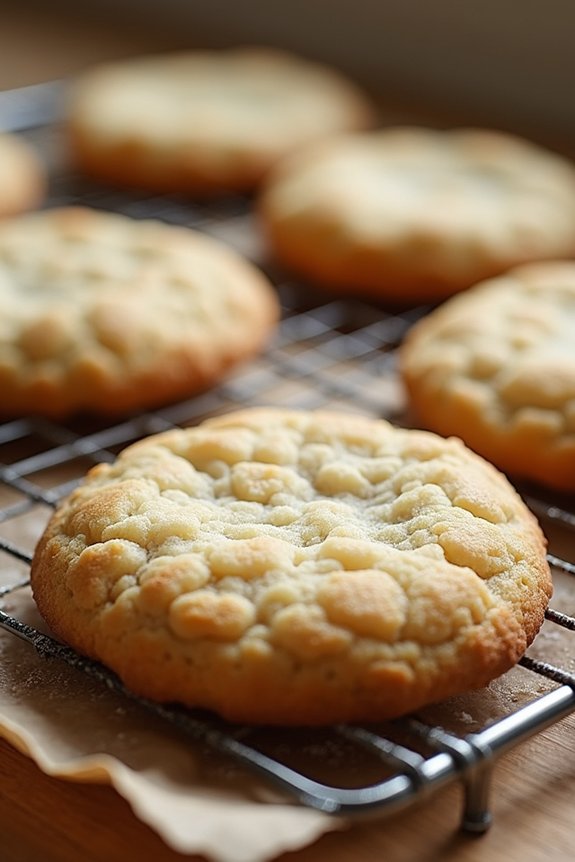
When you bake cookies with bread flour, you’re going to notice some real differences compared to what you’re used to. The texture shifts dramatically because bread flour’s higher protein content triggers more gluten development in your dough. This means you’ll get chewy cookies with crisp edges and a denser center—think chewier than what all-purpose flour delivers.
Spread patterns change too. Your cookies won’t flatten as much during baking. They’ll hold their shape better and develop a firmer structure overall. The appearance reflects these changes: you’re looking at less tender, more substantial cookies that feel satisfying to bite into.
These differences aren’t drawbacks—they’re simply what happens when extra gluten forms. Understanding this helps you decide if bread flour fits your cookie goals.
Troubleshooting: When Something Goes Wrong
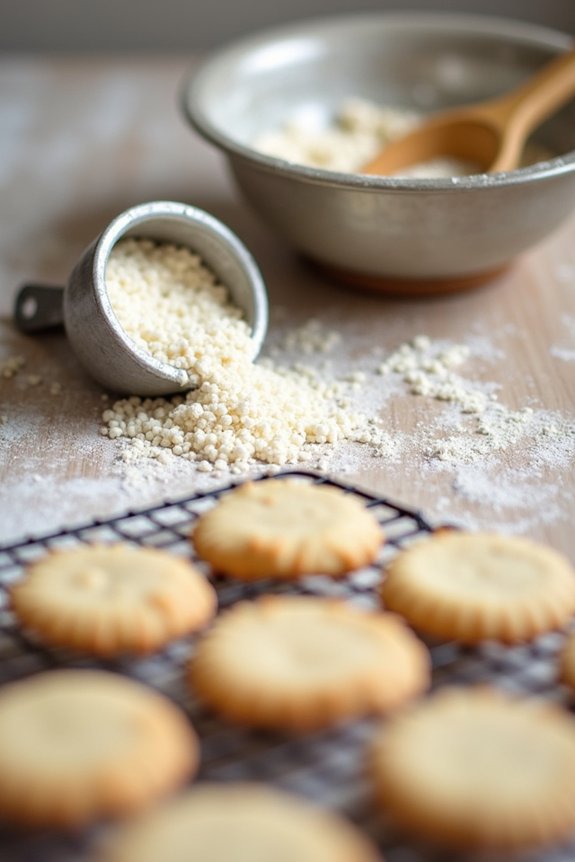
Even with the best intentions, bread flour cookies don’t always turn out perfectly on the first try. Here’s what I’ve learned works:
| Problem | Cause | Solution |
|---|---|---|
| Dry, crumbly dough | Bread flour absorbs more liquid | Add 1–2 teaspoons of water per cup |
| Rock-hard cookies | Overbaking | Reduce time or lower temp to 350°F |
| Not chewy enough | Insufficient gluten development | Use bread flour consistently, one brand |
The higher protein content in bread flour demands moisture adjustment. If your dough looks too stiff, add liquid gradually. Baking temperature matters too—I keep mine between 350–375°F to prevent over-browning.
Brand consistency helps. Different manufacturers vary slightly in protein content, affecting how your chewy cookies turn out. Test one brand first, then adjust as needed.