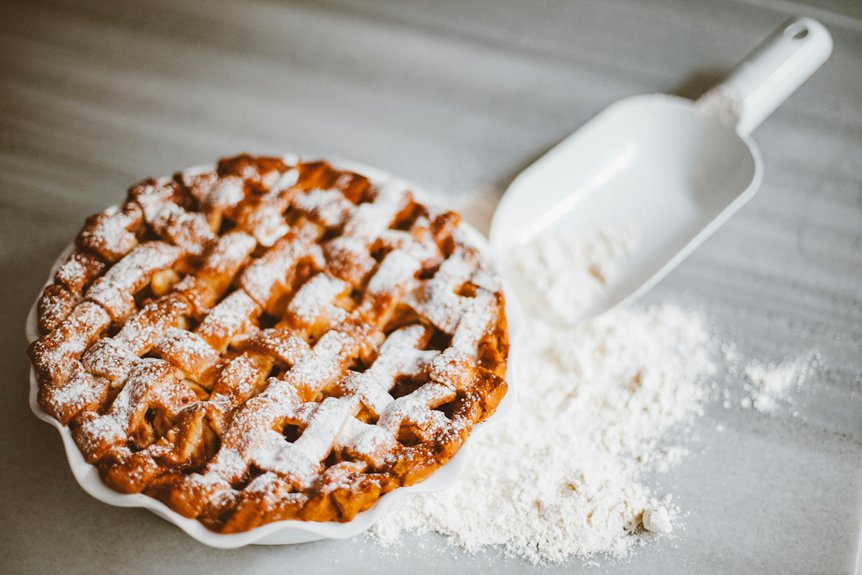
No—cornstarch and baking powder do completely different jobs in baking. Cornstarch absorbs moisture and softens texture, while baking powder creates rise by releasing carbon dioxide gas when it hits liquid and heat. Swap cornstarch for baking powder and you’ll get dense, flat baked goods with zero lift. You need baking powder’s acid-and-base reaction to make cakes and muffins fluffy. If you’re out of baking powder, you can mix baking soda with cream of tartar instead—but cornstarch alone won’t cut it. There’s a better solution if you keep scrolling.
The Quick Answer: No, Cornstarch Won’t Replace Baking Powder
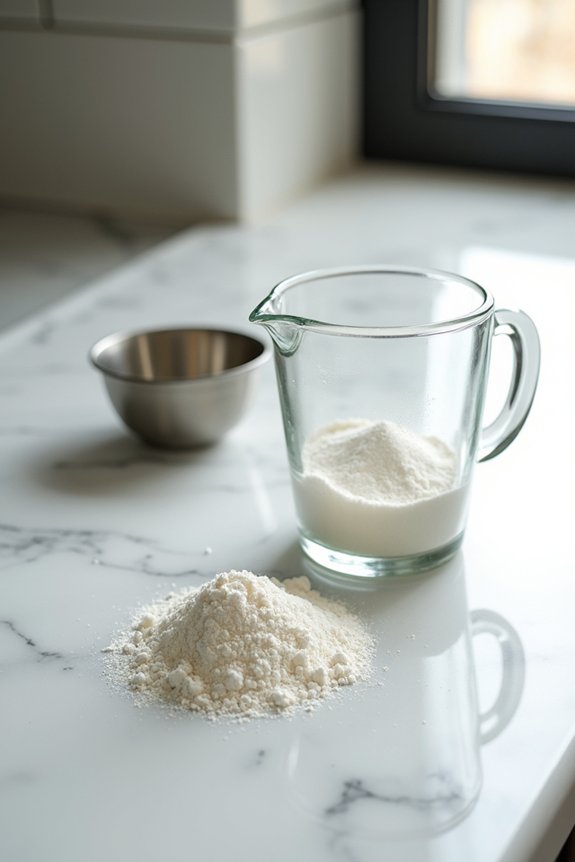
Why can’t you just swap cornstarch for baking powder in your cake or muffin recipe? Here’s the thing: cornstarch and baking powder do completely different jobs. Cornstarch thickens sauces and absorbs moisture. That’s it. Baking powder, on the other hand, creates lift. It contains baking soda plus a dry acid that releases carbon dioxide bubbles when you add liquid and heat. Those bubbles make your baked goods rise and become fluffy.
If you replace baking powder with cornstarch, you’ll end up with dense, flat baked goods that won’t rise at all. Your cake won’t have that airy texture you’re expecting. Instead, you’ll get something more like a brick. The solution? Use a real baking powder substitute made from baking soda, cream of tartar, and cornstarch mixed together.
Why Cornstarch Falls Short as a Leavening Agent
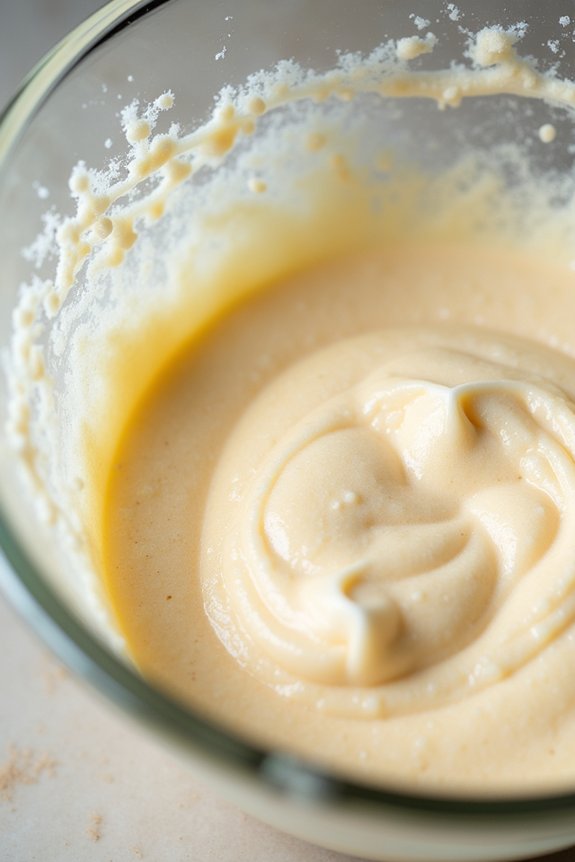
Since cornstarch doesn’t contain any leavening compounds, it can’t create the carbon dioxide bubbles that make baked goods rise. When you bake, baking powder releases gas that expands with heat, lifting your cookies and cakes. Cornstarch does something totally different. It absorbs moisture and softens textures, which is useful for some recipes. But it won’t give you that rise you’re after.
If you swap cornstarch for baking powder, you’ll end up with flat, dense results. Your baked goods won’t have that light, fluffy structure you want. Cornstarch simply lacks the chemical reaction needed for leavening. You can use cornstarch alongside baking powder to adjust texture, but it can’t do the job alone. Stick with actual leavening agents for proper rise.
The Key Difference Between Cornstarch and Baking Powder
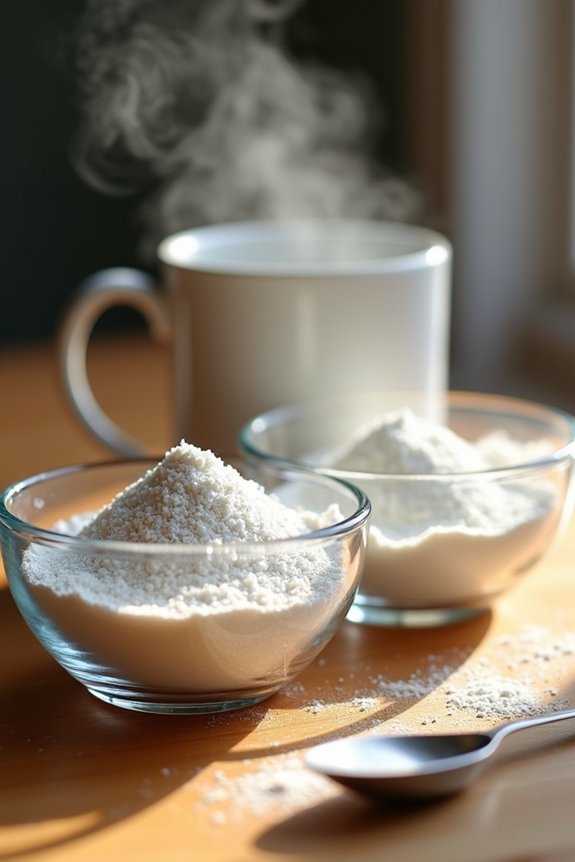
I want you to understand the core distinction: cornstarch thickens mixtures, while baking powder makes them rise. Baking powder contains baking soda plus an acid (like cream of tartar) that react when you add liquid and heat, releasing carbon dioxide gas that creates all those air pockets you see in fluffy cakes and muffins. Cornstarch, by contrast, has no leavening power at all—it just absorbs liquid and creates a thicker, smoother texture without any of that essential lift.
Leavening vs. Thickening
cornstarch and baking powder do completely different jobs in your kitchen.
Baking powder is a leavening agent. It creates carbon dioxide gas when it gets wet and heated, making your baked goods rise and become fluffy. Cornstarch, on the other hand, is a thickening agent and moisture absorber. It doesn’t produce any gas, so it can’t make things rise.
| Agent | Main Job | Result in Baking |
|---|---|---|
| Baking Powder | Creates gas for rising | Light, fluffy texture |
| Cornstarch | Absorbs moisture | Dense, flat texture |
When you swap cornstarch for baking powder without adjustments, you’ll get dense, heavy products instead of the airy crumb you’re after. Think of baking powder as your rising partner and cornstarch as your texture helper. You need both roles covered separately to succeed.
Texture and Function Roles
How do these two ingredients actually work differently in your batter?
Cornstarch and baking powder serve completely different jobs in baking. Baking powder creates leavening—it releases carbon dioxide gas when it hits moisture and heat around 350°F. That gas lifts your cake or cookies as they bake. Cornstarch doesn’t do any of that. Instead, it absorbs moisture and changes texture. When you swap cornstarch for baking powder, you lose the rising action entirely. Your baked goods won’t puff up like they should. They’ll turn out denser and heavier. Think of baking powder as the engine that makes things rise, while cornstarch simply adjusts how tender or moist your final product feels. You need both functions working together for best results.
What Cornstarch Actually Does in Baking
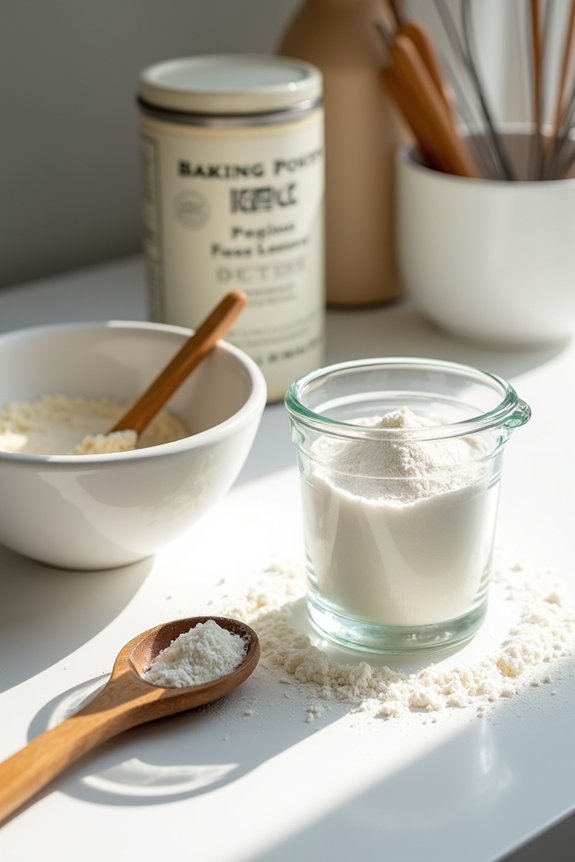
I should tell you upfront: cornstarch works in your baked goods by absorbing moisture and softening the gluten structure, which gives you that tender, delicate crumb you’re after. When you substitute some flour with cornstarch—say, in a ratio of one part cornstarch to seven parts flour—you’re basically creating a gentler network that breaks down more easily when you bite into it. Think of it as a texture modifier rather than a leavening agent, because unlike baking powder, cornstarch won’t create the rise or lift your cookies and cakes actually need.
Moisture Absorption Properties
Why does cornstarch change how your baked goods feel and taste? Cornstarch is hygroscopic, meaning it pulls moisture from the air and surrounding ingredients. This moisture absorption property gives your baked goods a specific texture and mouthfeel.
When you add cornstarch to cookies or cakes, it soaks up excess moisture. This keeps your treats from becoming too wet or dense. The result? A lighter crumb structure that feels tender on your tongue.
Here’s the catch: cornstarch doesn’t just absorb moisture passively. It actually weakens gluten formation in your dough. Weaker gluten means less structure, creating that delicate, crumbly texture you get from quality shortbread or sugar cookies.
Use cornstarch strategically in small amounts. Too much throws off your texture entirely.
Texture and Structure Role
So what’s cornstarch actually doing in your batter if it’s not making things rise?
Cornstarch isn’t a leavening agent, but it’s doing important work in your baked goods. Here’s what I mean:
- Tenderizes gluten – It softens the protein structure, creating a lighter, crumblier texture
- Absorbs moisture – It keeps your baked goods from drying out too quickly
- Creates delicate crumb – Small amounts produce a more tender, cake-like structure
- Weakens flour strength – It reduces toughness when replacing part of your flour
When I use cornstarch in cookies or cakes, I’m adjusting texture, not lift. You can mix it with regular flour to create a cake flour substitute. But here’s the key: cornstarch alone won’t make anything rise. You still need baking powder or baking soda to generate carbon dioxide. Think of cornstarch as your texture helper, not your rising agent.
What Baking Powder Does in Your Recipes
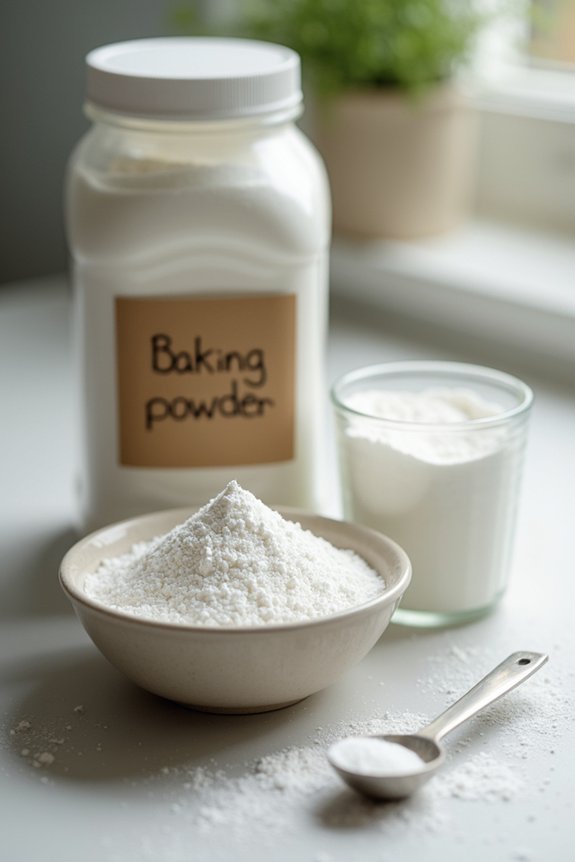
When you mix baking powder into your cake batter or cookie dough, you’re adding a chemical leavening agent that does the heavy lifting—literally. Baking powder releases carbon dioxide gas when dry ingredients meet liquid and heat. Those tiny bubbles expand, creating lift and lightness throughout your baked good.
| Component | Function | Found In |
|---|---|---|
| Baking Soda | Base reacting with acid | Homemade blends |
| Cream of Tartar | Dry acid triggering reaction | Commercial powder |
| Cornstarch | Prevents premature activation | Moisture absorber |
| CO₂ Bubbles | Creates rise and texture | Heat activation |
| Structure Support | Sets during baking | Final crumb |
Here’s what matters: cornstarch alone won’t create this leavening action. It’s just a moisture absorber. You need baking powder’s complete formula—baking soda, acid, and cornstarch working together—to achieve that fluffy texture you’re after.
Why Baking Powder Actually Creates Rise
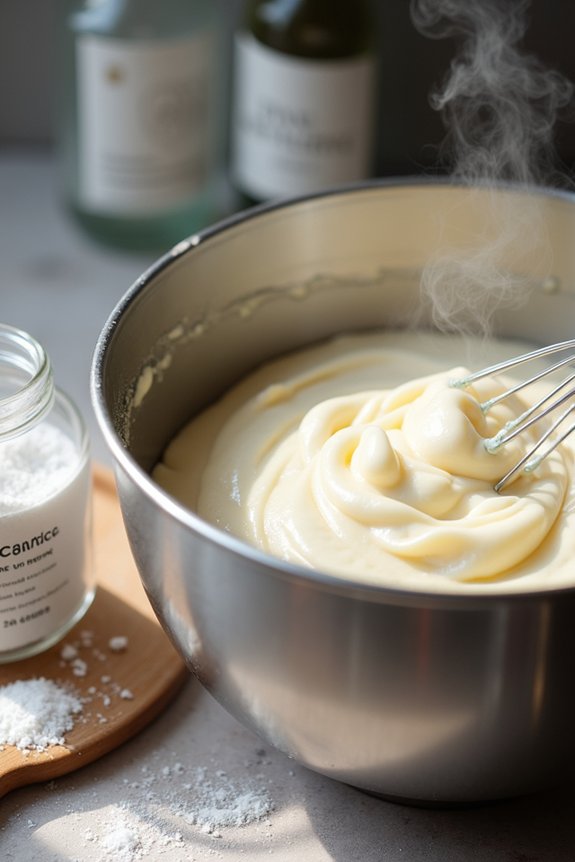
When baking powder gets wet and heated in your oven, the dry acid and base inside trigger a chemical reaction that creates carbon dioxide gas. I find it helpful to imagine this process like tiny bubbles forming throughout your batter—these CO2 bubbles get trapped in the mixture and expand as heat increases, which pushes everything upward and outward. That’s literally what gives your cakes, muffins, and biscuits their light, fluffy texture instead of a dense, flat result.
Chemical Reaction Process
baking powder triggers a chemical reaction that produces carbon dioxide gas.
Let me break down how this works:
- Baking soda (sodium bicarbonate) sits in your dry ingredients, waiting for moisture to activate it
- Cream of tartar, the dry acid component, remains inactive until it meets liquid
- Water from your wet ingredients causes these two compounds to react with each other
- Carbon dioxide gas bubbles form instantly, creating thousands of tiny air pockets throughout your batter
These CO2 bubbles expand when heat hits them during baking. The warmth makes the gas expand further, lifting your batter upward. This is why your cake or cookies rise and develop that light, fluffy texture you’re after. The cornstarch in the mixture absorbs moisture so the reaction doesn’t happen prematurely in the container.
Carbon Dioxide Gas Formation
The moment your wet ingredients hit the baking powder, the acid (cream of tartar) reacts with the base (baking soda), and boom, carbon dioxide gas starts forming. This gas creates those tiny bubbles you see in your batter—they’re what makes your baked goods rise.
Here’s what happens: the carbon dioxide release actually occurs in two stages. First, you get an initial reaction right when you mix wet and dry ingredients together. Then, when your oven heats up to around 350°F or higher, a second reaction kicks in. This heat-activated stage produces even more gas, giving your cake or cookies that final lift.
That’s why fresh baking powder matters. Stale powder can’t generate enough carbon dioxide to do its job properly.
When Should You Use Cornstarch Instead?
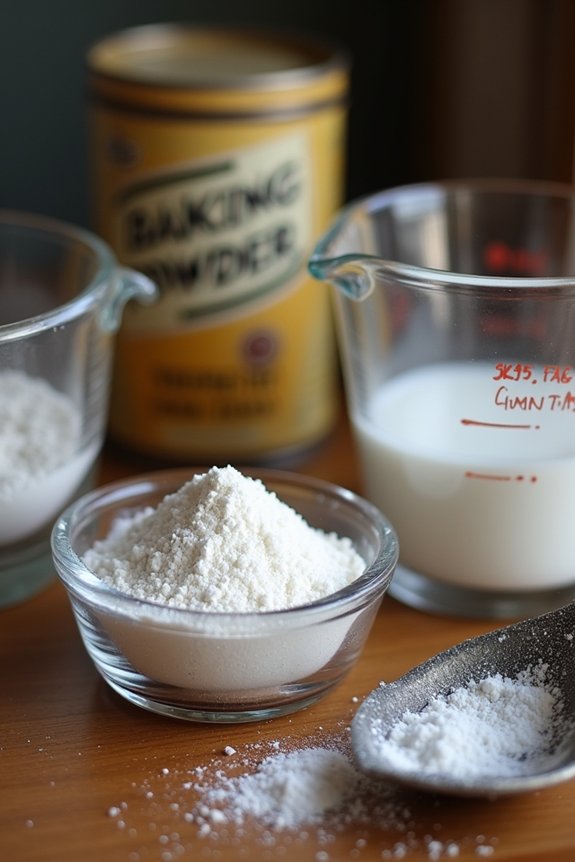
So, can you swap cornstarch for baking powder in your favorite cookie recipe? Not really. Cornstarch won’t give you the leavening you need. Here’s when cornstarch actually shines:
- Adjusting texture – Use it to make cookies softer and more tender without affecting rise
- Absorbing moisture – Add cornstarch when your dough feels too wet or sticky
- Preventing spreading – It helps cookies hold their shape during baking at 350°F
- Creating coating – Dust it on dough before rolling or shaping
The key difference? Cornstarch doesn’t create carbon dioxide gas like baking powder does. You’ll want to keep your leavening agent and use cornstarch as a supporting player. Think of cornstarch as a texture helper, not a rise maker. Use both together for best results in your baking projects.
Better Baking Powder Substitutes That Actually Work
If you need actual leavening power—not just texture tweaks—you’ve got better options than cornstarch alone. I’d recommend making a homemade baking powder substitute using cream of tartar, baking soda, and arrowroot powder. Mix 2 parts cream of tartar with 1 part baking soda and 1 part arrowroot. This combo gives you the rise you need without cornstarch. You can also use 1/4 teaspoon baking soda plus 1/2 teaspoon cream of tartar plus 1/4 teaspoon cornstarch to replace 1 teaspoon baking powder. Test your baking powder substitute by fizzing it in hot water first. This confirms it’ll actually work in your recipe. These substitutes deliver real leavening where cornstarch alone would leave you flat.
How Do You Make Baking Powder at Home?
Making your own baking powder at home is straightforward and takes just minutes. I’ll show you how to create a reliable baking powder substitute using basic ingredients you probably have on hand.
- Combine 1/2 teaspoon cream of tartar with 1/4 teaspoon baking soda
- Add 1/4 teaspoon cornstarch to the mixture
- Stir all ingredients together thoroughly
- Use this blend to replace 1 teaspoon of commercial baking powder
The cream of tartar acts as the dry acid, while baking soda provides the leavening power. Cornstarch absorbs moisture and prevents clumping. Mix only what you need for immediate use, since homemade baking powder loses potency faster than store-bought versions. This DIY baking powder substitute works identically to the commercial kind in cookies, cakes, and quick breads.
Have a Corn Allergy? Here’s Your Baking Powder Solution
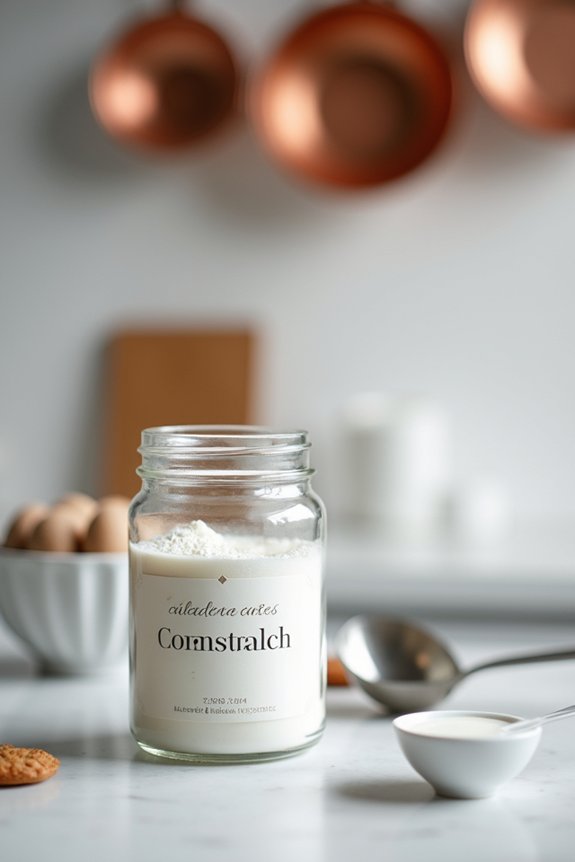
What do you do when cornstarch—a key ingredient in homemade baking powder—triggers an allergic reaction? You swap it out for arrowroot powder instead. Arrowroot works perfectly in place of cornstarch within a homemade baking powder blend.
Here’s your corn-free formula: combine 1 part baking soda, 2 parts cream of tartar, and 1 part arrowroot powder. This ratio replaces 1 teaspoon of store-bought baking powder. Mix these three ingredients thoroughly and store in an airtight container. You’ll get the same leavening power without any corn exposure.
The beauty of making your own baking powder is control. You know exactly what goes into your baked goods. Your cookies and cakes rise properly while you avoid allergens. It’s that straightforward.
How to Store and Use Your Homemade Baking Powder
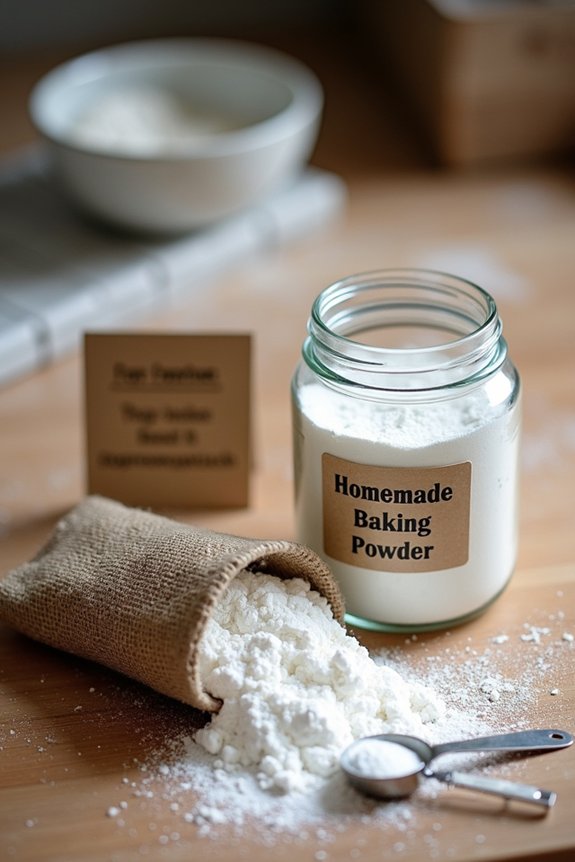
Your homemade baking powder needs the right storage conditions to stay potent. I’ll help you keep yours fresh and ready to use.
- Store it in an airtight container at room temperature
- Keep it away from moisture and humidity
- Label your container with the date you made it
- Check potency every few months by fizzing a small amount in hot water
Your homemade baking powder will last several months when stored properly. The cornstarch in your mixture actually helps absorb moisture, protecting the baking soda and cream of tartar inside. If you see visible fizz when you test it in hot water, you’re good to go. That fizzing action is what makes your baked goods rise. When it stops fizzing, it’s time to make a fresh batch.
Common Baking Mistakes When Substituting Leavening Agents
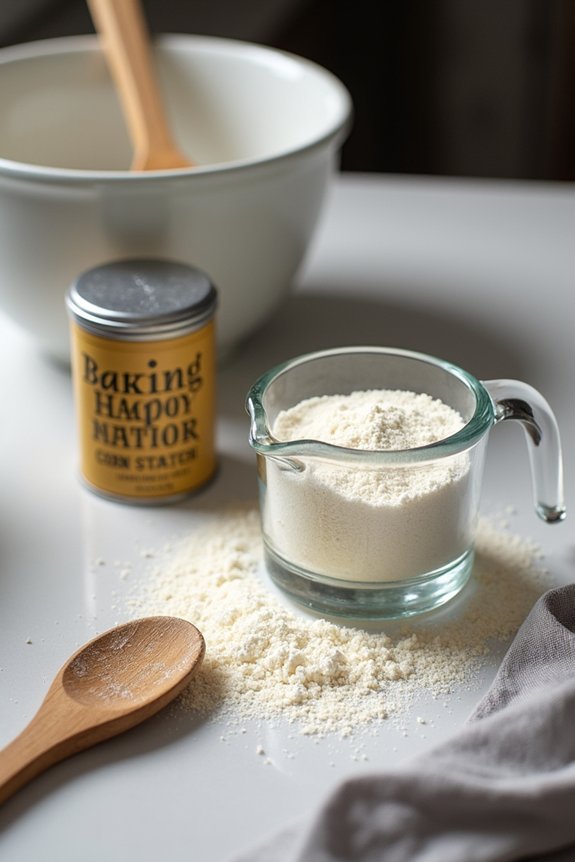
Now that you know how to keep your homemade baking powder fresh, let’s talk about what happens when you try to cut corners with substitutions. I see bakers make one critical mistake: swapping cornstarch for baking powder expecting the same rise. It won’t happen. Cornstarch affects texture and moisture, not leavening. When you use cornstarch alone, your baked goods stay flat because there’s no acid-base reaction creating lift. Another mistake I notice is using a 1:1 cornstarch substitute without adjusting other ingredients. You need baking soda plus an acid for actual leavening. Skip this balance, and your cake won’t rise properly. Stick with proper leavening agents like baking powder or combine baking soda with acidic ingredients for reliable results.
Frequently Asked Questions About Baking Powder Substitutes
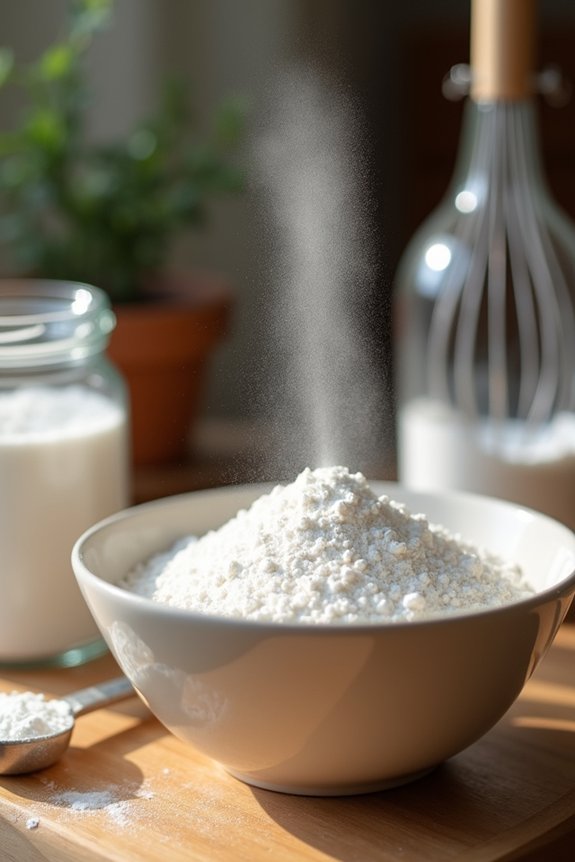
I get asked all the time whether cornstarch can truly stand in for baking powder, and the short answer is no—not on its own.
Here’s what you need to know about finding the right baking powder substitute:
- Cornstarch lacks the acid-base reaction that creates carbon dioxide gas, so your baked goods won’t rise properly without additional help.
- A reliable DIY baking powder substitute combines 1/2 teaspoon cream of tartar, 1/4 teaspoon baking soda, and 1/4 teaspoon cornstarch to replace one teaspoon baking powder.
- You can use cornstarch as a partial flour replacement for texture changes, but never let it replace your leavening agent entirely.
- When substituting, always adjust your recipe’s acid and base components to maintain proper rising action.
Understanding these basics keeps your baking on track.