When you eat raw baking chocolate, your mouth hits an intensely bitter, chalky sensation because it’s packed with cocoa solids and cocoa butter—basically pure chocolate with almost no sugar. The texture feels dense and waxy, coating your tongue with a gritty aftertaste that lingers for several minutes. It’s completely safe to eat, but most people find it unpalatable solo. Pairing it with honey, fruit, or nut butter balances the bitterness dramatically. There’s more to understand about why your body reacts this way and smarter ways to enjoy it.
Why Baking Chocolate Tastes So Bitter
Ever wonder why baking chocolate tastes like you’re chewing on pure cocoa powder? The answer lies in what’s actually inside the bar. Baking chocolate contains chocolate liquor with minimal added sugar, so there’s nothing to mask the intense cocoa solids. When you eat it straight, you’re experiencing the full force of that bitter flavor with zero sweetness balance.
Regular eating chocolate gets its smooth taste from added sugar that hides bitterness. Baking chocolate skips that step entirely. Its near-zero sugar content means cocoa solids dominate your taste buds completely. The intense chocolate flavor you’re detecting? That’s pure cocoa doing its thing.
That’s why people pair baking chocolate with honey, maple syrup, or nut butters. These additions create the sweetness balance your palate craves, transforming an unpleasant experience into something actually enjoyable.
Is It Safe to Eat Raw Baking Chocolate?
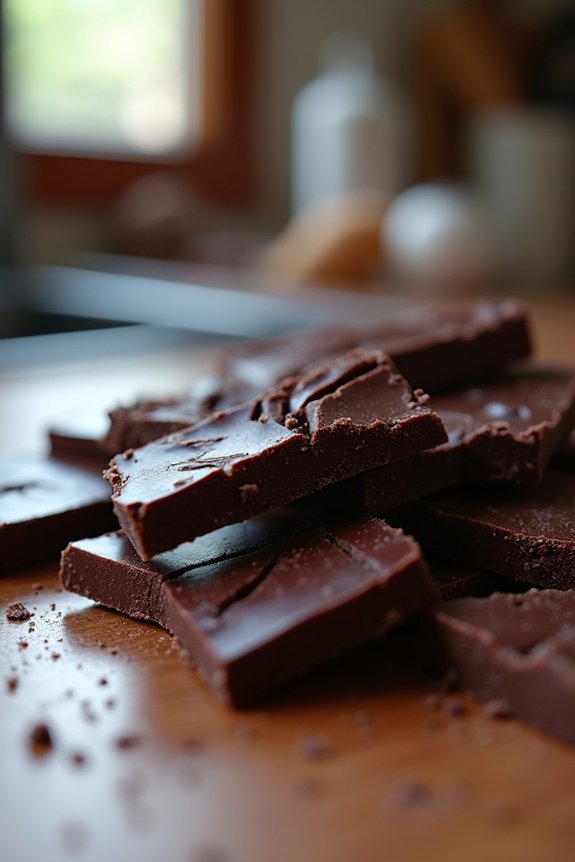
Now that you know why baking chocolate tastes so intensely bitter, you might be wondering if it’s actually safe to eat it straight from the wrapper.
Good news: it’s completely safe. Baking chocolate contains cocoa solids and cocoa butter with minimal added ingredients, so there’s nothing harmful about eating it raw. Here’s what you should know:
Baking chocolate is completely safe to eat raw—it’s just cocoa solids and cocoa butter with minimal additives.
- Safety first: No sugar or milk means no risk of foodborne illness
- Texture matters: You’ll notice a chalky feel because of minimal additives, unlike regular eating chocolate
- Taste strategy: Pair it with honey, maple syrup, or fruit to balance the bitterness
Your mouth won’t love the intense, unsweetened flavor, but your body won’t suffer any consequences. Raw baking chocolate simply isn’t as enjoyable as milk chocolate. That’s the real issue here—palatability, not safety.
What’s the Texture Really Like?
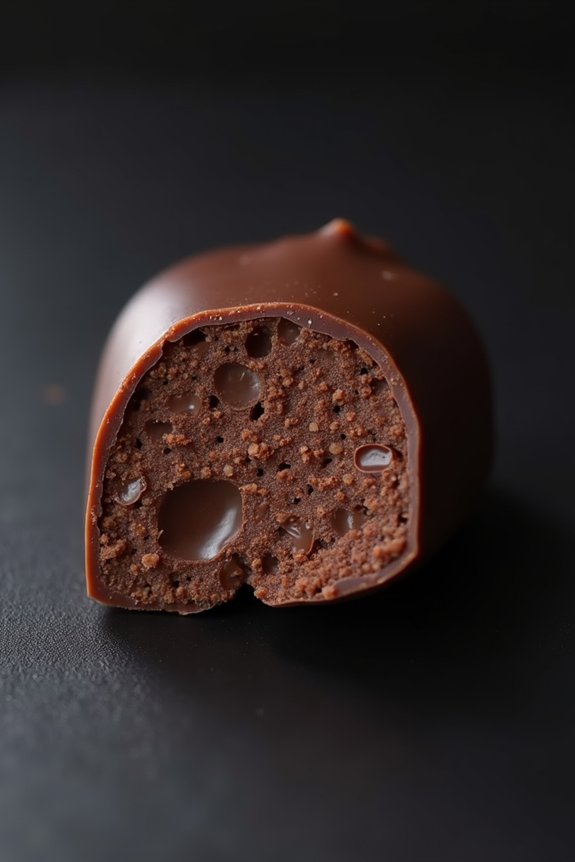
When you eat baking chocolate straight from the package, you’ll notice it feels chalky and dense on your tongue, almost like it’s absorbing all the moisture from your mouth. The texture has a waxy quality too, especially if the chocolate doesn’t melt completely at your body temperature—around 98 degrees—which means it sits there longer than regular chocolate would. That intense bitter aftertaste sticks around for a while after you swallow, lingering on your taste buds because baking chocolate contains way more cocoa solids and minimal sugar to mask the flavor.
Chalky And Dense Crumb
Why does baking chocolate feel so different in your mouth compared to the chocolate bars you’re used to? The answer lies in what’s missing: fats and emulsifiers. Unlike regular chocolate, unsweetened chocolate lacks these smoothing ingredients, leaving you with a noticeably chalky mouthfeel.
Here’s what you’ll actually experience:
- A dense, crumbly texture that feels powdery on your tongue
- Undissolved cocoa solids creating a gritty sensation
- Intense bitterness without sweetness to balance it out
The density comes from cocoa solids packed tightly together. When you eat unsweetened chocolate solo, your mouth feels dry and astringent. Even warmth won’t fully fix this. Pairing it with butter or nut butters temporarily softens things, but that chalky sensation remains. It’s simply the nature of pure, unprocessed baking chocolate.
Waxy Mouthfeel Sensation
Beyond the chalky sensation, baking chocolate delivers another distinct texture you’ll notice right away: a waxy mouthfeel that coats your mouth differently than regular chocolate bars.
Here’s what’s happening. Baking chocolate has a high cocoa butter to cocoa solids ratio and minimal sugar content. This combination creates that waxy sensation on your tongue. As the cocoa butter cools and solidifies in your mouth, it leaves a firm, glossy coating that clings to your palate rather than melting smoothly.
Without milk solids, dark baking chocolate enhances this dry, velvety coating. Your texture perception shifts from creamy to dense and slightly tacky.
Want to soften it? Try letting a bit of heat melt it briefly, or pair it with sweeteners like honey. These additions balance both texture and taste, making the experience more enjoyable for your mouth coating.
Bitter Aftertaste Lingers Long
That chalky, waxy feeling you just experienced? Now comes the bitter aftertaste that’ll stick around for a while. Here’s what’s happening in your mouth:
- Cocoa solids and cocoa butter finish slowly, creating a dry, astringent sensation that lingers
- Unsweetened chocolate leaves a sharper, more persistent bitterness than sweetened eating chocolate
- The bitter aftertaste can last several minutes after swallowing
High-quality baking chocolate intensifies this effect. You’re tasting pure cocoa without sugar to mask it. The good news? You can shorten that lingering bitterness with smart pairings. Try pairing with honey or maple syrup. Dried fruit and nut butters work too. These additions soften the harsh edge and help your mouth recover faster, making the whole experience more enjoyable.
How Much Can You Safely Eat?
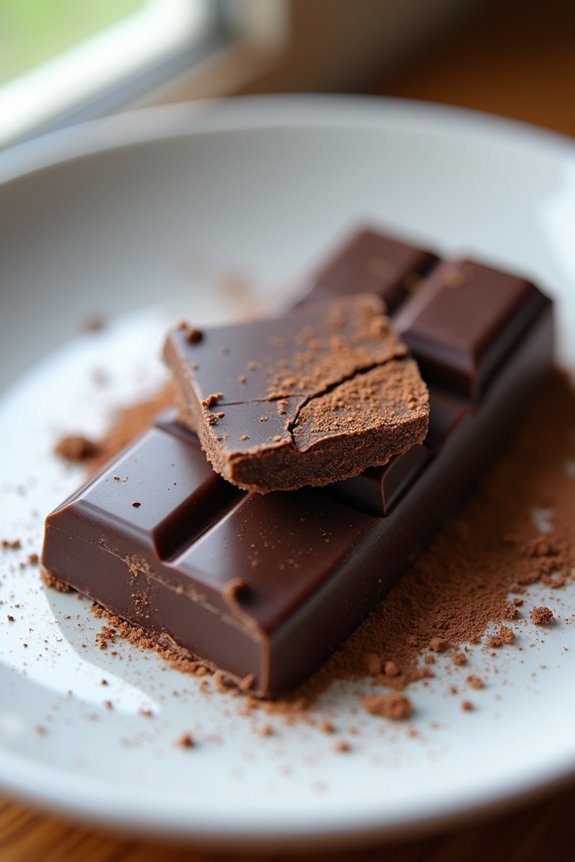
How much baking chocolate you eat matters less than how you eat it. I’d break off small pieces and let them sit on my tongue first. This lets you gauge your tolerance to the bitterness before committing to more.
The safety factor here is straightforward: baking chocolate is edible, but its high cocoa content and minimal sugar content make moderation key. Start with one small square. Your body will tell you if you’ve had enough.
Because baking chocolate lacks added sugar, portion size naturally controls itself. Most people find that a few pieces satisfy their curiosity about the intense cocoa flavor. The chalkier texture and extreme bitterness act as natural limiters, preventing overconsumption. You’re unlikely to eat large amounts anyway.
What Happens Inside Your Body
Once you swallow that small square of baking chocolate, your digestive system gets to work breaking down something quite different from regular candy. Your body processes the cocoa butter and cocoa solids for energy right away. Here’s what happens next:
- Sugar response: If your baking chocolate contains any sugar, you’ll experience a quick but modest blood glucose rise as your body absorbs it.
- Stimulant effects: The caffeine and theobromine kick in, boosting your alertness and giving you a noticeable sensory jolt within minutes.
- Digestion challenge: The high fat content and density may trigger gastrointestinal discomfort in your stomach, especially with regular consumption.
Your mouth dries out from minimal sugar, leaving that chalky feeling. The intensity hits differently than sweetened chocolate, so you’re experiencing pure cocoa power coursing through your system.
Simple Ways to Reduce the Bitterness
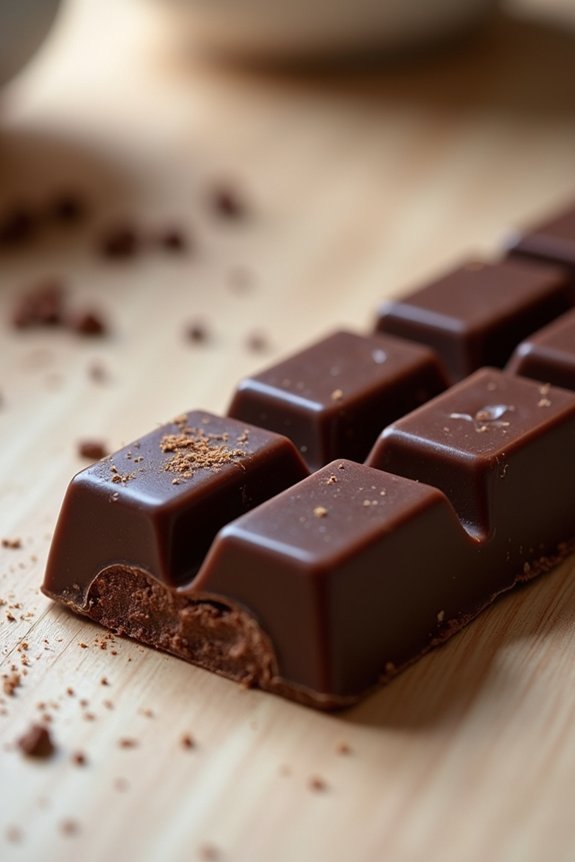
Why does baking chocolate taste so harsh and chalky? It contains little to no sugar, making the cocoa solids intensely bitter. I’ve found several straightforward ways to fix this.
Baking chocolate tastes harsh and chalky because it contains little to no sugar, making the cocoa solids intensely bitter.
Pairing baking chocolate with honey or maple syrup instantly balances the flavor. Dried fruits work well too. I recommend adding peanut or almond butter—they mellow the intensity beautifully. Aged cheese like Gouda or Brie creates surprising harmony with unsweetened chocolate.
Warming or melting your baking chocolate with sugar or milk approximates regular chocolate’s sweetness. Simply heat them together until combined. You control the sugar balance this way.
Choosing darker chocolate with higher cocoa solids actually helps. More cocoa can paradoxically feel smoother on your palate. Experiment with different cocoa percentages to discover what works for you.
Does Raw Baking Chocolate Have Health Benefits?
Raw baking chocolate packs serious antioxidants and flavonoids because of its high cocoa solids content—typically ranging from 50% to 100% depending on whether it’s unsweetened or semi-sweet. When you compare it nutritionally to sweetened chocolate bars, you’re getting way more cocoa goodness and fewer added sugars, which means your body actually absorbs more of those beneficial compounds. The catch is that these health perks depend heavily on the exact cocoa percentage, so a 90% cocoa baking chocolate delivers more antioxidants than a 50% version.
Antioxidants And Cocoa Solids
How much of baking chocolate’s actual nutrition are you getting when you eat it? You’re getting a serious dose of antioxidants, my friend. Unsweetened baking chocolate contains cocoa solids packed with powerful compounds:
- Catechins, epicatechin, and procyanidins – these three polyphenols work together to fight cell damage in your body
- High cocoa content – typically 50-100% cocoa solids means more antioxidants per gram than regular chocolate
- Minimal processing – less alkalized baking chocolate retains more of these beneficial compounds
Here’s the deal: you’re getting concentrated antioxidants without added sugar diluting the benefits. One ounce of unsweetened baking chocolate delivers more polyphenols than sweetened varieties. However, absorption depends on how much you actually eat. A small piece provides real nutritional value within a balanced diet.
Nutritional Content Comparison
So what’s actually inside that bitter square of baking chocolate you’re holding? You’re looking at a nutritional powerhouse that’s quite different from candy bars. Unsweetened chocolate packs serious cocoa solids and cocoa butter—way more than regular eating chocolate. The low sugar content means you’re getting genuine cocoa benefits without the sweetness.
Here’s where it gets interesting: that high cocoa solids concentration delivers real antioxidants and magnesium your body actually needs. But here’s the catch—the calorie density is intense. You’re consuming more calories per bite because there’s minimal sugar padding and maximum fat content.
EU standards require 35%+ cocoa solids for dark chocolate, but baking chocolate often exceeds that significantly. Those extra cocoa solids translate to better nutrition, though the bitter taste requires sweeteners for most people to enjoy it.
Should You Actually Eat It Straight?
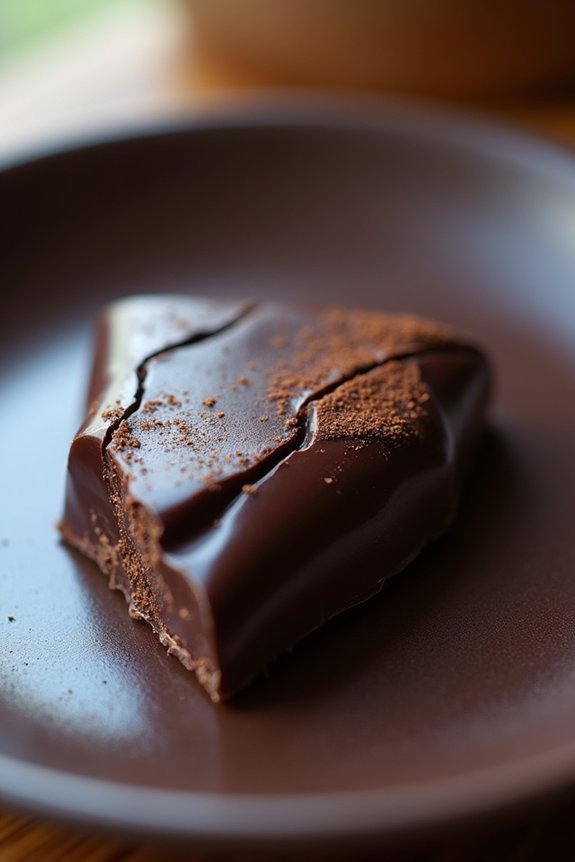
Can you eat baking chocolate plain? Yes, but I’d recommend thinking twice. Here’s why:
The experience differs from regular chocolate. Baking chocolate contains high cocoa solids and minimal sugar, creating an intensely bitter flavor profile. Your taste buds will notice the difference immediately.
If you want to eat it raw, you can. It’s safe. However, most people find the taste too harsh solo. Consider these options instead:
- Pair it with honey or maple syrup to balance the bitterness
- Combine it with fresh fruit for natural sweetness
- Melt it with added sugar and milk to improve texture and taste
Think of baking chocolate as a flavor base, not a snack. Its cocoa-forward intensity works best in recipes where other ingredients create sweetness and creaminess. Save the straight eating for regular chocolate instead.