A standard box of cake mix yields about 24 full-sized cupcakes when you fill each liner two-thirds full and bake at 350°F for 18–22 minutes. The yield changes based on cupcake size—you’ll get roughly 48 mini cupcakes or just 12 jumbo ones from the same box. Most box instructions produce thinner batter, so thickening it with melted butter improves your results. There’s plenty more to discover about scaling batches and adjusting for different pan sizes.
Standard Box Cake Mix Yields About 24 Full-Sized Cupcakes
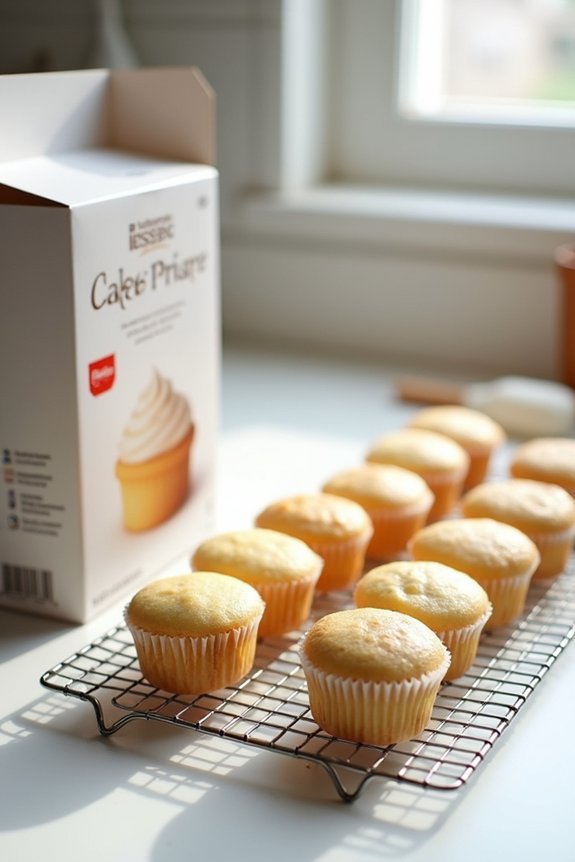
Most standard box cake mixes will give you about 24 full-sized cupcakes when you bake them the typical way. Here’s what I’ve found works best: one box mix contains roughly 5 cups of batter, which fills 24 standard cupcake liners to about two-thirds full. That two-thirds fill level matters because it prevents overflow while ensuring your cupcakes rise properly in the oven.
When you’re preparing your box mix, follow the package directions exactly. Then grab a standard ice cream scoop or measuring cup and portion the batter consistently into each liner. This technique creates uniform cupcakes that bake evenly at the recommended temperature, usually around 350°F for 18-22 minutes.
Using this straightforward method with your box mix guarantees reliable results every single time you bake.
How Box Mix Batter Amount Changes With Cupcake Size
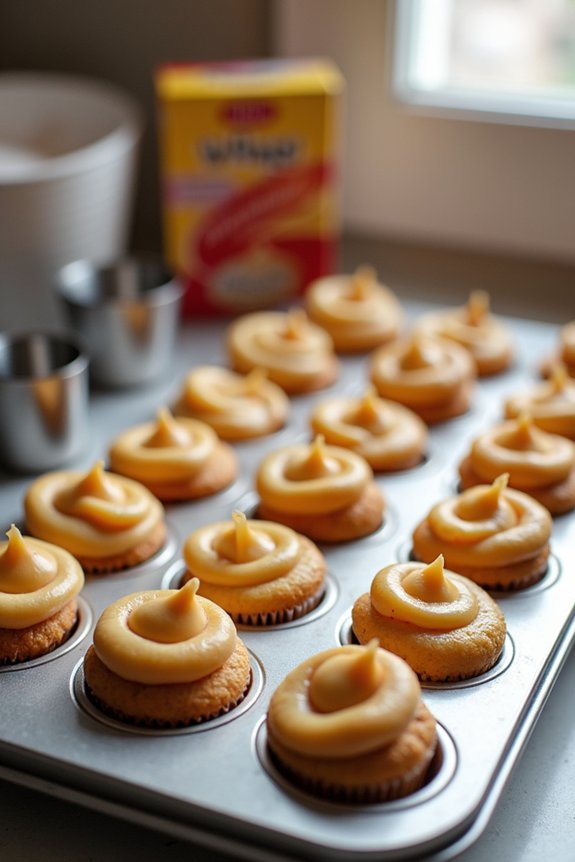
The same box of cake mix won’t give you the same cupcake count if you switch pan sizes—and that’s actually pretty straightforward to understand. Here’s what happens: when you use a standard cupcake pan filled about two-thirds full, you’ll get roughly 24 cupcakes. But jump to jumbo cups? You’re looking at only 12 cupcakes from that same box. Mini cupcakes flip the script entirely—you’ll squeeze out 48 from one batter yield. The reason’s simple: bigger cups need more batter. Your cupcake pan size directly determines how much batter each cavity holds. Larger cavities mean fewer total cupcakes per box, while smaller ones multiply your count. Understanding this relationship helps you pick the right pan for your baking goals.
Mini Cupcakes: Expect 48–60 Per Box Mix
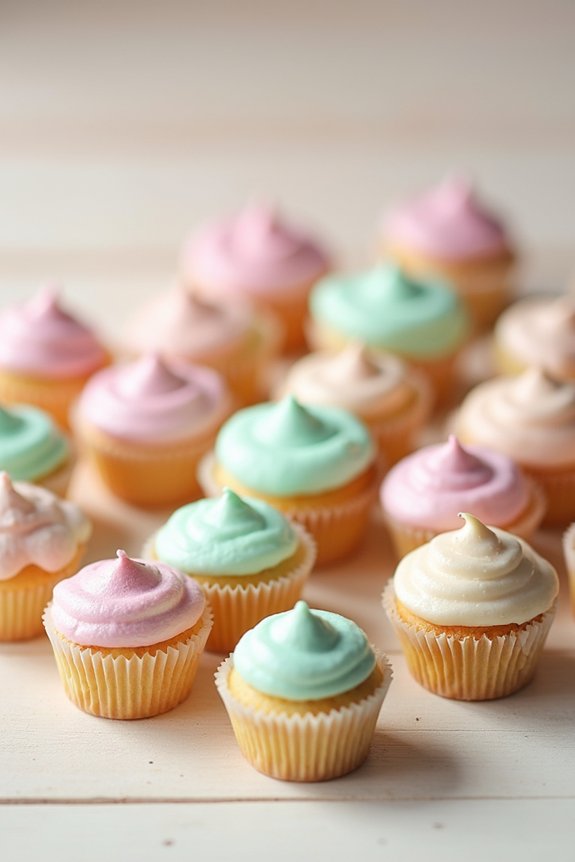
When you’re making mini cupcakes from a box mix, you’re working with considerably smaller portions than standard cupcakes, which changes how far your batter stretches. I’d fill each mini cup about 2/3 to 3/4 full, and you’ll typically get 48 to 60 cupcakes per box—that’s roughly double what you’d get from standard-sized cupcakes. If you add mix-ins like chocolate chips or sprinkles, your batter volume might shift slightly, so keep an eye on your pan as you fill to nail down your exact yield.
Batter Volume And Yield
If you’re looking to maximize your box mix output, mini cupcakes are your answer. One standard box gives you about 5 cups of batter total. Here’s where the batter yield gets interesting: you’ll fill each mini cavity with roughly 1/4 to 1/3 cup of batter. That smaller portion translates to 48–60 mini cupcakes per box mix.
The exact number depends on how full you fill each liner. Use 1/4 cup per cavity, and you’ll land closer to 60. Go with 1/3 cup, and you’ll get around 48. Your batter thickness matters too. Thicker batters might yield fewer cupcakes, while thinner ones stretch further. Add mix-ins like chocolate chips or sprinkles, and your count drops slightly. These variables let you customize your mini cupcake yield to fit your needs.
Sizing And Portioning Tips
How do you actually get 48–60 mini cupcakes from one box of cake mix? The trick is portioning. You’ll want to use about 1–2 tablespoons of batter per mini cup. This smaller amount fills the liner properly without overflow.
Standard mini muffin cups need less batter than regular cupcakes do. Fill each cup roughly two-thirds full, then bake at 350°F for 10–12 minutes. Your box mix will stretch further when you’re working with mini cupcakes because the portions are smaller.
Check doneness with a toothpick around the 10-minute mark. If it comes out clean, you’re done. This portioning method ensures you’ll hit that 48–60 range consistently with your box mix, giving you plenty of little treats to share or save.
Why Box Mix Instructions Yield Thin Batter
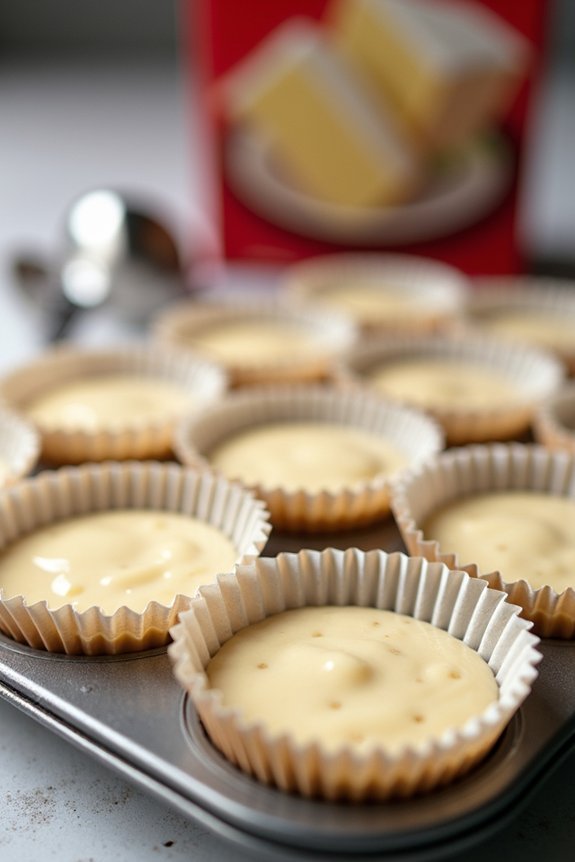
I’ve noticed that standard box instructions call for specific oil and water ratios designed to work for most home bakers, but these measurements actually create a thinner batter than what you’d get from a bakery. You can achieve thicker, creamier results by swapping out oil for melted butter and reducing the water slightly—this simple tweak gives your cupcakes that denser, more indulgent texture. I recommend starting with less water than the box suggests and adjusting as you go, since you’re aiming for a batter that coats a spoon rather than flows like pancake mix.
Standard Box Instructions Explained
Why does following a cake mix box to the letter often leave you with batter that’s too thin for cupcakes? The standard instructions call for 1⅓ cups water, 1/3 cup oil, and 3 eggs. This combination creates a pourable consistency perfect for sheet cakes, but cupcakes need something thicker.
I’ve discovered the issue: box mixes are formulated for various pan types. The thinner batter spreads evenly across large rectangular pans. However, when you’re filling cupcake cavities, you need batter that holds its shape and fills to about two-thirds full.
To fix this, I adjust the liquid ratio. Use 3 eggs and ½ cup melted butter instead, then reduce water slightly. This modification transforms your box mix into ideal cupcake batter without sacrificing texture or flavor.
Oil And Water Ratios
The standard box mix formula—1⅓ cups water and 1/3 cup oil—creates batter that’s simply too thin for cupcakes. I’ve found that swapping oil for melted butter gives you thicker, more flavorful results. Here’s what I do: reduce the water to about 1/3 cup or slightly less, depending on your specific box mix. This adjustment prevents that runny, cake-in-a-cup texture nobody wants. When I replace oil with butter, the batter naturally thickens up nicely. The key is mixing carefully afterward—overmixing can work against you. The goal here is creating that thick, creamy batter that bakes into bakery-quality cupcakes. Trust me, this simple tweak transforms box mix results from mediocre to genuinely impressive every single time.
Achieving Thicker Batter Consistency
Have you ever followed a box mix’s directions exactly and ended up with batter that looked more like pancake mix than cupcake batter? I’ve been there. Standard box instructions create thin, runny consistency that makes cupcakes prone to overflow. Here’s what I do differently.
I replace oil with melted butter and reduce water slightly. This adjustment dramatically improves batter thickness. The goal? Batter that resembles soft-serve ice cream when you scoop it. This texture gives you better portion control and prevents messy spills.
I also avoid overmixing, which thins the batter further. Then I fill liners two-thirds full and bake at 350°F. These steps help maintain that thicker consistency throughout baking. The result is superior cupcakes with better structure and texture every single time.
The Doctored Mix Method for Thicker, Creamier Batter
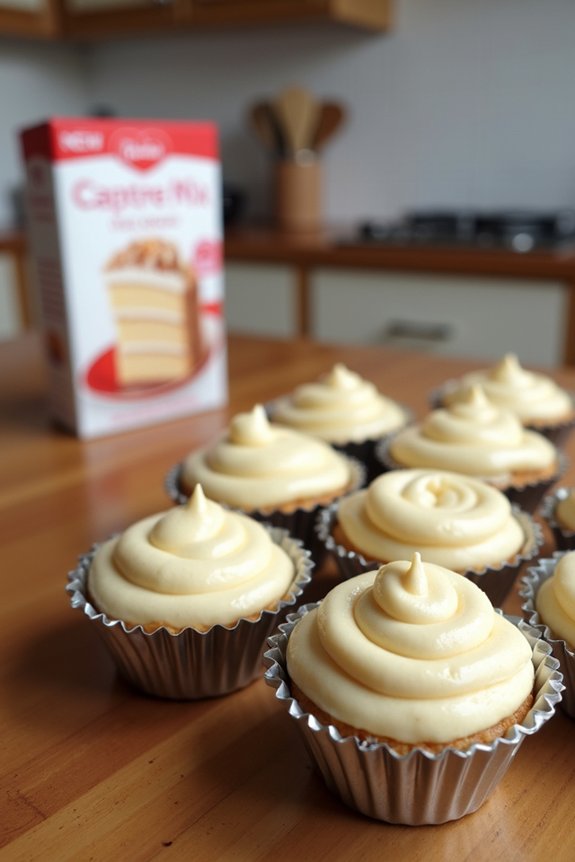
Looking to elevate your box mix cupcakes? The doctored mix method transforms standard cake into something noticeably better. I combine one box mix, three large eggs, and half a cup of melted unsalted butter. The secret? I use slightly less water than the box recommends. This adjustment creates thicker, creamier batter that bakes into superior cupcakes.
| Ingredient | Amount |
|---|---|
| Box mix | 1 |
| Large eggs | 3 |
| Melted butter | 1/2 cup |
| Water | Less than directed |
| Baking temperature | 350°F |
I divide the batter two-thirds full into liners, yielding 24 standard cupcakes. Substituting melted butter for oil and reducing water are the game-changing tweaks. For white cake, I use egg whites only unless following box directions. This approach works with any box mix you love.
How Replacing Oil With Butter Affects Your Box Mix Yield
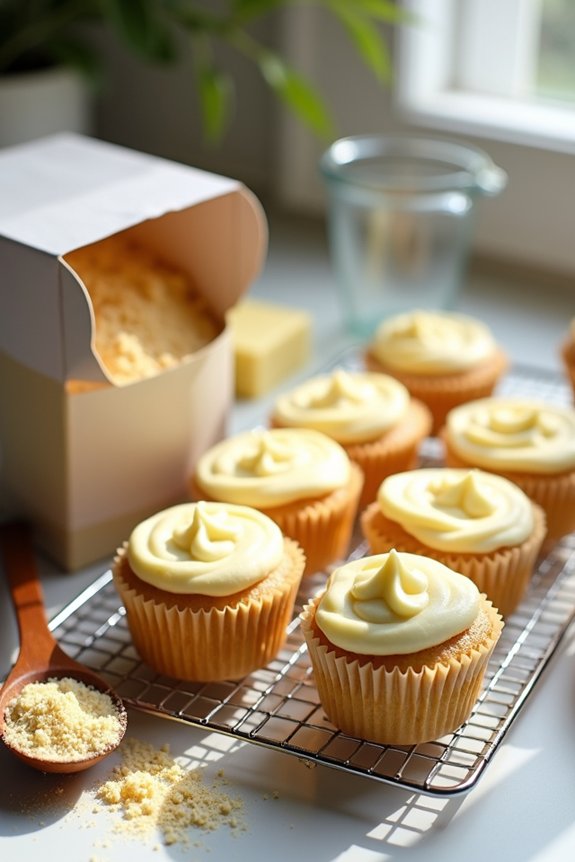
Why swap oil for butter when you’re making box mix cupcakes? Butter substitution adds richness and flavor that oil simply can’t match. I find that replacing oil with melted butter improves moisture and taste noticeably.
Here’s what happens: the butter changes your batter’s thickness slightly, which might affect how your cupcakes rise. I reduce the water by a tablespoon or two to keep the batter consistency right. This adjustment maintains that perfect balance.
The good news? Your yield stays roughly the same. You’ll still get the standard cupcake count from one box mix. The final crumb becomes creamier and more tender with butter substitution. It’s a simple swap that delivers better results without complicating your baking process.
Does Reducing Water in Your Box Mix Change Cupcake Count?
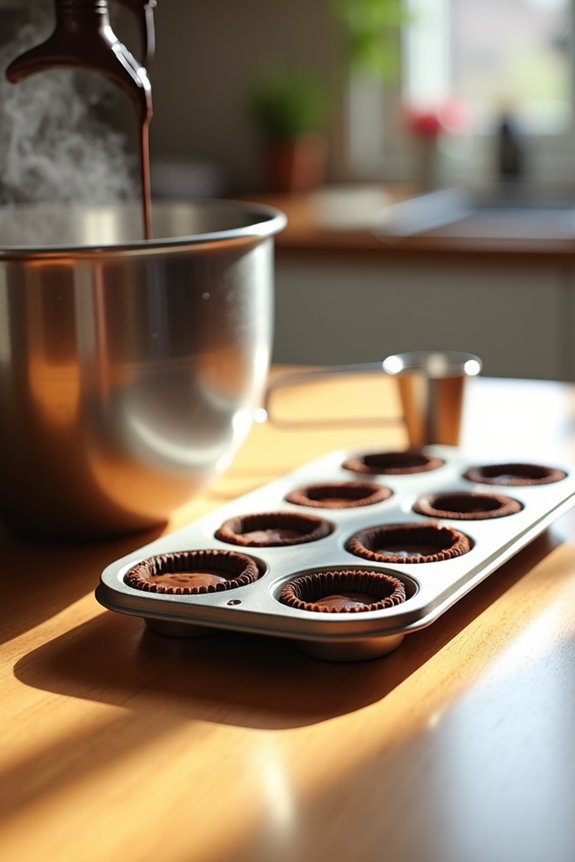
When you reduce the water in your box mix, you’re changing how thick your batter becomes, but here’s the thing—you’ll still get roughly 24 cupcakes from a standard box if you fill each cavity about two-thirds full. The key shift isn’t really in cupcake count; it’s in texture and bake time, since less water creates a denser crumb and may require slightly longer in the oven. I’d focus on adjusting your batter thickness to match what works best for your preferred cupcake density rather than expecting a major change in how many you can make.
Water Reduction Impact
How much does tweaking the water amount actually affect your cupcake yield? I’ve found that minor water reduction keeps your yield steady at around 24 cupcakes per box. Here’s what happens when you adjust:
- Thicker batter forms, making portioning trickier
- Batter consistency changes affect how evenly you fill liners
- Reduced water can create under-filled cups if you’re not careful
- Standard 24-cupcake yield holds when you maintain proper scoopable batter
The real issue isn’t the water reduction itself. It’s keeping your batter consistency workable. When I reduce water significantly, I compensate by adding a splash of milk or an extra egg. This maintains volume and prevents half-empty liners that tank your total count. Stick to small adjustments—just slightly less than box instructions—and you’ll stay at that reliable 24-cupcake standard.
Batter Thickness Adjustments
The thickness of your batter directly impacts how many cupcakes you’ll actually get from that box mix. When you reduce water, your batter becomes thicker and spreads less during baking. This means you’ll likely get fewer, larger cupcakes—maybe dropping from 24 to 22 or 23 per box.
Here’s what happens: thicker batter doesn’t flow as much in the pan, so each cupcake takes up more space. You’ll need to use a scoop or measuring cup to keep portions consistent. The good news? Your box mix count stays fairly stable if you only slightly reduce water. The overall batter volume remains roughly the same.
For mini cupcakes or different pans, the same thicker batter works fine. Just watch your bake times—they may shift slightly.
Scaling Down: Making 12 Cupcakes From One Box Mix
Ever find yourself with a box of cake mix but only wanting a dozen cupcakes instead of two dozen? I’ve got you covered. Scaling down is simpler than you’d think, and you’ll join plenty of bakers who do this regularly.
Scaling down cake mix for a dozen cupcakes is simpler than you’d think, and plenty of bakers do this regularly.
Here’s my approach:
- Use half the box mix with adjusted liquids
- Add 1 egg, 1/4 cup melted butter, and slightly less water
- Portion batter into 6 liners, then repeat for 12 total
- Bake at 350°F for 15–18 minutes
Alternatively, I mix 1 cup dry mix, 1/3 cup water, 3 tablespoons oil, and 1 egg for 6 cupcakes. Then I double that batch to hit 12.
Both methods work great. You’ll waste nothing and get exactly what you need.
Using Mini Loaf Pans: 15–23 Loaves Per Box Mix
Want to stretch one box of cake mix even further? Mini loaf pans let you do exactly that. I’ve found that using 1/4 cup batter per mini loaf yields about 23 loaves from a single box. If I use 1/3 cup instead, I get 15–17 loaves, depending on whether I’ve added mix-ins like chocolate chips or nuts.
The beauty here is flexibility. I can bake these mini loaves at the standard temperature your box recommends, typically 350°F, checking them around 15–20 minutes for doneness. The thicker the batter, the fewer loaves I’ll make. I’ve also discovered that I can pour this same batter into cupcake pans with liners instead. This approach gives me transport-friendly portions that work like standard cupcakes but in loaf form.
How Ingredient Swaps Change Batter Consistency and Yield
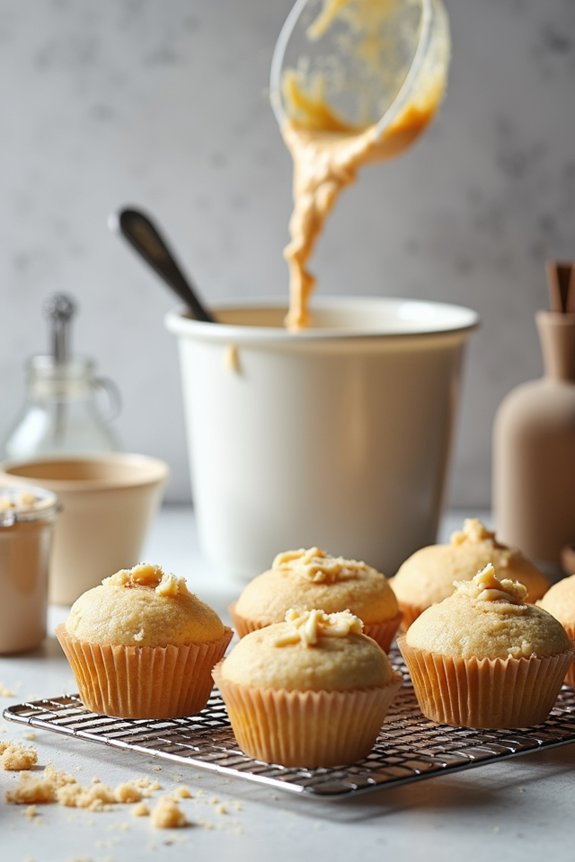
When you swap oil for melted butter, you’re thickening your batter, which means you might get fewer cupcakes per box because the stiffer mixture doesn’t flow as evenly into cups. I’ve found that using less water than the box calls for actually works better—it gives you a thicker batter that reliably produces 24 standard cupcakes instead of unpredictable amounts. These two changes, butter and reduced water, directly control how your batter behaves and ultimately determine your final cupcake count.
Butter Versus Oil Impact
Swapping oil for butter in your box cake mix sounds simple, but it actually changes what happens in your mixing bowl and your oven. Here’s what I’ve learned about this swap:
- Butter creates thicker, creamier batter than oil does
- You’ll need to reduce water slightly to prevent runny batter
- Bake time may shift to avoid overbrowning the edges
- Unsalted butter gives you better flavor control than salted
When I use melted butter instead of oil, my batter becomes noticeably denser. This thickness affects how your cupcakes rise and develop their crumb structure. The extra richness from butter also means I’m watching the oven more closely—those cupcakes brown faster. I always use unsalted butter so I’m controlling exactly how much salt goes in. Small adjustments make a real difference in your final batch.
Water Reduction Effects
How much water you use directly shapes your batter’s thickness and, ultimately, how many cupcakes you’ll get from one box. I’ve found that using slightly less water than the box directs helps maintain a thicker, more manageable batter. This matters especially when you’ve already swapped oil for butter, since butter adds extra fat that can thin things out.
Reducing water by a tablespoon or two keeps your batter from becoming too runny. Thicker batters bake up denser and may yield fewer cupcakes than standard recipes predict. If you’re making mini batches, cutting both water and butter proportionally prevents over-thinning. The key is adjusting gradually. Start small with water reductions, then observe how your batter behaves before committing to a full batch.
Bake Time Adjustments When You Alter the Recipe
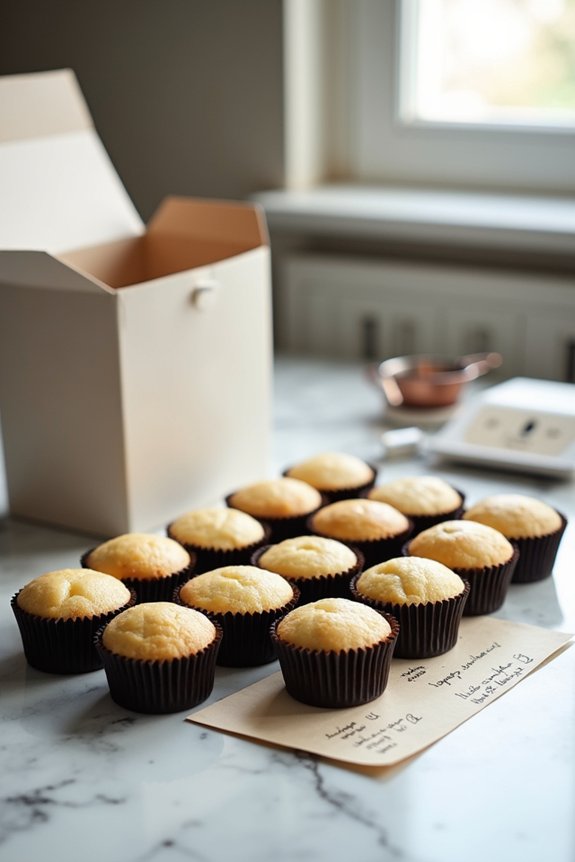
Because you’re changing the recipe’s ingredients, you’ll probably need to adjust your bake time too. When you swap oil for butter or reduce water in your box mix, the batter density shifts. This means your cupcakes might bake faster or slower than normal.
Swapping oil for butter or reducing water shifts batter density, making cupcakes bake faster or slower than expected.
Here’s what to watch for:
- Check doneness 2–3 minutes earlier than the box suggests
- Use a toothpick to test the center for wetness
- Raise oven temperature by 25°F for denser batters
- Start checking mini cupcakes at 9 minutes instead of 14
Standard cupcakes typically need 15–20 minutes, but your adjustments change this. Don’t just set a timer and walk away. Every oven behaves differently, and your recipe changes make timing unpredictable. Keep checking until a toothpick comes out clean.
Why Cupcakes Crack or Shrink
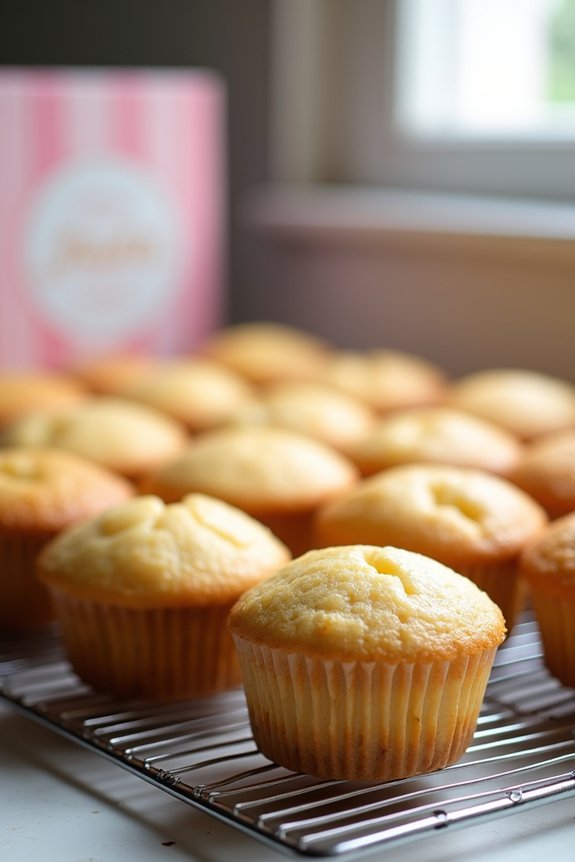
Even when you nail the bake time, you might still pull a cupcake from the oven only to find cracks spreading across the top or a sunken center once it cools. Several issues cause this frustration with box mixes.
Overmixing your batter incorporates excess air, creating too tall a rise that cracks or domes unevenly. Filling cavities beyond 2/3 full causes overflow and uneven shrinking. Using temperatures above 350°F forms a rapid crust that traps steam, promoting cracks. Substituting ingredients—like changing fat or water content—weakens structure without adjustments.
Watch your oven temperature closely. Don’t exceed recommended heat. Fill cups consistently to two-thirds. Mix just until combined. These steps prevent the cracks and sinking that disappoint bakers everywhere.
The Ice Cream Scoop Trick for Perfect-Sized Cupcakes
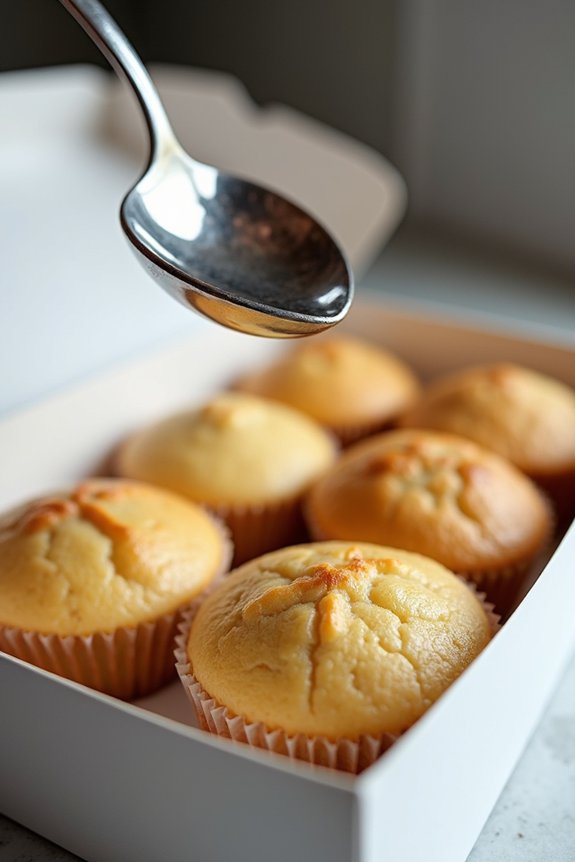
One simple tool transforms your cupcake-baking game: an ice cream scoop. I’ve found this trick creates uniform cupcakes that bake evenly and look professional.
One simple tool transforms your cupcake-baking game: an ice cream scoop creates uniform, evenly-baked, professional-looking results.
Here’s why I use an ice cream scoop:
- Portions batter consistently at about 3 tablespoons per cupcake
- Ensures even baking throughout your batch
- Prevents overfilled or underfilled liners
- Saves time compared to spooning batter manually
When you use the same cupcake size for every liner, they bake at the same rate. This means no more waiting for some cupcakes while others finish. Your ice cream scoop becomes your secret weapon for achieving that bakery-quality appearance at home. Join other bakers who’ve mastered this simple technique. Trust me, once you start using this method, you’ll never go back to guessing.
Scale the Recipe Up or Down
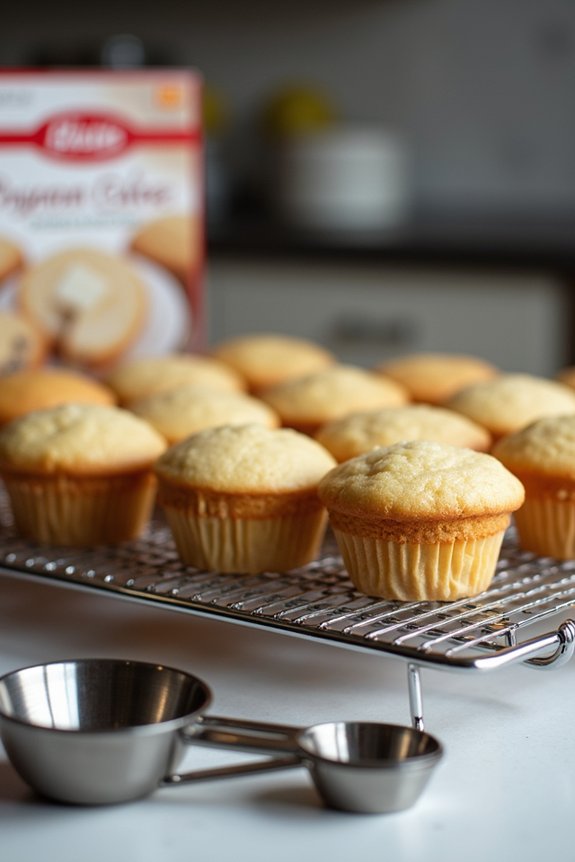
What if you don’t need 24 cupcakes, or what if you want to make way more than one box allows? You’ve got options. For smaller batches, use just 1 cup of cake mix with 1/3 cup water, 3 tablespoons oil, and 1 egg to yield 6 regular cupcakes. This approach works great when you’re baking solo or testing flavors.
Going bigger? Double or triple your cake mix amounts. Two boxes make 48–52 cupcakes using standard liners. Three boxes? You’re looking at 72–78 cupcakes.
The key’s consistency. Whatever you’re making, portion your batter equally using an ice cream scoop. This ensures every cupcake bakes evenly and looks uniform. Scale confidently by adjusting your ingredients proportionally, and you’ll nail your cupcake count every time.
Converting Box Mix Batter to Regular Cake or Other Pan Sizes
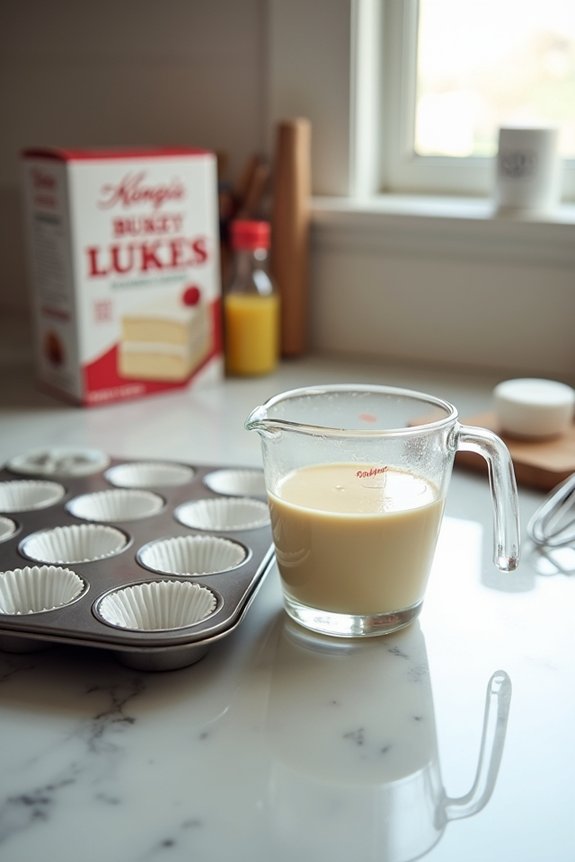
Don’t want cupcakes? Your box mix’s 5 cups of batter converts beautifully to other pan sizes. Here’s how I adapt my cupcake batter:
- Pour into a standard 9-inch round cake pan for one layer cake
- Fill two 8-inch round pans for a two-layer dessert
- Use 15–23 mini loaf pans for individual servings
- Try alternate shapes like muffin tops or brownie pans
When converting pan sizes, I increase the oven temperature by 25°F to ensure even baking. Smaller vessels bake faster, so I check doneness with a toothpick around 12–18 minutes depending on depth. Thicker batter in larger pans needs extra time—up to 25 minutes sometimes. The key? Monitor your creation closely. Every oven runs differently, so adjust accordingly.