
A 2-quart baking dish holds 8 cups of food. Round dishes measure about 8–9 inches across and 2–2.5 inches deep. Square ones are roughly 8×8 inches, while rectangular dishes run about 11×7 inches with 1.5–2 inches of depth. The exact dimensions vary by brand, but they all share that same 2-quart capacity. Your shape choice affects how heat circulates—round pans distribute warmth more evenly, while rectangular ones brown edges faster. Stick with what fits your kitchen and recipes best. There’s more to discover about how shape impacts your actual baking results.
2-Quart Baking Dish Dimensions: Square, Rectangular, Round
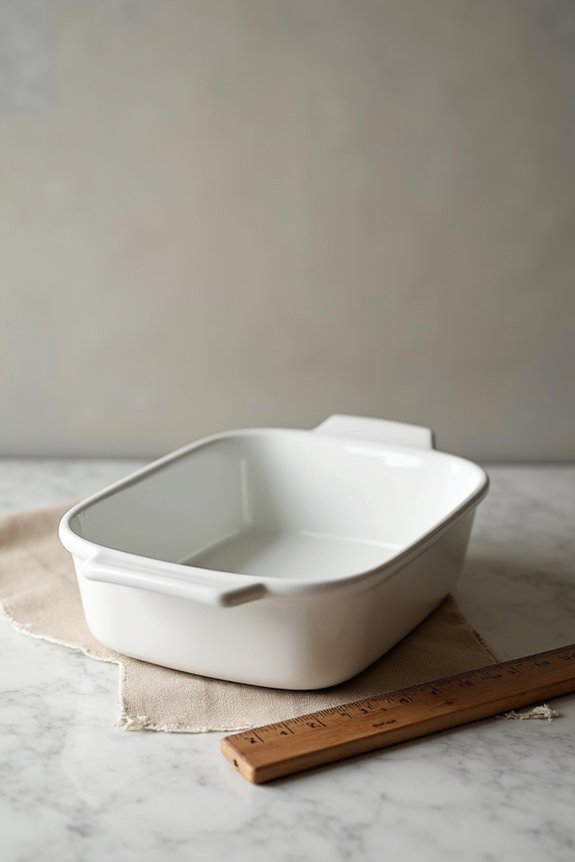
What exactly fits in a 2-quart baking dish? You’re looking at a container that holds 8 cups of food, and it comes in three main shapes with different dimensions.
Round dishes measure about 8–9 inches across with a depth of roughly 2–2.5 inches. Square versions sit at approximately 8×8 inches, giving you that familiar footprint. Rectangular dishes stretch longer at about 11×7 inches, running shallower at 1.5–2 inches deep.
Here’s the thing: dish shape variance means external dimensions shift depending on the brand, even though they all share the same 2-quart capacity. What matters most isn’t the exact measurements of your specific dish. It’s understanding that capacity corresponds to volume, not appearance. Pick whichever shape works best for your kitchen and recipes.
How Shape Affects Baking Results
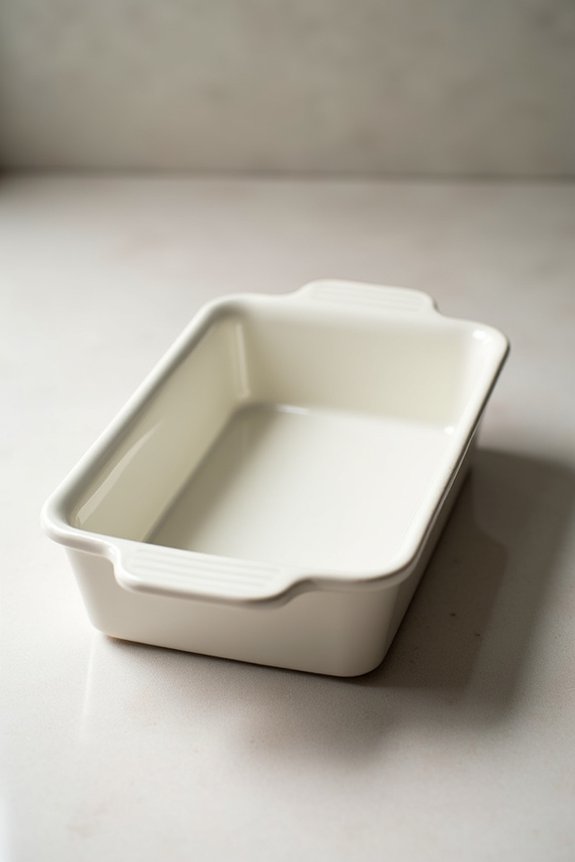
I need to tell you that your baking dish’s shape matters more than you might think. Round pans like that 9-inch dish circulate heat more evenly around the food, which means fewer cold spots and more consistent browning, while rectangular or square pans create slightly hotter corners that can brown edges faster. When you swap shapes—say, using an 8×8 square instead of a round 9-inch—you’ll want to watch your baking time closely and add 5–10 minutes since the different depth changes how quickly heat reaches the center of your dish.
Heat Distribution Differences
Why does a round 2-quart baking dish bake differently than a rectangular one? The answer lies in how its dimensions affect heat distribution. Round dishes circulate heat more evenly throughout your food because heat travels uniformly from all sides. You’ll notice fewer hot spots—those annoying burnt edges—compared to rectangular alternatives.
The round shape’s design creates consistent heat penetration. Heat waves bounce around the curved sides, reaching your casserole or lasagna uniformly. Rectangular dishes, conversely, concentrate more heat at corners, creating uneven cooking.
Because of this superior heat distribution, round 2-quart dishes with their 8–9 inch diameter promote better browning across your entire dish. You’re looking at more predictable cooking times and better results overall. That’s why many bakers prefer them for achieving that perfect golden finish without babysitting your meal constantly.
Cooking Time Adjustments
they don’t bake your food in the same amount of time, even when they hold the same volume. I’ve found that round baking dish shapes heat more evenly because their curved design distributes heat uniformly. This means you might actually need less bake time than a rectangular pan with the same capacity.
However, denser casseroles change the game. When you’re working with heavier ingredients, I increase the bake time in 5–10 minute increments. The key is monitoring your dish’s depth too. Deeper 2-quart options require longer cooking. Check your food at the original time, then adjust as needed. This approach keeps you from undercooking dense dishes while preventing dry, overcooked edges that rectangular pans sometimes create.
2-Quart Capacity: Cups and Servings
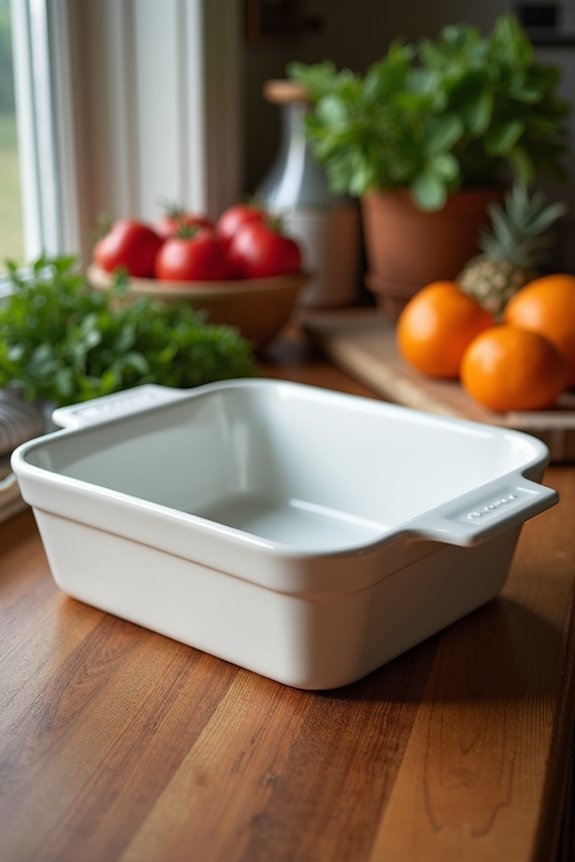
How much food actually fits in a 2-quart baking dish? You’re looking at exactly 8 cups of capacity. That’s your magic number for planning meals.
The 2-quart capacity works across different dimensions. Round dishes run 8–9 inches wide and 2–2.5 inches deep. Rectangular ones measure about 11 inches long by 7 inches wide with 1.5 inches depth. Same volume, different shapes.
Here’s what your servings look like:
| Dish Type | Capacity | Servings (Main) |
|---|---|---|
| Round | 8 cups | 4–6 people |
| Rectangular | 8 cups | 4–6 people |
| Either | 2 quarts | 6–8 (side dish) |
You’ll feed 4–6 people as a main course or stretch it to 6–8 servings as a side. The dimensions change, but the 2-quart capacity stays constant—that’s what matters for your cooking plans.
Material Choice: Glass, Ceramic, or Metal
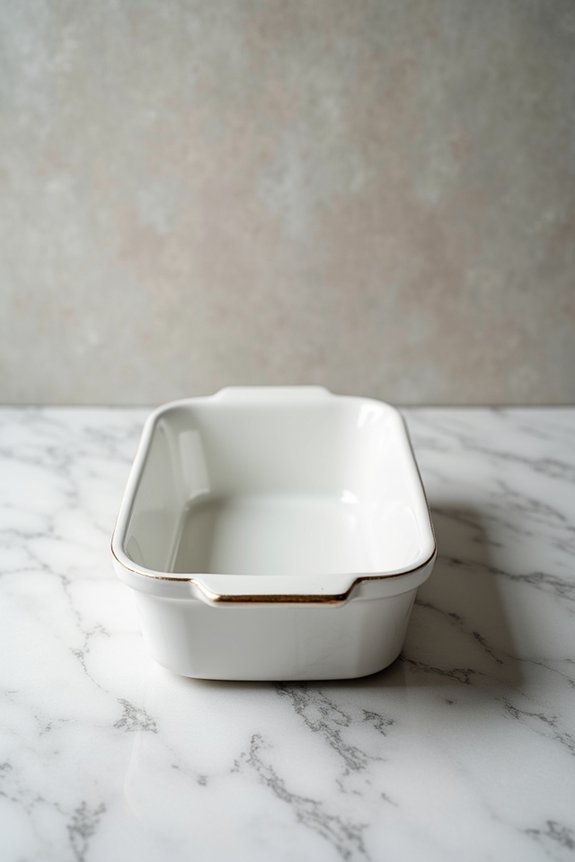
Once you’ve settled on your 2-quart capacity, the real decision comes down to what your dish is made from—and that material changes how your food cooks. Glass and tempered glass provide even heat distribution and let you watch your casserole bake without opening the oven. Ceramic and stoneware retain heat longer, keeping your food warm after it comes out, plus they look great on the table. Metal heats fastest and browns edges quickly, but it can sometimes over-brown if you’re not careful.
For oven-safe materials, most glass and ceramic options handle temperatures up to 425–500°F safely. Understanding these baking dish dimensions and material properties helps you pick what works best for your recipe and cooking style.
Swapping Sizes: When Substitutions Work
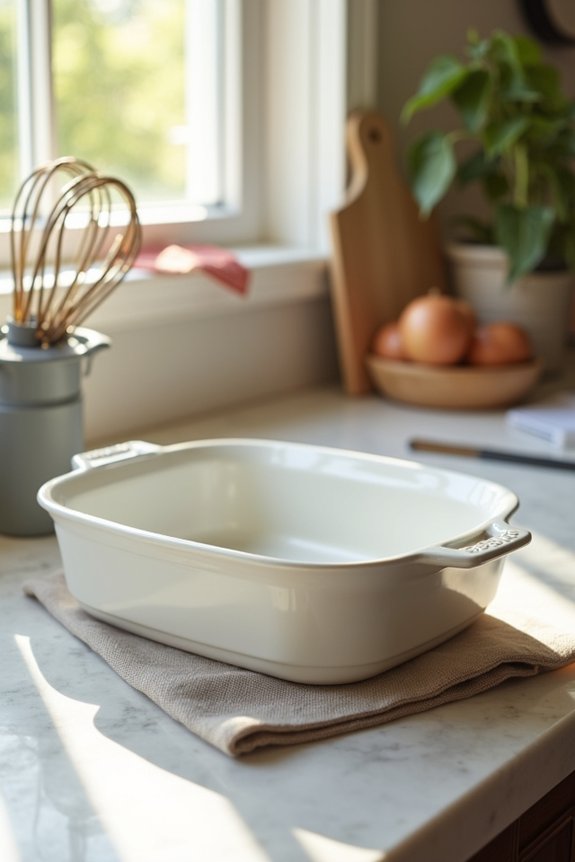
Now that you know what material works best for your cooking needs, let’s talk about what to do when your recipe calls for a dish size you don’t have on hand.
Substitutions work when capacity matches. A 2-quart round dish holds 8 cups, just like a 9×13-inch rectangular pan. You can swap them without changing cooking times or temperatures. Shape matters less than volume.
Substitutions work when capacity matches. Shape matters less than volume when swapping dishes in your recipes.
Check your dish’s capacity with a water test if you’re unsure. Fill it cup by cup until it’s full, then note the total. Compare that number to what your recipe requires.
Different manufacturers produce varying dimensions, so don’t rely solely on size labels. A round dish might work as a substitute for a rectangular one if the cup measurements align. Always verify before you cook.
Is Your 2-Quart Dish Oven Safe?
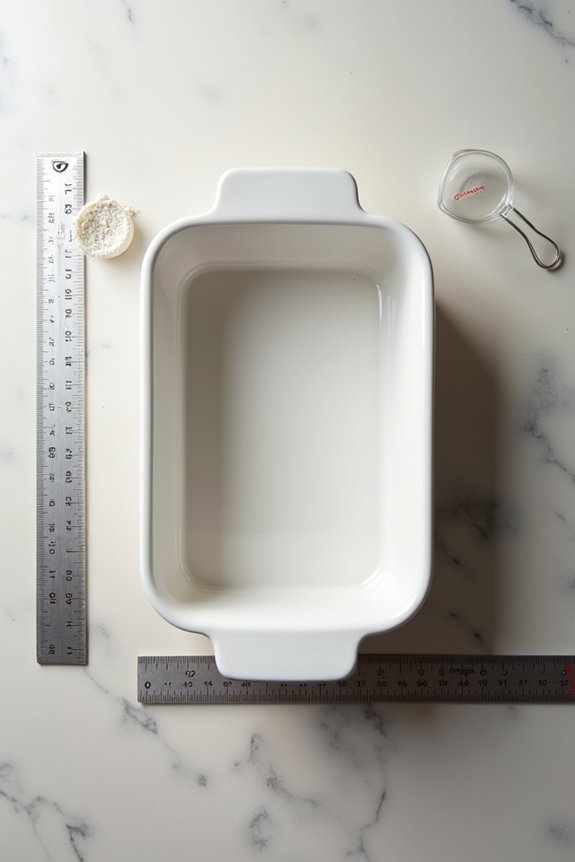
Before you pop that 2-quart dish into the oven, you’ll want to know if it can actually handle the heat. Most glass and ceramic dishes with 2-quart capacity are oven safe up to 425–500°F, but here’s the thing: you need to check your manufacturer’s label first. Different brands set different limits, and you don’t want surprises mid-bake.
Your dish dimensions matter too. Whether you’re using an 8×8 inch square or 11×7 inch rectangle, oven safety depends on the material and construction. Metal handles or decorative trim sometimes have lower heat tolerances than the dish itself.
Check the bottom of your dish for temperature markings. If you can’t find anything, contact the manufacturer or look up the brand online. Knowing your oven safety limits prevents damage and keeps your cooking reliable.