A tea towel is a thin, lint-free kitchen cloth made from cotton or linen that’s perfect for drying dishes and polishing glassware without leaving fibers behind. I’d use it for delicate items like wine glasses, wrapping warm bread, or covering dough while it rises. Wash yours in warm water with mild detergent, skip the fabric softener, and tumble dry on low heat. Store it somewhere cool and dry. There’s actually quite a bit more to know about getting the most from this versatile kitchen essential.
What Is a Tea Towel? Definition and Key Characteristics
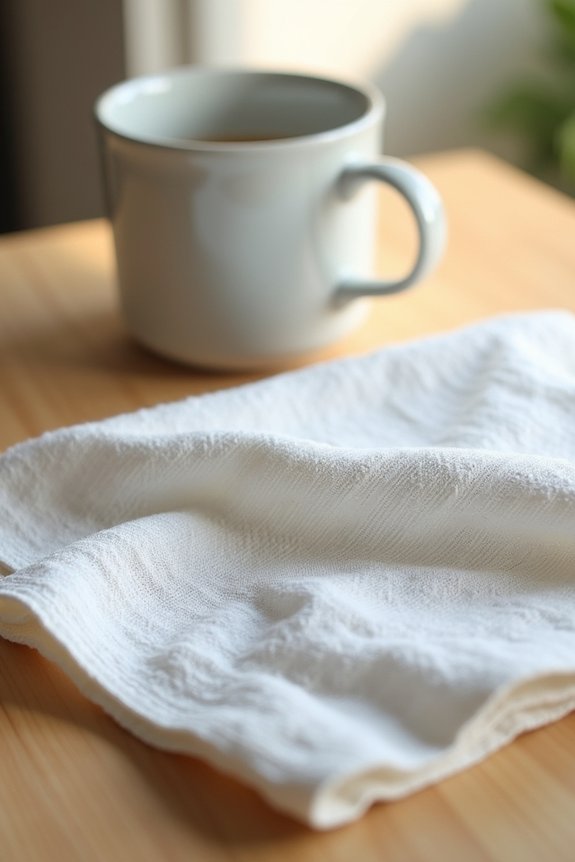
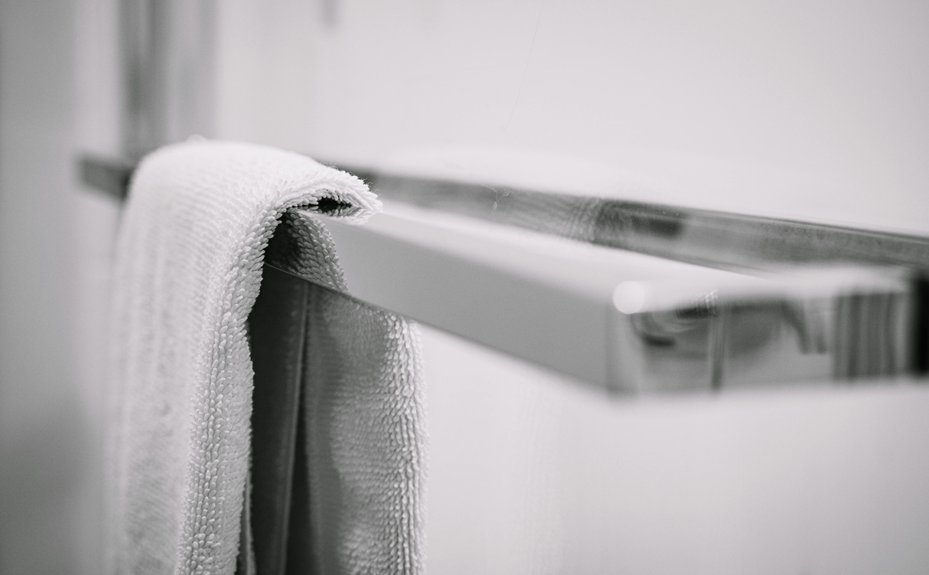
A tea towel is a lightweight, absorbent kitchen cloth made from linen or cotton that you’ll use primarily for drying dishes and polishing glassware. I find these towels thinner than standard dish towels, making them ideal for delicate items. They’re designed to be lint-free, so you won’t leave fibers on your clean plates or glasses.
The name comes from 18th-century England, when people used them to insulate warm teapots during tea service. Modern tea towels still serve that purpose while looking great in your kitchen. You’ll find them in standard sizes around 40 x 60 centimeters or 50 x 70 centimeters, fitting easily into most drawers. They balance function with style, offering patterns or branding alongside practicality. They’re the kitchen towel that works hard and looks good doing it.
Tea Towels vs. Dish Towels: What’s Actually Different?
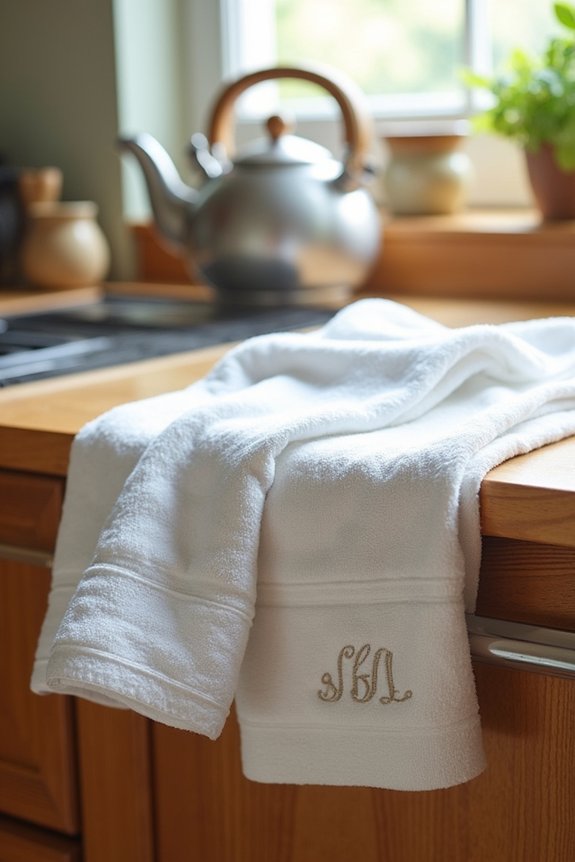
Why do you need two types of kitchen towels? They’re actually built for different jobs.
Tea towels are lightweight and lint-free, making them perfect for drying glassware without streaks. Made from cotton linen blends, they’re thinner and dry quickly. You’ll find them prioritize looking nice while staying practical. Dish towels, by contrast, are heavier and built for serious absorbency. They handle the tough stuff—wet cookware, spills, and everyday messes.
Think of it this way: tea towels excel at polish and finesse. Dish towels excel at heavy lifting. Tea towels originated in 18th-century England for insulating teapots, while dish towels developed for broader kitchen tasks. Both work with cotton, but they’ve got different personalities. You’re not replacing one with the other; you’re choosing the right tool for the moment.
Why Tea Towels Are Called Tea Towels: A Brief History
I’ll tell you why these towels got their name: back in 18th-century England, tea towels were essential gear for afternoon tea service, where they insulated hot teapots and protected fancy porcelain from lint and damage. Over time, people started using them for all sorts of kitchen tasks beyond just tea service, but the original name stuck around because that’s what folks had always called them. So today, when you grab a tea towel to dry dishes or wipe your hands, you’re using a tool named after its historical job, even though it does way more than that now.
18th Century Tea Service Origins
Ever wonder why we call them “tea towels” instead of just kitchen towels? The name comes straight from 18th-century England’s tea service tradition. Back then, these linen cloths served two specific purposes. First, they wrapped around hot teapots to insulate them and keep the tea warm during service. Second, they dried delicate porcelain cups and plates without leaving lint behind. This lint-free drying mattered because elegant tea gatherings demanded spotless dishware. The linen material was perfect for this job. Over time, tea towels expanded beyond their original tea service role into general kitchen utility. But we’ve kept the historical origin in the name. Today’s tea towels still echo that 18th-century tradition of quality and care, even when we’re not serving tea.
Evolution Beyond Tea Insulation
How’d tea towels escape their original job of wrapping hot pots? Well, they didn’t really. Instead, their purpose expanded. Servants realized these thin linen cotton cloths worked perfectly for more than insulation. They dried delicate porcelain without leaving lint behind. They polished teaware to a gleam. Soon households discovered tea towels tackled everyday kitchen tasks beautifully. Their lightweight design made them ideal for gentle work. Unlike thicker dish towels, tea towels remained versatile and elegant. The name stuck around even as their evolution continued. Today, we use them for drying, polishing, and countless other kitchen jobs. That historical connection to tea service persists in the name, reminding us of their sophisticated origins while we fold laundry and wipe counters.
Put Your Tea Towel to Work: 12 Kitchen Uses
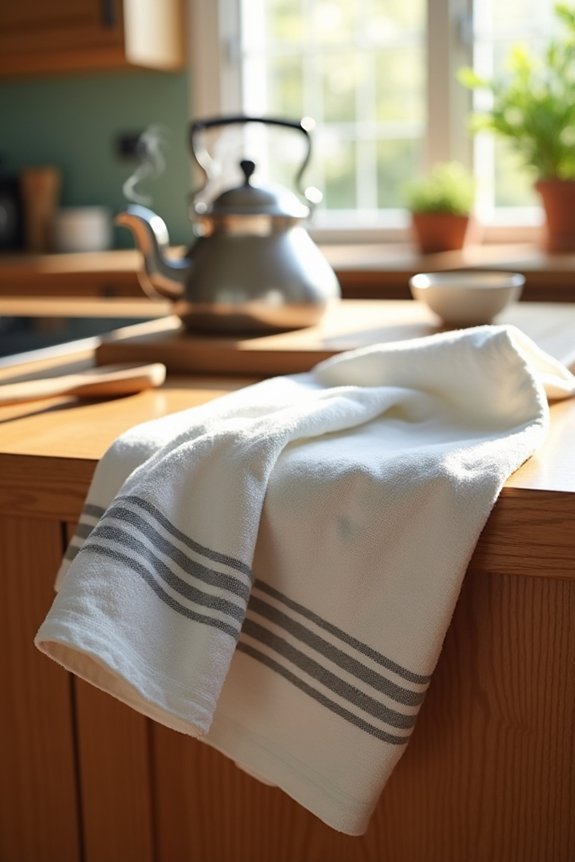
Why stick with paper towels when a tea towel can handle almost every kitchen task? I’ve found that switching to linen or cotton tea towels transforms my kitchen routine. These absorbent cloths dry dishes without leaving lint, making them perfect for polishing glassware. I use mine for wiping spills, covering dough during proofing, and drying hands throughout the day. Unlike a bulkier dish towel, my tea towel’s thinner design works great for delicate jobs. The best part? They’re eco-friendly alternatives to disposable papers. You’ll discover that kitchen uses expand quickly once you start. From wrapping warm bread to straining pasta, these lightweight cloths become indispensable. Keep several in rotation, and you’ll never reach for paper towels again.
Tea Towel Care Essentials
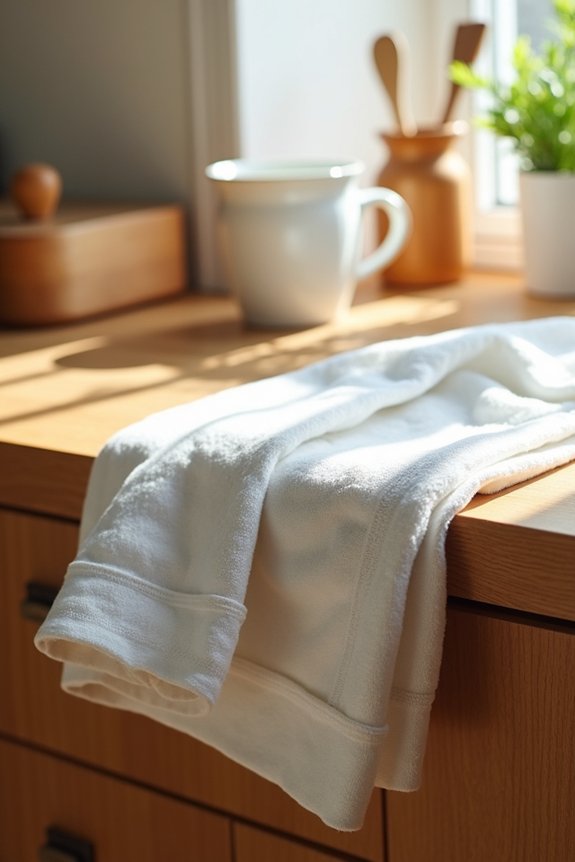
Now that you’ve got your tea towels working hard in the kitchen, keeping them in good shape matters just as much. Wash your absorbent cotton and linen towels separately in warm water with mild detergent. This prevents lint transfer to other fabrics and keeps them lint-free for dishware polishing. Skip the fabric softener—it reduces absorbency. Tumble dry on low heat or air dry flat to maintain their integrity for drying dishes. Store them in a cool, dry spot away from direct sunlight, which fades decorative patterns. Check regularly for odors, which signal they need washing. Proper care and maintenance extends their life and keeps your kitchen essentials looking fresh. Well-maintained tea towels remain reliable companions in any kitchen setup.
What Damages Tea Towels (and What Doesn’t)
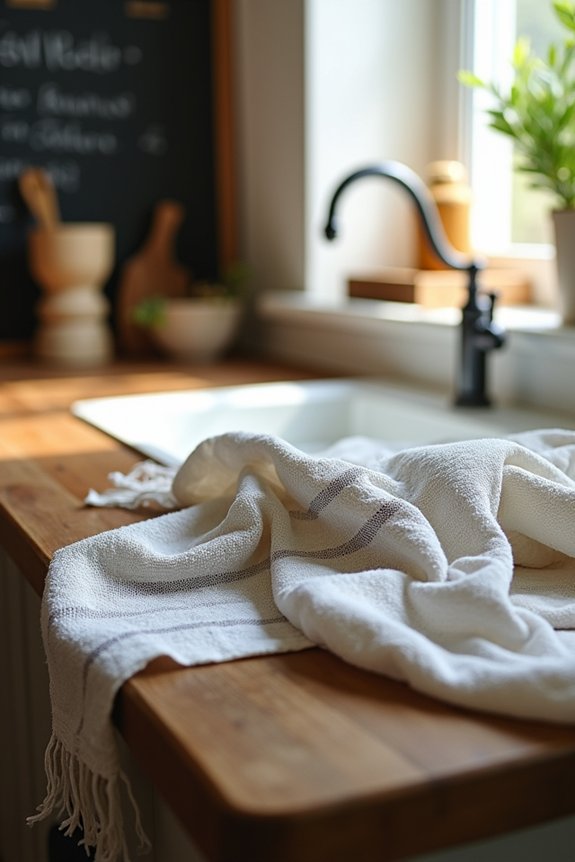
What exactly ruins a tea towel, and what’s just normal wear? I’ve learned that heat is your tea towel’s enemy. Direct flame or high heat scorches the fabric and weakens it over time. When washing, I use cool water and mild detergents instead of harsh chemicals or bleach, which degrade natural fibers and kill absorbency. Hot water causes shrinkage and fading, so skip it.
Moisture damage sneaks up quietly. I always hang tea towels to dry completely after use. Prolonged dampness breeds mold and musty odors, especially in damp storage areas. Repeated washing with harsh detergents also causes fraying and embroidery damage.
With proper fabric care, your tea towels last years. Store them dry, wash gently, and avoid heat sources. That’s genuinely all it takes to keep them in great shape.