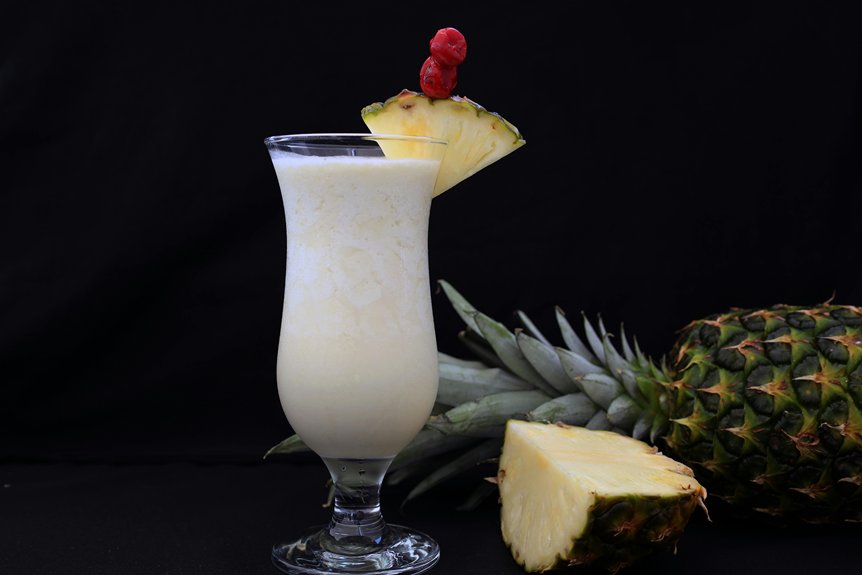
A standard Piña Colada contains about 288–300 calories per 4.5-ounce serving. The culprit? Coconut cream and pineapple juice—they’re packed with sugar and fat. You’re looking at roughly 32 grams of carbs and 31.5 grams of sugar per drink. If you swap coconut cream for coconut milk, you’ll slash calories dramatically since coconut cream packs 13 times more calories per ounce. Want a lighter version? Reduce the rum, use coconut milk, and fresh pineapple juice to cut calories nearly in half. There’s plenty more ways to customize your drink.
Classic Pina Colada: 288–300 Calories Per Serving
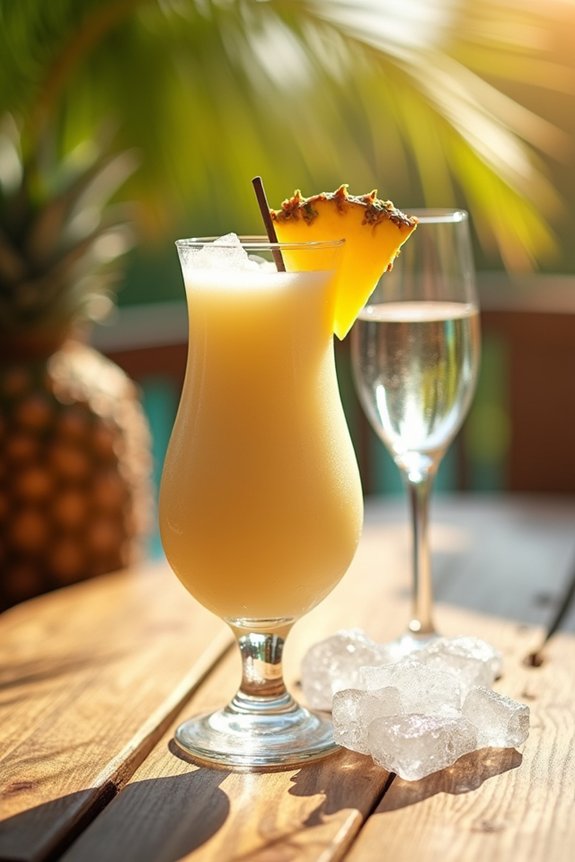
A classic piña colada clocks in at around 288–300 calories per serving, and that number comes straight from the drink’s three main ingredients: white rum, pineapple juice, and cream of coconut. Each component contributes its own caloric load to your glass.
The pineapple juice brings natural sugars and carbohydrates. Cream of coconut adds richness and fat, which substantially bumps up the calorie count. White rum provides alcohol calories on top. A standard serving measures 4.5 fl oz, and most of the calories per serving come from carbohydrates and sugar in the mix.
Understanding this breakdown helps you make informed choices about your drink. You’re looking at roughly 300 calories in a full-strength version. That’s useful information when you’re tracking your intake.
Coconut Cream: Why It’s 13× More Calorie-Dense Than Coconut Milk
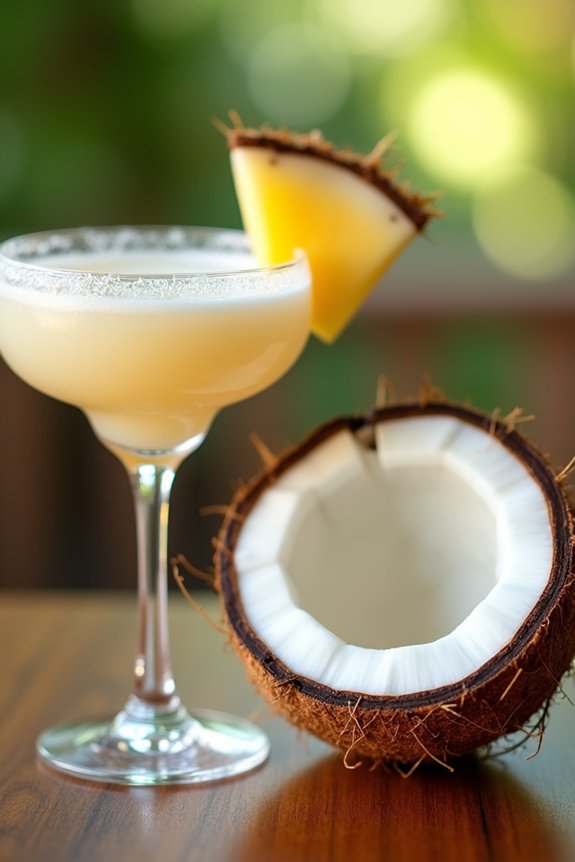
Why does that creamy coconut ingredient pack so much more punch than its lighter cousin? The answer lies in concentration. Coconut cream contains roughly 130 calories per ounce, while coconut milk sits at just 10 calories per ounce. That’s a 13-fold difference in calorie density.
Here’s what causes it: coconut cream is basically concentrated coconut fat. The thicker, richer texture you feel comes from packed saturated fats that pack serious energy. Coconut milk, by contrast, gets diluted with water during processing, keeping calories lower.
This matters for your Piña Colada. Swap coconut cream for coconut milk, and you’ll slash calories dramatically while keeping that tropical flavor. You’re preserving taste without the caloric overload. It’s a straightforward trade that works.
Pina Colada Nutrition: Carbs, Fat, and Protein Breakdown
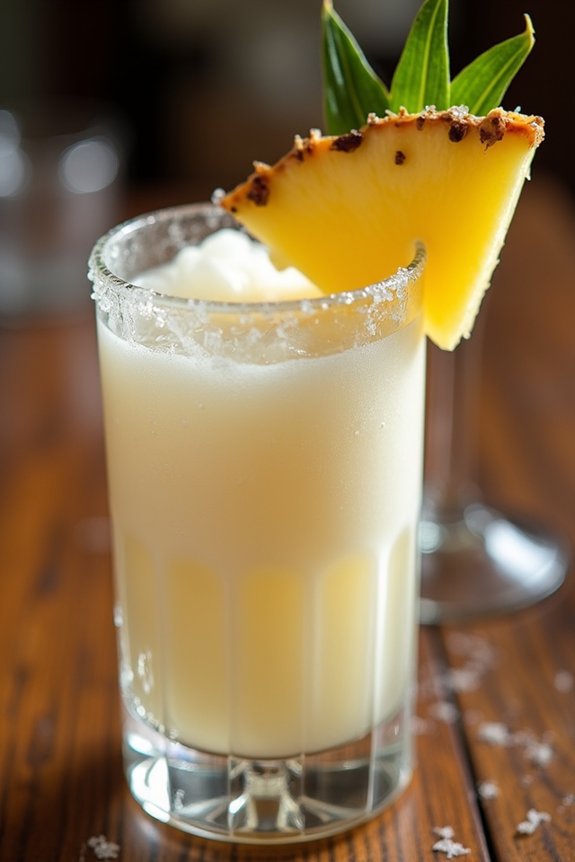
I want you to see how a Pina Colada’s macronutrient breakdown tells you exactly why it’s such a calorie-heavy drink: carbs dominate at 83% of the 245 calories per serving, while fat and protein barely register at 15% and 2% respectively. The real culprit here is sugar, which makes up nearly all 32 grams of carbs in that 4.5 fl oz serving, leaving you with basically zero fiber to slow down how your body processes it. This sugar-heavy, carb-focused ratio explains why a Pina Colada packs more punch than many desserts you’d actually sit down to eat.
Macronutrient Ratio Analysis
Most of the calories you’re drinking in a Piña Colada come straight from carbohydrates—and the numbers tell you exactly why. Out of 245 total calories per 4.5 fl oz serving, carbs deliver 128 calories alone. That’s 83% of your drink right there.
Here’s the breakdown: you’re getting 32 grams of carbs, mostly from 31 grams of sugar. Fat contributes 24.3 calories (15% of total), coming from 2.7 grams per serving. Protein barely registers at 0.6 grams, giving you just 2.4 calories.
This macronutrient ratio makes sense when you consider what’s actually in your glass: rum, coconut cream, and pineapple juice. These ingredients are carb-heavy and sugar-loaded. If you’re tracking macronutrients, understand that a Piña Colada is essentially a carb-dominant beverage.
Sugar Content Comparison
How much sugar are you actually sipping when you order a Piña Colada? The pina colada sugar content might surprise you. Each 4.5 fl oz serving delivers 31.5 grams of sugar—that’s roughly seven teaspoons. When you combine this with the drink’s total carbohydrates, you’re looking at 32 grams per serving, which means net carbs equal 32 grams as well.
| Component | Amount (g) | Percentage |
|---|---|---|
| Total Sugars | 31.5 | 98% of carbs |
| Total Carbs | 32 | 100% |
| Net Carbs | 32 | 100% |
Understanding these numbers helps you track calories per serving accurately. The sugars dominate this drink’s nutritional profile, making it calorie-dense despite its small portion size. If you’re monitoring your sugar intake, a standard Piña Colada requires careful consideration.
The 180-Calorie Pina Colada: Recipe & Swaps
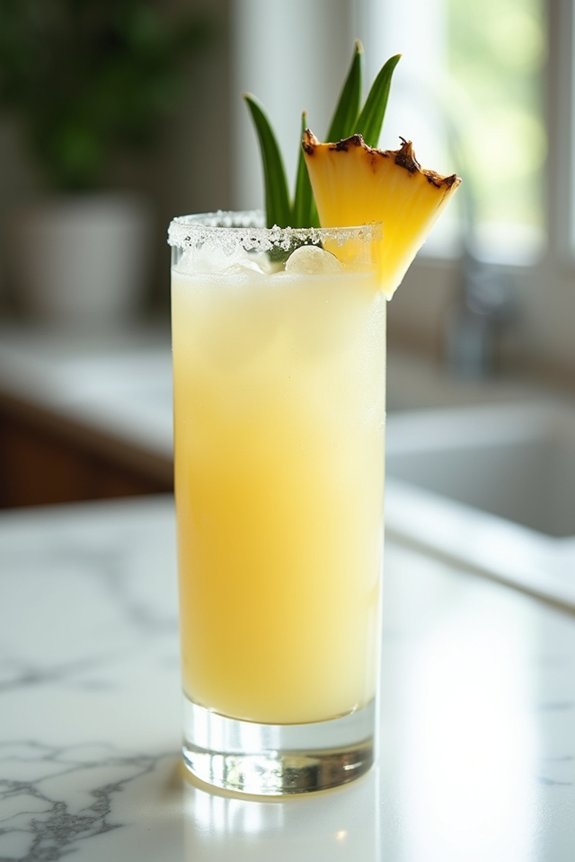
I’ll show you how to trim a classic Pina Colada from 288–300 calories down to 180 by making smart ingredient swaps. The main moves are reducing rum from the standard 2 oz to just 1.0–1.5 oz and swapping out full cream of coconut for lighter coconut milk, which cuts calories while keeping that tropical texture you’re after. You can even go virgin (alcohol-free) and still nail the pineapple-and-coconut flavor combo without sacrificing taste.
Ingredient Substitution Strategies
When you’re craving a Piña Colada but want to cut the calories roughly in half, swapping out just one ingredient makes all the difference. Coconut milk is your secret weapon. It contributes only about 10 calories per ounce, while coconut cream adds roughly 130 calories per ounce. That’s a massive difference in your glass.
Here’s what works: use 1.0–1.5 ounces of coconut rum instead of the traditional 2–3 ounces. Trim your pineapple juice to 4 ounces. Fill the rest with coconut milk. You’ll land right around 180 calories per serving instead of 288–300. These substitutions let you enjoy that tropical flavor you love without the calorie overload. You’re getting the same refreshing taste your friends are having, just lighter.
Calorie Reduction Techniques
Want to slash nearly 120 calories from your Piña Colada without sacrificing that creamy tropical taste?
Swap cream of coconut for coconut milk. That single change cuts about 120 calories per ounce—cream of coconut packs roughly 130 calories per ounce while coconut milk sits at just 10. You’re keeping the flavor while ditching the calorie overload.
Build your lighter version by reducing rum to 1.5 ounces and trimming other ingredients proportionally. Use fresh pineapple juice instead of syrup-heavy mixes. This approach lands you around 180 calories total, compared to the traditional 288–300 calorie serving.
The math works because you’re replacing high-calorie components strategically. Reduced-fat coconut products and real fruit maintain that balanced tropical taste you’re after. You get the drink you love without the guilt.
Virgin Pina Colada: A Non-Alcoholic Alternative
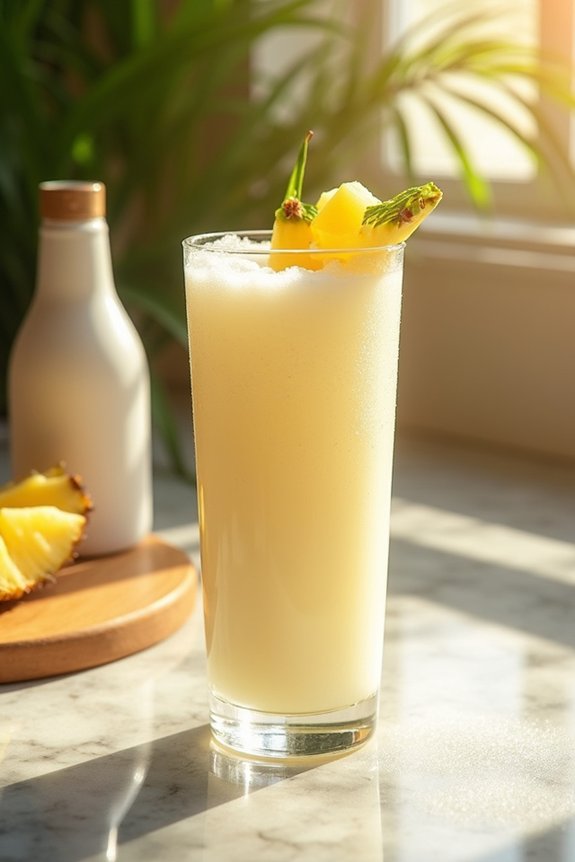
For those skipping the rum, a virgin piña colada delivers the same tropical goodness without any alcohol—and honestly, you won’t miss what’s not there. I find that swapping rum for extra pineapple juice and coconut milk keeps the tropical profile intact while cutting out the ethanol entirely.
| Component | Calories |
|---|---|
| Pineapple juice | 70 |
| Coconut milk | 80 |
| Sweeteners | 30 |
A typical virgin piña colada ranges around 180 calories per serving. Using coconut milk instead of coconut cream reduces both fat and calories, creating a lighter non-alcoholic alternative. I blend everything with crushed ice to achieve that smooth, refreshing texture you’d expect. The traditional pineapple and cherry garnishes stay put, making your virgin drink look every bit as appealing as its alcoholic cousin.
4 Ingredient Swaps to Cut Calories in Half
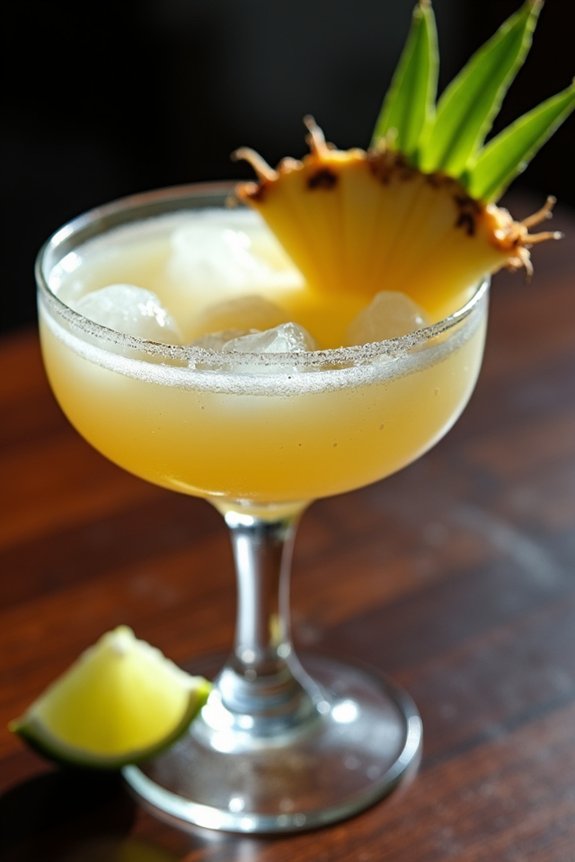
Now that you’ve seen how a virgin piña colada stacks up, let’s talk about trimming calories from the classic alcoholic version. You can cut the drink’s calories in half with smart swaps. First, swap coconut cream for coconut milk. Coconut cream packs 130 calories per ounce, while coconut milk sits at just 10 calories per ounce. Second, reduce rum from standard amounts to 1.0 to 1.5 ounces. Third, boost your pineapple juice portion to add volume and flavor without heavy calories. Finally, try light coconut milk or a half-and-half blend with extra pineapple juice for that creamy texture you want. These substitutions work together, transforming your piña colada into a lighter drink you’ll actually feel good about enjoying.
Serving Size Matters: Small vs. Large Pina Coladas
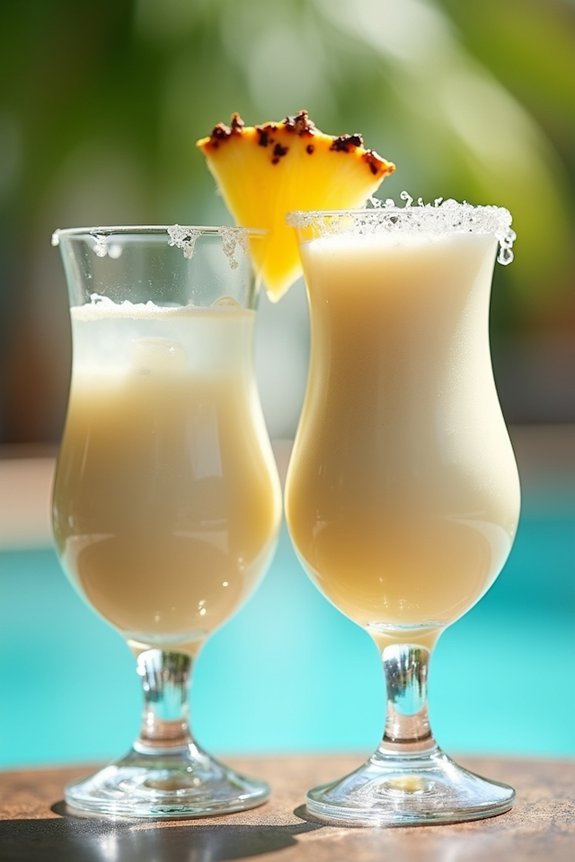
When I order a pina colada, I’m actually choosing between two very different calorie counts depending on whether I get a standard 4.5 fl oz cocktail portion or a frozen blended version that might pour into a 12-16 oz glass. That smaller serving hits around 245 calories, while a larger frozen drink scales up proportionally and can easily reach 500+ calories since the same ingredients just keep multiplying. The real difference comes down to whether I’m sipping a traditional cocktail at the bar or grabbing a frozen vacation-style drink, and that choice alone can double my calorie intake before I even think about swapping ingredients.
Standard Cocktail Portions
Does the size of your glass actually change what you’re drinking? Absolutely. A standard Piña Colada serving is 4.5 fluid ounces, containing 245 calories. When you order a larger version, you’re getting more of everything—more coconut cream, rum, and pineapple juice.
Most bars serve Piña Coladas in 5 to 8-ounce glasses, which means you might consume 270 to 435 calories in a single drink. Smaller 4.5-ounce portions keep calories manageable at 245. The serving size directly impacts your carbohydrates, too. That standard 4.5-ounce glass delivers 32 grams of carbs and 14 grams of alcohol.
Understanding your Piña Colada’s actual serving size helps you make informed choices about what fits your goals.
Frozen Versus Blended Servings
What’s actually in your glass makes a bigger difference than you’d think. When you order a frozen pina colada versus a standard blended one, serving size dramatically changes your calorie intake. A smaller 4.5 fl oz portion contains around 245 calories, while larger frozen blends can deliver considerably more.
The coconut milk you use matters too. Lower-calorie coconut milk reduces overall calories compared to traditional coconut cream versions. Here’s how serving sizes stack up:
| Serving Type | Size | Calories |
|---|---|---|
| Standard cocktail | 4.5 fl oz | 245 |
| Small frozen blend | 6 fl oz | 310 |
| Large frozen blend | 12 fl oz | 620 |
Choosing smaller portions keeps your calorie count manageable while still enjoying that tropical flavor you’re after.
Pina Colada Calories vs. Other Tropical Cocktails
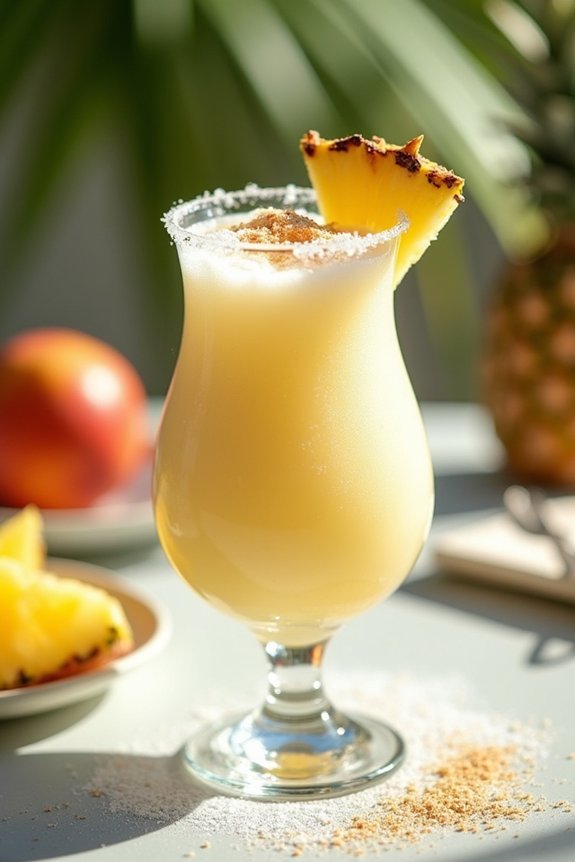
You’ll notice the calorie count in a Piña Colada can swing pretty wildly depending on how it’s made. A standard recipe clocks in at about 245 calories per 4.5 fl oz serving. But here’s where it gets interesting—lighter versions using coconut milk instead of coconut cream drop substantially lower. Classic versions with full coconut cream bump up to 288–300 calories. Some brands, like Bacardi’s ready-made option, come in at just 148 calories per serving. When you compare Piña Coladas to other tropical cocktails, they’re actually moderate players. The carb content stays high around 32g per serving, mostly from sugars. Your choice between cream-based and milk-based versions makes the real difference in your calorie intake.
Why Pina Coladas Got So Sweet: A Quick History
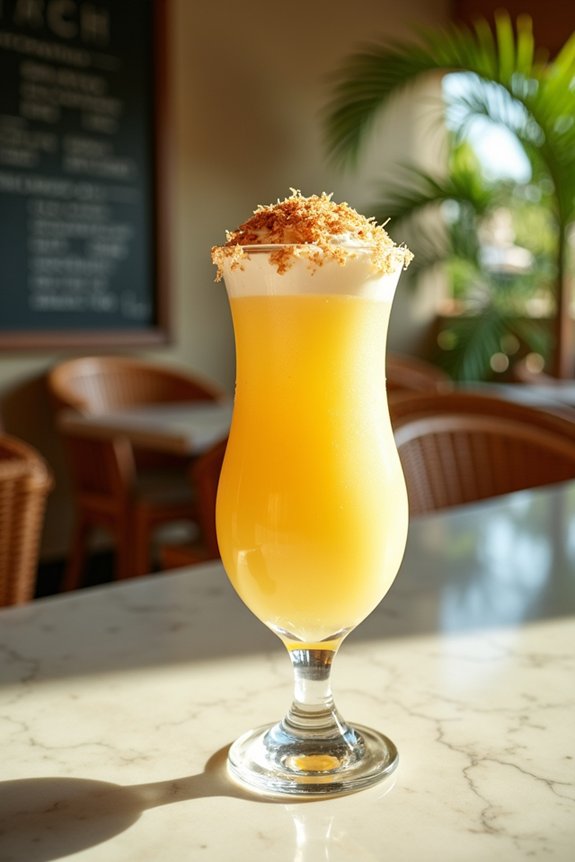
The Piña Colada’s origin story starts in 1950s Puerto Rico with bartender Ramon Marrero, who created this now-iconic drink by blending rum, coconut, and pineapple juice. Back then, he used fresh-pressed pineapple juice, which naturally contained sugars but wasn’t overly sweet on its own.
The real sweetness came from cream of coconut, a thick, rich ingredient that became the drink’s signature component. This ingredient packed serious sugar content, transforming the cocktail into the dessert-like beverage we know today.
Over time, bartenders standardized recipes and simplified ingredients. Pre-made mixes replaced fresh juice. Each change added more sweetness to appeal to wider audiences. What started as a balanced tropical drink gradually became the sugar-loaded indulgence sitting in your glass today.
Burn Off a Pina Colada: Swimming, Running, and Walking Times
So you’ve enjoyed your 245-calorie piña colada, and now you’re wondering how to work it off. The good news? You’ve got options. Swimming’s your quickest route—just 20 minutes in the water burns those calories. If you prefer staying on land, jogging takes about 28 minutes to expend the same amount. Cycling’s a middle ground at roughly 38 minutes of activity time. Walking’s the gentlest choice, though it’ll require around 68 minutes of steady pace. Pick whatever fits your routine and lifestyle. These times apply to a 35-year-old female who’s 57 inches tall and weighs 144 pounds, so your personal activity time might vary slightly. The takeaway? That colada’s workable into your week without stress.
Does Fresh Juice Really Cut Calories? Fresh vs. Bottled Showdown
Why does fresh juice get such a health halo? I’ll be straight with you—fresh pineapple juice won’t magically slash your piña colada’s calories. Here’s what actually matters: coconut cream drives the calorie count, not whether your juice came from a bottle or a blender this morning.
Both fresh and bottled juice contain similar natural sugars and calories per ounce. The real calorie culprits are the coconut cream and rum in your drink. Using fresh juice might improve taste balance, letting you skip extra sweeteners. That’s the genuine win here.
Want fewer calories? Focus on reducing coconut cream portions or choosing lighter alternatives instead. Fresh juice tastes better, sure. But it’s not a calorie-cutting shortcut.
Build Your Perfect Pina Colada: A Calorie-Conscious Guide
You can absolutely enjoy a piña colada without derailing your nutrition goals—it just takes smart ingredient swaps and portion control. I’ve found that reducing coconut cream and using light rum cuts calories significantly. Try using fresh pineapple juice instead of bottled versions, which often contain added sugars. A standard 4.5 fl oz calorie-conscious pina colada contains 245 calories, with most coming from carbs and sugar.
| Ingredient Swap | Calories Saved |
|---|---|
| Light rum instead of regular | 15-20 |
| Fresh juice vs. bottled | 10-15 |
| Reduced coconut cream | 30-40 |
These tweaks let you enjoy your drink guilt-free. You’re making choices that fit your lifestyle, not sacrificing flavor. Mix your perfect pina colada by experimenting with ratios until you find your ideal balance between taste and nutrition.