Ice cream earns its dessert status through a precise formula: it’s sweet, creamy, and served after meals. Regulatory standards define it by requiring at least 10% milk fat and 12–16% total solids in the US. That fat content, combined with sugar that lowers the freezing point, creates a soft, indulgent texture instead of a hard freeze. Emulsifiers stabilize everything into smoothness. The result? A treat specifically engineered for enjoyment, not necessity. There’s actually more science behind why it all works together.
The Definition of Dessert and Why Ice Cream Qualifies
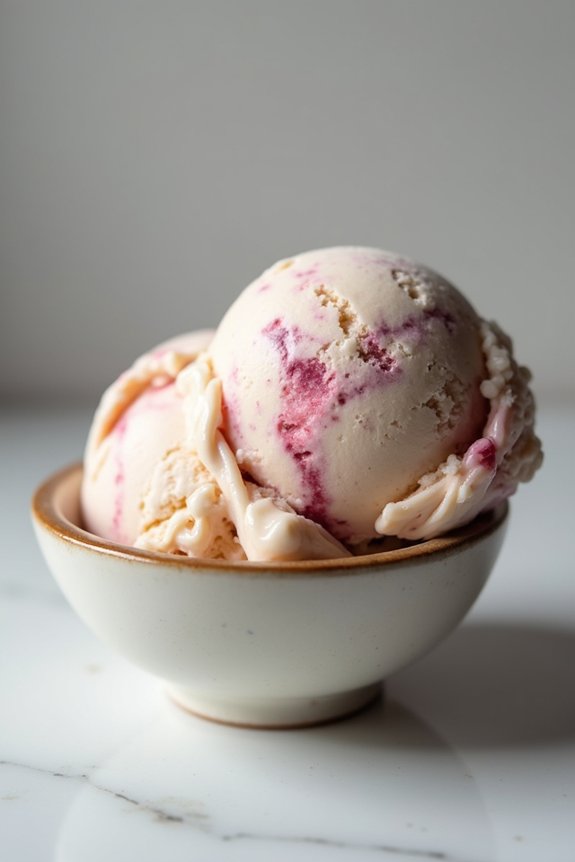
When you think about dessert, you’re probably picturing something sweet that comes at the end of a meal—and that’s exactly what dessert is. Ice cream fits this definition perfectly. It’s a frozen dairy dessert made from milk, cream, sugar, and flavorings. You’ll find it creamy and indulgent, designed purely for enjoyment after dinner.
What makes ice cream qualify as a dessert? First, it’s sweet. Second, it contains dairy and fat that create that luxurious mouthfeel you crave. Third, regulatory definitions in most regions classify ice cream as dessert based on specific fat and sugar content requirements.
Ice cream isn’t alone either. Gelato and frozen custard are cousins in the frozen dessert family, each varying in fat and air content. They’re all served as final courses, cementing ice cream’s status as a legitimate dessert.
Fat Content: The Foundation of Creaminess and Indulgence
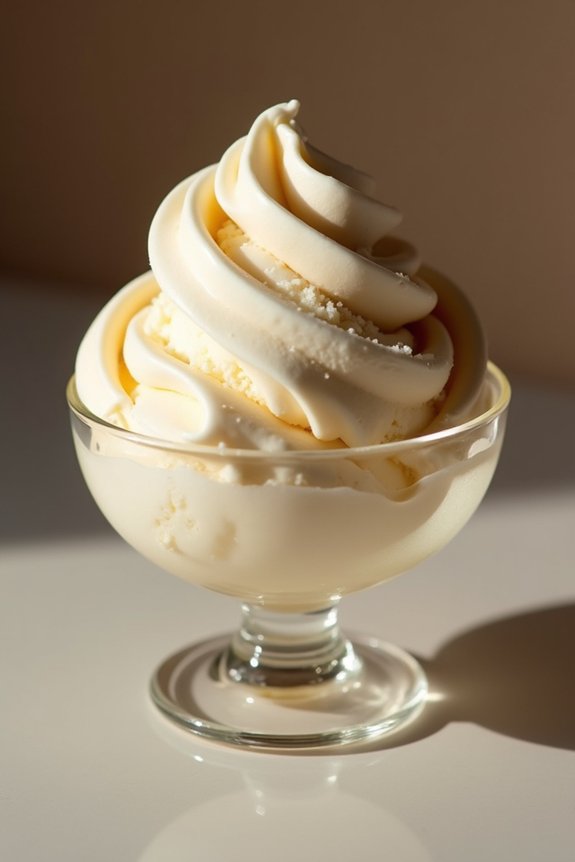
Why does premium ice cream feel so smooth and luxurious on your tongue? Fat’s the answer. Higher fat content coats your mouth with richness, creating that creamy sensation you crave. Premium ice creams pack 11–18% fat, which means less air gets whipped in during churning. This lower overrun produces a denser, more indulgent texture than regular varieties. Fat also works as an emulsifier, stabilizing those tiny fat droplets throughout the frozen mixture and preventing separation. Think of it like a protective shield keeping everything together. Even gelato, which uses less fat overall, achieves creaminess through dense churning with minimal air. The takeaway? Fat isn’t just flavor—it’s the foundation making ice cream taste genuinely luxurious.
Sugar and Sweeteners: Creating Softness Instead of Hardness
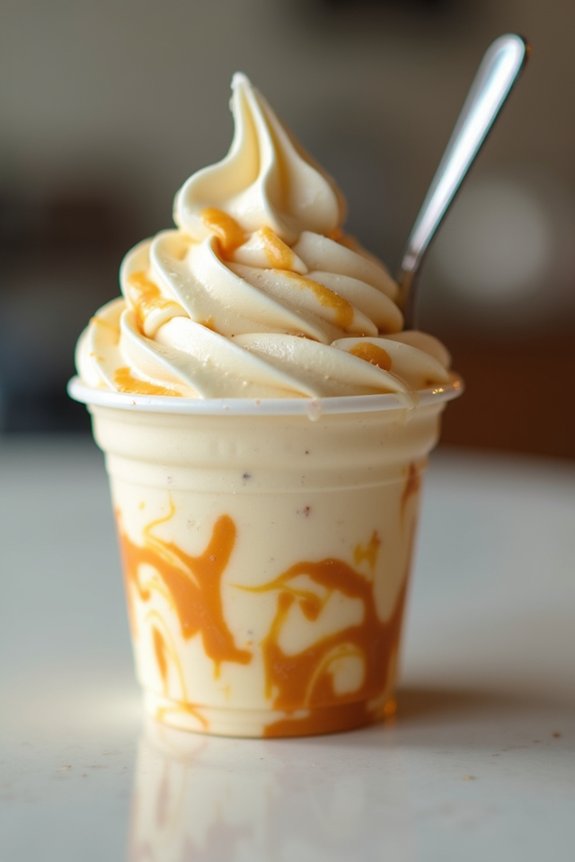
Ever wonder why ice cream doesn’t freeze solid like a rock? Sugar’s the answer. When you add sugar to the ice cream mix, it lowers the freezing point—meaning the mixture stays softer at colder temperatures. This freezing point depression is key to that perfect scoop-ability you love.
Here’s what happens: sugar creates unfrozen water within the mix, which keeps everything creamy instead of icy. More sugar generally means softer ice cream with fewer large ice crystals forming during freezing. That’s the texture difference between smooth and grainy.
The FDA recommends about 12–16% sugar in ice cream composition. Balance matters though. Too much sugar makes it mushy; too little brings back that hard, crumbly texture. Getting this ratio right alongside fat and solids delivers the creamy indulgence you’re after.
The Role of Freezing Point Depression in Texture
When you add sugar and stabilizers to ice cream, you’re actually lowering the freezing point of water—meaning the mixture won’t freeze solid until it reaches a much colder temperature than regular water would. This trick prevents those large, unpleasant ice crystals from forming during freezing and storage, so you end up with tiny crystals instead that create that smooth, creamy texture you’re looking for. By understanding how freezing point depression works, you’ll see why ice cream isn’t just frozen milk, but a carefully engineered product designed to stay scoopable and delicious.
Lowering Water’s Freezing Point
We’re basically tricking water into staying liquid at temperatures where it normally freezes solid. When we add sucrose and milk solids to ice cream, we lower the freezing point below 0°C. This freezing point depression lets the mixture freeze at colder temperatures than pure water.
Here’s where stabilizers like carrageenan and guar gum enter the picture. They disrupt ice crystal growth, letting unfrozen water persist throughout the freezing process. More unfrozen water means a creamier texture at serving temperature.
| Ingredient | Function | Effect |
|---|---|---|
| Sucrose | Lowers freezing point | Enables freezing below 0°C |
| Stabilizers | Disrupts crystals | Maintains smooth texture |
| Milk solids | Adds dissolved solids | Increases unfrozen water |
The result? Small ice crystals instead of large, icy ones. That’s what gives you the silky mouthfeel you’re after.
Preventing Large Ice Crystals
Now that you understand how freezing point depression works, let’s see why it’s actually the secret ingredient to stopping those annoying large ice crystals from ruining your ice cream’s texture. Here’s what happens: when you add sugars and milk solids, they lower the freezing point, leaving unfrozen water throughout your mixture. That unfrozen water acts like a sponge, absorbing water that’d otherwise form big crystals. Rapid freezing combined with churning creates tons of tiny crystals instead of a few large ones. Stabilizers like guar gum join the team, further reducing the freezing point and keeping that unfrozen water locked in place. The result? A smooth, creamy texture you’ll actually want to eat.
Creating Smoother Texture Results
The secret to smooth ice cream texture comes down to one thing: keeping your mixture from freezing solid all at once. I’ll show you how freezing point depression makes this happen.
When you add ingredients like sucrose and milk solids, they lower the freezing point of water in your mix. This means your ice cream doesn’t freeze at 32°F like plain water does. Instead, it stays slightly soft during churning, letting you control ice crystal formation.
Here’s what stabilizers actually do for you:
- Lower the freezing point of the mixture
- Prevent rapid ice crystal growth during churning
- Create a finer crystal matrix throughout
- Maintain a soft, scoopable consistency at serving temperature
- Support continuous texture control as you freeze
Carrageenan and guar gum work especially well. They keep everything creamy by managing how ice crystals develop. The result? A smooth, creamy dessert instead of an icy, grainy one.
How Emulsifiers and Milk Proteins Create Smoothness
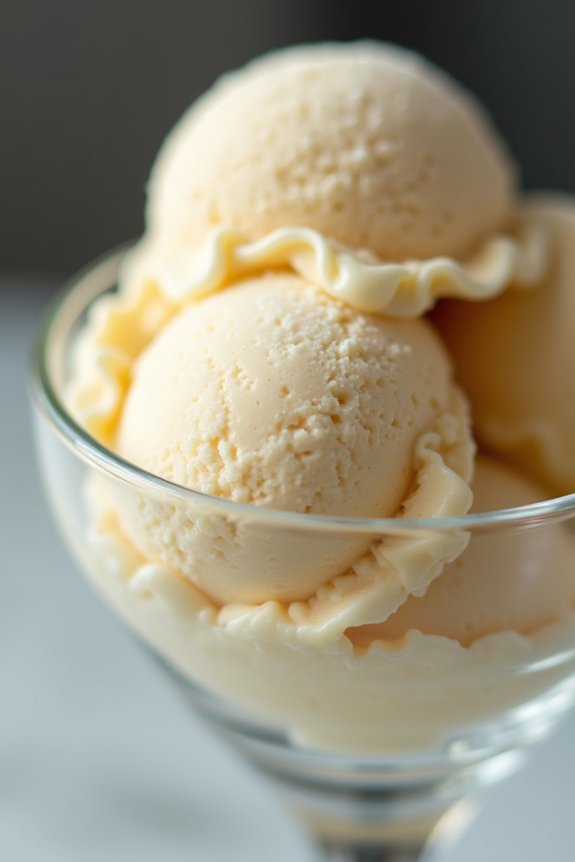
You might wonder why your ice cream feels smooth on your tongue instead of grainy and icy, and I’ll tell you—emulsifiers like lecithin from egg yolk are the unsung heroes doing that work. These emulsifiers grab onto fat droplets and coat them, kind of like tiny bodyguards that prevent them from clumping together and ruining that creamy texture you love. Milk proteins such as casein and whey jump in too, acting as natural stabilizers that help water and fat get along at the microscopic level, which means you get that velvety mouthfeel in every spoonful.
Fat Droplet Stabilization
Creating that silky, smooth ice cream texture comes down to one essential job: keeping fat droplets from clumping together.
Here’s how fat stabilization actually works:
- Emulsifiers coat fat droplets at the fat-water boundary, forming a protective shield
- Milk proteins act as guards that prevent droplets from merging during freezing
- Interfacial tension drops significantly, allowing finer fat dispersion throughout
- Emulsification creates a cohesive matrix that resists separation under churning
- Stable fat droplets enable smaller ice crystals, boosting that creamy mouthfeel
When you’ve got proper emulsification happening, those fat droplets stay separated and distributed evenly. Egg yolk lecithin and casein proteins work together, rapidly absorbing at interfaces before droplets can stick. This stabilized fat emulsion resists breaking apart when frozen and churned. The result? Ice cream that feels velvety on your tongue rather than grainy or icy. That’s the real magic behind the smooth texture you’re after.
Protein’s Emulsifying Role
So we’ve covered how fat droplets need protection to stay smooth and separated. Here’s where emulsifiers come in—they’re like tiny bouncers keeping fat and water from fighting. Milk proteins like casein work as natural emulsifiers, coating fat droplets and preventing them from clumping together. Egg yolk lecithin does the same job, reducing interfacial tension so droplets stay dispersed throughout your ice cream. These proteins also enable better air overrun during mixing, which means more tiny air bubbles get trapped. That’s what gives you that light, creamy texture you’re after. When proteins stabilize both fat droplets and air pockets, you get a uniform distribution of everything. The result? A smoother, more luxurious mouthfeel that feels premium on your tongue.
The Science of Small Ice Crystals vs. Grainy Texture
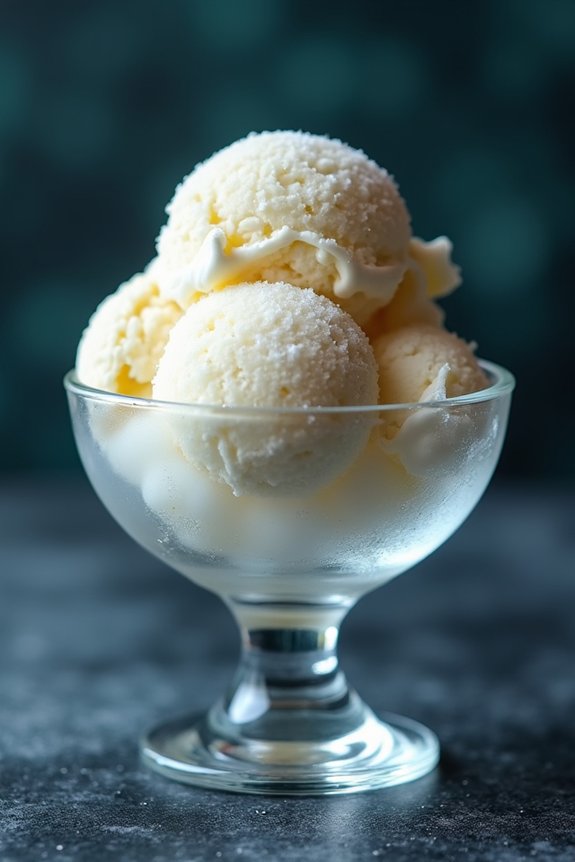
Why does homemade ice cream sometimes feel gritty on your tongue while store-bought versions feel impossibly smooth? The answer lies in ice crystal size. I’ll break down what creates that perfect creamy texture:
- Rapid freezing forms many tiny microcrystals instead of large ones
- Sugars and milk solids lower the freezing point, preventing crystal growth
- Churning incorporates air and disrupts crystal formation
- Stabilizers and emulsifiers trap air and prevent crystals from joining together
- Slow freezing allows Ostwald ripening, where large crystals grow at smaller ones’ expense
Homemade ice cream freezes slowly, creating larger ice crystals that feel grainy. Commercial producers use high-speed freezing and precise formulations to maintain small crystals. The texture difference comes down to freezing speed and controlled crystal management throughout the process.
Air Incorporation: Why Overrun Matters for Mouthfeel?
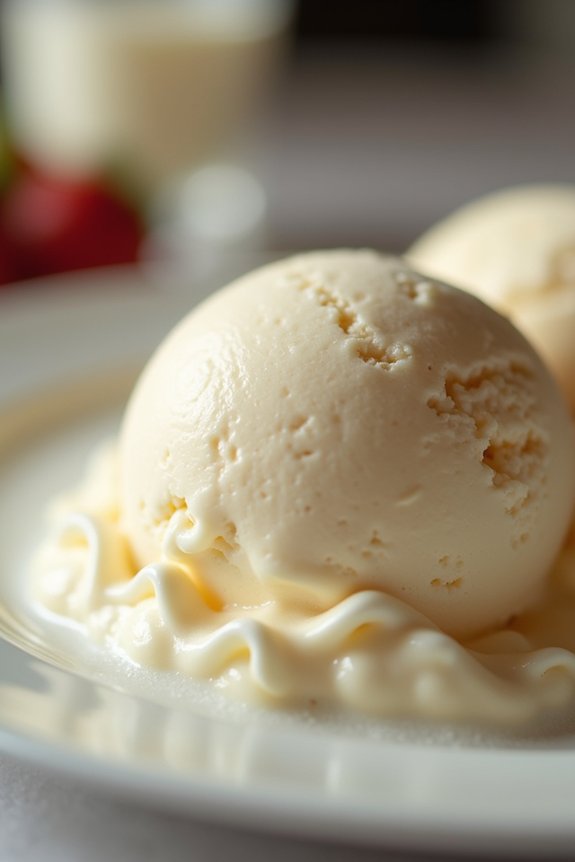
The magic of smooth, creamy ice cream often comes down to something you can’t see: air. That’s overrun—the percentage of air whipped into ice cream during churning. It’s what transforms a dense mixture into something light and scoopable. Here’s why it matters for mouthfeel: more air incorporation means a fluffier texture that feels less heavy on your tongue. Commercial ice creams typically aim for 90–100% overrun in regular versions, while premium brands keep it under 20% for denser richness. Higher fat content helps capture and stabilize those air bubbles, keeping your ice cream smooth rather than icy. Emulsifiers like lecithin work behind the scenes, holding everything together as it freezes.
Eggs and Custard: Adding Richness and Density
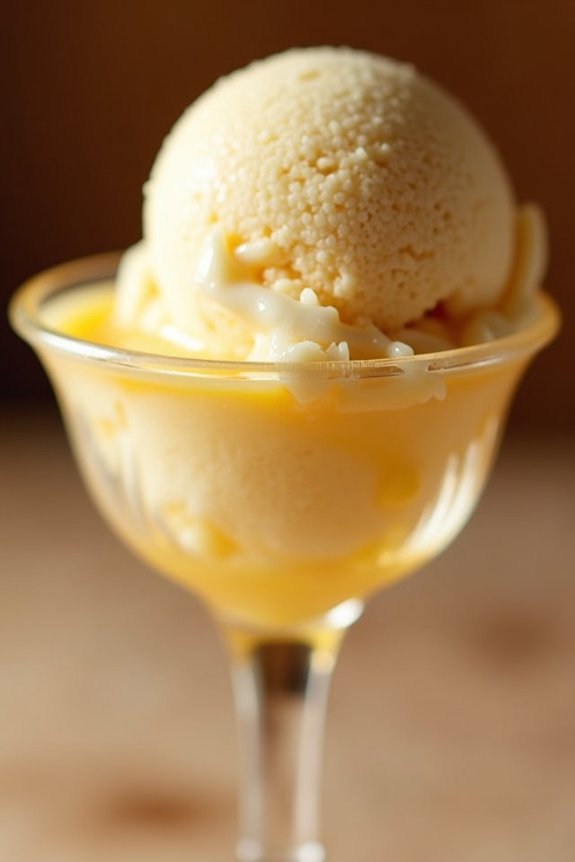
While air gives ice cream its light, fluffy texture, eggs and custard do something different—they add weight, richness, and that luxurious density that makes premium ice cream feel special on your tongue.
When you make an egg-based custard, you’re heating the mixture to high temperatures. This does two important things:
- Dissolves sugars evenly throughout the base
- Ensures pasteurization kills harmful bacteria
- Creates an emulsion where fat and water blend smoothly
- Prevents large ice crystals from forming during freezing
- Develops deeper, more complex flavors
The egg yolks act as natural thickeners and stabilizers. They help fat disperse throughout your ice cream, creating that creamy mouthfeel you’re after. After cooling your custard completely, you churn it into something genuinely special—denser, richer, and unmistakably premium.
Stabilizers: Preventing Recrystallization and Ice Formation
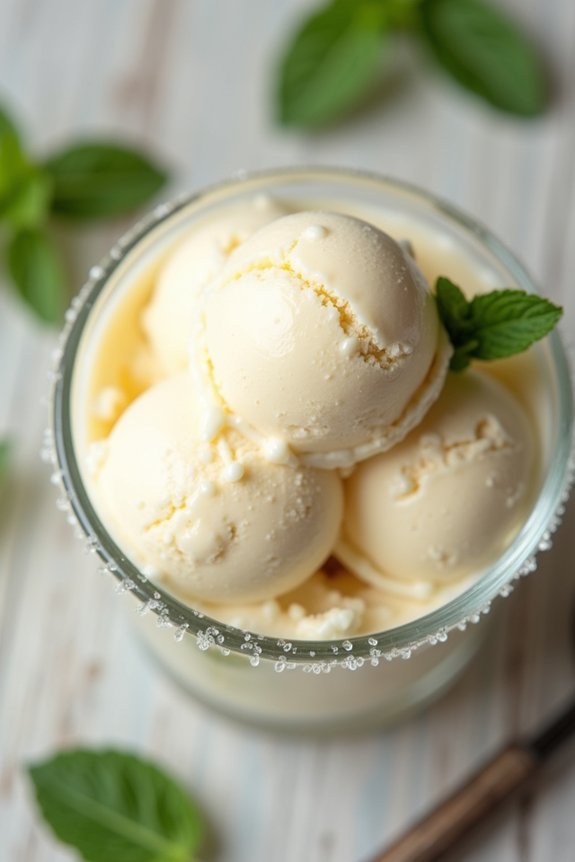
Once you’ve got your custard churned and freezing, you’ll face an enemy that lurks in your freezer: ice crystal growth. That’s where stabilizers come in. These ingredients—like carrageenan and guar gum—lower the freezing point of your ice cream base, keeping ice crystals small and preventing that gritty texture nobody wants.
Here’s how they work: stabilizers thicken the unfrozen liquid around the ice crystals, slowing their growth during freezing and storage. Emulsifiers like lecithin protect fat droplets, maintaining uniform ice cream texture throughout. They also trap air bubbles created during churning, giving you that light, creamy feel.
The real magic happens over time. Stabilizers reduce recrystallization rates, meaning your ice cream stays smooth even when temperatures fluctuate. Your dessert resists that icy breakdown and maintains quality longer.
Churning and Chilling: The Equipment That Shapes Dessert Quality
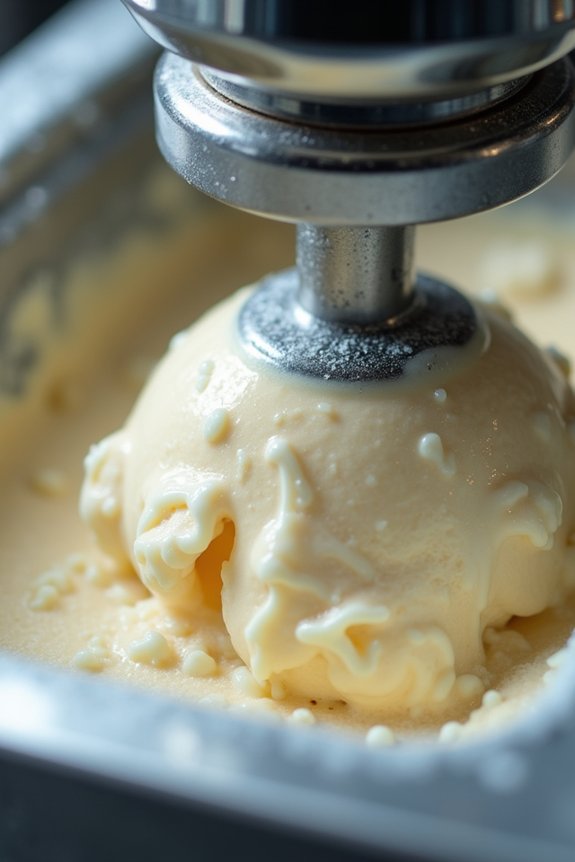
I want you to understand how the equipment you choose shapes your ice cream’s final texture, because churning and freezing work together to create that smooth, creamy result you’re after. When you churn ice cream, you’re doing two things at once: freezing the mixture while incorporating air into it, and the speed at which your equipment freezes determines how small your ice crystals stay. A home machine might take 20-30 minutes and produce larger crystals than an industrial freezer operating at extremely low temperatures with high pressure, which is why store-bought ice cream often feels creamier than homemade versions.
The Churning Process Explained
The magic of ice cream happens inside the churner, where several things occur simultaneously to transform a liquid mixture into something creamy and smooth. I’ll break down what’s actually happening:
- Air incorporation creates overrun, which lightens the texture dramatically
- Rapid freezing forms tiny ice crystals instead of large, gritty ones
- Constant motion keeps fat and water from separating during the process
- Temperature control maintains the ideal freezing speed for crystal formation
- Viscosity management helps the mix trap and hold air effectively
During churning, your mixture spends 20-30 minutes at around 0°F. The paddle’s continuous movement whips air in while freezing happens fast. Emulsifiers and fat work together to stabilize everything. The result? A smooth, creamy texture you can actually enjoy eating.
Freezing Methods and Results
Now that you understand what happens inside the churner, let’s look at the equipment itself and how different freezing methods shape your final product.
Your freezing method directly affects ice crystal formation and your dessert’s texture. Commercial machines freeze at -40°F rapidly, creating tiny crystals and smooth results. Home freezers work slower, producing larger crystals and icier textures. Fat content matters too—higher fat helps trap air during churning, improving creaminess.
| Method | Temperature | Crystal Size |
|---|---|---|
| Commercial Equipment | -40°F | Small, fine |
| Home Freezer | 0°F | Larger, coarse |
| Soft Serve Machine | -15°F | Medium, creamy |
The balance between your fat content and freezing speed determines whether you’ll scoop easily or struggle with hardness. Stabilizers lower the freezing point, letting your dessert stay scoopable even at typical freezer temperatures.
Homemade vs. Commercial Ice Cream: Why Process Determines Excellence
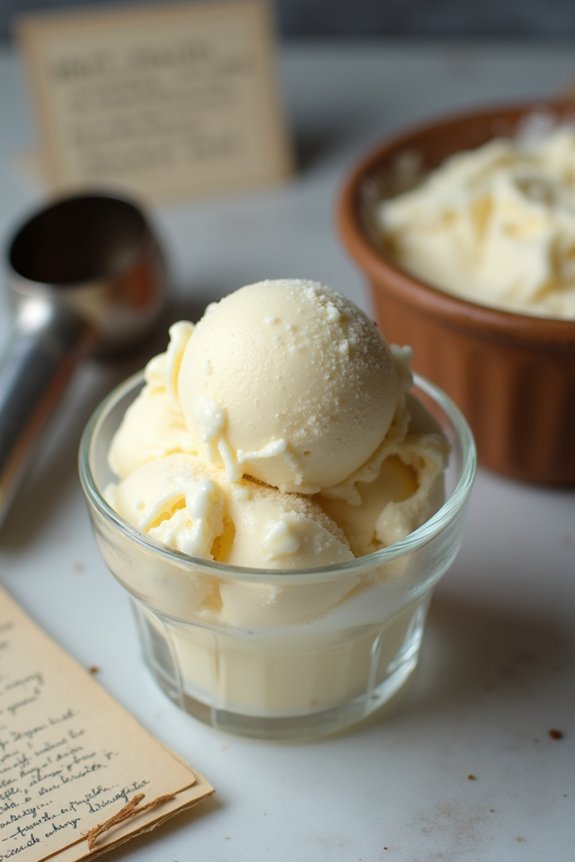
Churning ice cream at home feels like magic, but the real difference between your homemade batch and what you grab from the store comes down to one thing: how the ice cream gets made.
Churning ice cream at home feels like magic, but the real difference comes down to one thing: how it gets made.
Here’s what separates them:
- Fat content: Homemade ice cream packs more fat, creating that luxurious creaminess you crave
- Overrun: Commercial machines whip in precise air amounts; yours incorporates less, making denser ice cream
- Ice crystals: Factory freezing happens fast and hard, creating tiny crystals. Home freezers work slower, forming larger ones that feel grainy
- Stabilizers: Stores add guar gum and carrageenan to lock in texture for months
- Control: Commercial operations manage every variable perfectly. Your kitchen can’t match that precision
You’re making real ice cream with honest ingredients. They’re optimizing consistency across millions of servings. Both approaches work—just differently.
Liquid Nitrogen and Modern Freezing Techniques
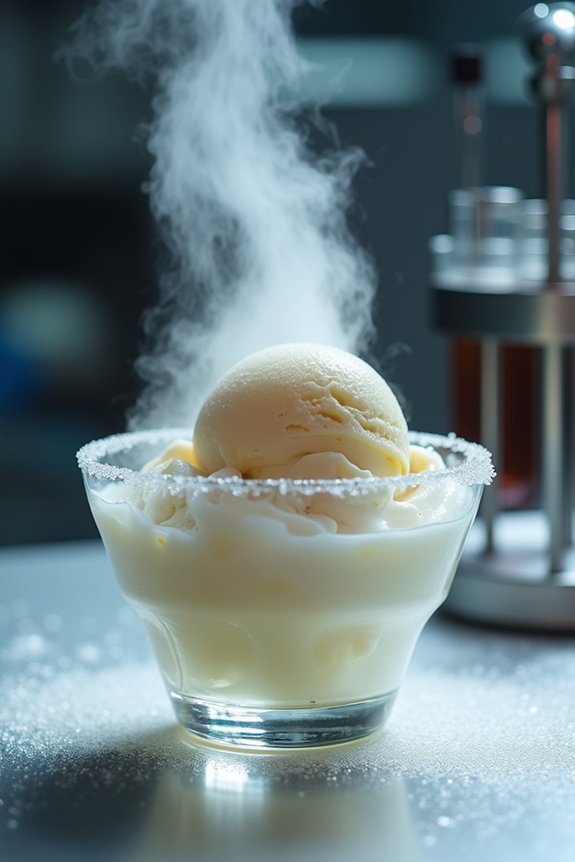
While homemade freezers and commercial machines both get the job done, there’s a method that makes them both look slow: liquid nitrogen. This technique chills your ice cream base to −196°C in seconds, creating ultra-fast freezing that produces tiny ice crystals. The result? Incredibly smooth ice cream texture without waiting hours.
| Aspect | Traditional Freezing | Liquid Nitrogen |
|---|---|---|
| Temperature | −18°C | −196°C |
| Time to Serve | 4-6 hours | Minutes |
| Ice Crystal Size | Large | Microscopic |
| Texture | Standard | Ultra-creamy |
| Overrun Level | Higher | Minimal |
When you add liquid nitrogen during churning, portions freeze instantly, creating dense, scoopable ice cream immediately. You skip the aging process entirely. Just remember: nitrogen is an asphyxiant, so you’ll need ventilation, proper equipment, and training. The theatrical fog effect? That’s a bonus.
Regional Variations: How Different Cultures Define Premium Ice Cream
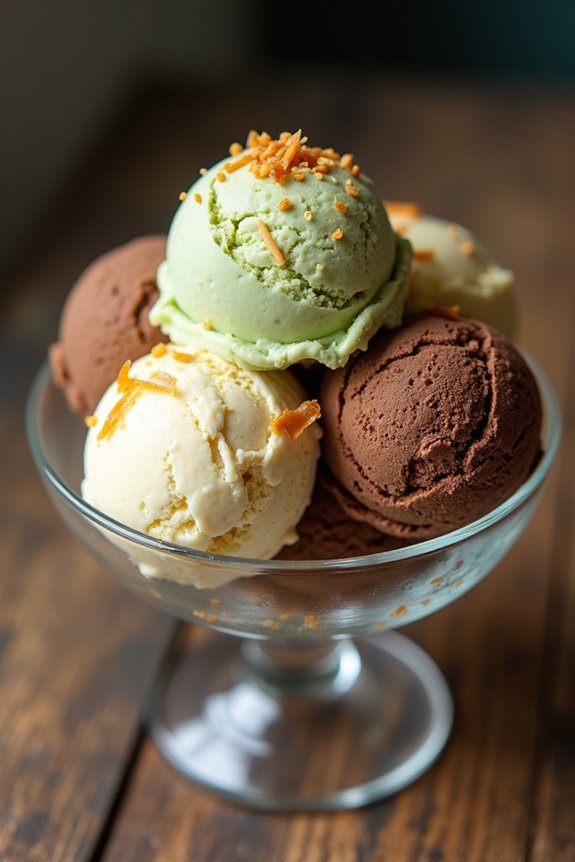
Premium ice cream means different things depending on where you live. Ice cream standards shift dramatically across regions, shaping what counts as premium in each culture.
Ice cream standards shift dramatically across regions, shaping what counts as premium in each culture.
Here’s how regional definitions vary globally:
- US standards require over 10% milk fat and 6–10% milk solids for premium classification
- UK requirements mandate at least 5% milk fat and 2.5% milk protein
- EU regulations commonly set a 5% dairy fat minimum across products
- Italian gelato uses less fat and air than American ice cream, creating denser texture
- Argentina and Europe often blur lines between ice cream, gelato, and similar frozen desserts through varied labeling
These premium ice cream distinctions matter because they determine what you’re actually eating. Sorbets and sherbets don’t qualify as ice cream in many regions. Understanding regional definitions helps you recognize quality products wherever you shop.
From Gelato to Soft Serve: Dessert Status Across Formats
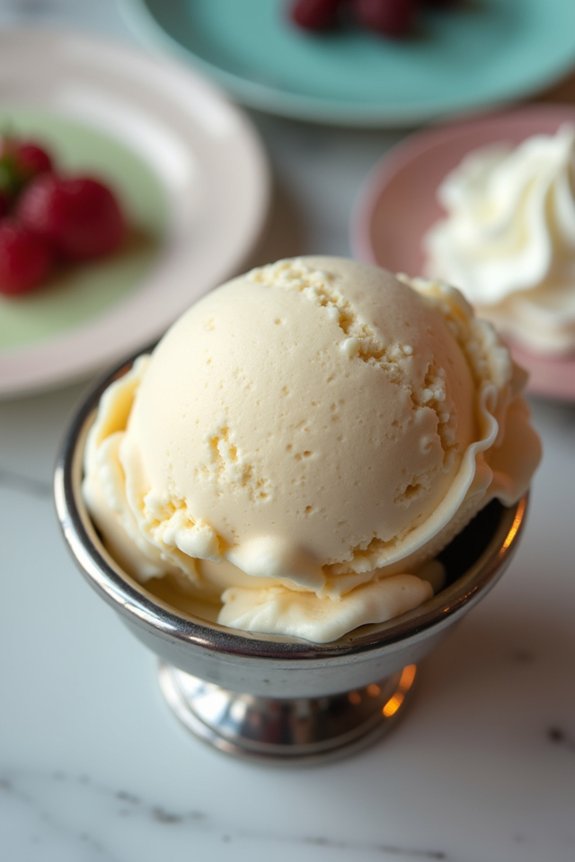
When you compare gelato to soft serve, you’re really looking at two totally different dessert experiences that sit at opposite ends of the premium spectrum. Gelato gets the upscale treatment because it’s churned slowly with less air and whole milk, creating that dense, chewy texture that commands higher prices and restaurant prestige. Soft serve, on the other hand, takes the casual route—served warmer and loaded with air for a lighter feel—making it the grab-and-go choice you’d find at a summer stand rather than a fancy Italian parlor.
Gelato’s Premium Positioning
How does gelato command higher prices than standard ice cream when it actually contains less fat? The answer lies in premium positioning through texture and flavor intensity.
I’ve found that gelato’s dense, creamy mouthfeel—achieved through minimal air incorporation and low overrun of 20-40%—justifies premium pricing. Here’s what sets it apart:
- Intense flavor perception enhanced by serving at slightly warmer temperatures
- Lower fat content paired with whole milk and minimal eggs
- Denser texture creating a chewy, satisfying experience
- Dairy-forward taste without heavy cream masking subtle notes
- Strategic differentiation from soft serve’s lighter, airier profile
You’re essentially paying for craftsmanship. The reduced aeration demands precision during churning. The warmer serving temperature amplifies aroma and sweetness despite less fat. This combination creates a sophisticated dessert experience that feels luxurious, positioning gelato as the refined choice for discerning palates seeking quality over quantity.
Soft Serve’s Casual Appeal
While gelato commands respect through its dense texture and sophisticated flavor profile, soft serve takes a completely different approach—and that’s precisely why it’s become America’s go-to casual dessert. I find soft serve refreshing because it delivers accessibility without pretense. The machines pump in extra air, creating what’s called overrun—typically 70–80% in most dispensers. This means you’re getting a lighter, creamier experience than traditional ice cream. The warmer serving temperature and lower fat content produce that signature smooth, foamy sensation. You’ll find soft serve everywhere: parks, fast-food joints, county fairs. You can grab it quickly and customize flavors on demand. Despite its casual reputation, soft serve shares ice cream’s core ingredients: milk, sugar, emulsifiers. It’s dessert stripped of pretension, pure enjoyment in a cone.
What Separates Ice Cream From Frozen Dairy Desserts and Substitutes
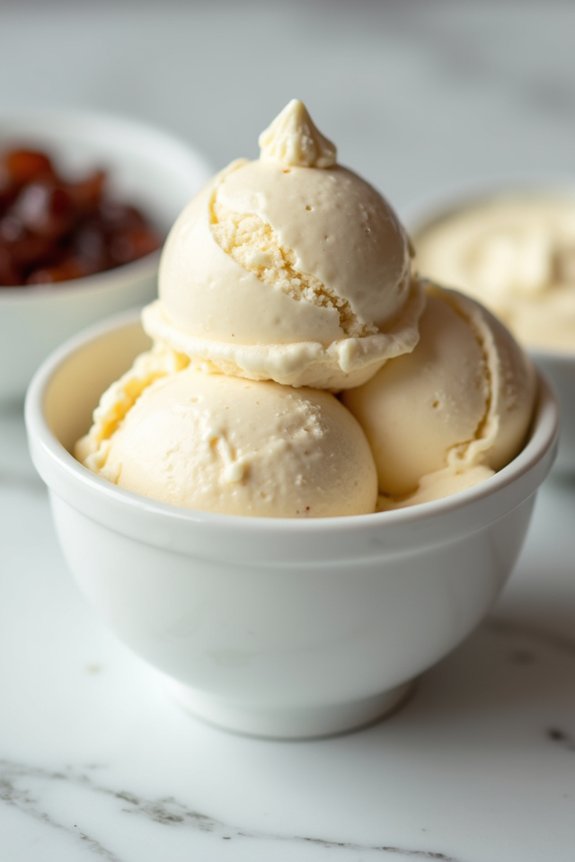
Why does one frozen treat get called “ice cream” while another sits on the shelf as “frozen dairy dessert”? I’ll break down the key differences you should know.
Why some frozen treats are called “ice cream” while others labeled “frozen dairy dessert”—the regulatory differences explained.
The main separators come down to three things:
- Fat content: Ice cream needs 10%+ milk fat in the US, while frozen dairy desserts contain less
- Overrun: That’s the air whipped in—ice cream has more, making it fluffier
- Total solids: Ice cream requires 12–16% solids including sugars and milk components
- Regulatory labeling: Government rules determine what companies can call their products
- Regional standards: The EU requires only 5%+ fat, creating different classifications
When a product doesn’t meet these standards, manufacturers must label it honestly. Gelato, for example, has less overrun and lower fat than traditional ice cream. Sherbet contains dairy but stays below 2% fat. Understanding these distinctions helps you choose exactly what you’re buying.